

You know what time it is — time to check out some movies I’ve watched recently! Newer ones, older ones, serious ones, silly ones — they’re all here! Let’s go!
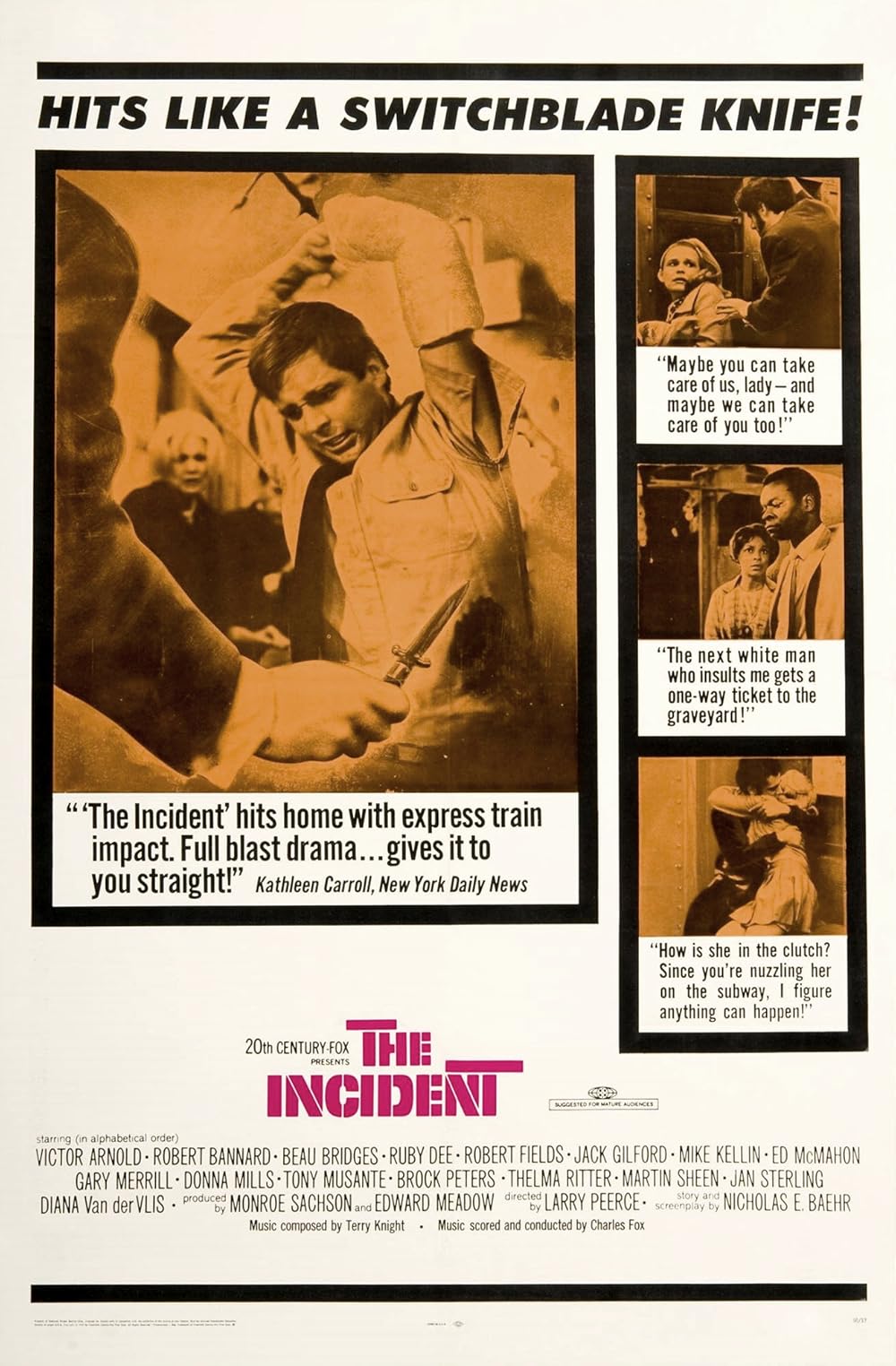 The Incident (1967). This is an interesting thriller that tries a bit too hard to make its social points but is still pretty keen. Two hoods — Tony Musante and Martin Sheen (in his feature film debut) — are roaming around New York in the middle of the night, mugging random dudes and causing trouble. A group of New Yorkers get onto a subway car, onto which Musante and Sheen jump at the last second, and our two punks begin terrorizing everyone. That’s it for the plot, but director Larry Pearce and writer Nicholas Baehr keep ratcheting up the tension, and Musante and Sheen keep getting more and more unhinged. The subway riders are both a decent cross-section of New York and a bit stereotypical — we have the “normal” middle-class family (the husband is played by Ed McMahon, of all people), the young lovers, the gay man, the older businessman who lost everything because he’s an alcoholic, the two young soldiers on leave, the old husband and wife who have money problems, the meek husband and his ambitious wife who doesn’t respect him, and a black couple who disagree on how to deal with racist white folk (the husband, perhaps naturally, is very militant). Musante and Sheen begin by picking on a sleeping drunk, and when the old businessman objects, they begin to get in everyone’s faces about it. It’s a bit unrealistic, as nobody really makes much of an effort to get off the train (the hoods stop those who do, but it still seems like they would be able to if they tried) and nobody stands up to the punks, which is, of course, kind of the point, but also seems a bit too much. The black man, played by Brock Peters, is shut down pretty effectively even before Sheen grabs his wife, Ruby Dee, and forces him to back down. Beau Bridges and Robert Bannard, who play the soldiers, could easily take the jerks out, as it’s clear they’re chemically altered in any number of ways (they’ve obviously been drinking), but Bannard, a New Yorker, doesn’t want to get involved, and Bridges, an Oklahoman, has a broken arm and is clearly a neophyte when it comes to fighting. Even Victor Arnold, playing the young punk who basically slut-shames Donna Mills on the platform, could probably take them out, but he’s easily cowed, too (the only good thing about that is that Mills might see through his tough guy act and not have sex with him, which she convinced herself was the thing to do). Still, it’s a story about how civilized people don’t react well when someone steps outside the societal norms, so the riders’ inaction makes sense if you think about it that way. The actors are generally quite good, despite the hysterical reactions to stress (usually by women) that we get a lot in movies made before, say, the late 1980s. But, in this case, not only the women — Mills stays silent while Musante is bullying Arnold, but Diana Van der Vlis and Ruby Dee both go a bit crazy — but the men, as well, even Musante and Sheen, who really lean into their rage as they move around the train car. It’s not a bad movie — it’s shot in black and white, so it looks really grungy and raw, plus the tension does get ratcheted up pretty well — it’s just that you have to ignore some fundamental silliness along the way.
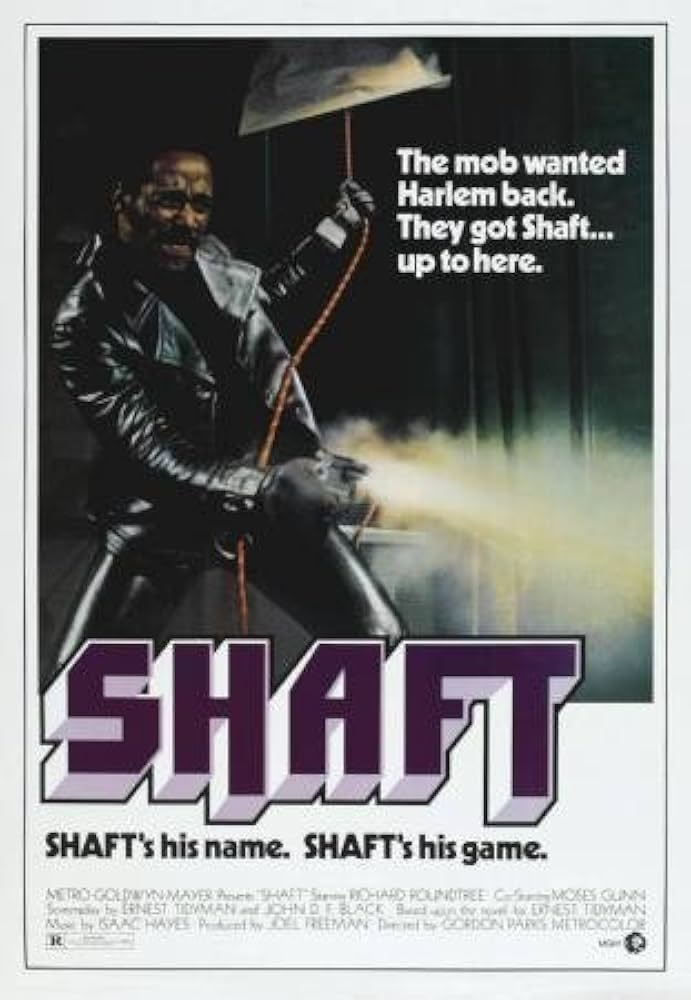 Shaft (1971). I had never seen Shaft (I know, it’s crazy!), so when it was on TCM recently, I checked it out. The interesting thing about it is that these days, it’s much more about its influence than its merits as a movie, because, well, it’s fine as a detective story, but nothing really that special (we’ll see more of these kinds of movies below!). A crime boss’s daughter is kidnapped and he hires Shaft to find her. He hints around that a militant black group took her, but of course, it wasn’t them, but the mafia, who’s trying to move in on his territory. Shaft enlists the militant blacks to help him out, and they get the girl back. Easy-peasy. It’s not about the plot, though, it’s about the vibe, and the vibe is hellacious. Just the opening, with Isaac Hayes rapping over that incredible funky beat as Shaft walks through the city, is enough to get you hyped up, and the movie doesn’t really let up from there. Roundtree is superb, all leather jackets and contempt for stupid people (white and black) and ease with the ladies (he bangs three different women in this movie, I think, one of them a waif-ish white girl who clearly wants to know, like Madeline Kahn, if the stereotype is true). The movie isn’t as radical as you might think — Shaft still works within the system, thinks the militants are somewhat foolish, and respects and is respected by the white police lieutenant, played by Charles Cioffi, who always wants to know what’s going on up in Harlem. Still, it’s an impressive movie because of all the reasons you’ve heard — a mostly black cast, no real interest in what’s going on in the “white” world, and a New York that most people were unfamiliar with. Director Gordon Parks doesn’t shy away from showing the shittier parts of New York — I mean, it’s the 1970s, so of course New York is going to look shitty — but he also shows the nicer sides of the black parts of the city, too. People live in a variety of kinds of apartments, including some very nice ones, shopkeepers have decent stores, and Shaft himself does all right as a detective. The plot is fun and exciting, sure, but it’s clear why this movie has become a cultural touchstone, and it has nothing to do with the story. It’s just a cool flick.
(All the clips I could show you, including the trailer, are age-restricted and can be watched only on YouTube. Just go watch the movie!)
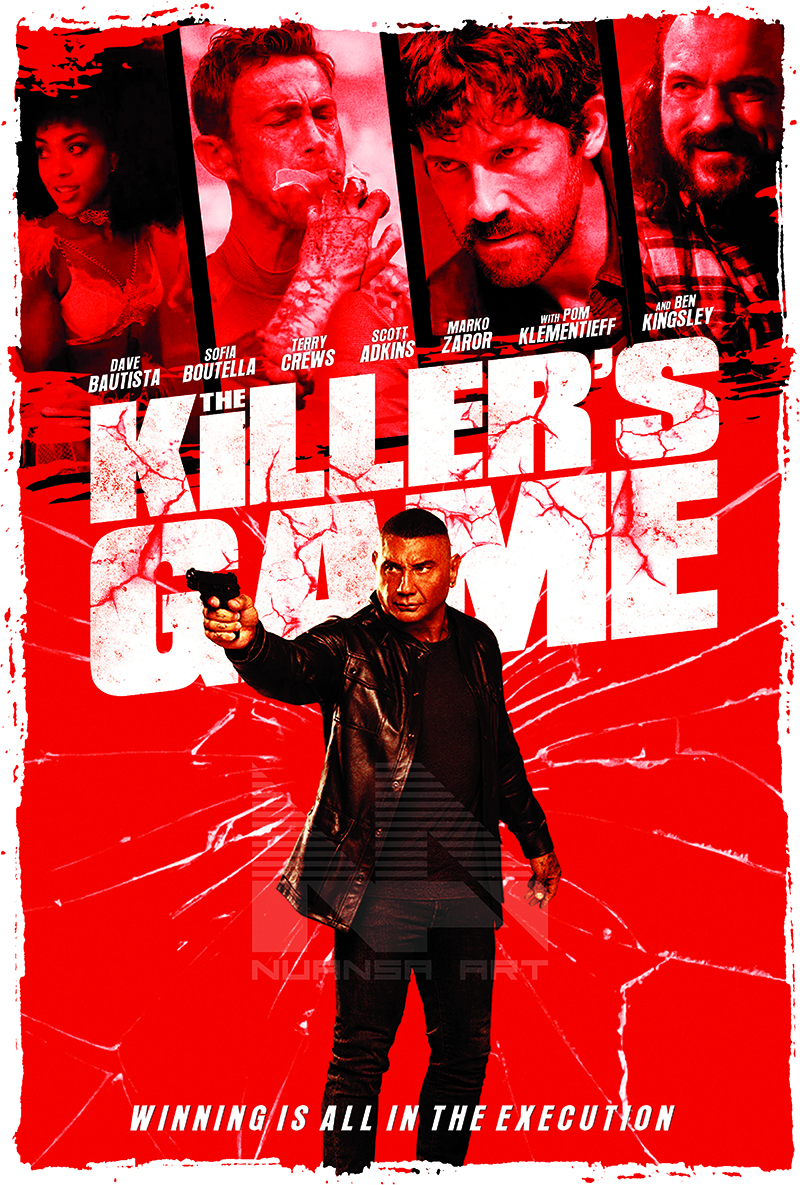 The Killer’s Game (2024). This is a slightly disappointing middle-of-the-road action movie, as it’s a bit too short (it’s a bit over 100 minutes, but maybe could have used 10-15 minutes more?) and it doesn’t really rise above anything other than people killing each other in ridiculously violent fashion. Dave Bautista is an assassin who meets a girl (Sofia Boutella) while on a job (she doesn’t know for a while what he does) and decides he wants to quit. Before he can do that, he gets a diagnosis of Creutzfeldt-Jakob disease, which is very quickly fatal. In a spectacularly stupid move, he takes out a hit on himself (not from his handler, Ben Kingsley, who won’t do it, but from an enemy, Pom Klementieff, who’s only too happy to take it) so that Boutella can collect the life insurance policy on him (a policy that he has Kingsley doctor, so why he just can’t commit suicide makes no sense — it’s already a fake policy, so can’t they write it any way they want?). Of course, right before the hit is about to go into effect (and several people want to collect on it, as Bautista is the best assassin in Europe and so all the others want to prove that they’re better), his doctor calls and tells him it was all a mistake. Klementieff isn’t inclined to cancel the contract, so Bautista needs to kill everyone coming after him. It sounds like goofy fun, and it is, to a point, but the lack of any character development is slightly disappointing, because it becomes a video game very quickly. Director J.J. Perry seems to be more interested in the assassins who are dispatched rather easily (except for Terry Crews, who’s also a very good hitman and therefore doesn’t go down as quickly) than Bautista, which is a shame. The acting is fine — Kingsley is always good, and Alex Kingston as his wife is fun, and I’m in the bag for Boutella, and she’s delightful, even though, as usual, it seems like she’s stuck in movies where she doesn’t get to do much, and Klementieff is having fun being pure evil. Bautista looks a bit rough, though — he was 55/56 when this was made, and the years haven’t been the kindest too him (Boutella was 42 or so during the filming, and she looks terrific). These ex-wrestlers don’t seem to age too well — I guess Mr. The Rock still looks pretty good, but even he’s showing his age — and it’s too bad, because they’re in action movies all the time, so they have to keep up the physique even when they’re getting older and can’t do it as well. Bautista has a natural charm that seems innate in pro wrestlers (Johnson has it in spades), and, honestly, a more rom-commy thing with Boutella would have been a fine movie, as they have good chemistry (he also has nice chemistry with Klementieff in this movie, which isn’t surprising). All the killing it fine, Crews is having a ton of fun in his role, and it does what it came here to do. It just felt a bit empty, and it would have been nice if it hadn’t been.
 Superman (2025). I guess people liked this, and I didn’t hate it, but it did feel like a big-budget superhero movie, which is a bit boring. There’s a bad guy, he has a nefarious scheme, the good guy is down and out (seemingly), but he comes back after learning something about himself (or herself, of course, although that’s still not too common) and triumphs. I mean, fine, but I don’t need to see it in every single superhero movie. Corenswet is fine, Hoult is fine, Brosnahan is quite good, and the cast is generally pretty good (I thought I would hate Guy Gardner, but Fillion manages to make him not quite as douchey as Guy of the comics). It’s still kind of a dull story, though, and I think it’s weird that superhero movies have become more brain-dead due to the fact that they need to justify the budget while comics, with their much smaller scale, have already done these big! action! stories! and can do other, more interesting things with characters that big-budget movies can’t really do. The best parts of this movie with Corenswet were the two scenes with Clark and Lois — the one where she interviews him (which is a bit off, as Clark is clearly not as “media-savvy” as he claims to be and I’m a bit tired of the heroes flying off the handle so quickly — come on, Clark!) and the one where he tells her he loves her (which is, of course, very much helped by the battle hilariously going on in the background) — because the relationship between Clark and Lois has always seemed the most interesting in the Superman canon, whether she knows who he is or not (and, of course, well after he stopped being a dick to her), and if you have good writing and good acting, they’re usually the best things in any Superman movie. The action and Lex’s plan is a bit dull, unfortunately. In the Age of Trump, the idea that Lex would spend even a day in jail, much less federal prison, is both childish and naïve, unfortunately. The entire plot hinges on some things that are not explained terribly well — even Superman stopping the invasion is kind of hand-waved away, which is kind of annoying, plus Superman seems kind of dumb when he’s fighting Ultraman. And I’m a bit tired of characters in movies — especially dudes — thinking their ancestry dictates who they are. Why doesn’t Superman go on a talk show and ask how many of these people condemning him have slave owners in their family trees? Why does he need anyone to tell him that your family history doesn’t define you? (Well, genetics can, but you know what I mean!) Does he think all the good things he’s done mean nothing? I buy the stupid people turning on him, but not him buying it himself. Sigh. The CGI in this movie is pretty terrible, too, which is disappointing. It’s not a bad movie, but it is a bit disappointing that superhero movies keep going to this well. Can’t they do something else? Anyway, it’s all right, but I always know I’m not a Superman guy, so maybe that’s why I’m reacting more negatively than some did. Who knows!
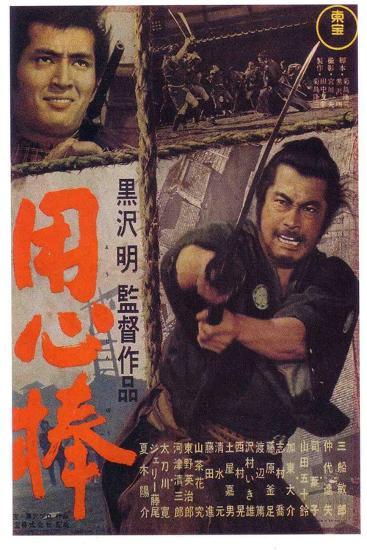 Yojimbo (1961). As I look for movies to DVR, I’m always keeping an eye out for things that I should have seen, either because they’re very good or very influential or both, and a lot of Kurosawa comes to mind, mainly because I haven’t seen a lot of it. Yojimbo is one such movie, and it was on recently, so I checked it out. I do have to say … it wasn’t my favorite. I can see why filmmakers like it, and I can see why Walter Hill, for instance, remade it with Bruce Willis in the samurai role (that’s not the worst movie in the world, if you ask me), because it’s a simple story that’s easily adaptable, and filmically, it’s pretty neat to look at. But it’s still odd. Mifune is an interesting actor, but he doesn’t have too much to do here, just sit around and kind of be mysterious, which he’s good at. The problem with the movie is that the other characters — the bad guys, mostly — are cartoonish to the point of ridiculousness, and it’s hard to take them seriously. When Mifune gets to town, he dispatches a few of them, and they’re immediately revealed as either cowards or lousy fighters or both. The two head gangsters are stupid to the point of incomprehension. There are plenty of opportunities to kill Mifune, not because they know that he’s trying to play them off against each other, but because he’s generally annoying and isn’t really doing anything he’s been paid to do, but they don’t take them. The only villain that seems at all menacing is Unosuke, played by Tatsuya Nakadai, who brings the gun to a swordfight, but even he goes out like a bitch just a bit. It’s not a bad movie — watching Mifune scheme is always fun, and the cinematography is terrific — but it is clearly necessary to watch more for marveling at its influence rather than because it’s such a classic. Rashomon is much better, for instance. But still — who doesn’t love Japanese movies from the ’60s?
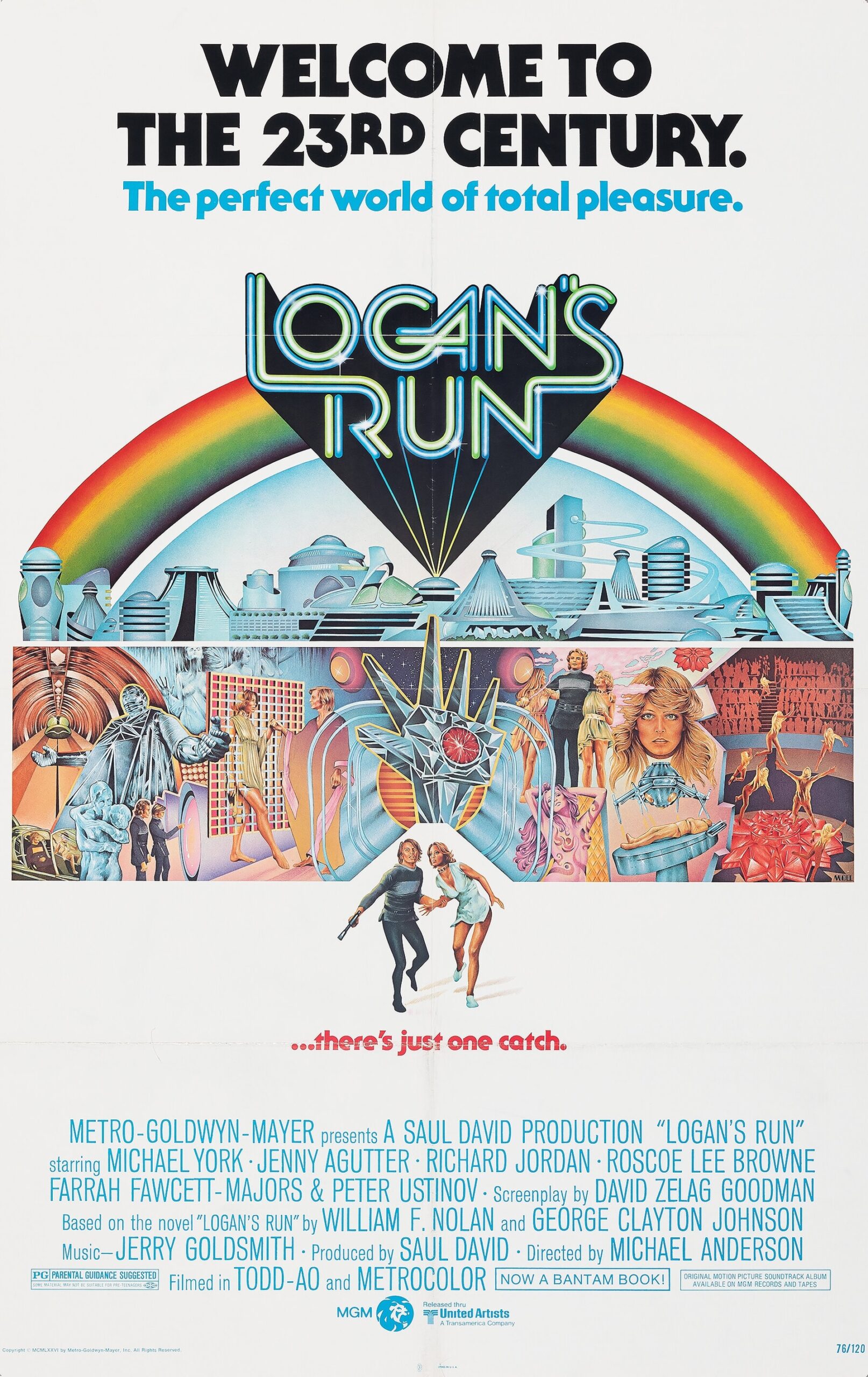 Logan’s Run (1976). I don’t know if Logan’s Run falls into the same category as Yojimbo (or Shaft, up above), but it’s one that a lot of nerds, at least, have seen, but I never did. I was 5 when it came out and living in Germany, and by the time I was old enough to perhaps appreciate it, I was interested in other things, plus it’s not like it was on television a lot in the 1980s. So I just never saw it, and now I have! Like Yojimbo, I wasn’t super-impressed by this, although the production design was much better than I thought it would be — sure, the city is obviously a model, but it looks really cool, and the buildings where they filmed it (mostly in Dallas) have that weird, retro-futuristic look that screams “1970s” but still has a nifty vibe 50 years later. The story isn’t bad, certainly, and the chase part is pretty neat, especially when Logan and Jessica begin to discover the world outside and what it means. And Peter Ustinov is always fun. There are problems, though, which are frustrating. The biggest, of course, is who’s in charge of this whole thing. Logan and Francis do their Sandman thing, and we see other Sandmen, but when Logan returns from the outside, only other Sandmen do anything to him, and he’s interrogated by a computer that seems ridiculously easy to confound. So who’s in charge? If it’s just Sandmen, why can’t Logan override them? Why do they have such a vested interest in retaining the status quo? The society itself seems not fleshed out enough — we never really get any explanation about “renewal” and the “carousel,” which I guess is kind of the point, as it’s evolved to be a religion that no one questions, but it still seems too important to just leave as “Well, that’s how it’s done.” And what the hell is Box? Is he the city’s last line of defense against people making it to the outside? That’s very weird. The performances are strange, too. York is weirdly manic, which seems like a York trait but ought to have been tamped down by the director, while Agutter is fine but a bit inert (I haven’t seen Agutter in too much, but she often seems inert). Why is she so keen to help runners? We never know. Jordan is pretty good as the die-hard, although he dies far too easily. And hey, that’s future Playmate Ashley Cox touching Ustinov’s beard and smiling at the end, so that’s fun. It’s just a weird tone throughout the movie, as if the filmmakers didn’t quite take it seriously but didn’t want anyone to know they weren’t taking it seriously. I know talk of a remake has kicked around for a while, and I think this could be a pretty cool sci-fi movie if someone took it seriously (not to make it dour — Logan and Jessica going through the hallucinogenic and nekkid Love Shop is bizarrely excellent, and if they could explain Box, it could be a wacky scene), but this is more interesting as an influential artifact than as a really good movie. Still, it’s fun to watch once!
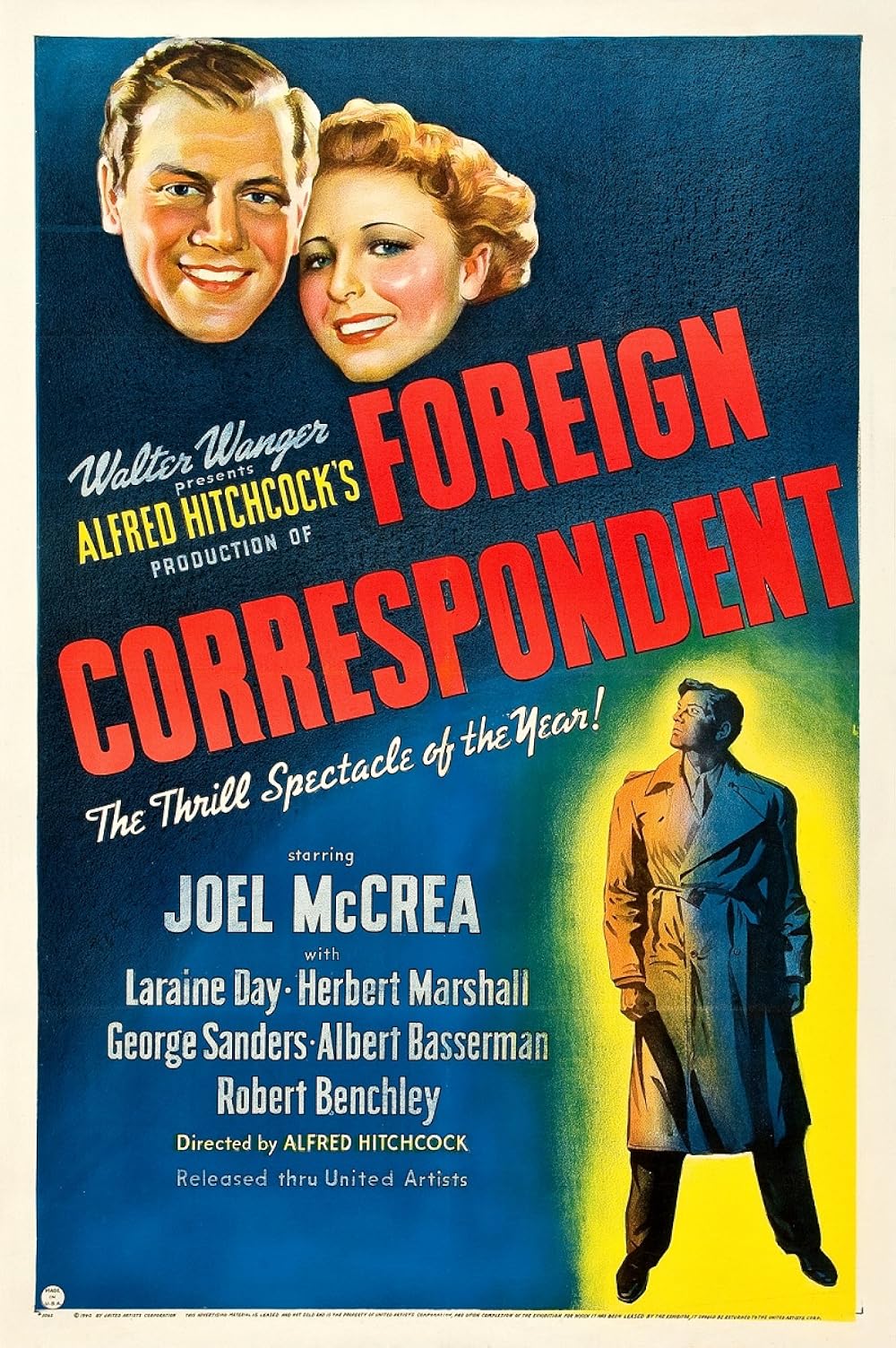 Foreign Correspondent (1940). I’ve often railed against fiction having two people fall in love instantly, especially these days, when people have sex once and then decide they’re meant to be together, but it’s not a new phenomenon, as in this movie, Joel McCrea speaks to Laraine Day (who is, in the best movie tradition, 15 years younger than he) for about two minutes and decides he’s in love with her, while she, having been a bit repulsed by him because he’s such an obvious lecher, changes her mind almost immediately and decides she’s in love with him. Sigh. Anyway, the romance is just a sidebar to this fun espionage movie, as McCrea is sent to Europe on the eve of World War II (the war actually starts in the middle of the movie) because the editor of his newspaper is sick of his foreign correspondents and wants a “real” reporter, and he’s impressed that McCrea knows nothing about what’s going on there (he’s a local crime writer). So off he goes to London to interview the architect of a treaty that might avoid war (fat lot of good it did). Hitchcock knows his way around a MacGuffin, so the interview is really just a way for McCrea to meet the dude and his ally in London, Herbert Marshall, who also happens to be Laraine Day’s father. The subject of the interview is almost immediately assassinated (see below), but McCrea figures out that he’s still alive and the Nazis (presumably; McCrea mentions Hitler early in the movie, but the villains are the story are generally ambiguous, nationality-wise) are trying to get him to reveal secret details of the treaty. Nobody believes McCrea at first, but he eventually convinces Day and another reporter, George Sanders, both of whom help him flush out the bad guys and find the kidnapped dude. Hitchcock, naturally, knows how to build suspense, and there are a lot of neat sequences in the movie — the one in the windmill when McCrea discovers the dude’s alive, the plane crash — and some tense drama. Some of it is silly — McCrea’s relationship with Day doesn’t quite work, and late in the movie, he does dumb things because, it seems, he doesn’t want to include a woman in his schemes — but overall, it’s a groovy spy thriller. The plane crash late in the movie is really well done, especially for 1940, so there’s that, and we get some very cool signature Hitchcockian shots, like when McCrea has to escape from his hotel room and goes out on the ledge to do so (or in the clip below). McCrea is fine — he’s often called upon to play the square-jawed, slightly ignorant American, and he’s quite good at it — and the rest of cast is good, too. Day doesn’t have too much to do, Sanders plays George Sanders, as he always does (but George Sanders is a fun character, so I don’t mind), Marshall as the urbane peacenik is good, and Robert Benchley as the kind of foreign correspondent McCrea’s editor does not like is having a ball. Just a nice, solid Hitchcock film. You can’t go too wrong with those!
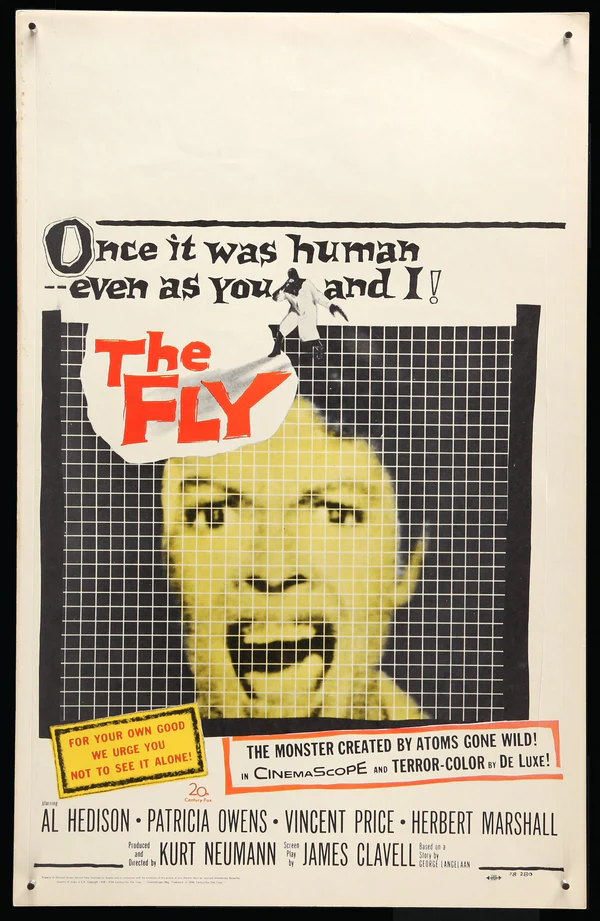 The Fly (1958). The Herbert Marshall film festival continues!!! (18 years after Foreign Correspondent, Marshall plays the police inspector in this movie.) He is, of course, the only reason to watch this movie!!!!
I’d never seen this movie (with its screenplay by … James Clavell?), so I thought I’d check it out, and it holds up very well for a horror movie from 1958. Sure, some things stretch credulity — how is Andre’s fly head and arm completely obliterated by the press so that no one notices it? — but it’s still pretty keen. I wasn’t sure what to think — I kind of thought Vincent Price would play a more sinister role, because he always plays kind of a sinister role, but no, he’s just Andre’s brother, and while he admits he’s in love with Andre’s wife, it’s not a big plot point at all (and she looks like Patricia Owens, who’s very easy on the eyes, so why wouldn’t he be?). Cronenberg, of course, turned this more into body horror, which it should be, and apparently David (“The Cast List Can Call Me Al”) Hedison (who later had his legs eaten by a shark so that Timothy Dalton could go on a revenge mission!) lobbied for more of that, but they thought 1958 audiences would be too icked out by it (by the 1980s, we wanted our horror movies gross, damn it!). It’s still a tense movie, as we begin with Andre’s death and the clear fact that Helene killed him, and only later does she tell the tale of how it happened. It’s a good way to tell it, because it becomes more of a tragic love story than a horror story, as we already know Andre is dead and so we can concentrate on his fall from grace. The movie wisely ignores the ridiculous science and doesn’t even show us the teleportation sequence when Andre and the fly get mixed up, which is probably for the best, especially because it allows Helene and the audience to see his transformation at the same moment. Andre actually looks quite horrific when he’s revealed, and Hedison does a good job showing how he’s becoming less human. Despite, apparently, Price and Marshall laughing during the scene with the fly in the spider web at the end, it retains a real horrific power as the spider approaches the fly with Andre’s head. I like Cronenberg’s remake better, because it is a better movie, but the original still has a lot going for it, so if you haven’t seen it, it’s a good one to check out.
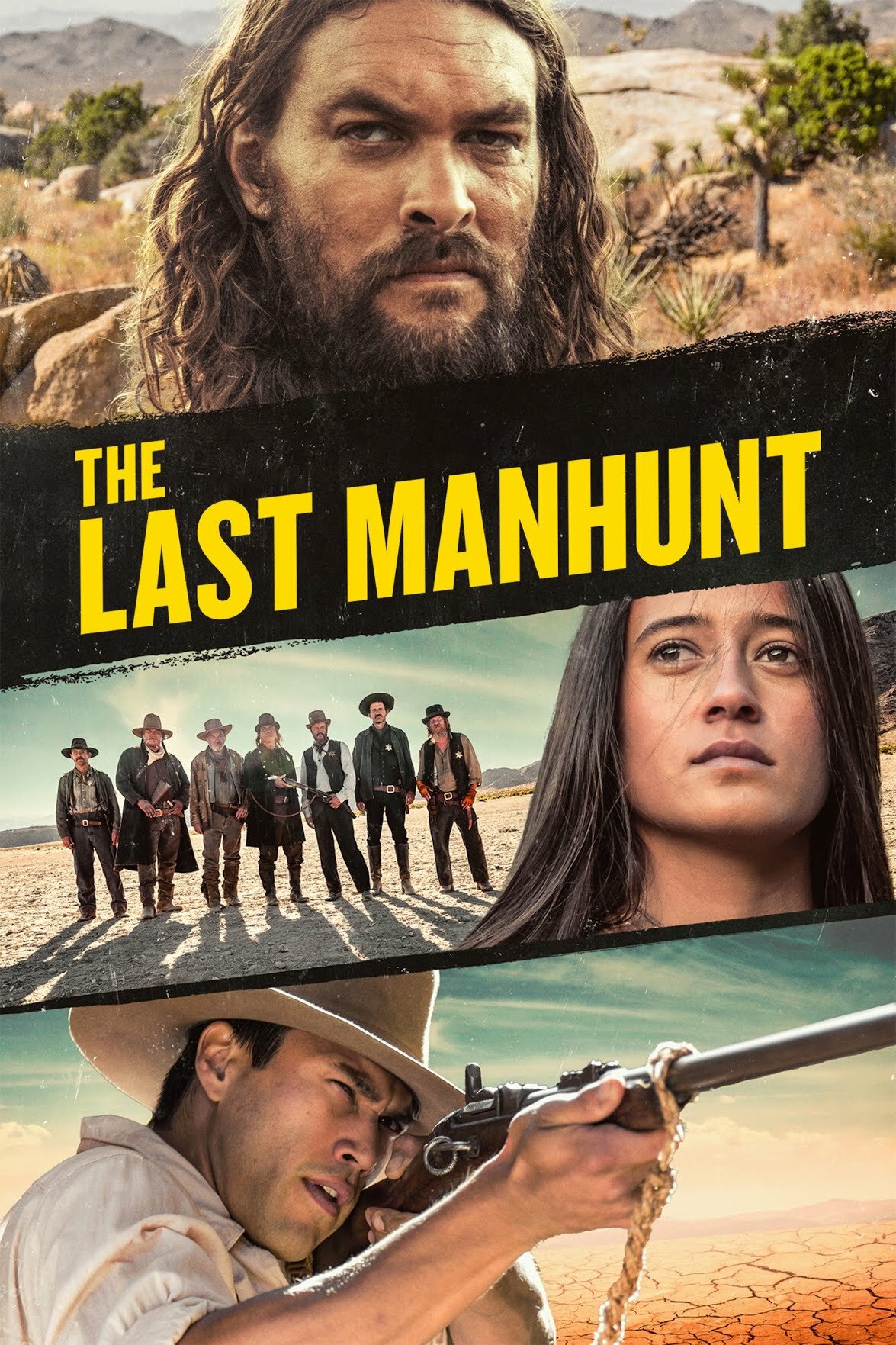 The Last Manhunt (2022). This is a strange movie, kind of a love child of Jim Jarmusch and Walkabout with some lo-fi Tarsem Singh thrown in, and it’s frustratingly far too inert to be really that good, although you can see a better movie lurking around the edges. It’s based on a true story, supposedly (although the details seem to be a bit sketchy), that occurred in 1909, when a Paiute man, Willie Boy, took off with Carlota, the daughter of a dude who did not want her to run off with Willie (they were cousins, but as her mom points out, distant cousins, and the population pool where they live is so small it’s not surprising they’re related somehow), and the father ends up dead, so the tribal police go after Willie because the dead dude is their chief, while the sheriff goes after him to make sure the tribal police doesn’t kill him. The entire movie is the dudes out in the California desert (the two named places in the movie are Joshua Tree and Banning) hunting for Willie and Carlota, and it goes very slowly. There’s a lot of sitting around, with characters saying very short and occasionally very cryptic sentences and then everyone else kind of staring meaningfully at them or off into the distance. There is, of course, the racism angle, as the white posse does not like having the Indians around, and there’s the issue of what kind of justice Willie deserves, and there’s the issue with how the press will report the story (the most unctuous character in the movie is the baby-faced reporter who just makes up the details of the story so he can sell more papers) … the movie has a lot on its mind, but it doesn’t do a very good job exploring it. Martin Sensmeier and Mainei Kinimaka, as Willie and Carlota, don’t have many lines, as they’re there to look pretty (which they are) and to run through the desert and occasionally stop and look pensively into the middle distance. Zahn McClarnon shows up to play Carlota’s dad, who gets to be angry for a few minutes before he’s killed. Lily Gladstone, the year before she became a big name by getting nominated for an Oscar, plays Carlota’s mother (she is, I should point out, 20 years younger than McClarnon — even in small, indie movies they can’t resist!). Raoul Max Trujillo and Brandon Oakes play the tribal cops, and they also don’t have many lines (there’s just not a lot of dialogue in the movie!), but they look suitably dismissive of the dumb white guys. Christian Camargo, the director, plays the sheriff, a man mourning his wife and drinking too much, and Camargo (who — say it with me — also doesn’t have a lot of lines, but probably more than any other cast member) does a nice job with the role, playing a man trying to do the right thing but not caring too much if anything gets resolved, because who cares now that his wife is dead? You’ll notice Jason Momoa prominently displayed on the poster, but that’s just to get people in the theater — Momoa has about 10 lines and is in the movie for about 5 minutes; he’s the executive producer, and I imagined he just put himself in the movie to secure financing, but he didn’t want to overshadow the other actors. It’s not a long movie, but it does plod along a bit, which is too bad, because it’s a gorgeous film — it was filmed out in the desert where the story supposedly took place — and I did appreciate that Camargo tried to make it thoughtful, it’s just that there needs to be a bit more balance between the thoughtfulness and, you know, something actually happening. Oh well!
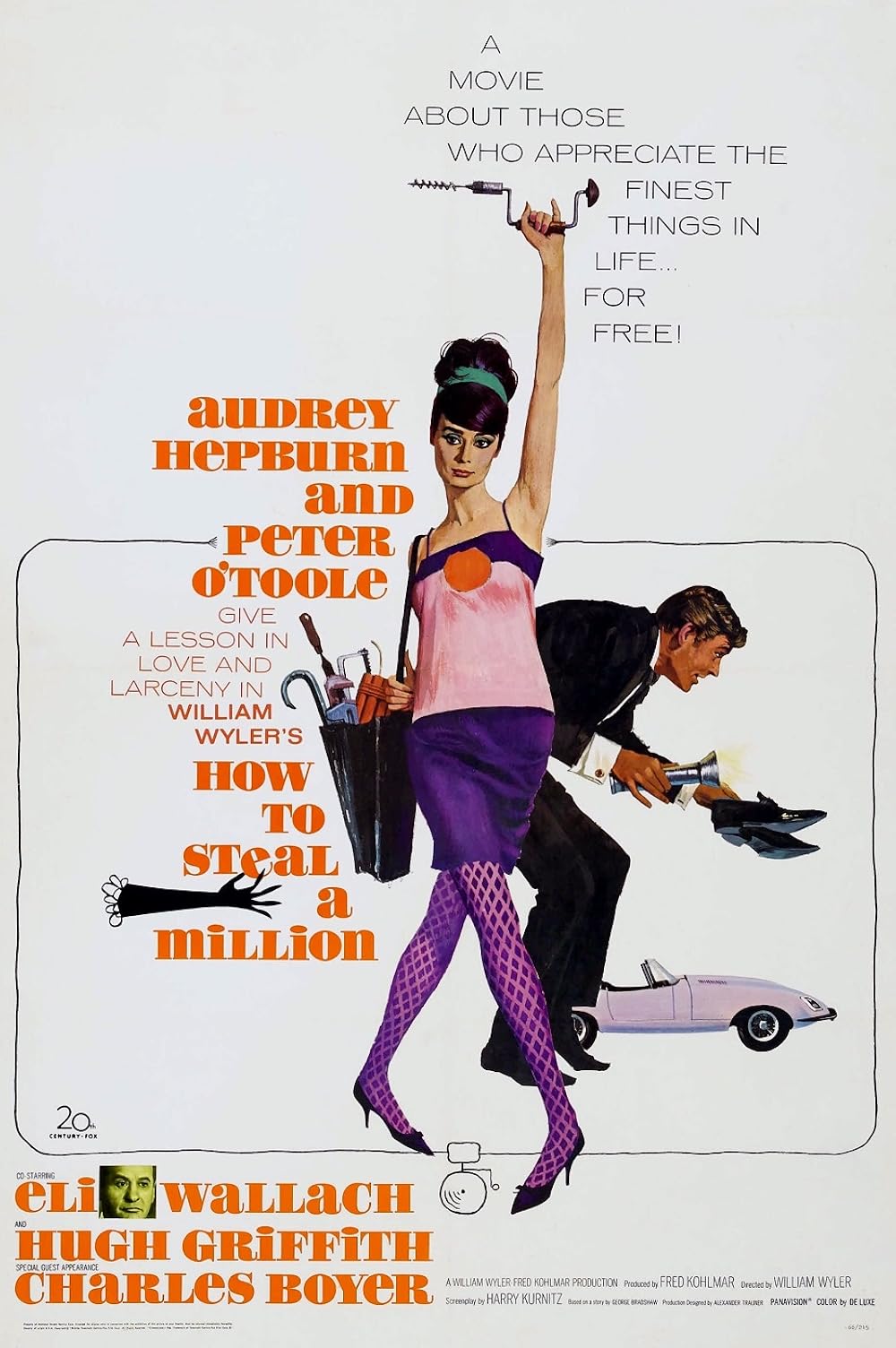 How to Steal a Million (1966). Let’s face it, if you put any moderately good actor or good-looking actor in a movie with Audrey Hepburn, the result will be fun as all heck, and Peter O’Toole at the height of his powers was both a good actor and a good-looking one, so How to Steal a Million is a fun comedic heist movie. It’s the mid-1960s, so it’s fairly regressive — two men kiss Hepburn on the mouth passionately without asking anything close to permission, with one of them basically forcing her to get engaged to him — but such is life. Hepburn is the daughter of Hugh Griffith, who’s a very successful art forger, while O’Toole is a dude who breaks into Griffith’s mansion one night to steal a van Gogh … or does he? He’s caught by Hepburn, which leads to them having chemistry, which leads to their larger endeavor — stealing a sculpture Griffith donated to a museum. Hepburn warns her father not to do it, as it’s a fake, but he think it will be fine because he’s not asking for any money, so they won’t examine it too closely … until they decide to insure it, which means an inspector who will definitely spot the fake. Hepburn, in order to save her father from embarrassment (and possible prison), enlists O’Toole to steal it. The actual heist is a bit ridiculous (it features boomerangs!), but it’s fun, and it’s just a fun, light movie in which Hepburn and O’Toole get to spark with each other and flirt a lot and have a ball. It’s inconsequential, but you really can’t go wrong with Hepburn, can you, and the added bonus of O’Toole is nice, too.
That was fun, wasn’t it? How many of these have you seen? How wrong are my opinions? Don’t be shy about telling me!

So I’ve actually seen a few of these:
Shaft is indeed awesome. That reminds me, it’s been awhile, I need to rewatch it.
On the latest Superman, while I’ll acknowledge some of its shortcomings, it is the first Superman movie I’ve enjoyed (and indeed, watched all the way through) since Superman II.
Logan’s Run is such a monument to campy ’70s excess. It’s worth watching more than once.
While Superman III is dreadful (I rewatched for my book on alien visitors to Earth) I was impressed that Reeve still gives it his all: he’s as committed playing the dirtbag Superman as he is to the real one.
I also liked Robert Vaughn’s brainiac girlfriend who hides her copy of Kant behind an issue of Vogue — but they did nothing with that idea.
I liked Superman a lot, though I don’t think it dethrones Superman IV: The Quest for Peace as the best Superman movie. I much prefer Gunn and Corenswet’s cornfed everyman version of Superman over the last couple big-screen versions of the character. The movie is maybe too in-medias-res and a little overstuffed, but at the same time, I also wanted more– more Lois and Clark, more Daily Planet, etc. It did give me the feeling of being a kid and opening a random comic and being thrust into the middle of a universe, filled with plots and characters, and having to keep up.
All that said, my favorite superhero movie– and, believe it or not, movie in general from 2025, is still Fantastic Four.
I have seen Shaft, a long time ago, and don’t remember it too well. Shaft in Africa is much sillier and therefore my favorite of the series. I also have Logan’s Run on DVD, but haven’t given it a spin in probably 20 years.
I liked the Superman way more than you did. I’ve never really liked Foreign Correspondent as much as most reviewers do: The Lady Vanishes and The Thirty-Nine Steps do similar stuff much better.
I loved Logan’s Run when I first saw it. Picked up the book after Greg Hatcher recommended it, watched the movie again — still fun, but as you say, the set-up makes no sense. And where the perils in the novel make sense, in the movie they might as well be random-rolled monsters in D&D (https://frasersherman.com/2024/04/06/double-features-in-different-media/)
The Lady Vanishes is better, yes. I don’t know if I’ve seen The 39 Steps — if I have, it’s been a very long time!
I forgot about the book existing, which I assume delves into the world a bit more deeply. I hate when movies excise crucial stuff but still leave in some stuff, which then becomes kind of out of context. Just get rid of it all or do a better job explaining it!
I’ll add to the chorus of people who both enjoy Superman and enjoyed Superman more than you, haha!
It very much captured the feeling of picking up a random “Superman” run mid-arc, with a fully established universe of colorful, weird, and wacky characters who are taken completely seriously (like goddamn Mister Terrific), with a take on Superman that felt both true to the character and lived-in.
I also freaking LOVED Tony from Skins as Lex Luthor.
I’ve seen both versions of The Fly. The first one some 50 years ago spoken in German. Most cool films were on German television at that time and then I didn’t mind hearing indians say hilve, hilve. 🙂 The Cronenberg a few times and the first at a premiere in Amsterdam. I have it in Blu-ray and have to watch it again. Thanks for reminding.
Saw Shaft but so long ago so I don’t remember much about it.
Superman vs Batman was the last Superman movie I saw. So bad I couldn’t put myself to see everything with the big S after that.
Bautista came late to pro wrestling, starting when he was about 30. His size got him a fast push (getting friendly with Triple H, Paul Levesque, helped). He was injury prone for most of his career, in part due to his use of steroids, and he suffered several muscle tears, which is common in steroid users, as users build bulk muscle, but the connective tissues don’t grow the same and become less flexible. He suffered a spinal injury in 2014 and was off the shelf for a few years. Most veteran wrestlers talk about a “bump card,” that your body can only take so much impact from “bumps,” the falls to the mat, in reaction to moves. In the old days, wrestlers spread those bumps over decades, saving the big ones for the big shows and not risking injuries for smaller house shows. Later generations would perform flashier…and riskier….moves, which increased the level of impact in their bumps, and the amount of injury they incurred. Most wrestlers these days are lucky to make it 10-15 years without serious injury. Dwayne Johnson was known more for his talking, before and after matches, than his actual bumping in the match. He has, however, had to have surgeries for gynecomastia (“bitch tits”), a fatty growth in the tissue, as a result of his steroid use. During those periods he wrestled while wearing a shirt, claiming he had a pectoral injury. So, Bautista took way more punishment, over a short period of time, while contributing to injury by using steroids and working out for mass, but not flexibility.
I like Yojimbo, but actually prefer A Fistful of Dollars, as far as the story goes. Last Man Standing is fine, but Willis is no Clint Eastwood and Walter Hill isn’t Leone.
Shaft is awesome. For anyone who wants to travel down this road, the sequels are good to decent. I would also recommend Black Samson, with Rockne Tarkington and Black Belt Jones, with Jim Kelly. Then, Three The Hard Way, for the Black Action Hero Justice League! Finish off with I’m Gonna Git You Sucka, for desert. Then watch Pam Grier’s classics, Superfly, and Original Ganstas, which reunites most of the great stars of these films.
I have Superman, but haven’t watched it yet and haven’t really been itching to see it right away. Eventually. Every time I see someone else play it, I tend to find a problem with either their performance or the approach. Only Christopher Reeve ever really “gets” Superman. Others have done fine in the role, within the context of what they are given, but only Reeve really captured it. Ps, RIP Valerie Perrine.
I love Logan’s Run, warts and all. Visually I still think it is good and the acting is generally good. The problem with the story mostly revolves around the changing of the story. In the novel, the whole US is a playground for the youth of the world. They are not just bottled up in the city. The system was run by a super-computer, The Thinker, buried inside the mountains in the Dakotas. The system pretty much runs itself, but age is limited to 21, not 30. That was to allow for older actors. In the novel, Logan reaches Lastday, and decides to run (after killing a runner and learning of Sanctuary) and find Sanctuary and destroy it, as his last act, as a Sandman. The route to Sanctuary takes he and Jessica through dead areas, in the system. Meanwhile, there is a legendary man, named Ballard, who runs the Sanctuary line. The film loses a lot of that and it loses a lot of the impetus for running. Carousel is a creation of the film and ends up being part of the lie. I think the screenwriters got more wrapped around surprise moments and deception, to match things like Soylent Green and the Watergate Scandal. The tv series is worse, as the city is secretly ruled by a council of old men, who offer Francis membership, to hunt down and kill Logan and Jessica. That makes no sense at all and would seem impossible to hide. The computer, in the film, is adapted from the Thinker and the system is automated, but it is breaking down. That is what they were trying to show, at the end, but I think they kind of wrote themselves into a corner.
How to Steal a Million is wonderful. I fell in love with it, as a kid, watching it on a weekend movie slot, on tv. I especially like the solutions to the various security measures and the problem of getting in and out of the museum. My favorite line is when O’Toole hands Hepburn the peasant clothing, for her cleaning woman disguise, saying, “Let’s give Givenchy the night off.” Givenchy was Hepburn’s designer and the pair were linked throughout their careers. Love the one guard, played by the French comic actor, Moustache, who also appears in the Alan Delon Zorro.