

“Ashes and diamonds, foe and friend — we were all equal in the end”
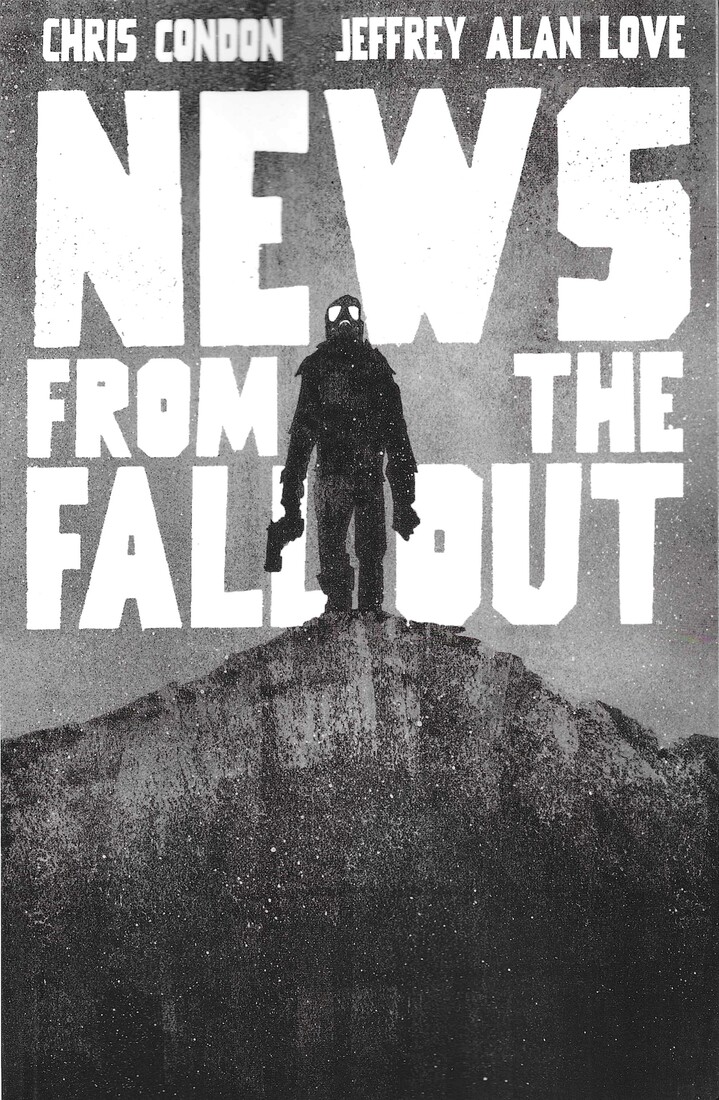
I’ve been doing these reviews instead of putting them all in one month-end post like I did for years, mainly just to try something new. I also got a bit busy early in the year and did not get a month-end post in January, and then February started getting away from me, so I decided to do this. 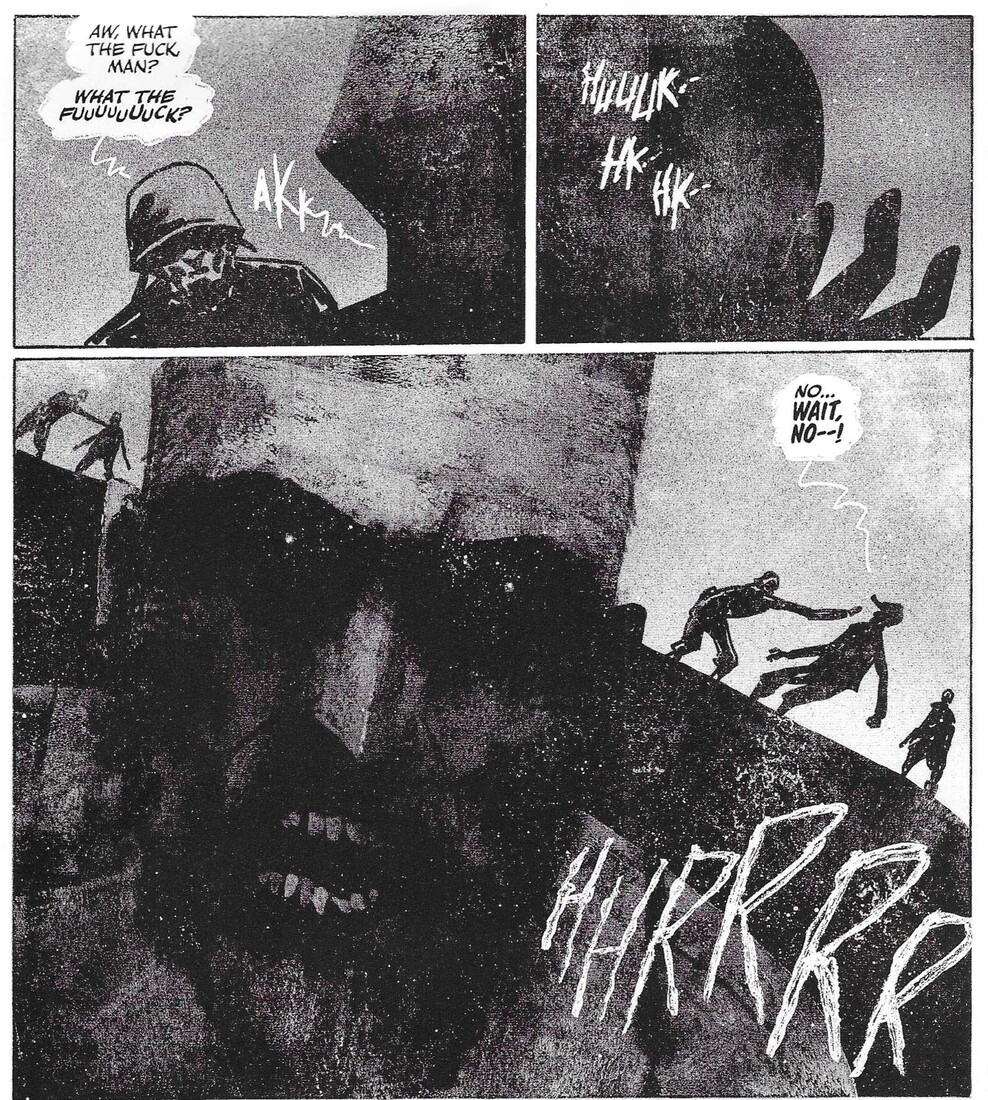 This is all just to say that with the month-end posts, I can zip past some comics that might not “deserve” a longer review, either because they’re not that good or there’s just not a ton to say about them. One of these is News From the Fallout, which is not a bad comic, but it is a fairly generic comic. Even the art, which ought to be the weird hook, doesn’t quite do it. But let’s take a look at it, because I can still write a bit about it. Chris Condon writes it, Jeffrey Alan Love draws it, Hassan Otsmane-Elhaou letters it. It’s 161 pages long and costs $19.99.
Condon writes in the foreword that he had the idea for News From the Fallout, in a rudimentary form, in high school (although it evolved quite a bit over the years), and it feels like it. He mentions that he became obsessed with George Romero, which is not surprising based on this book, but I would also say he watched a Romero movie paired with Invasion of the Body Snatchers and The Thing and it really imprinted on him. Look, I know ideas are hard and no idea is original, but man, this is a derivative comic. It takes place in 1962, and a crazy general in Nevada detonates an atomic bomb above ground, and it turns out he does it because he’s possessed by intelligent spores from an ancient rock, an intelligence that lands on planets and warps them to their needs, an intelligence that possessed dinosaurs but was thwarted by the extinction of the dinosaurs and went underground, waiting for another species to come along. The explosion kills or possesses all the soldiers except for one, Otis Fallows, who suspected things were bad and wore a gas mask, so he escapes. He manages to get to a diner full of Nevadans who ignore him when he tells his story but get sober really quick when the zombie-fied soldiers show up. 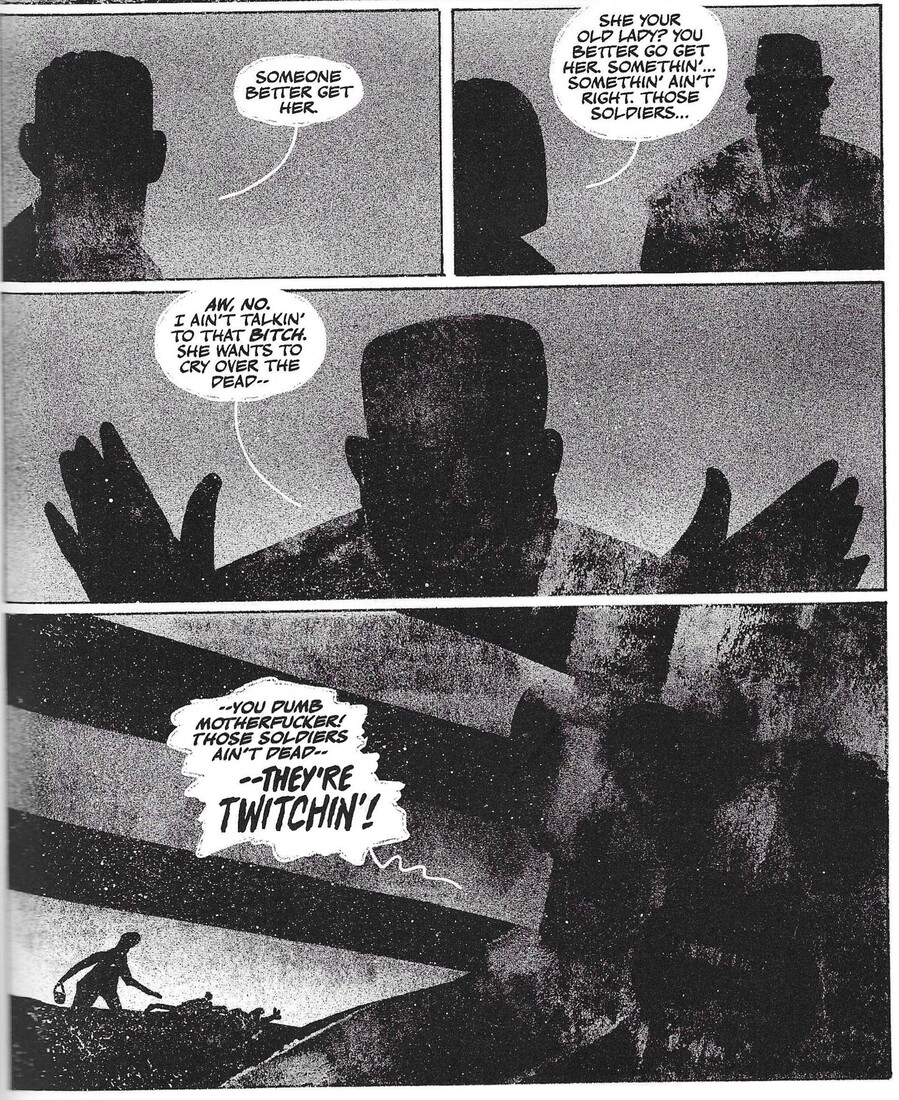 Of course, from there on, it’s a battle for survival.
Absolutely nothing is surprising about this comic. Condon gives us a bunch of characters and tells us a bit about them, but they’re all doomed anyway, we’re pretty sure (the only one we’re unsure about is Otis himself, but even with him, we’re confident about his fate), so there’s not much use in learning about them, and what we do veers into cliché anyway. In these types of stories, usually the writer/filmmaker is making a comment on whether the human race deserves to live anyway, so the ending is ambiguous (we don’t know what happens after Donald Sutherland opens his mouth or whether Kurt Russell and Keith David make it back to civilization or if they’re infected), and Condon wants to go that way … but he undercuts it in the backmatter to the final issue, which reveals what happened. It doesn’t even make it into the regular pages of the comic, which is very frustrating. Condon wants it both ways — to make us wonder about humanity’s fate, but also to wrap things up. If you’re going to wrap things up, do it in the regular pages, not buried in prose in the back. Anyway, things happen, people get killed or possessed, and there’s a final irony, as there always is. That’s about it.
I’d like to say nice things about Love’s art, because it is weird and idiosyncratic and honestly fits the tone of the book quite well, but it’s frustrating, too. Early on, before the explosion, Love draws … I want to say “normally,” but let’s just say in a more regular style, with thick lines and heavy blacks that imply the weight of the general’s decision. 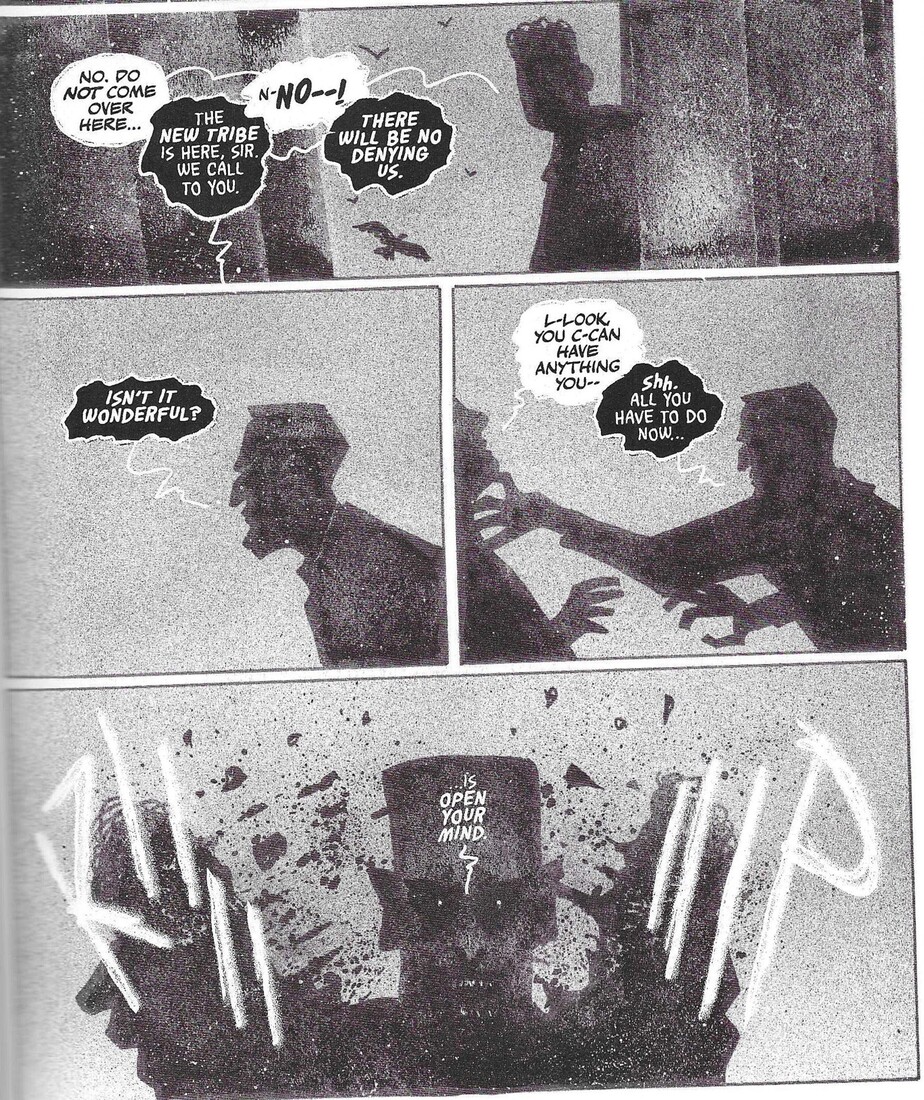 Once the bomb goes off, Love switches almost entirely to black, geometric shapes to build up his characters, and so it remains for the rest of the book. His use of silhouettes is wacky and does sync with Condon’s dark vibe, but it also removes all nuance from the book. We don’t see any faces or movements, and two characters who wear glasses are a bit hard to tell apart when they’re both in a scene. There’s no creeping terror on the characters’ faces because we don’t see their faces. Using silhouettes and shadows also means some panels are very confusing, because it’s hard to tell what’s happening as there’s no border between two characters and/or the things they’re holding. It’s simplistic enough that generally we can deduce what’s going on, but on more than one occasion, we’re unable to. It’s frustrating. There are a few times when Love does show actual faces, usually of the infected people, and it hits very hard, so I know why he did it this way, I just don’t think it’s as successful as he and Condon think it is. It’s an interesting experiment that doesn’t feel like it worked completely.
Condon has shown that he’s a pretty decent writer, but this book feels like the high school idea it is, and it probably should have stayed there. I’m bummed that I don’t like it more, but hey! maybe you’ll enjoy it more than I did!
Rating: ★ ★ ★ ★ ★ ½ ☆ ☆ ☆ ☆

Condon seems like a top-notch “doubles” writer…who keeps trying to hit homers.
Love Peril of the Brutal Dark, though!
That is not a terrible analogy!