

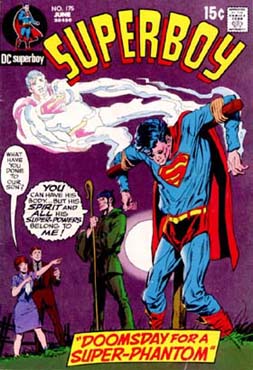
 If you’re wondering how Homo magi, something Gerry Conway came up with in 1979, fits into my Silver Age reread — well, Superboy #175 (cover by Neal Adams) came out in April, 1971, does that make it clear?
Wait, of course it doesn’t. Like the title says, this is a head-canon blog post. Head canon doesn’t make sense outside my head unless I explain it. Duuuuh.
As most of y’all probably know, Conway introduced the Homo magi (technically I suppose they’d be a subspecies, Homo sapiens magi) in Justice League of America #164 and #165 (art below by Dick Dillin, cover by Rich Buckler). Zatanna goes searching for her mother, Sindella, whom she never knew. The trail leads her, and eventually the Justice League (she’d just joined) to a lost city in Turkey, home of Homo magi.
Homo magi, as Zatanna learns, wield magic as a natural ability, like seeing color or spitting.
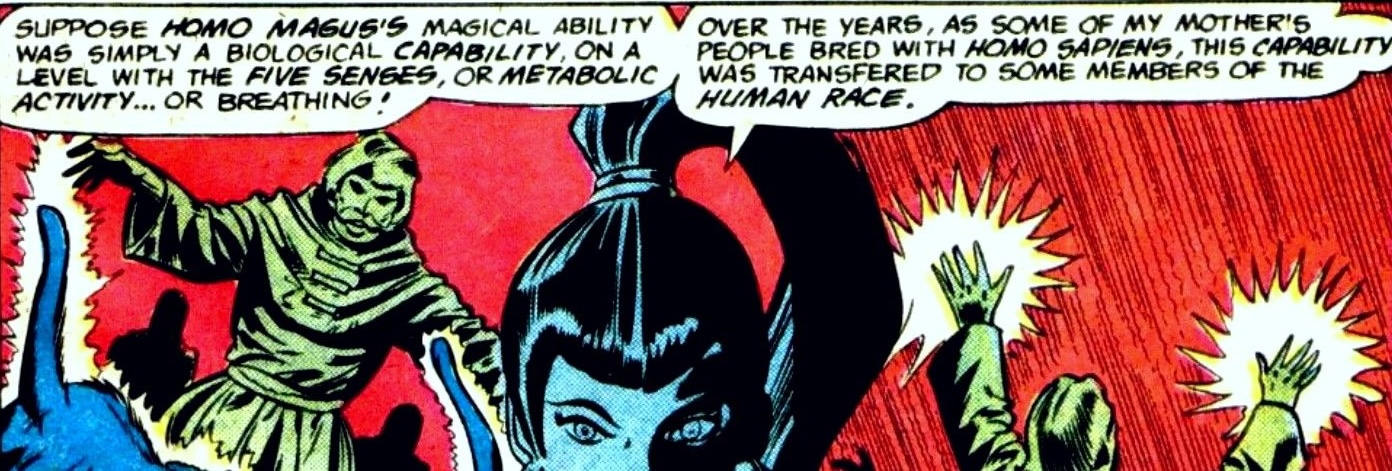
They might have ruled over their lesser cousins, Homo sapiens, except for one weakness: when opposite sex members of the two subspecies meet, they fall instantly in lust/love (this being 1979, the question of how this plays out with gay, trans or intersex individuals doesn’t come up). The mixed-race descendants lose their magi abilities within a couple of generations, forcing them to develop the forms of ritual spell-casting most DCU mages use, like Zatanna and Zatara saying it backwards.
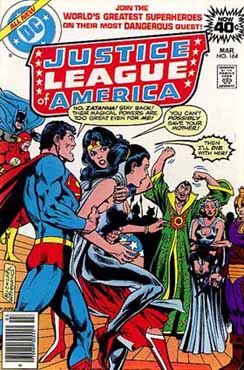
While this concept, as far as I know, has never been retconned out, I don’t think it ever caught on the way Keith Giffen’sconcept of the metagene did. Which is understandable. The metagene is an easy explanation for new superheroes (“She walked out of that chemical bath as a living mist! Her metagene must have kicked in!”); the Homo magi explanation doesn’t work as well. Mages still have to train in their form of the magic arts or find some convenient magical talisman to trigger their genes. Which is what mages do whether or not their abilities are genetic.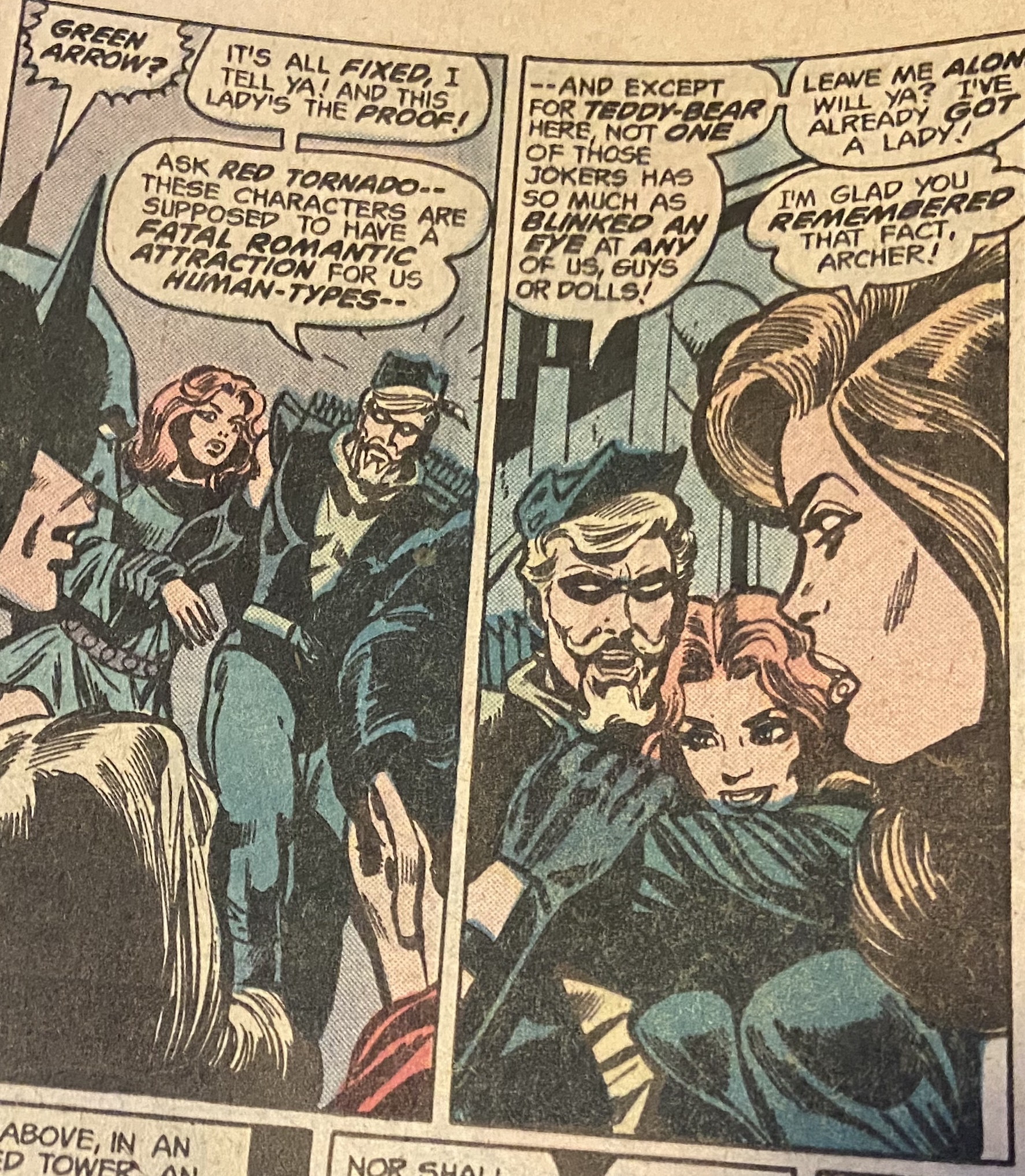
It’s also clear Conway didn’t think things completely through when he developed this concept. Magi and sapiens meeting supposedly triggers something irresistible — they meet, they hook up, end of story. As Ollie points out, none of the Homo magi react to the Leaguers’ presence except the redhead who falls for him, and he’s not feeling it at all. When he leaves, she doesn’t follow, even though she should be stalking him obsessively.
The obvious conclusion is that the irresistible hormonal urge is more myth than reality (it may be Conway intended that, even if he doesn’t spell it out). Occasionally it happens when members of the two races meet; there may have been more cases where they came together by the usual “Hey, you’re cute” means. Perhaps magi telling themselves their kids/spouses were driven by some fundamental biological drive made the mingling of the races more palatable.
How does Superboy #175 fit in? Give me a second, first we have to discuss Immortal Man.
When Immortal Man debuted in Strange Adventures #177, we learned that in his original life, he was part of an entire tribe of superhumans, as shown in this scene by Jack Sparling.
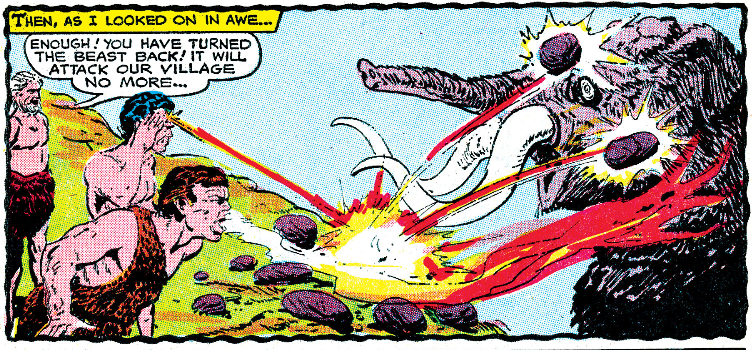
The chieftain of this Stone Age tribe refers to them as a geographically isolated race unlike any other. So plausibly (as I speculated when first writing about this issue), Homo magi although they don’t see themselves as anything but human. Indeed, the chief wishes they could help other humans with their powers, leading the future Immortal Man to use a magical amulet to reincarnate himself.
Next up in my fan canon (though it came out after that Superboy story), The Demon #7, “A Witchboy” (Jack Kirby writing and 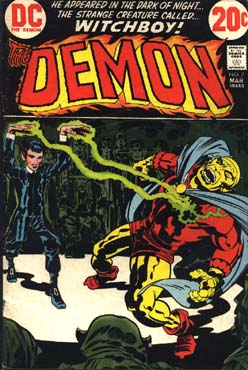 penciling). This introduced us to the one and only Klarion, who comes from the “Beyond Country” where everyone dresses like Puritans and practices magic. In my head canon, the witches of the Beyond Country are another faction of Homo magi. Rather than retreat into isolation to preserve their powers, they fled into another dimension where they could preserve their magical purity until the end of time.
And where does the Superboy story “Doomsday For a Super-Phantom” (Leo Dorfman, Bob Brown) fit in? Take a look at the Coven family.
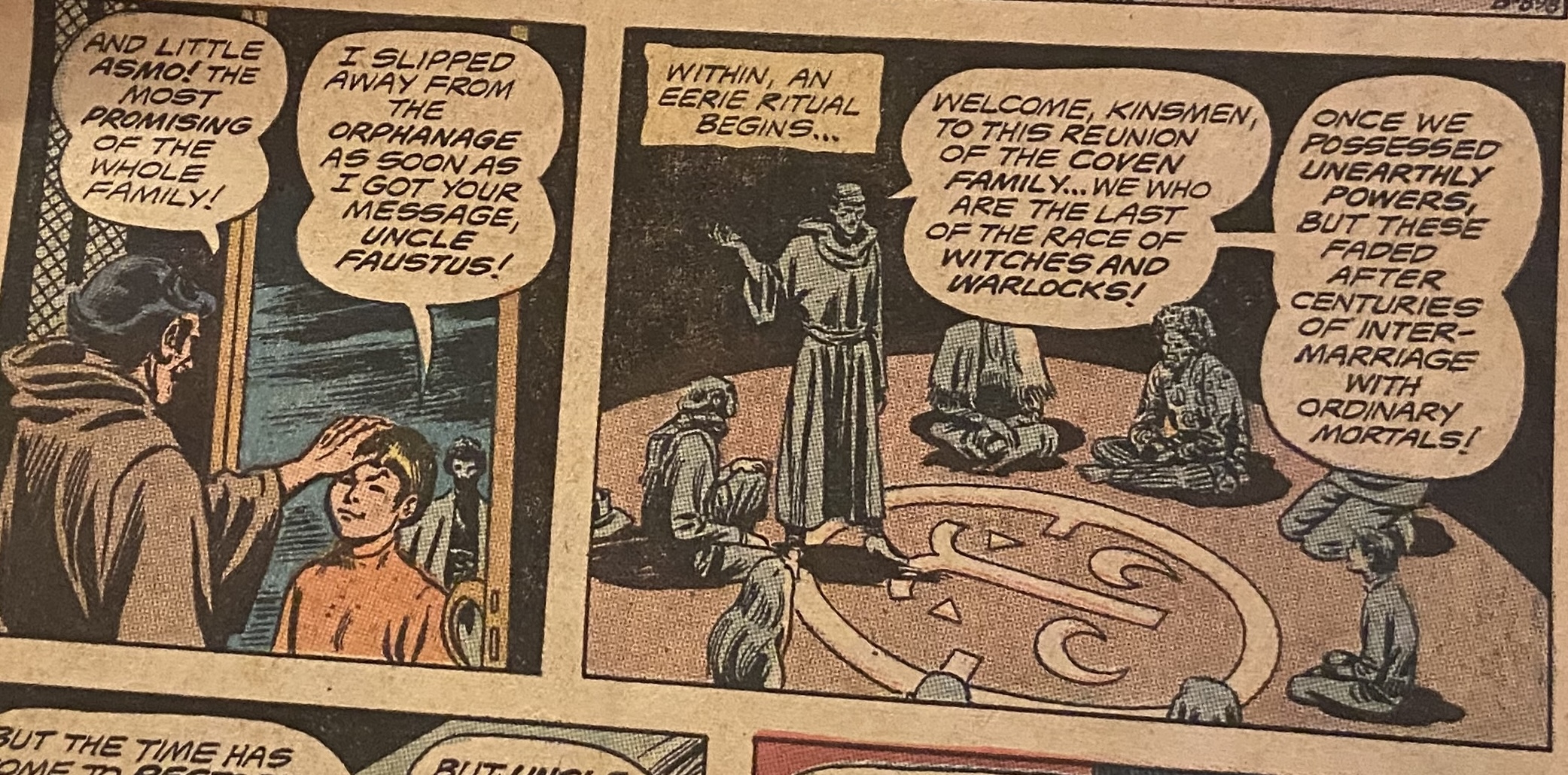
Homo magi to a T, though clearly oblivious to the existence of other practitioners. Faustus plans to use technology as a stepping stone to regaining magic power from the one person who still retains it —
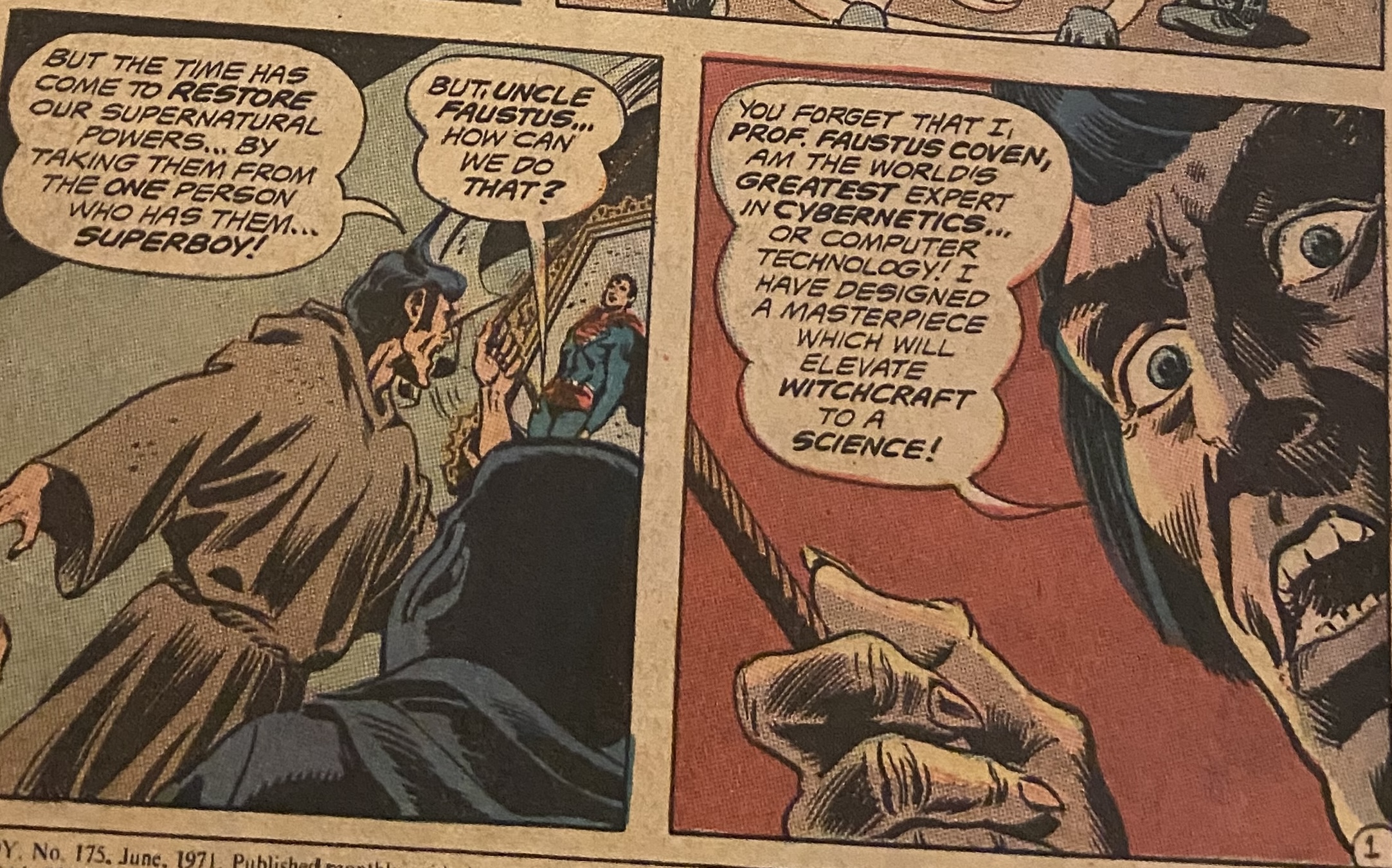
Yep, despite the common knowledge of Superboy’s origins, Faustus has convinced himself the Boy of Steel’s powers must be magic. His computer traps Superboy’s soul which, of course, doesn’t have any supernatural powers. Complications ensue before Faustus’ nephew Asmodeus switches sides. Another branch of the family would try to get revenge in #184.
Like I said, head-canon speculation. But I think it holds together well.

Works for me.
And now I want someone to run with this…