
It’s depressing and horrifying to see big news organizations roll over and submit rather than confront the necrotic toddler in the Oval Office. Bari Weiss, CBS news head, spiking a 60 Minutes piece about the brutal overseas prison the toddler wants to ship immigrants too — though of course, the Ellisons buying CBS was precisely to turn it into a Fox Lite. Reporters repeatedly both-sidesing things or media using sanewashing headlines (“Trump teases acquisition of Greenland” as if threatening to attack another country was a whimsical little joke.

It happened back in his first term, when one of Pittsburgh’s papers fired a cartoonist for being too critical of the toddler. Heck, I had the same experience with an online magazine I used to write columns for; they went from gushing and discussing ways to promote me better to “well, now that he’s elected we need to look forward, not backwards.” They took a hard right turn; I left (and they eventually folded, though my leaving wasn’t the cause). Due to software problems the affiliate links never generated any money for me, so no regrets.
 It’s easy to imagine things used to be completely different but David Halberstam’s The Powers That Be shows the media have never been as fearless towards authority as we’d like to think (and so, I’m sure, would they). It’s a doorstop to read, but it’s one fascinating doorstop.
Published in 1979, it looks at four players in the news media: Time magazine, CBS news, the Washington Post and the Los Angeles Times (Halberstam touches on the New York Times but in less depth, reportedly because he used to work for them), chronicles their growth and change over the 20th century (sometimes going back further) and the ways in which their tremendous influence became as much a burden as an opportunity.
The book starts in the 1930s when William Paley moved into the dubious new business of radio, taking over the tiny fringe operator CBS (NBC was far stronger). Paley saw potential; radio coverage of WW II confirmed he was right. Radio was going to be a big deal.
Time and its sibling publication Life were the product of visionary Henry Luce  and reflected his anti-communist politics. I remember flipping through old 1960s issues of Time at the local library and marveling that we were always, constantly on the brink of defeating North Vietnam,
The Washington Post was for years merely the local paper covering small-town Washington DC. And the LA Times existed to give its owners, the Chandlers a tool for promoting their personal economic interests, which they assumed coincided with Republicans winning elections.
As the media changed, so did politics and America. Edward R. Murrow broadcasting from London in the early days of WW II made millions of Americans more sympathetic to the Allies. Halberstam credits Luce as a major influence on America insisting that Taiwan was the rightful government of mainland China (we didn’t recognize “Red” China as legit until the Nixon administration). The Chandlers covered Republican politicians extensively but wouldn’t report any positive news about Democrats.
Politicians changed. In 1952, neither General Eisenhower nor Adlai Stevenson was comfortable with television covering their campaigns. Eisenhower learned to make effective TV appearances; Stevenson never did. Whatever chance Stevenson had evaporated.
As James Fallows notes in the post that got me to read this, none of these companies are the forces they once were. The book is still  more relevant than, say, Season Finale chronicling the battles between the UPN and WB to become the “fifth network.” It shows that in many ways, the weaknesses we’re seeing now from the media in the face of the Felon Administration are nothing new.
Yes, CBS took on Joe McCarthy but they were so nervous about it, Murrow had to spend his own money to advertise the special. The Chandlers show that biased coverage to suit a publisher’s personal agenda is nothing new. Many editors trusted White House assurances we were winning in Vietnam more than accounts from reporters who were over there.
The bigger and more profitable they got the worse it became. In the 1960s, one CBS executive apologized to a stockholders meeting for how occasionally pre-empting TV shows for news had lowered their revenue — otherwise stockholders would have seen an extra 6 cents dividend per share. Kowtowing to Wall Street became essential — don’t do anything that would lower the stock price! The need for access led news organizations to mute their criticism of the government, to avoid offending their sources.
By the time of Halberstam’s book, the vulnerabilities are apparent. Even more so now, when billionaire owners seem determined to push us back to the days of the nakedly partisan press.
I don’t think it’s game over. As the book shows, all these newspapers (and TV) changed a lot over the decades — they can change again and be better. Lots of good reporting goes on at other outlets every day, whether national coverage on ProPublica or the Carrboro NC online paper I freelance for. “That’s just the way things are” is a status quo resulting from countless decisions. Decisions and decision-makers change.
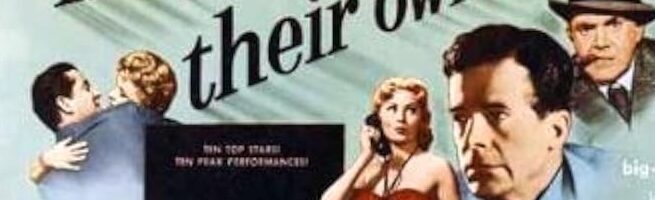
Big Town over by Gil Kane.

Hardly a new concept, as the media has always reflected the interests of those who produce it, for good or ill, Left or Right. Pulitzer and Hearst engaged in circulation wars and, by accident, more than design, published some good journalism, but more often buried under editorial content or propaganda. the fact that a writing prize is named after Joseph Pulitzer just demonstrates how self-serving the media often is. CBS caved before, with Westmoreland and Big Tobacco, as did the other networks, in the face of threats. Back in the early 90s, I read the book Through the Media Looking Glass, by Jeff Coehn and Norman Solomon, of FAIR (Fairness and Accuracy In Reporting) that explored how self-interest undermined journalism in the media, including within the so-called “liberal media,” with its very un-liberal corporate owners. Things like how the bulk of NPR’s financial news reporting came from the Wall Street Journal, hardly a great friend to Labor, or that the ABC news magazine spiked a potential piece on the nuclear industry because the producer was married to a lobbyist for the nuclear industry.
Trump and his cronies will bring about their own downfall, through their arrogance and incompetence. The question is, how much damage will occur before it happens.
I’m afraid there will be a lot of damage done before people will say enough is enough.
There are a lot of similarities with 80 years ago.
Replace ice with gestapo and non-white people with jews and see that other countries are afraid to stand up to him.
I really hope that the people in Republican Party will put a stop on it sooner than later. But being afraid to lose power…
A very pessimistic dutchman here.