
[You can find the original post here. Once again, good comments are underneath it! Enjoy!]
You know what? This project might be even more insane than I thought. But am I daunted? No I am not!
There are some interesting things popping up in this issue of The Manhattan Guardian, so needless to say (but I still must say it!), here be SPOILERS! You know they’re out there, lurking!
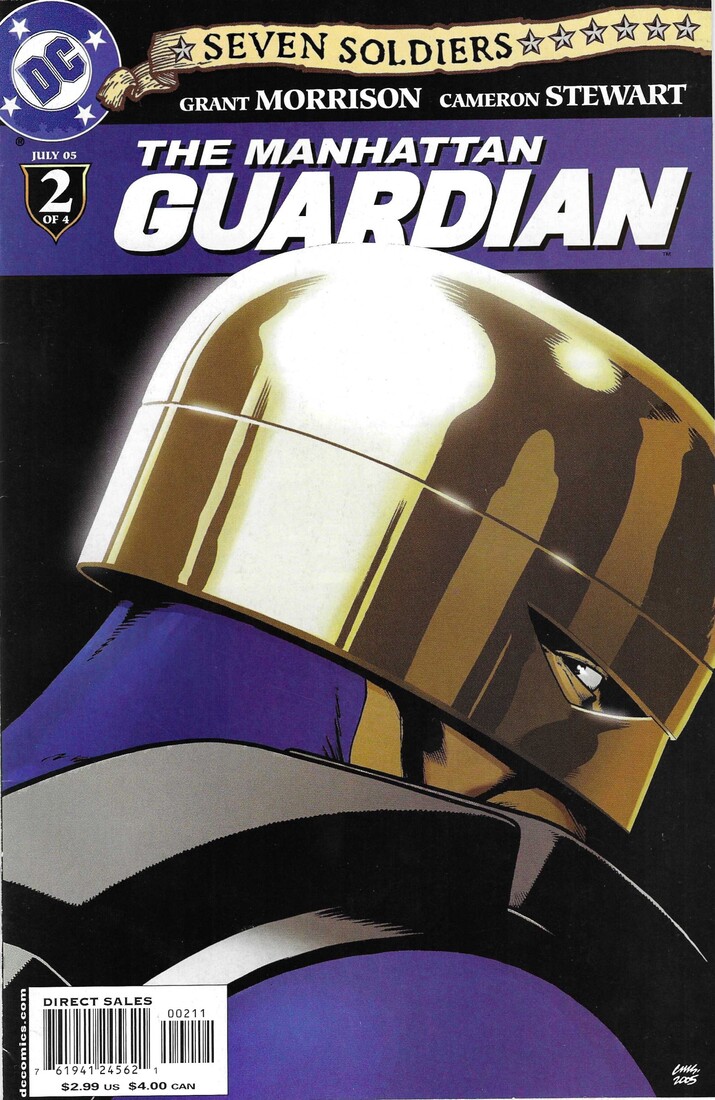
Who’s Jake looking at in this cover?????
We begin with more dramatic narration, as befits a Kirby-esque/tabloid comic. Instead of the Guilt monster, we have ”The Monster Greed!” Greed, of course, is a major theme of this issue, as both groups of pirates are trying to find … something (we’ll get to it), which leads to the ruination of all. Greed is, of course, one of the Seven Deadly Sins, and I’m wondering how they and the Cardinal Virtues fit into this saga. 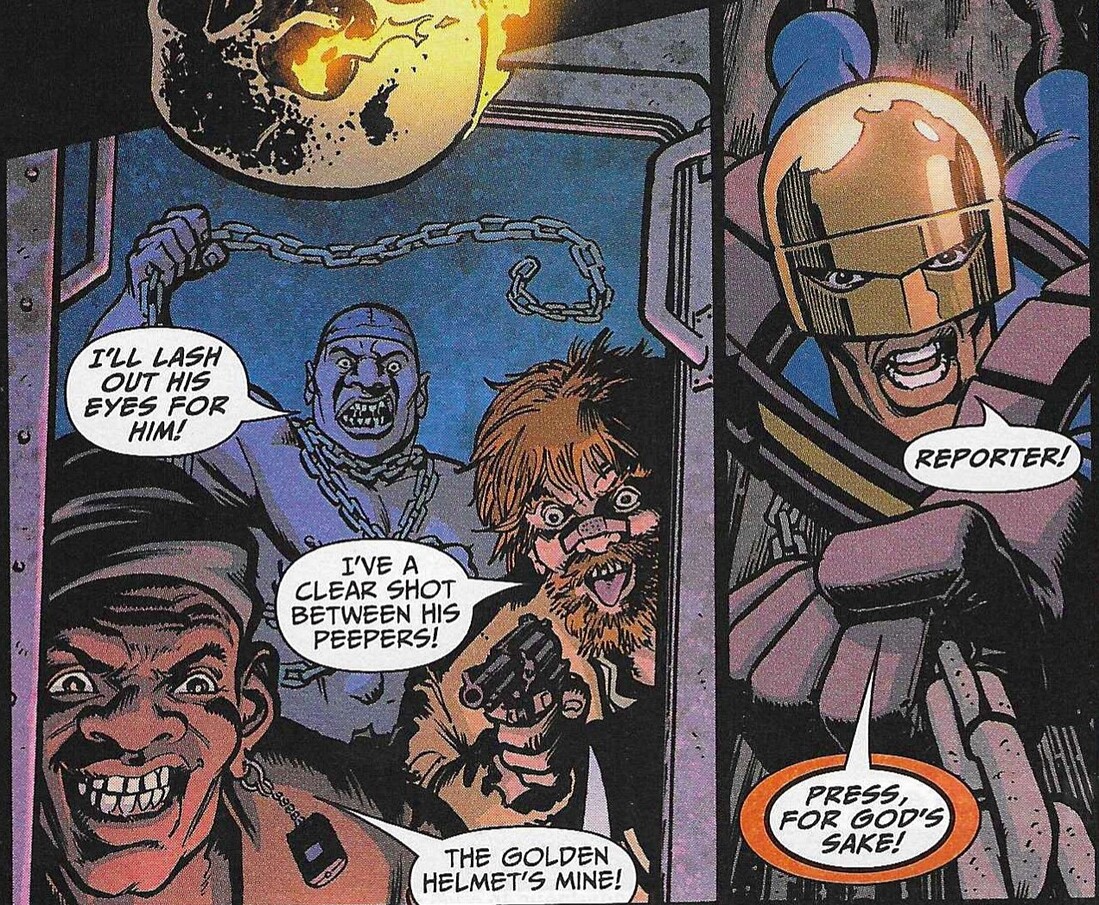 But that’s a post for another day …
Jake is trying to climb onto the subway train (as Soapy’s still-flaming skeleton falls by), but All-Beard is having none of that, and he cuts him loose. As Jake watches the train disappear into the darkness, a wall magically appears across the tracks. Where did that come from? Behind him, however, another pirate train appears. It’s No-Beard! Jake gets on board and says that the train went straight through solid rock. Well, at least it’s acknowledged that the wall is there! No-Beard explains who the pirates are: “We’s all people just like you. All the failures and the fuck-ups you don’t like to think about. The crazy, lost and homeless … Imagine if they just turned their backs on a world that’s turned its back on them?” He then sounds a horn, which opens a door in the wall and leads into New York’s secret subway system (a map of which he has, thanks to ripping it off of Soapy’s back last issue). The subway system, of course was built by “Masonic architects” in the early days of the nation. Which is neat, considering that New York was mostly farmland back in those days. But they’re Masons — they don’t care about that! Especially when you consider that the train passes through “Cenozoic Station” — is Jake going back in time as well as deeper underground? The ”origin” of the subway pirates reminds us that we are dealing with the most “serious” of the mini-series — the pirates have been discarded by society, and they have made themselves into urban legends because they have a need to belong. It’s interesting to compare the pirates with the Seven Soldiers, who, to one degree or another, have also been ignored by society — the society of superheroes, at least — and are trying to figure out how they belong. This is why Morrison remains, despite some excess, a fascinating writer — some writers would certainly come up with subway pirates, but by giving them a little depth, Morrison makes them something more than just garden-variety wackos.
The train (named the President Clinton) runs over a creature that we see only in silhouette. 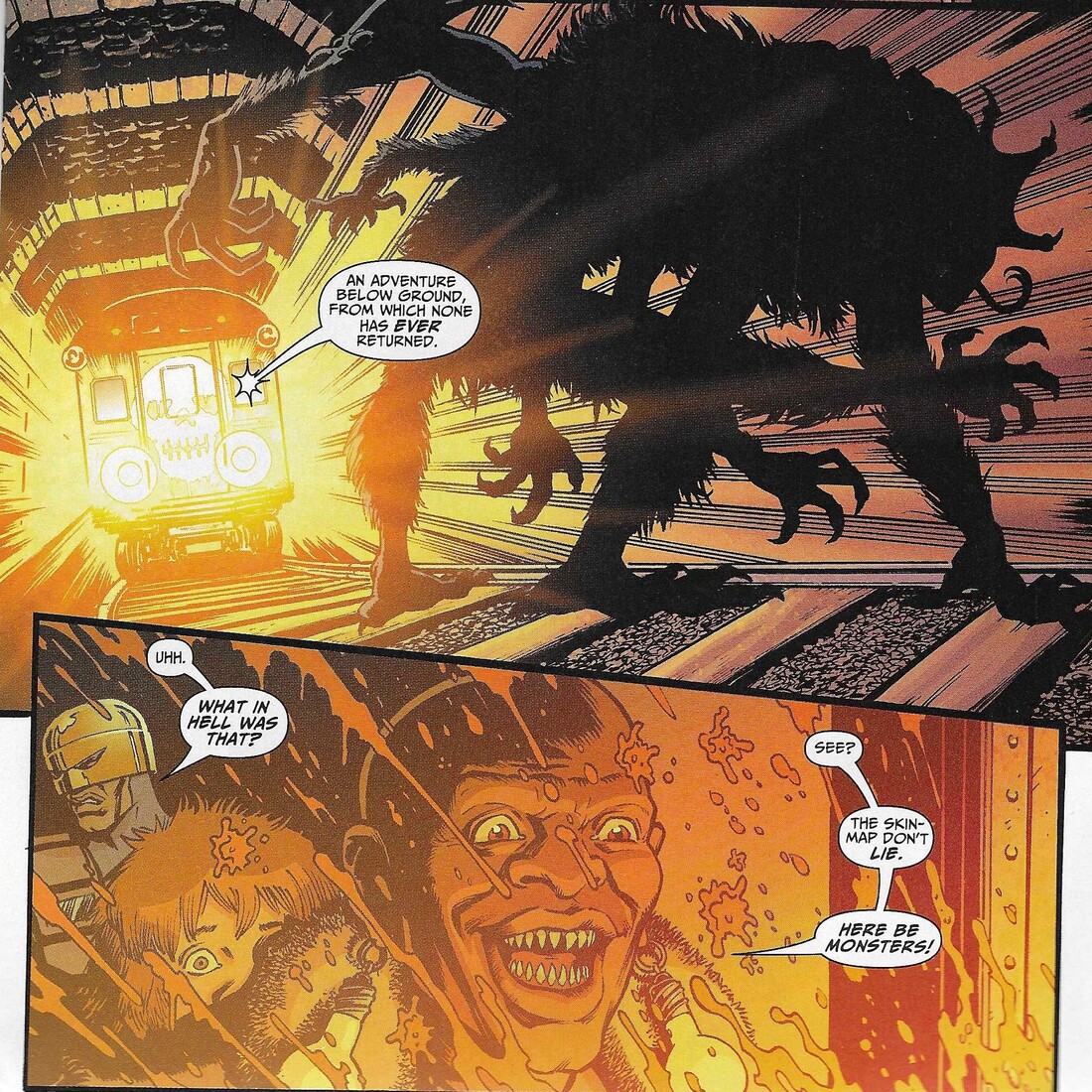 But we can certainly tell that it’s the Horigal, last seen about to eviscerate poor little Klarion. This, of course, coincides with Ezekiel speaking of tunnels and rails in the first issue of that series. It appears that Limbo Town is underneath New York, unless the Horigal has come a great distance. We will see this collision again, from a different perspective, in the second issue of Klarion.
Jake wants to know what the big deal is with All-Beard. No-Beard says that in Falsebeard’s day, “they told tales of underground markets where Puritan kiddie-snatchers from hell came to trade with talking rats. They called us junkies, bums and losers upstairs, see. But down here … we’re legendary pirate kings.” Again, we see the idea of becoming legends, which I’ll get back to. The market, of course, refers to where the inhabitants of Limbo Town trade. The talking rats are interesting — on the first page of the issue, All-Beard’s train runs over a couple of rats exhibiting greed by arguing over a piece of … let’s call it cheese and ignoring the train bearing down on them (oh, those greedy rats!), and we’ll see rats again. Can they talk, though? We’ll see … As for the kiddie-snatchers, it should warn us that perhaps Klarion should not trust Ebeneezer when he meets him. You think?
Jake asks No-Beard what he’s looking for, and the pirate tells him that he wants the Foundation Stone, the Heart of New York. It’s a six-sided stone of power that makes a man master of destiny. We have seen the imporance cubes play in this saga, from the infant universe of Qwewq to Zatanna asking her magician friends to focus on a green, six-sided sun. Cubes become more important as we go along, as we’ll see.
All-Beard, meanwhile, is making his captives walk the plank. He mentions a “god-train” and again derogatively refers to iron (”his awful iron voice I did hear in the screaming clatter of rails!”) and the calls the subway a “segmented worm-train.” Considering that we saw the Sheeda riding worms when they attacked Camelot, there’s probably a connection. 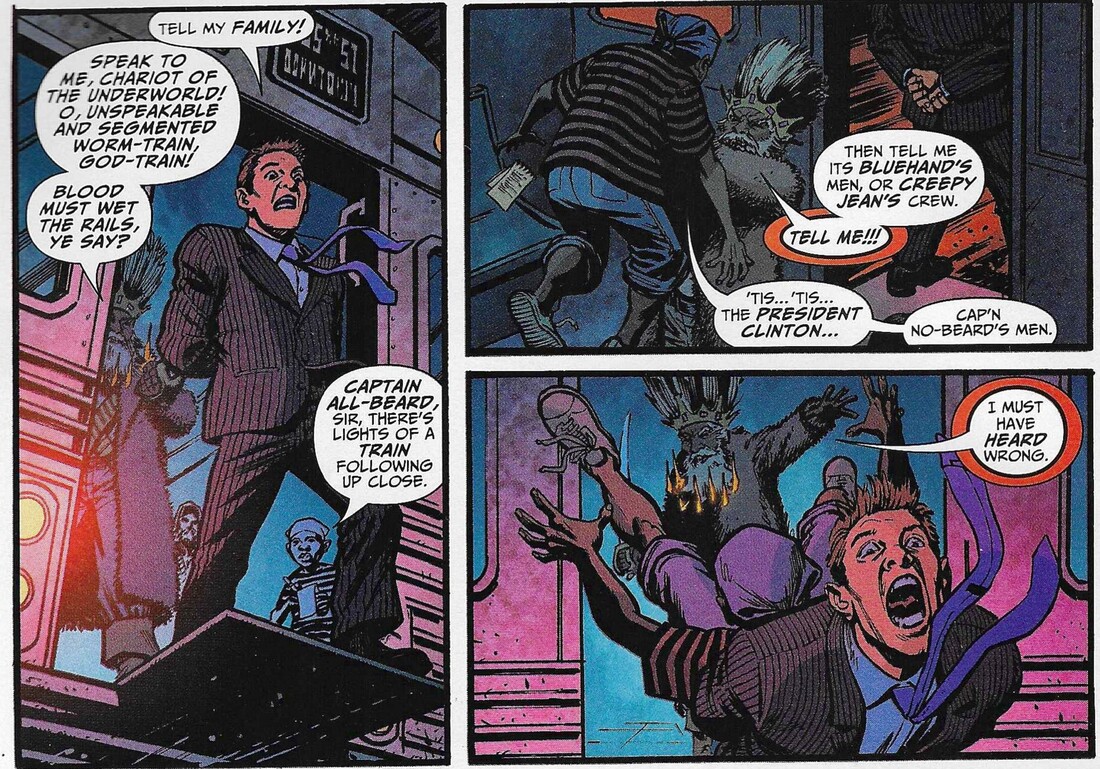 One of his captives is killed, and he asks Carla, “Who among you can write down me wondrous prophecies and visions now?” She can, apparently. The President Clinton, meanwhile, has come up behind them, and Jake leaps onto All-Beard’s train and springs into action! Carla is in the front, writing down those very same “prophecies and visions.” All-Beard says some interesting things — he’s walking barefoot on scalding tiles of radioactive pearls, which refers, probably, to his immediate future, and then he mentions a “god, in burning shackles! He lifts his awful, star-maned head and says … says …” We never get to find out what he says, because All-Beard snaps out of it and orders cannon fire, but this has to refer to Aurakles, doesn’t it? I’ll get back to Aurakles and his weird inclusion in the story later, but this is probably our first reference to him. “Star-maned” … the constellation Leo? Perhaps.
The President Clinton is hooked onto All-Beard’s train, and they’re rapidly approaching Dead Man’s Junction, so No-Beard and his crew board the other train. Suddenly the trains fly off the track and into space — the rails just end. Everyone but Jake, Carla, and some snotty white guy (and a dead woman, but she’s, well, dead) go over the side. A rat perches on the switch, and presumably switched the rails so that the trains did not curve around to safety but went over. And some people say rats are cute! Vile, evil things, they are. No-Beard, who still lives, finds his young aide, whom he calls “Hands” (because the boy scratches his back — No-Beard, remember, has hooks on the end of both wrists). 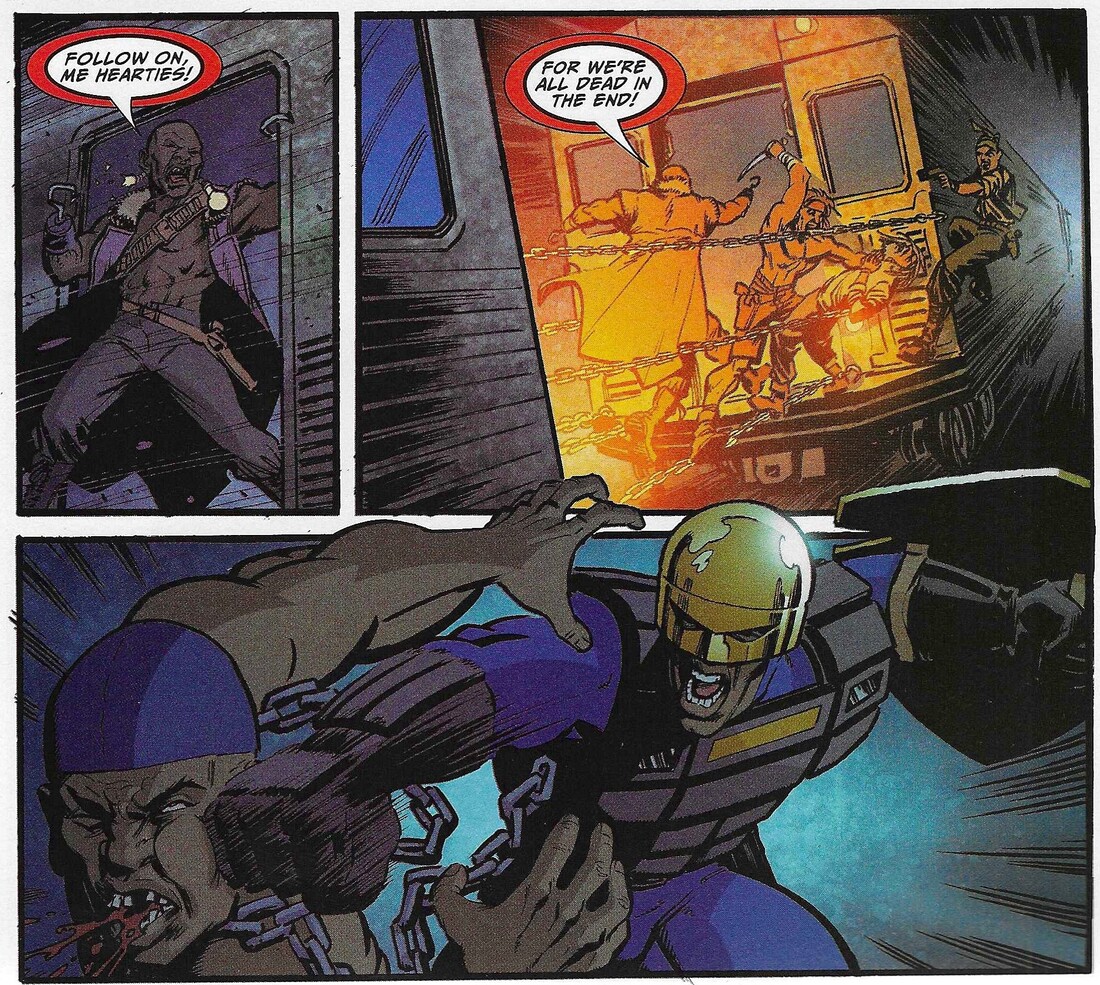 Hands tells him, with his dying breath, that All-Beard was always a better pirate. Man, that’s gotta hurt No-Beard’s ego. Am I the only person who was reminded of Israel Hands, the character from Treasure Island? It turns out Israel Hands was a real person — check out this web site about him (warning: it plays annoying sea shanty music). The two pirate captains struggle forward to find the Foundation Stone, and when All-Beard gets there, he finds out that the god in iron shackles (there’s iron again) is nowhere to be found. And what about the six-sided engine of desire? All he finds are skeletons in a glowing pit of some sort. He wades out into the pit, which No-Beard tells him is radioactive, and gets to an altar, where he finds the “hidden, eternal Heart of New York” — a die. No-Beard loves this, wades in after him, and tells him to cast it — “Evens ye die, All-Beard! And odds, ’tis I!” You have to love pirates!
Jake, Carla, and Bill Brazil, the other survivor, make it to a railroad cart, and he leaves his helmet there, in the hope that everyone understands bartering. Carla asks him if Larry is okay, and Jake avoids the question. Of course, when next we see him, he’s standing in the rain at Larry’s funeral. Then it’s back to the Guardian offices, where Ed tells him that No-Beard was actually Eamon Garcia, an “escaped lunatic” trying to establish his own private kingdom. Again, it might be only me, but this seems to echo attempts by presumably non-lunatics to establish countries, like the Republic of Minerva. Jake doesn’t want to go on, because he claims he’s a magnet for death, but the circulation is rising, and the readers love Jake. Ed points out that if not for him, Carla would have died as well as Larry, and then he makes the point that “we’re telling stories about human dignity … stories of how human beings make culture and meaning for ourselves, even down there in the garbage.” He convinces Jake to go on, even if he does invoke Jake’s guilt (there it is again) about Larry’s death. The issue ends with a nice coda to the pirates. 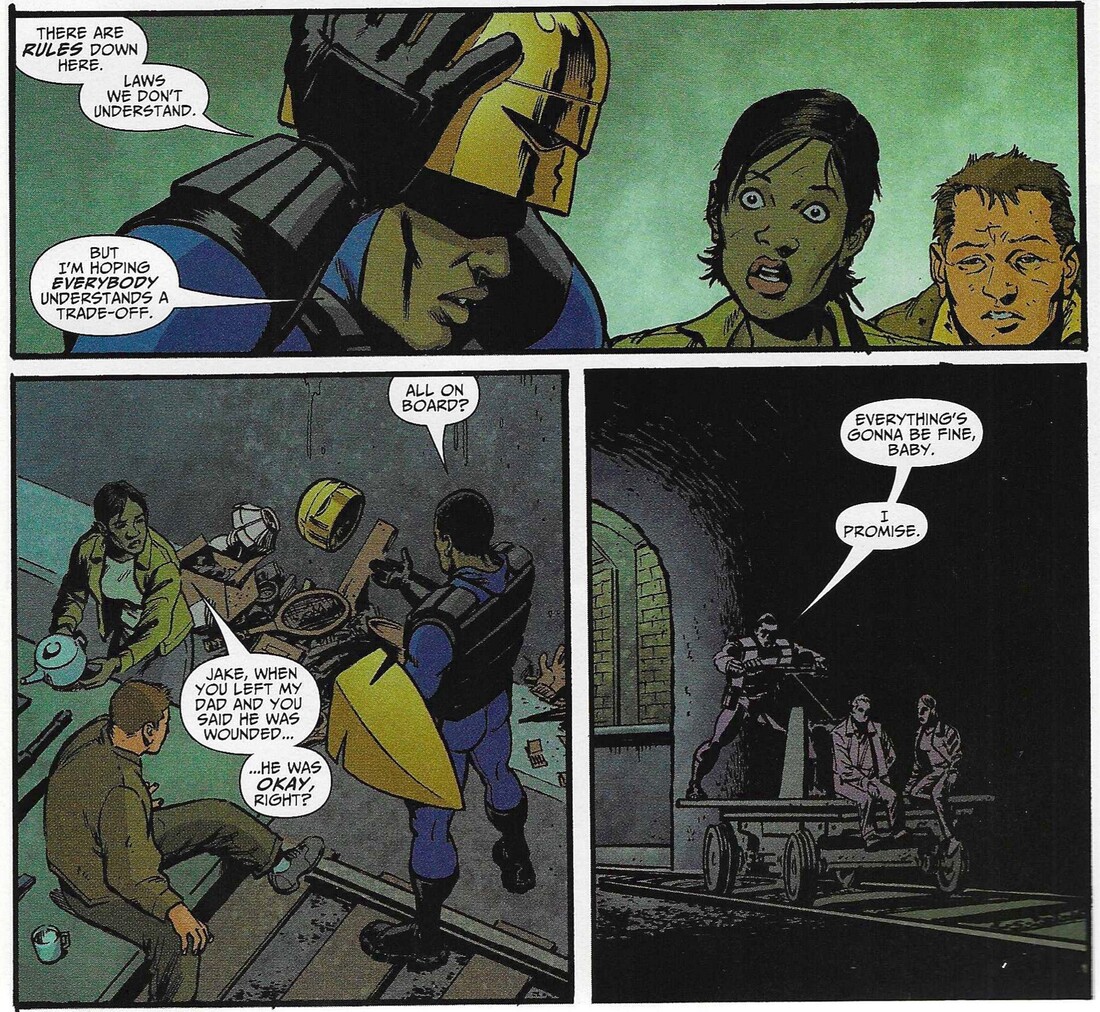 The narration speaks of stories about a mad pirate king who haunts the subways in a green (from the radiation, I guess) death-train, with a crew of radioactive skeletons. The stories tell of “grand themes: of guilt and greed, or retribution, judgment and damnation.” In the last panel, we see a disintegrating pirate captain, chains hung around his neck, at the wheel of a train, and the narration reads: “But it’s only some old homeless guy. Sick and soon to die.”
I’ve mentioned before that this is the most serious of the mini-series, and this issue does nothing to dissuade me of that. Ed is right — people make a culture and a society wherever they go, and the pirates are an interesting way for Morrison to make this point and still tell a good adventure story. These are people who are looking for some dignity, which was denied to them by the world above. Jake is also looking for a place to belong, some sense of worth after killing a kid and, now, feeling the guilt over Larry’s death. I mentioned this last time — guilt is a nasty emotion, and even though Jake could not have saved Larry any more than Justin could have saved Avalon, he feels it in his gut, and in later issues, Carla becomes a human form of the Mood 7 Mind Destroyer when she blames Jake for her father’s death. How is that any different from a weird-looking monster stalking Justin? We see again how the Sheeda, whose frontal attack in JLA: Classified failed, will come as “whispers of death, unseen …” If they can make these heroes doubt themselves before the battle has even begun, then the Sheeda win. They failed with Justin, who has been a fighter for a long time. Jake, however, is still wrestling with these feelings.
Greed, of course, also plays a major part of this story (and the saga as a whole). It’s the greed of No-Beard and All-Beard that leads to their downfall, and this idea of greed consuming all is what destroys the Sheeda in the end. But it also leads to the Sheeda getting a new king, as we’ll see. 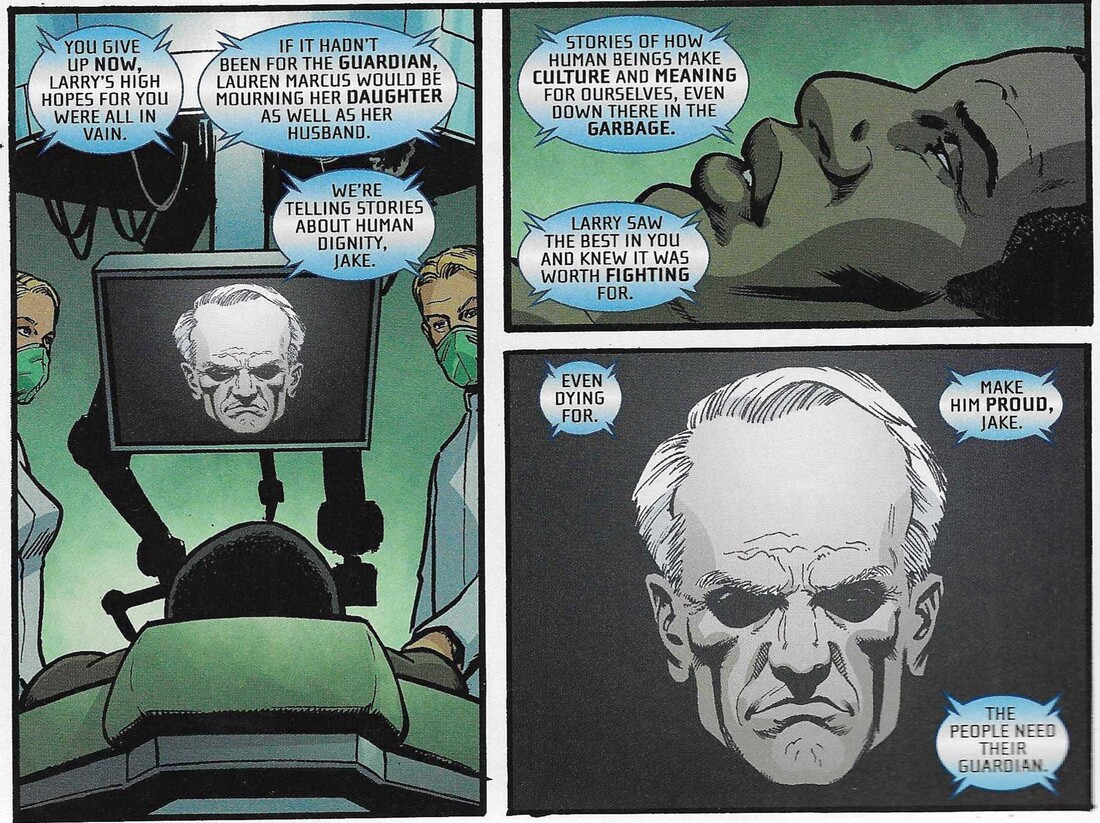 Greed also seems to be driving Ed forward, as he is talking about the circulation numbers of his newspaper. It’s this fine line between a “good” greed — Ed believes that he is doing good for society, and so the more money he makes through his paper, the better for everyone — and the greed that consumes is what is interesting. How greedy is too greedy? The Sheeda, we see, believe they have a right to survive. Are they being too greedy, or do they simply view us as we view cows and pigs, animals to be slaughtered without remorse to feed us? Gloriana Tenebrae’s greed destroys her, but Klarion’s rewards him. Who is worse?
I’m not entirely certain of the identity of the pirate king at the end. It looks like No-Beard, but as I read on, I could have sworn we see the corpse of No-Beard at the altar, which would make this a radically altered All-Beard (his hair has fallen out, which wouldn’t be a shock, considering he’s radioactive). We’ll see. The captain is also wearing chains, which could mean he’s replaced the god in shackles. Again, we’ll see. (To be fair, Cameron Stewart says we’re not supposed to know who it is.) The point is, that no matter how grand someone views their own circumstances — and the pirates see themselves as grand — someone else might view them as tragic and pathetic. The way Morrison juxtaposes those two ideas is another nice thing they do well — we want to believe that the world is like the one Jake enters, even with the danger — pirates living below the surface of the world looking for mysterious objects that contain wondrous powers — but as Morrison makes clear, even those objects of power aren’t very powerful — the die makes a man “master of destiny,” but when you cast it, everything is left to chance. The implication is that men should not look for external determinants of fate but seize fate in their own hands, which is what Jake finally does in the final two issues of the series. 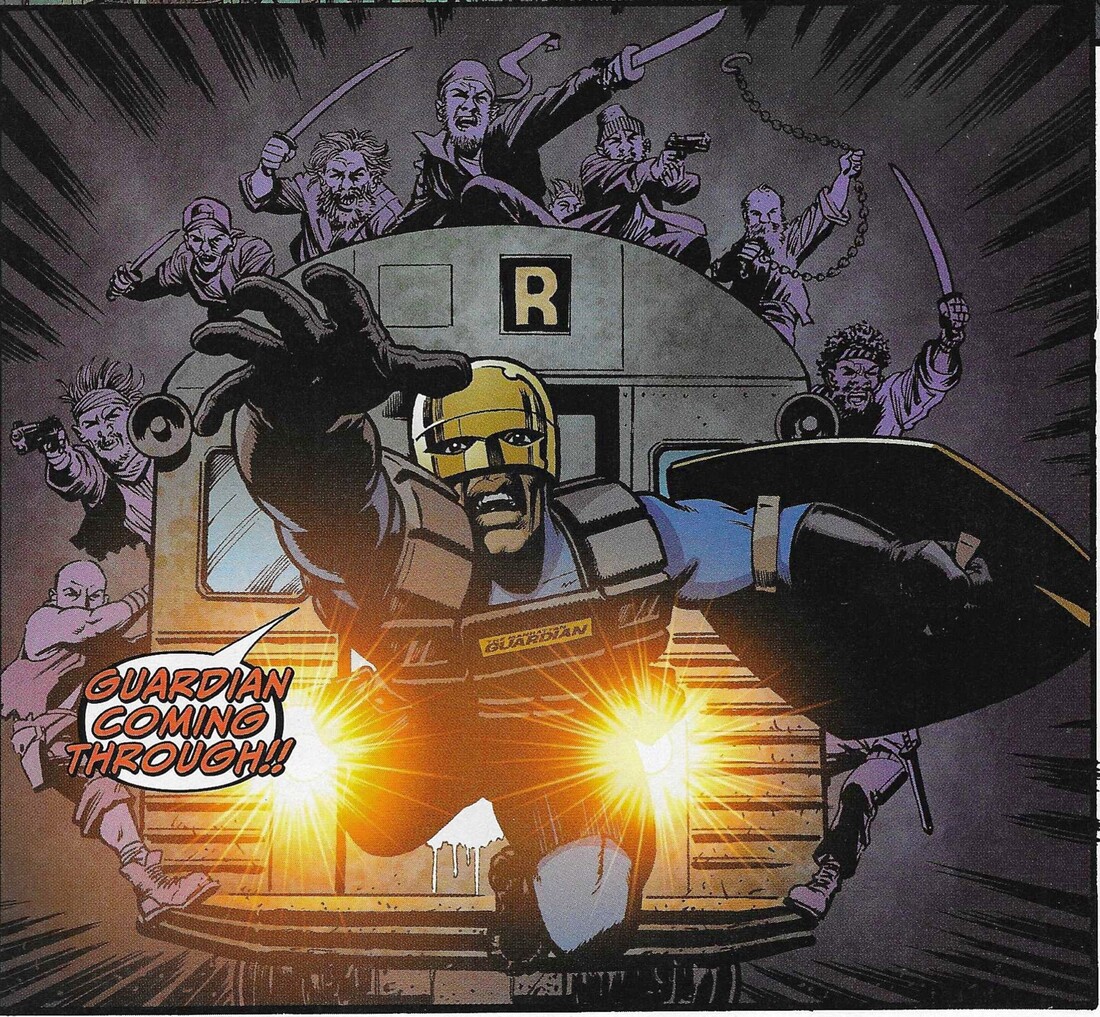 With a die, you don’t have to feel guilty about your choices — “I rolled the die, and it told me what to do!” — but you also have no free will. Think of poor Harvey Dent. The pirates, despite the weird romance of their lives, are infantile, trusting in secret power objects to rule their world. Jake comes to understand that adults don’t live like that. Justin has already learned that lesson — he felt the guilt, which is a grown-up emotion, but overcame it. Jake will too. The entire epic is about becoming a hero, and Jake does not understand yet that he has to grow up in order to be a hero. No-Beard and All-Beard never learned that lesson.
The annotations are not bad, if you want to check them out. Jog, as always, has some interesting thoughts, although I think he is expecting different things out of the issue (and he wrote the review in media res, so his thoughts are naturally going to be truncated). As usual, if you have anything to add, feel free!
We continue next time with Zatanna #2, as the Phantom Stranger goes grocery shopping. Now that’s something you don’t see every day! I also bought comics this week — I’ll get around to reviewing them soon!
