

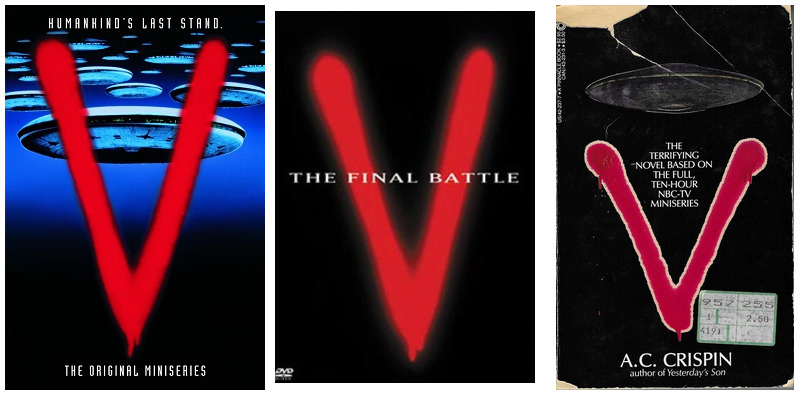
I miss television mini-series. Back in the day, you would get them fairly often, usually during sweeps months, and they were usually quite good. I don’t know if Roots was the first one, but it certainly made mini-series a viable thing, and of course we got the twin titanic Richard Chamberlain ones, Shōgun and The Thorn Birds, from 1980 and 1983, respectively (my mom had a thing for Chamberlain, so she watched both of these religiously). I remember Sam Neill in Amerika (from 1987), which I would love to re-watch but can’t find streaming anywhere, sadly, and I enjoyed Fresno, the parody soap opera series from 1986. For me, however, the best one was V, because I was a young teenager when it came out and who can’t get behind alien invaders and the humans fighting against them? I hadn’t remembered, however, that the mini-series was actually two different ones, with the first two-episode series running in May 1983 and the sequel (V: The Final Battle) running in May 1984. I had conflated them in my mind, probably because for the last 35 years or so, the only reference I had was A.C. Crispin’s novelization, which simply treats them as one big story. I’m not sure when I got the novel, but it was published in 1984 and I imagine I got it not long after that. I’ve read it a few times since, and I simply forgot that a year went by in the real world between the first series and the second. Apparently, über-creator Kenneth Johnson (Greg H. loved Johnson, but I’m not sure he ever mentioned that he created V, which seems odd) got in a snit with NBC over the direction of the series and didn’t do much work on the sequel; he’s credited with a pseudonym. I’m not entirely sure why NBC didn’t simply do the series completely from the beginning, as the second episode of the first series ends very inconclusively, so clearly they had to do a sequel. I’m not privy to the machinations of networks and creators from over 40 years ago, sorry!
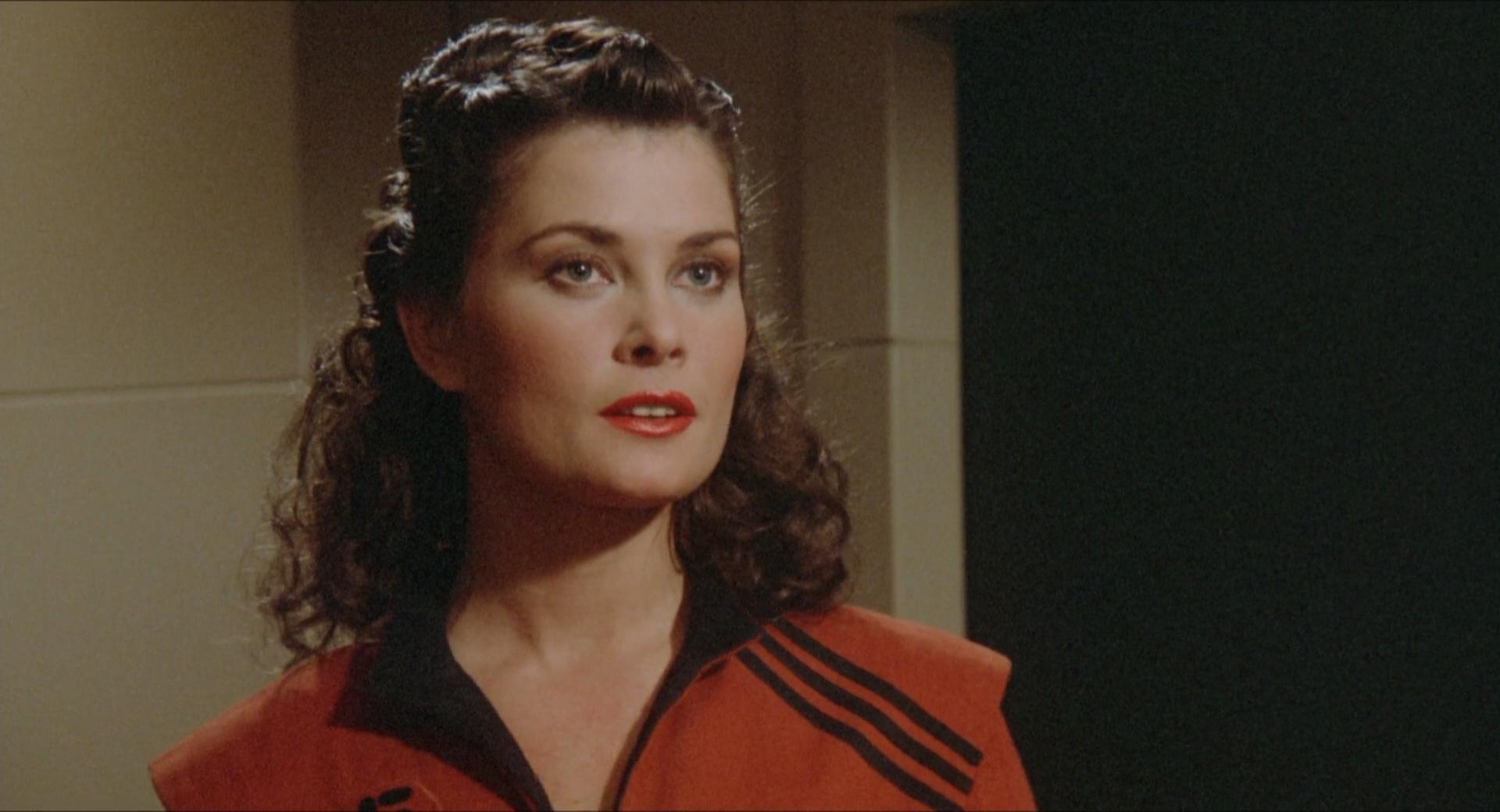
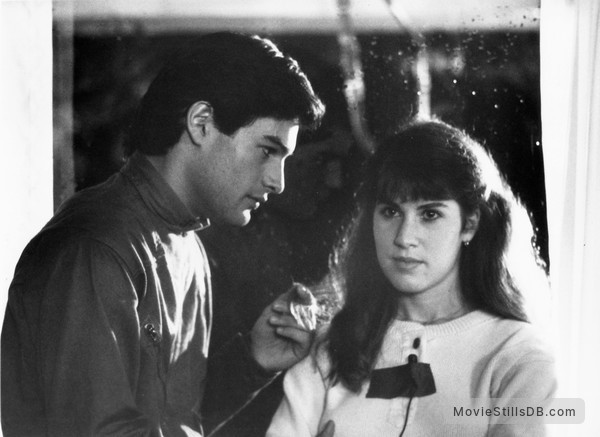
Anyway, you know what’s going on in V: aliens who look like us arrive and claim they’re going to help us, they’re actually reptile-like creatures who want to steal our water and eat us, humans fight back. It’s a classic tale, people! I loved the series back in the day, and rewatching it, it’s strange how much I remember clearly. I mean, I don’t have the greatest memory in the world, and I often marvel at people who recall conversations in movies from years before or entire minor character arcs in books that they read dozens of years ago, but when I was rewatching this, I was amazed at how many scenes I remembered very well. I remembered a lot of Daniel’s smarmy evil, I remembered how Robin got pregnant and how she gave birth and what she did to the father and how her kid ended up on the Visitor ship and what happened to the priest who took her there, I remembered Julie’s experience when she was a prisoner, I remembered Abraham’s admonishing of the younger folks because they were all giving in to the Visitors just like others gave into the Nazis, I remembered how Mike’s mother died, I remembered how Tyler killed the alien who killed Mike’s mother (see below) — I remembered a lot, in other words. I know things lodge in your brains more easily when you’re younger, but I was taken aback by how much I recognized instantly and even knew was coming. Nice that something from the olden tymes stays lodged in my brain!
The series is pretty terrific, too. The Nazi comparisons, especially in the first two episodes, which focused more on the alien infiltration and less on the never-ending fight against the aliens (perhaps that was why Johnson left the show — did he want to show more of a “life under the regime” thing while NBC execs simply wanted “blow shit up” action?), are very heavy-handed, but they work, naturally, especially because it had been less than 40 years since the end of the war and someone like Abraham (Leonardo Cimino) was still around to warn people about the dangers of fascism. Abraham and his son and daughter-in-law, Stanley and Lynn (George Morfogen and Bonnie Bartlett) watch in despair as their dissolute offspring, Daniel (David Packer), joins the “Friends of the Visitors” youth program and rises in the ranks because he’s willing to sell out his fellow humans, as he does when their neighbors, the Maxwells, are targeted because the father, Robert (Michael Durrell) is a scientist (the Nazis went after Jews, while the Visitors go after scientists). The idea of Visitors “converting” scientists using mind control techniques is a big part of the first series, but, as I noted, by the time of the second series, it’s all action, all the time, and the more subtle infiltration of the first series is gone (I mean, it’s not subtle, but it’s more subtle compared to the second series). Stanley and Lynn show up very briefly in the sequel, in a tiny cameo, where Lynn is played by a different actress, so clearly NBC wanted to go in a different direction. It’s fine — when you have alien Nazis trying to take over, eventually you’re going to have to fight! — but the second series is a bit less complicated than the first. In the first series, Mike’s former lover, Kristine Walsh (Jenny Sullivan) becomes the spokesperson for the Visitors (she’s a newscaster, he’s a cameraman), and Sullivan does a decent job showing how Kristine slowly sells her soul, and she can’t bring herself to believe the Visitors are reptilian man-eaters. She gets a noble death, but it’s too bad that they didn’t continue with her as the propagandist for the aliens, because it was pretty interesting. The entire mini-series rocks, but the first two episodes are a bit better, simply because they show how easily people fall under the sway of a fascist regime. By the second series, all the humans are either fighting for the rebels or irredeemably evil and get their just desserts. There’s no time for nuance anymore!
The funny thing is, what was kind of almost laughable back in 1983-1984 is all too depressingly normal now. Sure, today we would still be suspicious of aliens if they showed up, but as they’re an allegory, the idea that fascists could just move in and take over doesn’t seem too far-fetched these days. Abraham cautions people against forgetting their history, but today, we willfully and almost gleefully forget history. The show pushes an anti-intellectual view (Daniel sneers about smart people at one point), which seemed crazy back then but is SOP for the Republican party these days (something that began around the time the show aired, as Reagan was also fairly anti-intellectual, but at least for a long time, there was pushback against that). The show doesn’t push the “capitalists are evil” angle as much as it surely would were it made today, but Mike’s mother, for instance, is clearly getting rich(er) off the Visitors’ regime, and she does tell Mike at one point that he needs to jump on the gravy train. The idea that the media is lying to us and that people can’t believe what they see with their own eyes has always been around, but it’s become more prevalent in the Bloated Orange Era, as no matter what happens, the Demented Dictator lies about it, and his followers have to know he’s lying about it, but they simply don’t care. When the Visitors are exposed as lizards on live television, viewers back in the day must have been shocked that didn’t end their regime. These days, we’d instantly wonder what AI program those pinko rebels used to pull it off.
The cast is large and decent, although only a few stand out. Marc Singer tends to be fairly wooden, and he is here, although he does get to be manly a lot, so that’s nice for him. Faye Grant is better, but still not great, although she does get to do a bit more than Singer, so maybe that’s why she makes a bit more of an impact (Grant is also the reason why we know Stephen Collins is a monster, so good for her!). Jane Badler is terrific as Diana, the evil Visitor science officer who eventually kills her way to the top of the command structure just to discover everything has fallen apart. Badler had done some soap opera work before this, but V was clearly a break-out role for her … which didn’t really turn into anything. She worked steadily after it, but never became a star, and she moved to Australia and, in her 50s, started singing in nightclubs and recording albums. Still, Badler is great in V: she’s pure evil, and unlike so many recent villains, we don’t need any backstory for her — she just likes being evil, fucks her way to the top, and kills humans and her fellow lizards (including Superman‘s Sarah Douglas) with reckless abandon. She’s great. Blair Tefkin, another actor who never really did anything other than this, has a good arc as Robin, who gives birth to two human-alien hybrids. Tefkin begins as just a boy-crazy teenager, then she goes through a horror phase as she realizes she’s carrying a lizard’s baby, then she transitions into pure evil when she’s confronted with the father of her children. Tefkin isn’t the greatest actor, but she does a decent job with the role. Robert Englund does a pretty good job as the innocent Visitor who tries to help the humans and can’t understand why so many of them hate him, while Andrew Prine is also quite evil as the coolly rational Visitor opposed to Badler’s more emotional one (yes, yes — the man is rational and the woman is emotional; the show doesn’t quite get past that stereotype!). Michael Ironside shows up in the second series as the tough soldier who wants to whip the ragtag band of L.A. rebels into shape, and Ironside is always fun to see. While the actors might not be great, they do a pretty good job. Meanwhile, the special effects do hold up pretty well, even though they’re clearly fairly primitive. They use a lot of matte paintings and such, but it works, and some moments, even with the somewhat wonky effects, do hit hard. When Mike first sees the Matrix-like pods holding the thousands of humans that the Visitors are going to eat, it’s easy to see that it’s a painting, but it still has a big effect. The birth of Robin’s twins works, too — we get a normal-looking baby that suddenly hisses and flicks out a long tongue, which looks a bit goofy but is still effective, and while the second kid is a puppet (because it’s all lizard, so they couldn’t use an actual baby even a little bit), seeing it rising from her belly is still pretty creepy. They did what they could with the technology available (Diana’s unhinged jaw verges on goofy, but then you recall what they were working with), and they did it pretty well.
The book is pretty good, too. Crispin hadn’t been writing long when she got the gig, and I don’t know why she was chosen, but she does a pretty good job with it, and she made a career out of novelizations, it seems. The book gets more in-depth with the characters, which isn’t surprising — Crispin can give us a few paragraphs delving into their innermost thoughts, which the show doesn’t have time or the means to do (not a lot of voice-overs in the show, nor was introspection the thing back in 1980s television, although there’s a tiny bit of it). Crispin also tells us a bit about what happened to some “cast members” who didn’t show up for the sequel — William Russ is a rebel in the original series but not in the second, and he’s never mentioned, but Crispin lets us know his character was killed, for instance. We get a bit more of Mike’s relationship with Kristine in the book, and Mike’s best friend, Tony (played by Evan Kim in the show), is a bit more prominent in the book. Books have always been able to get away with a bit more than television, so there’s some cursing in the book (just “shit,” as far as I can remember, and I think someone calls Diana a “bitch,” but it’s still more than the show!), and the sex scenes are a bit longer. This helps make the book better in two instances — when Maggie (Denise Galik) has to seduce Daniel to get information about him, the scenes where they have sex are decidedly creepier in the book than the show (which only shows them relaxing in bed together), and when Robin has sex with the Visitor Brian, the show does a nice job showing that he’s really thinking about banging Diana, but the book makes it very clear it’s rape, something the show avoids like the plague. I’m not sure why the show didn’t make it clearer that Robin was raped, but perhaps Crispin — who wrote the book based on the script, of course, so afterwards — thought that the menfolk were pretty dumb about making it consensual, so she took it upon herself to change that. Who knows? The book also gives the characters a bit of a denouement for the characters — in the show, Elizabeth saves the day, and Mike says to Martin, a Visitor ally, “Let’s go home,” and that’s it. In the book, Mike and Julie get to discuss some things, which is nice. In the book, Elizabeth’s actions are more super-intelligent rather than supernatural, and Crispin lets us know what happened to Sean, Mike’s son — in the show, the last time we see him, he’s selling out the rebels to his grandmother, but in the book, we find out he gets out from her grasp before the rebels show up and kill everyone. Crispin has the space to expand on some things in the show, and that’s never a bad thing. It’s a quick, beach-type read, but that doesn’t mean it’s not entertaining.
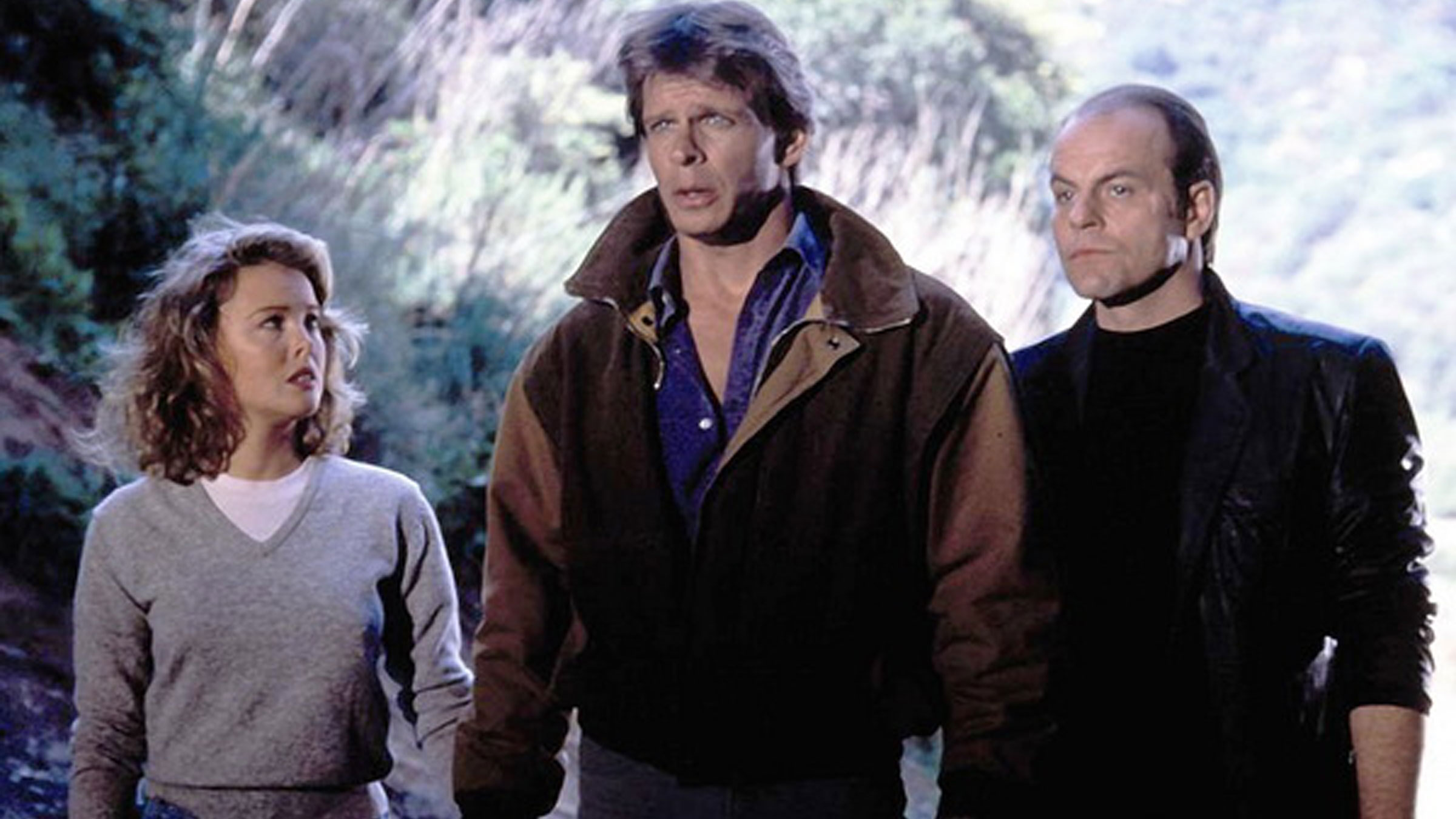
I know I watched some of the ongoing series that came after this (it only lasted a season), but I don’t remember it as well. I know I watched the 2009-2011 revival, with Morena Baccarin perfectly cast in the “Diana” role, but it wasn’t quite as memorable as this one, probably because I wasn’t 12 when I watched it. The original is streaming, so you can check it out and marvel at the glorious Eighties hair and clothing (so much feathering, so much hairspray, so many prairie shirts!), the wonderful gigantic gas-guzzling cars, and the marvelous pew-pew lasers! Give it a look today!
