
In Sandy Hook: An American Tragedy and the Battle for Truth, Elizabeth Williamson looks back at how Alex Jones kicked off the modern age of conspiracy. Following the 2012 elementary school shooting, Jones’ Infowars became notorious for his claims the shooting was a false flag. Maybe those kids didn’t die; maybe they didn’t even exist! Sure, Jones didn’t have any solid evidence but come on, something about the whole event just felt wrong.
This was deranged, based-on-nothing bullshit but we live in an era when “connect the dots!” is old-fashioned political paranoia; in the 21st century, it’s normal to connect dots that don’t even exist. Through the power of the Internet and social media, Jones’ crackpot lies spread wildly, foreshadowing Pizzagate, QAnon, anti-vax paranoia and “stop the steal!”
Williamson’s book is excellent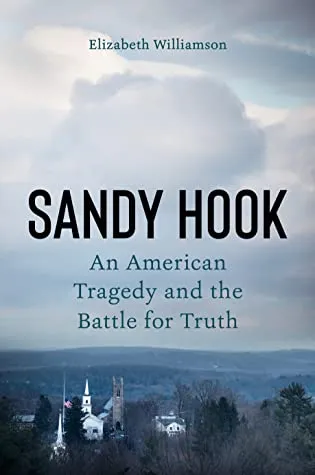 , showing the growth of the False Flag legend, the impact on the grieving families and their efforts to push back, including multiple lawsuits against Jones. The book also look at the diverse reasons people believe or spread this stuff. Jones is a narcissist and a grifter who used to sell lots of InforWars swag. Lonely people found companionship online in discussing Sandy Hook and coming up with new batshit theories. 9/11 truthers happily hopped to a new conspiracy. Some people were smugly convinced that seeing through the (non-existent lies) proved their own intellect; sociopaths got a kick out of tormenting the families.
While one of the grieving parents has successfully talked some of the conspiracists off their ledge, the book is a depressing reminder how difficult it is to crush these ideas once they grow. I take some small satisfaction that Jones lost control of his website to The Onion during bankruptcy proceedings,
Empire of Pain: The Secret History of the Sackler Dynasty by Patrick Radden Keefe shows how the family, infamous now for their role in the opioid epidemic, first got involved in big pharma decades ago. Patriarch Dr. Arthur Sackler made the dynasty wealthy by marketing drugs with mainstream advertising techniques and high-pressure tactics targeting doctors. Don’t worry, nothing unethical in this — no amount of salesmanship can convince a doctor to prescribe a particular drug (this was a lie). Sackler saw no conflict between marketing drugs and running a supposedly objective medical newspaper that promoted the same pharmaceuticals; he was into advertorials before advertorials were cool. He turned tranquilizers, something psychiatrists used to calm the mentally disturbed, into something average Americans used routinely — wasn’t life less stressful and more pleasurable with regular doses of Valium.
Later in the century, the Sacklers adopted similar approaches to promoting Oxycontin as an opiate for everyday pain. No risk of addiction, ever! If people suffer withdrawal, it’s really their underlying pain overcoming the opiates — what they need is more Oxycontin! Even after the Sacklers learned this was bullshit they kept parroting the lie, and turned a blind eye to doctors writing far more prescriptions than a legitimate practice would need. Okay, not exactly a blind eye — they sent salespeople around to prescription mills to pitch the doctors on their product. If worried FDA officials learned to look away, they could anticipate great post-government jobs with Pardue.
Robert Louis Stevenson once observed that sex and commerce are both legitimate activities, but they’re arenas that can bring out the worst in us — “cruelty, cowardice and selfishness.” That isn’t news to me but I still found it horrifying how cruel, cowardly and selfish the Sackler’s were. Partly, I think, it’s the sheer, mind-boggling scope — they put thousands of innocent people through hell while insisting they were the real victims. Part of it is definitely their greed: at one point, when the family members learned their annual draw from the company — $700 million apiece — was not sustainable, they demanded their staff boost sales (tell doctors their patients need higher doses!). And their complete inability to even fake contrition or acknowledge their company’s drug had problems. Either way, they make Elizabeth Holmes of Theranos look like a choir girl.
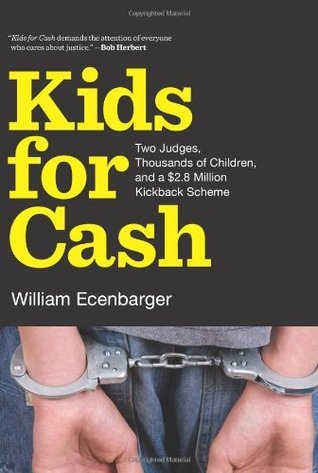 Kids for Cash: Two Judges, Thousands of Children and a $2.6 million Kickback Scheme by William Ecenbarger induced a similar rage in me. Ecenbarger shows how Michael Conahan, top judge in one Pennsylvania county, joined forces with Mark Ciaravella, the county’s only juvenile-court justice, to shut down the county’s juvenile-detention facility. Probably a good idea — the building really was decrepit — except they then used their influence to contract with a for-profit company offering the same services. In return, the company offered them a “finder’s fee.” It was a large fee but no problem: Ciaravella saw to it any kid who came before him would spend time there. Sometimes as punishment, sometimes to hold them before sentencing, sometimes a few days so the facility psychiatrist could make an evaluation. Normally that’s an outpatient thing but that wouldn’t help the facility turn ap rofit.
While Ciaravella put away some teenage hoodlums, mostly his victims were kids being kids. Throwing lunch meat in the school dining room. Flipping the bird at a passing cop car. Mouthing off to a teacher or arguing with a parent. Ciaravella had them shackled, then locked up. For many of them and their families it was devastating and humiliating.
To be fair, this wasn’t all about Ciaravella’s greed — he was a shitty, hardcase judge who thought nothing of sentencing kids to months in detention, even in facilities he wasn’t affiliated with. In so doing he routinely violated their rights. Probation officers lied to kids that if they’d waive their rights to an attorney, it was guaranteed the judge would go easy on them. Even if they insisted on a public defender, Ciaravella would ignore the attorney, talk over them or make a point of trading small talk with the prosecutor
Equally horrible, the system went along. This was Pennsylvania coal country, long a corrupt political machine, first run by the coal companies, then by the mob. Ecenbarger says everything was pay-to-play; a teaching gig cost $5,000, payable to the school board. Almost everyone in the courts and schools collaborated with Ciaravella and Conahan. Schools got rid of troublemakers. Prosecutors notched up a higher success record. Staff stayed silent to protect their jobs. The state’s judicial review board heard complaints and did nothing. If not for the handful of opponents — activists, state auditors, reporters — who helped bring the judges down, I’d despair (Ciaravella is still in jail, President Biden eventually commuted Conahan’s sentence). Those who fought the good fight were a light in the heart of darkness, and this was a shitty darkness indeed.
