
“I look at this lifeline stretched way all across my hand, I look at the burned out empty like a plague across the land”
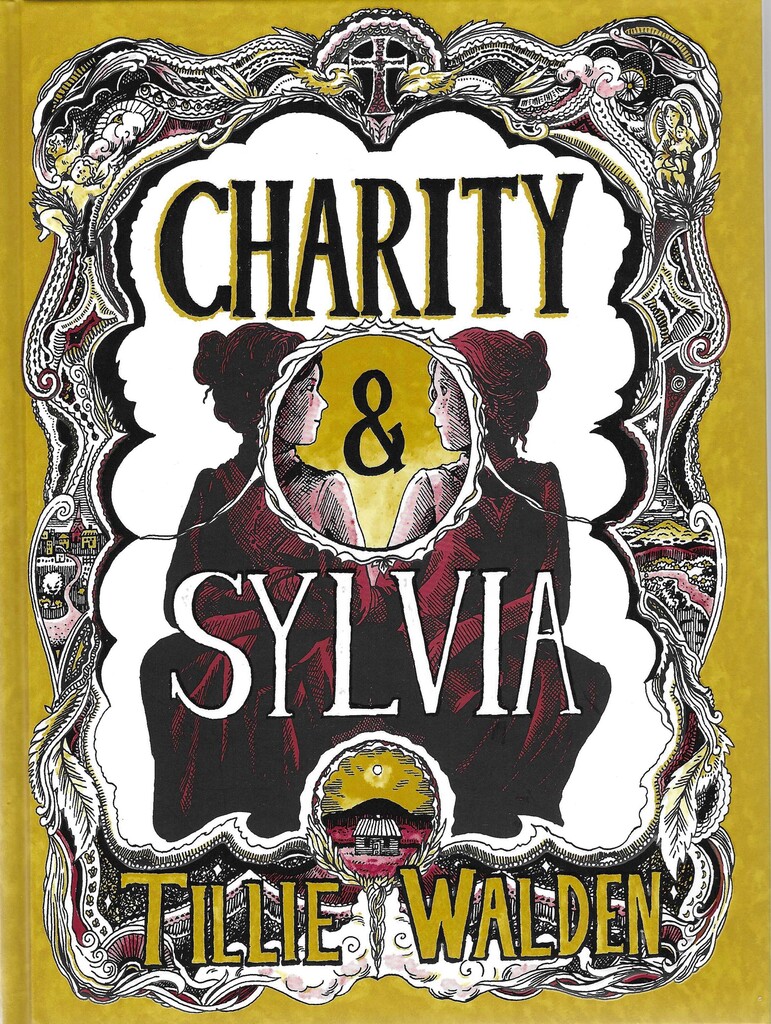
Now that Tillie Walden has gotten her zombie urge out of her system (and I don’t begrudge her at all, because I’m sure Kirkman pays well), let’s hope she can get back to things like Charity & Sylvia, her book about two lesbians living in Vermont in the first half of the 19th century. 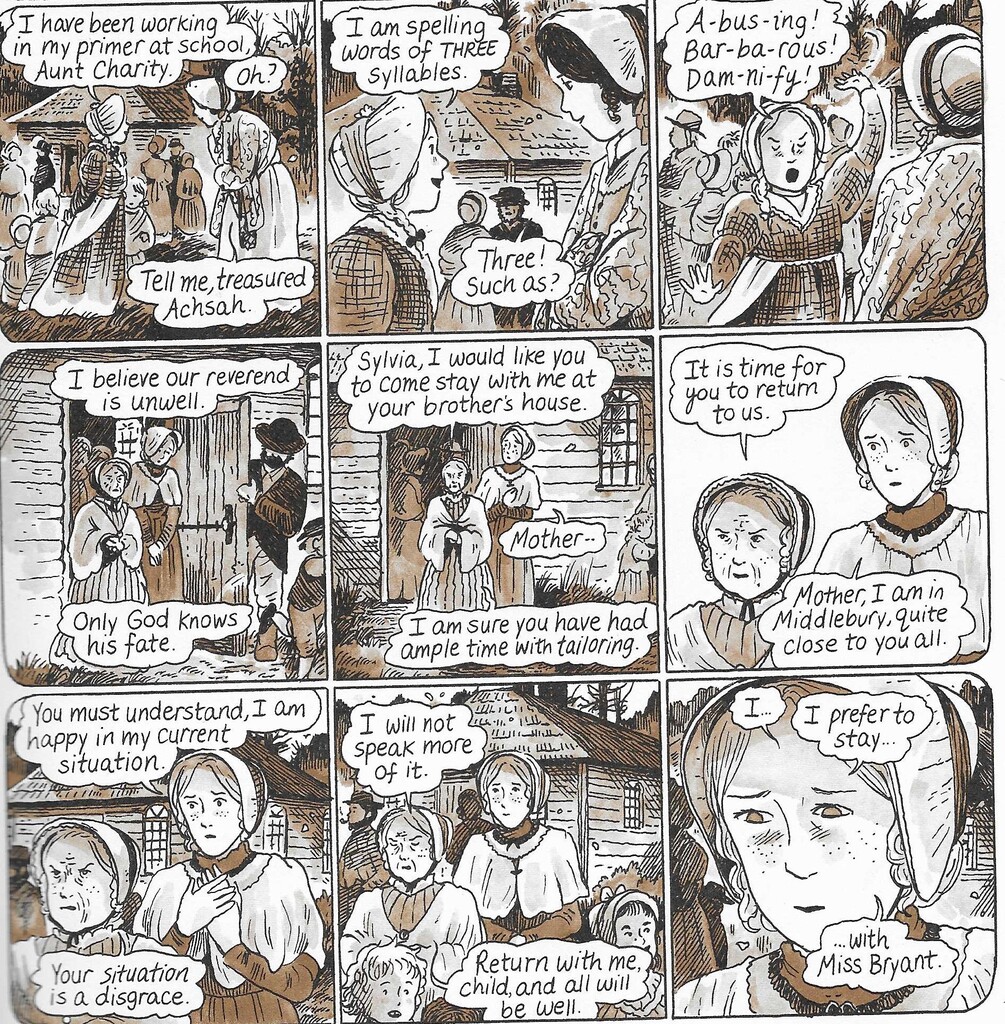 It’s from Drawn & Quarterly, costs $30, and comes in at 258 pages. Will it sell as well as zombie stuff? Probably not, but maybe it should!
Walden tells us the story of Charity Bryant and Sylvia Drake, who lived together in a small town in Vermont from 1807 until Charity’s death in 1851 (Sylvia lived for another 16 years). Charity is invited to Weybridge, Vermont (which remains a tiny town on the outskirts of Middlebury today), by Sylvia’s sister, whom she had met in Massachusetts, and when she arrives, Charity stays and sets up a tailoring business. She and Sylvia becomes friends, but it’s clear they dig each other a bit more than that, and eventually they move in together — ostensibly to save money and because Sylvia becomes Charity’s assistant in the business, but Walden makes it clear they’re not really fooling anyone. What follows is a biography of their lives together. That’s kind of it.
This might not sound like your cup of tea, and that’s fine, but Walden is a very good storyteller, and the story is quite gripping even if it doesn’t deal with momentous events or dire circumstances. Things happen, of course, as they do in any life — Sylvia and Charity build a life with each other, growing their business, meeting new friends, and hanging out with their families. Walden doesn’t sensationalize or melodramatize anything — many people die in the book, because that’s just life in the 19th century, and there’s a sense of melancholy over the proceedings, but it’s not a sad book at all. 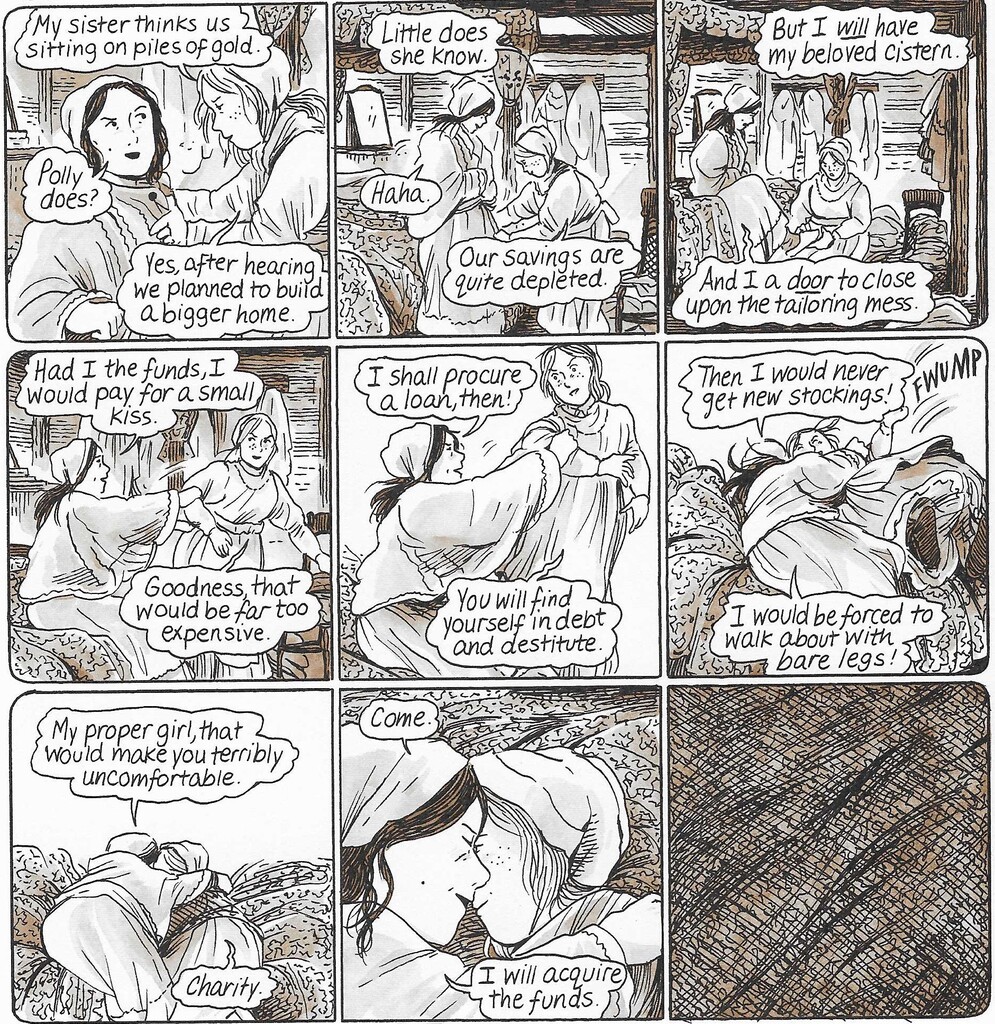 People die, everyone weeps, and, unfortunately, they have to get back to life, because living is hard. The death of Sylvia’s niece, whom they both loved and who died in her early 20s, hits them the hardest, and Walden gives us a tremendous moment late in the book when it comes back around and affects Sylvia greatly, but many other people die, too, and our heroes have to keep moving on. Walden does a marvelous job showing us how death affects these people and also how they can’t let it affect them too much. It’s a delicate balance, but she pulls it off. And it’s not a sad book, as I noted — despite people dying, Charity and Sylvia have their love for each other and for the many members of their families and the people in the community. This is a comic both about and not about a lesbian couple in Vermont — of course it is, but it’s more about the way people tried to make the new country something grand, with everyone doing their small part. Despite the eastern setting, Weybridge feels a bit like a frontier, and Charity and Sylvia are pioneers — not only because of their living arrangements but because they are women running a business and building up a settlement as they go. Their movement from a rented room to a small house to a larger house is indicative of their success, true, but also of the idea of becoming a success in the U.S. Charity and Sylvia become emblematic of what can be accomplished in the country. Charity is more hard-headed, a woman who wants to be successful but knows some forces will be arrayed against her, and she fights against that. Sylvia is more religious, and she worries more about their eternal souls than their material success. Through them, we see a young country struggling with itself — there isn’t much about the natives or slaves, but it’s always lingering around the edges, and Walden manages to comment on it without being too blunt about it. She does a very good job showing how tough it was to live in a small town in the first half of the 19th century, when so many things could just wipe you out. Sylvia and Charity have to deal with horrific weather, epidemics, economic downturns (with zero governmental safety net, remember, because this was the good old days!), and sudden deaths. Walden shows all this matter-of-factly, which makes it feel more real.
But wait, isn’t this entire book about, as Cliff Clavin would say, two women “sunbathing nude on the isle of Lesbos”? Walden is gay, so she has an agenda to push, right? 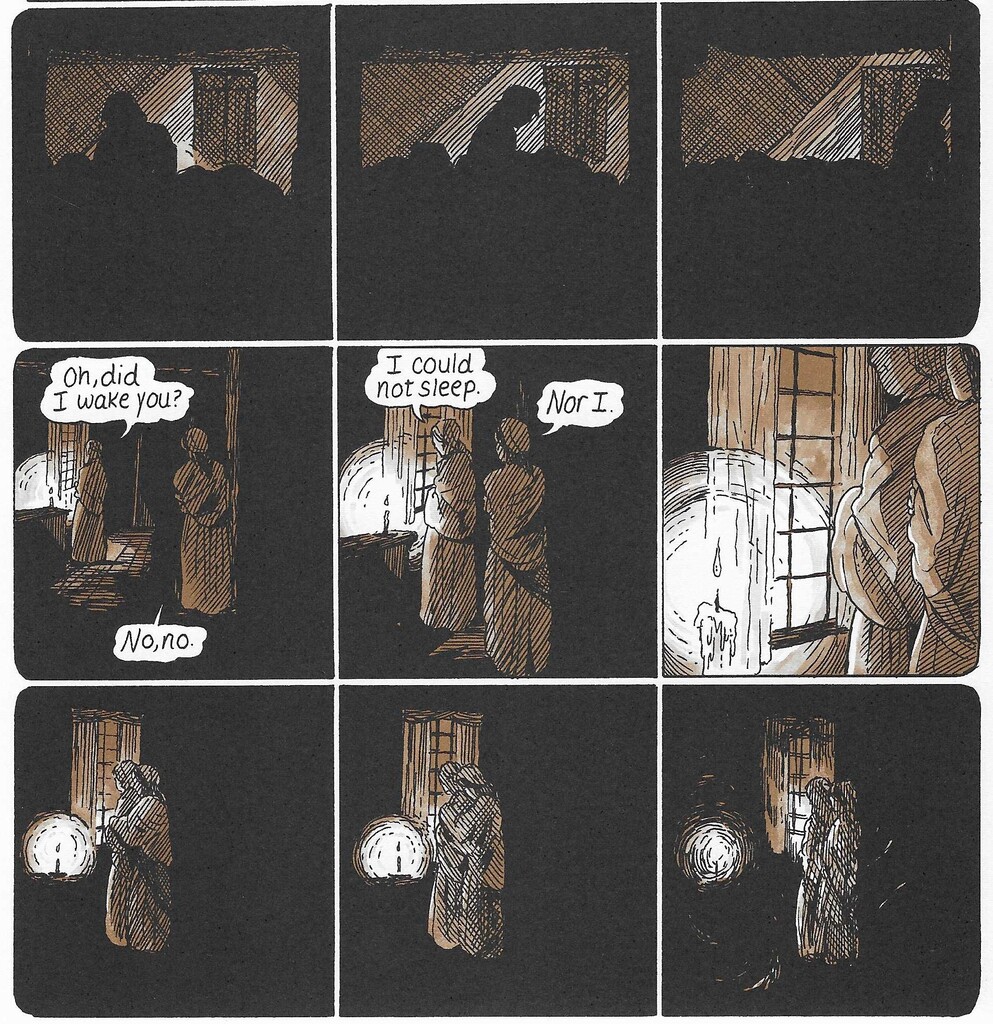 We need to read all about the lesbianism!!!! Well, sure, Charity and Sylvia are lovers, but what’s interesting about the book is how little a deal Walden makes of it. It’s the 19th century, after all, and people were far more demure about their private lives, and Sylvia and Charity more so. While she was alive, Charity burned her journals, so whatever she wrote about her relationship is lost to us. Walden shows us this scene, but it’s fictional, so she doesn’t know why Charity would do it and doesn’t speculate. Sylvia wrote, also, but not as much as Charity and in very little detail. From her, we get the sense that, as the religious one, she was more tortured by the romance, as she thought it went against God’s will (whether this is because it was “unnatural” or just because they didn’t produce children is unclear). Walden has to fictionalize their relationship, and some of the more powerful parts of the book are when they talk to each other about their romance or when they’re alone together, although, of course, we never see too much of the physical relationship. Here’s the thing, though: Walden, presumably, wants to look at the way society handles this, and she does a nice job there, as well. There are some people who find the ladies odd and “unnatural,” but they tend to mutter about it rather than actually do anything about it. Almost everyone else — including the town’s pastors over the years — tend to ignore it, as they know Charity and Sylvia are fine people and who are they hurting, anyway? We meet one of Charity’s ex-girlfriends, who got married to a man and had a more conventional life, and while she seems happy, she also laments not being as brave as Charity is, and there are a few other women who hint around that they, too, are “unnatural,” but generally, in public everyone just minds their own damned business. It gets back to the way of living in this time period — “private” meant something different in an age when so many people lived close together or so close to some many relations, so everyone was in each other’s business almost without meaning to, so the fact that Charity and Sylvia had their own house raises some eyebrows, but nothing more.
 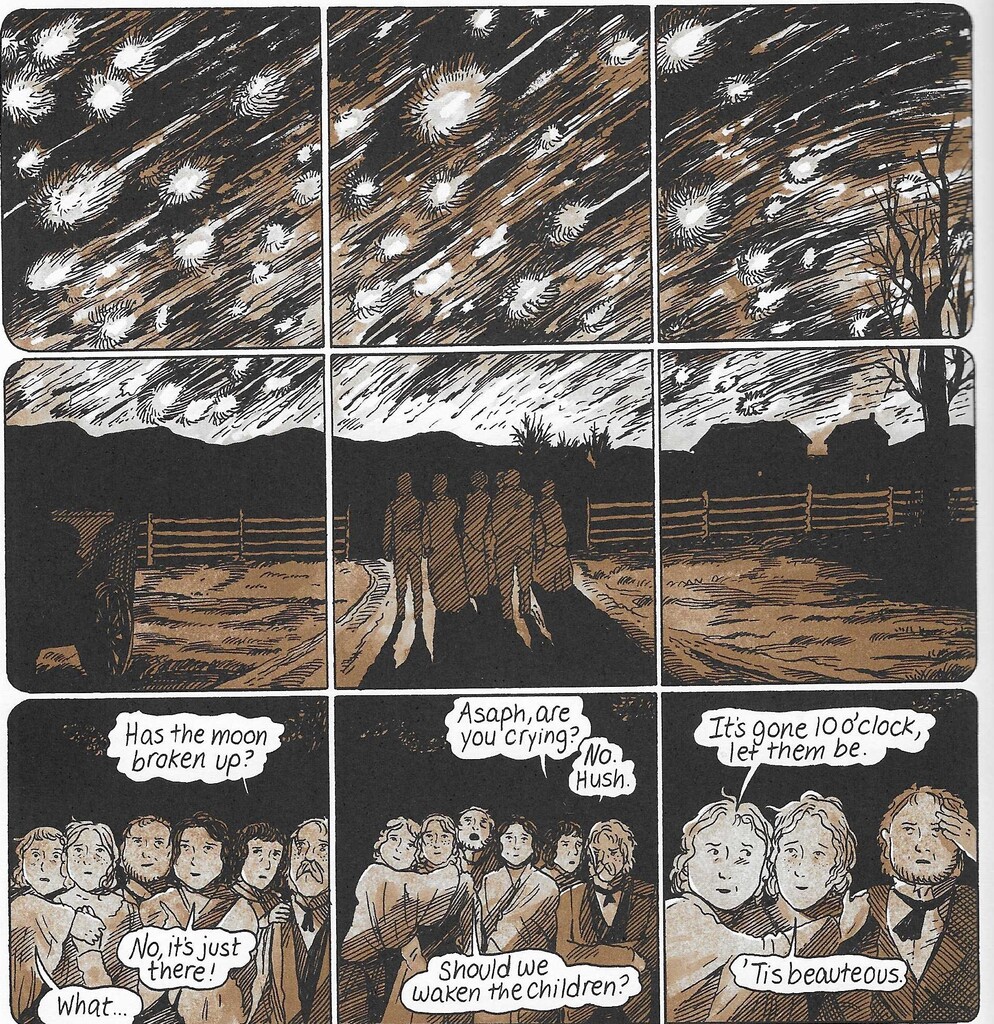 Any privacy was cherished, because there was so little of it, and Walden shows that the townspeople understand this. Plus, we have to remember that “love” was something more universal in this time, and two women living together who “loved” each other might not mean the same thing then as it does today. We see many women and men writing letters to someone of the same gender in which they’re effusive with their emotions, and it does not mean they were romantically in love with each other. Charity’s nephew was William Cullen Bryant, and he wrote of them after visiting them in 1843 that their union was “no less sacred to them than the tie of marriage,” and how Charity was like the husband and Sylvia was like the wife. This is the strongest evidence of their relationship, along with some of their own writings, but again, nothing is terribly explicit, and while I’m not saying they weren’t lovers (it’s fairly clear they were), by not emphasizing it too much, or at least by not making the society in which they live worry about it too much, Walden does a nice job showing how not crazy it is. Charity and Sylvia do nothing but help the community, so why should anyone object to how they spend their private time?
Walden’s art continues to be terrific, as she has such a wonderful attention to detail, bringing to life rural Vermont 200 years ago with amazing clarity and depth. She generally uses a 3 x 4 grid, which adds nice uniformity to the pages and visually restricts our characters, which feels conscious on her part, as it feels like she wants to proscribe their boundaries, although within those boundaries they have a great deal of freedom (I could be completely mistaken about this, but it’s what I feel). 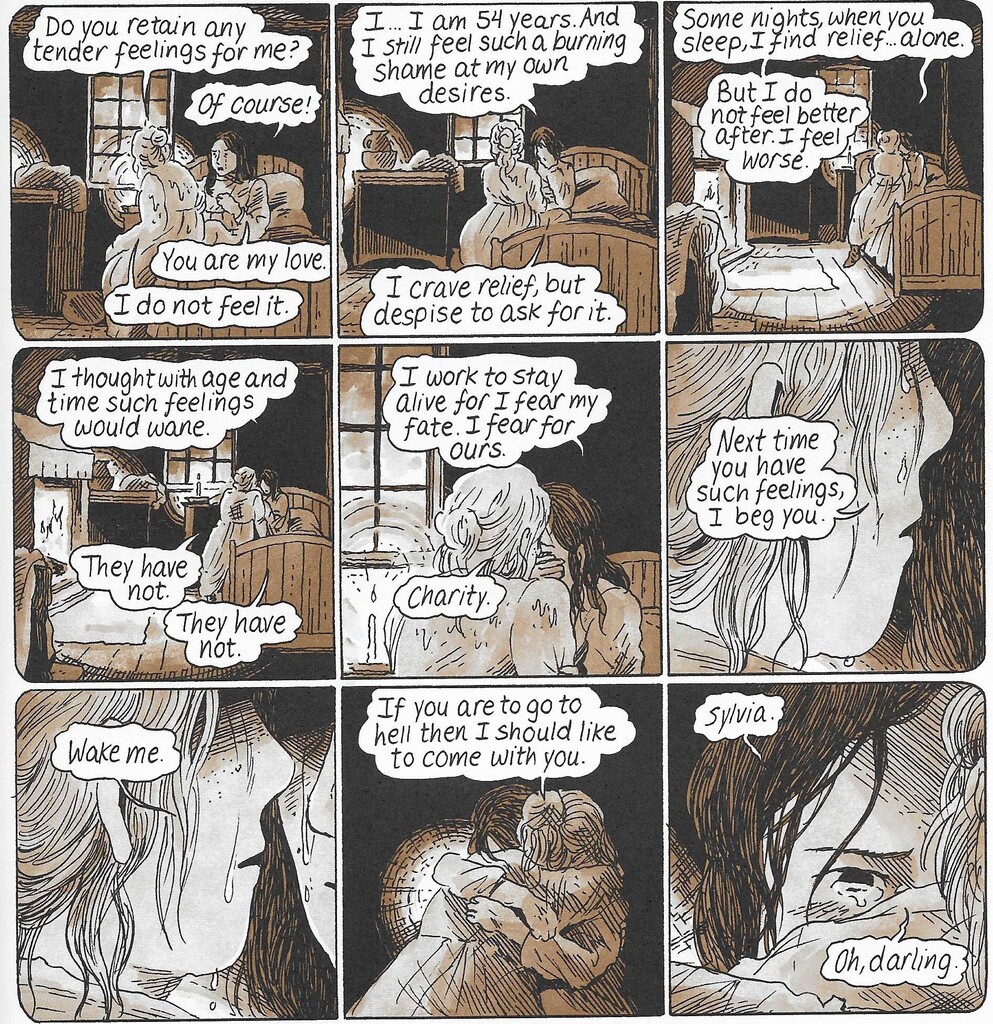 The way she draws the “regular” life of the characters is very good, as she gets the period details right and we get a good sense of who these people are and where they live. Occasionally, she does some “irregular” things, and they’re a nice contrast to the straight-forward narrative. In one section, she gives us biographical background on Sylvia and Charity, and she still uses the grid, but her line work is simpler and sparer and thinner, as she’s doing a flashback. She interrupts the narrative occasionally to show us a map of Weybridge or the ladies’ journey to Boston or to visualize poems by showing us individual things mentioned, either tangibly or symbolically, in poems that she reprints. A few times, she shows the imaginations of the women, and her style becomes a bit more abstract, which again is a nice contrast to the regular story. When Charity dies, there are some wonderful pages of fade-outs and fade-ins as time passes, and when Sylvia dies, Walden modifies the grid beautifully to expand their world now that they’re no longer bound by it. Walden is an excellent artist and storyteller, and the visual components of the book make it work as much as the prose components.
If you haven’t read a Tillie Walden book, Charity & Sylvia is a good place to start. It’s a warm, deep, occasionally sad, more often triumphant, and ultimately beautiful portrait of two lives lived as fully as possible, and while, yes, it’s true that not a lot “happens,” it’s never boring and it’s always heartfelt. You could do a lot worse with your time than check it out!
Rating: ★ ★ ★ ★ ★ ★ ★ ★ ☆ ☆
