

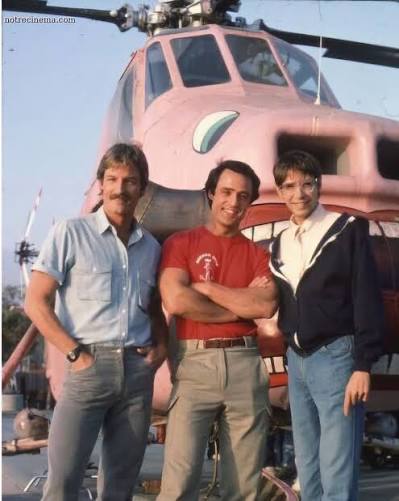
I mentioned, when I started this category, that I would look at books and television shows I watched when I was but a lad (or a younger adult), but the shows I’m thinking about take a while to get through, so I’ve been re-reading books and posting about them, but here’s a television show! it’s time to check out Riptide!
Riptide, which ran from January 1984 to April 1986, is not the biggest or most beloved Stephen J. Cannell show — Cannell, of course, created many, many shows over the years, and most of them were very popular. In fact, calling this post “revisiting” a “favorite” is a bit of a misnomer, as I liked Riptide when I was a teenager but never watched it religiously. Of course, back in the day, it was harder to keep current with television shows, especially if you’re a kid and you have other things going on in your life. So I watched it occasionally and enjoyed it, but even the shows I really liked I couldn’t necessarily keep up with. Riptide, however, is a more interesting show than you might think, and it’s fun to watch all 56 episodes in a relatively short time.
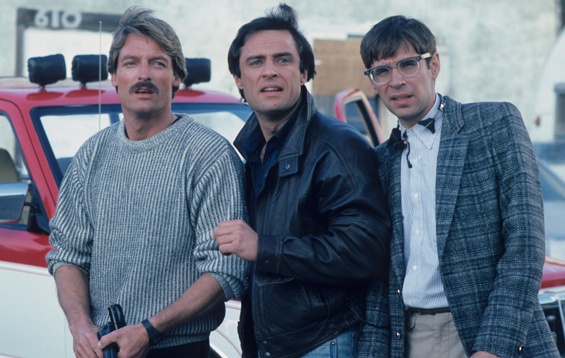

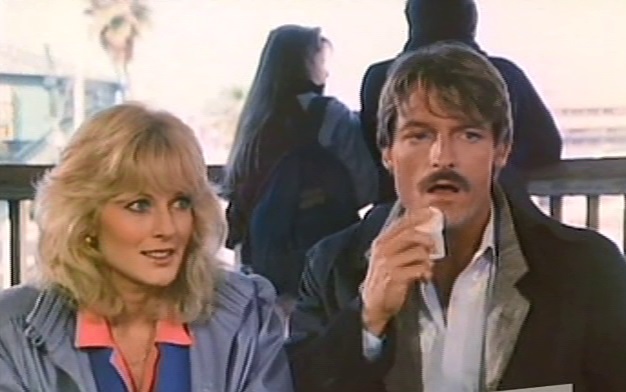
Riptide was a mid-season replacement, and it began with a two-hour pilot, which was more common back then than it is today. It starred Perry King as Cody Allen, Joe Penny as Nick Ryder, and Thom Bray as Murray Bozinsky, private investigators who lived on and worked off Cody’s boat, which was named the Riptide. In the pilot, Cody and Nick come across Murray, whom they knew several years ago in the Army (they were MPs escorting him, as he was a prisoner, a story we learn about in a later episode), and they realize that his knowledge of computers would be very handy in a private investigator business. The show feels a bit more cutting-edge than a lot of others from the time, because of Murray’s hacking skills, which he uses a lot. It’s also a bit more forward-thinking in how Cody and Nick treat Murray, as he’s a computer geek, which in the 1980s, means that he would usually be an object of some ridicule (it was starting to change, but it was still a thing). Other people occasionally talk about Murray and his geekiness, but Nick and Cody always defend him, as he’s their friend and they like him because he’s just a good dude. Sure, his geekiness is played for laughs occasionally, but it’s very gentle humor — Murray is socially awkward, which is grounds for some humor, either because he’s socially awkward or because he tries to not be, but the show also has some women get to know Murray and really like him, which is also kind of nice. Obviously, on this kind of show, none of the principals ever have a long-standing relationship with a woman, but it’s nice that the writers don’t ignore Murray when it comes to romance. In the pilot, in fact, the woman ends up digging Murray more than the other two, which is fun. The dynamic between the three of them is nice — the actors have good chemistry with each other, and the writing reinforces the chemistry, as Cody, Nick, and Murray form a really good team. (One thing that is a bit surprising is the utter lack of gay subtext, given that it’s three men living together in a relatively small space. In today’s social environment, it would be all subtext, either played for laughs or played as a serious undercurrent, but it just never occurs to the writers of a 1980s show that it might be a thing. Straight dudes just lived with each other, and that was fine.)
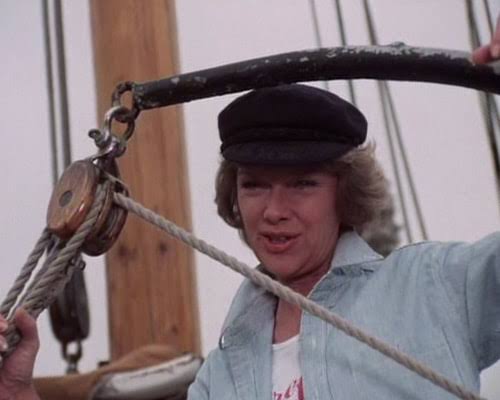
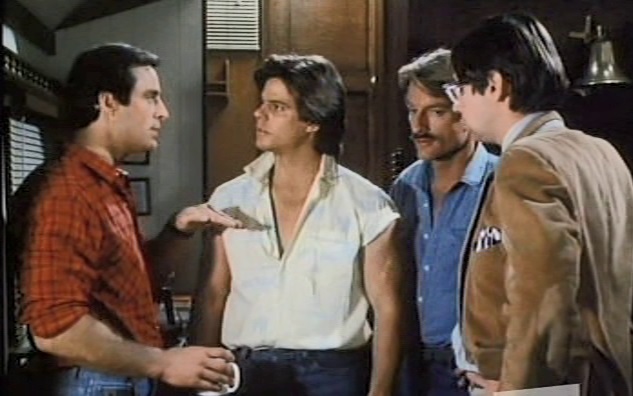
At the time, King was the more accomplished actor (he’s 8 years older than Penny, 6 years older than Bray, and was 35 when the show debuted), and early on, it seems like he takes on a bit of an “elder statesman” role, something that never quite went away. This comes up even in the final episode, in which Cody gets shot and spends most of the episode off-screen, partly because King directs the episode, which Penny never did. Cody talks more about getting older in the series, which is also somewhat refreshing, as so many modern television shows never admit that their characters actually age. King never dominates, as the writers do a nice job giving all three characters some “spotlight” episodes, but I wonder if the show got greenlit partially because King was a more known commodity. The show never had more than the three characters — Jack Ging played a crusty police lieutenant in a little over half the episodes, and in season 3, just as he was beginning to see the value of the guys (even though he still didn’t like them), they killed him off in a very odd way. June Chadwick came on as the new police liaison, and it seemed clear that the show was putting her together with King, but it got cancelled before anything could happen. Early on, Anne Francis was actually featured in the main cast (as you can see from the season 1 intro video above), as she ran a tourist boat docked next to the Riptide. Her boat featured an all-female, usually bikini-clad crew, and the joke was that they all thought Cody, Nick, and even Murray were pretty groovy, but Mama Jo did not let her crew fraternize with anyone (which seems a bit draconian, but such was the times). Francis lasted only six episodes, and it seems the show wanted to shift away from the guys as babe-hounds, so their lusting after the ladies was turned way down after the first few episodes. The tourist boat remained and they referenced it occasionally, but for the most part, it went away. Ken Olandt, who would later go on to fame (?) as the stripper who sleeps through class in Mark Harmon’s Summer School (a classic!), recurs as a somewhat doofus-y dock boy who gets the guys in trouble occasionally but has a good heart.

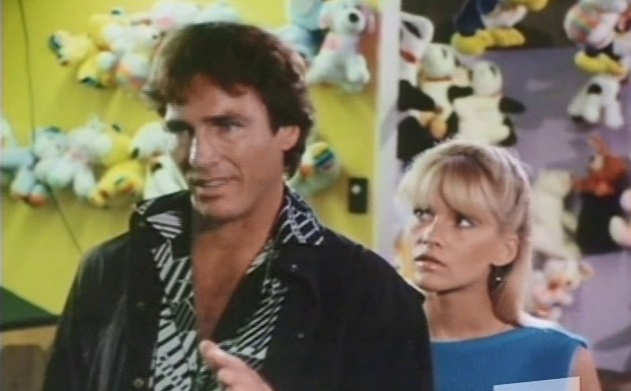
The cases are typical — they usually involve murder, but not always, and our gang is very often in trouble with the police, as Ging never wants them meddling in his business. As was not uncommon for television shows at the time, all three are veterans (Murray worked on computer stuff for the army, and he actually outranks Nick and Cody) and Cody and Nick saw action in Vietnam, so that comes up occasionally. The show often looks askance at those in power, which is nice for the gung-ho 1980s — sure, Cannell shows (and others) would have your occasional crooked cop, but this show has some episodes about the systemic rot and incompetence at the center of some power structures, which is nice. They don’t push it — it’s still Reagan’s ‘Murica, after all — but they don’t shy away from it. The show has some unusual cases, too, and not all of them are serious, which is nice. Late in the show’s run, for instance, Chadwick proposes a contest to see who the best investigator is (they were arguing about it), and she picks three very low-stakes cases, but they’re still fun. In another late episode, the gang gets a consulting job for a detective show on television, which is always fun because it allows the writers to make fun of themselves. The two stars follow them around on a case, and they satirize Moonlighting (which was beating Riptide in the ratings and may have been a reason for its cancellation), as the two “actors” are clearly modeling Bruce Willis and Cybill Shepherd (especially the dude, H. Richard Greene, who’s having the time of his life mimicking Willis). The show was not afraid to poke fun at itself, which was nice, and the cases were cleverer than you might expect. The writers and actors were also far more “woke” than you might expect for the 1980s. As I noted above, Nick and Cody were friends with Murray, and while they poked fun at his nerdiness, it was the kind of ribbing you get from friends, not bullies, and they often told Murray how much they relied on him and how great a guy he was. They had some love interests throughout the show, and it was always treated seriously, and when they were crushing on women who weren’t interested in them, it never went too far and the writers deflated it nicely (Cody thinks Murray’s sister digs him, but she doesn’t even remember his name). At one point, a mentally challenged man claims he sees a mermaid, and while others think he’s just making stuff up, the guys believe him and help him, and Penny gives a speech to a character about how the guy is a human being and deserves to be taken seriously. In the final episode, a big plot point is that someone is gay, and nobody makes any jokes about it, they just take it in and adjust their thinking about the case accordingly. I know that a lot of television shows at this time were beginning to be a bit more sensitive to people outside the white male power dynamic, and it’s nice that a show you might not expect to do so did.
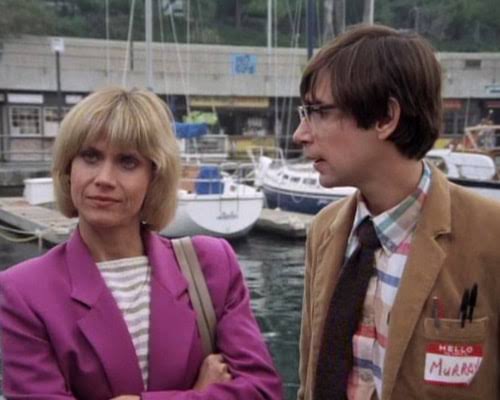
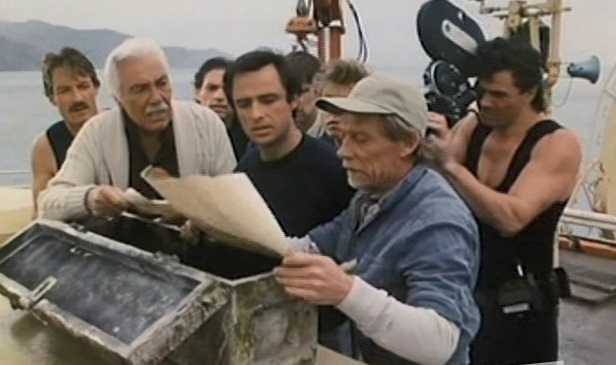
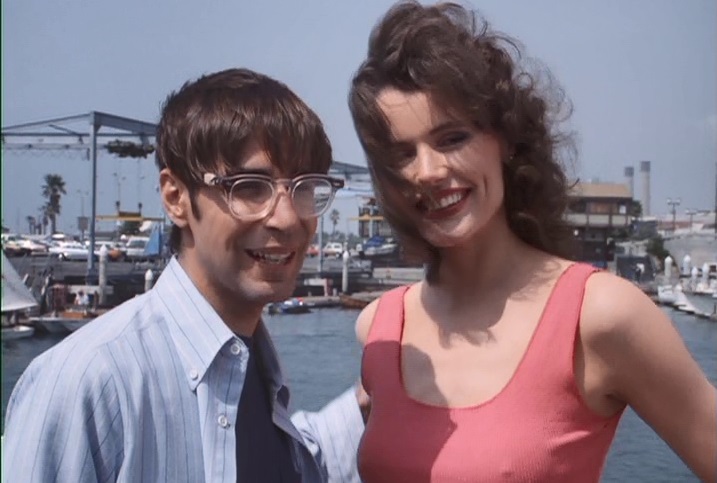
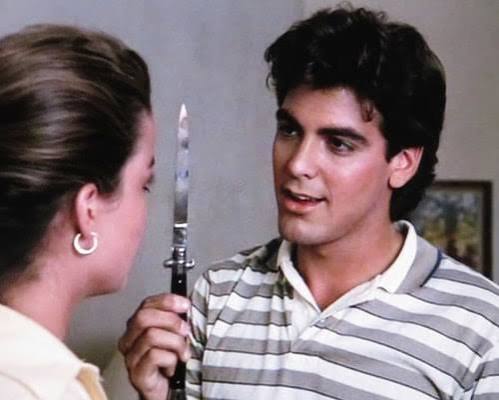
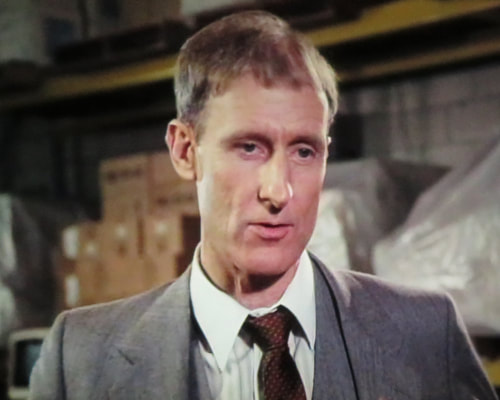
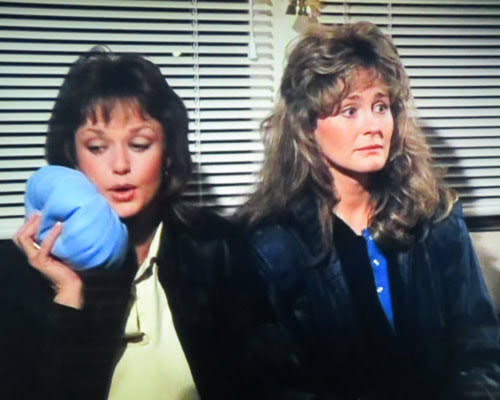
Of course, whenever you have a show where the whole point is for the cast to deal with different people every time, you’re going to have fun guest stars. Law & Order has made a cottage industry out of this, but Riptide doesn’t do too badly. Cindy Pickett (Ferris Bueller’s mom) guest stars as an old friend of Murray’s. James Luisi, a classic That Guy, is in an episode, as is Kathryn Witt, who’s a good “Hey, I know her!” actor. In an early episode, Kelly Preston (Mrs. Travolta!), who I believe gets the excellent first line of dialogue in Jerry Maguire — “Never stop fucking me!” (if it’s not the first, it’s one of the first!), Paul Gleason (Vice Principal Vernon!), Xander Berkeley, Lewis Arquette, and Marsha Warfield (who showed up a few times early on in the show’s run) guest star. Stepfanie Kramer was a rival P.I. in an episode, which might have gotten her the role in Hunter. Dennis Franz, whose career started in the 1960s but, of course, didn’t really become a known commodity until right around this time, is in an episode (post-Hill Street Blues … well, his first stint on the show). Lance Henriksen is in the episode with Murray’s sister, who is played by Future Oscar Winner Geena Davis (sporting that gloriously frizzy head of hair) right before she showed up in Fletch and her career started to take off. Christopher McDonald plays two different characters in seasons 1 and 3 (I always love when actors guest star as different characters in the same show, as Franz would do in Hill Street). Future Two-Time Oscar Winner George Clooney (in his first speaking role) shows up in the first episode of season 2, playing a bad guy. Kurtwood Smith plays an FBI agent in an episode. Lana Clarkson, who’s unfortunately probably most famous for getting killed by Phil Spector, is in an episode. Ray Wise shows up, as does Gleason again. Edith Fellows, whose first movie was in 1929 (!!!), plays an elderly movie star who disappeared decades ago. Gene Rayburn and Bob Eubanks starred as themselves in an episode. John Astin plays a slightly kooky inventor whom Murray befriends. Richard Lynch, another excellent That Guy, guest stars in an episode. James Cromwell plays an evil loan shark who gets poor Belinda Montgomery and Lenore Kasdorf to commit burglaries for him. Jere Burns gets to play a neo-Nazi, which was fun, I’m sure. Cesar Romero plays an oceanographer in two separate episodes (in seasons 2 and 3), while his daughter is played by Ava Lazar, with Dana Elcar showing up in the first of Romero’s episodes. Lyle Alzado inexplicably shows up in an episode, presumably because they wanted a huge dude to play against type, which he does, hilariously. Richard Hatch plays a Brian Wilson-type singer on the comeback trail in season 3’s premiere. It’s odd to see Larry Linville play a decent dude when he was such a weasel on M*A*S*H, but there he is. Paul Willson has a small role in one episode. James Whitmore does a nice job as a grieving father whose soldier son died under mysterious circumstances. Richard Sanders (Les Nessman!) is an insurance investigator in an episode in which Nick inherits a large sum of money. Also in this episode is Kim Darby, who’s probably most famous as John Cusack’s mom in Better Off Dead but who was also the girl in the original True Grit (and she speaks the same way she does in Better Off Dead, so I guess that’s just her voice?). An eccentric millionaire played by Richard Lewis hires the gang to find his dream girl in probably the most uncomfortable episode of the series — she’s a model, he doesn’t know her, but he pursues her relentlessly even though she tells him she wants nothing to do with him, and eventually, she falls in love with him because it’s the 1980s and of course she does. In a two-part episode, an old friend of Murray’s, Joel Brooks, invites them to San Francisco to help him out, and while there, Cody gets reacquainted with the love of his life, played by Jane Badler of V fame. She does a really nice job (plus, the episode is set in San Francisco, and the show puts together a banger of an opening credit sequence, as you can see below). Steve Allen stars as the owner/play-by-play announcer of a minor league baseball team, and the 65-year-old Allen (at the time) is married to 36-year old Barbi Benton. Bernard Fox, who showed up occasionally on Hogan’s Heroes and sank into the sand in the Fraser/Weisz Mummy, is one of the several people looking for a lost Shakespeare manuscript. Phew! I know I missed some, but those are just a nice cross-section of guest stars. And Awesome Eighties Evil Henchman Al Leong is in an episode as … an Awesome Eighties Evil Henchman!
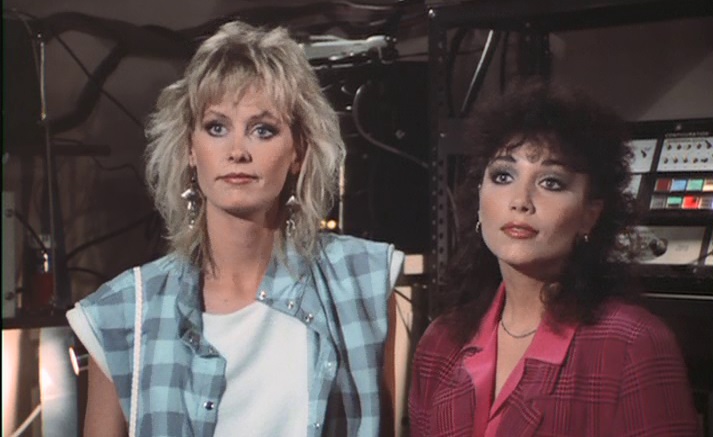
Riptide wasn’t a great show, I must admit. It was, however, entertaining, and it’s fun to revisit it. Shows made before the turn of the millennium feel so much more like the era in which they’re made (mainly because the eras were more easily delineated), and this is a very 1980s show. The fashion, the hair styles, the attitudes, and the film quality all make it feel like something from the distant past (which, I mean, it’s not too distant, but it’s more distant than I like to think about!), and it’s very fun to watch simply to enjoy the look of the show. The show deals with some deeper themes prevalent in ‘Murican life — the distrust of authority, the power imbalance between men and women, the way certain segments of society are discriminated against — but it doesn’t do it too often and too heavy-handedly. It’s just a fun detective show. King and Bray haven’t done much of note since the show went off the air — they both worked for years, but nothing spectacular — while Penny went on to star in a more successful show, Jake and the Fatman, in the late 1980s/early 1990s, as well as a series of TV movies as a detective in the 2000s. But that’s kind of what happens with actors — landing a successful series is hard, and many of them never reach those heights again.
There are other Cannell shows I will probably watch as part of this series. We shall see. The dude knew how to put together a show. If you’re in the mood for some old-school detective television, check out Riptide!
