
As a die-hard Doctor Who fan I suffered through the recent, dismal Disney + series that wasted the charm of Ncuti Gatwa as the first Doctor of color. I also read reviews by other fans, including Tom Brevoort, Aussie specfic blogger Camestros Felapton and Ben McClure at Blue Towel Productions. Reviewing the penultimate episode, “Wish World,” McClure made an observation I found interesting:
“If you are going to take an episode of your show and give us not just an alternate view of the world but also the characters themselves, you have to do one of a couple of things to make it work, to avoid this feeling that it all just doesn’t matter. One way is to make the new world incredibly interesting, often by raising all sorts of questions about how the world works or even how the world came into being at all.” The second way “is to make the alternate-version of the character meaningful. And the way to do this is to use this new persona to reveal something that we couldn’t otherwise about that character. I’d go so far to say this is the only justification for spending an episode burying the main character in flatter and duller version of themselves. “
 It struck me this is relevant to comic books, given their fondness for alternative timelines, What If’s and imaginary stories. For example, there’s Action Comics #388 (cover by Curt Swan), in which Superman is trapped in a parallel world where Bizarro studies Balzac (and understands what he’s reading!), Sgt. Rock used to date Lois and Superman’s weaknesses include brussels sprouts and three-day old garbage.
There’s also Superman #230 and 231, which I described as follows: “one of Jor-El’s inventions killed Lara. Deranged by grief he blew up Krypton, fled to Earth with his son Lex-El and accidentally killed bank robbers Martha and Jonathan Kent when making landfall. The Kents’ son Clark grows up into the most ruthless criminal America has ever seen, as a mad scientist’s experiment makes Clark as rotten as both his parents combined. Lex-El, of course, becomes Lex Luthor, a mild-mannered toupee-wearing Daily Planet reporter who is secretly — well, you can figure it out, right?”
Both these Super-covers are by Curt Swan.

Over at Marvel we have What If? #12 by Don Glut and Sal Buscema, cover by Buscema: what if Rick Jones became the Hulk?
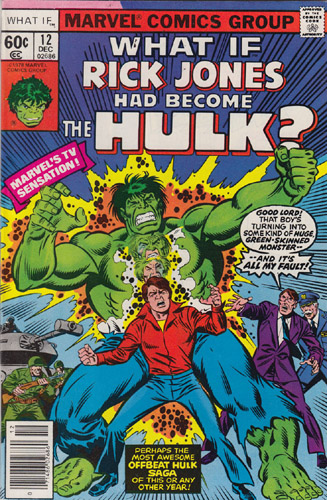
The turning point for this story comes at the moment Bruce shoved Rick ahead of him into a bunker, right before the gamma bomb went off. Here Rick pushes Banner in first and gets blasted by gamma radiation for the usual effect. Now we have a Hulk who spouts 1950s J.D. lingo — “Soldiers carry heaters! Want to rumble with Hulk! Hulk will smash those squares!” And we end happily with Rick-Hulk trapped in the Negative Zone where he destroys Annihilus and becomes an admired hero. 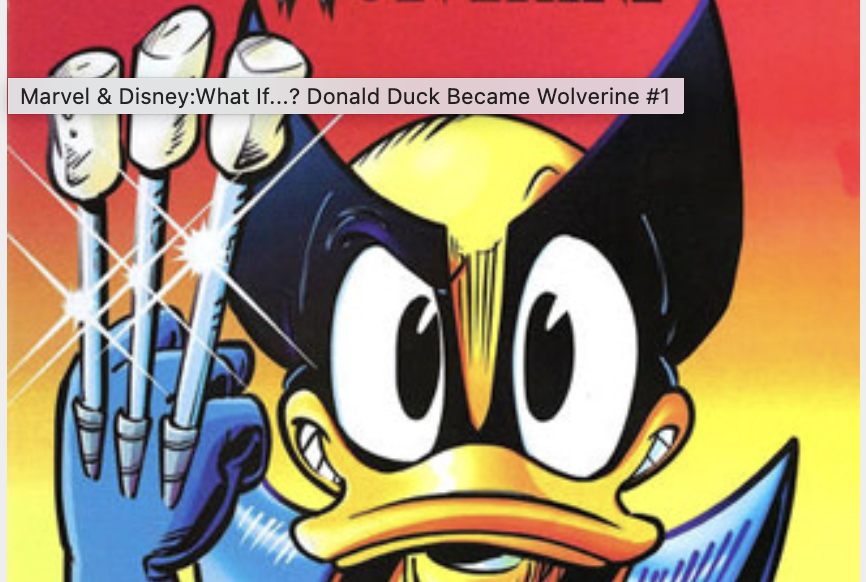 While I haven’t read the book, What if Donald Duck Became Wolverine? seems to fit the same classification: give us a fun world where everything’s different.
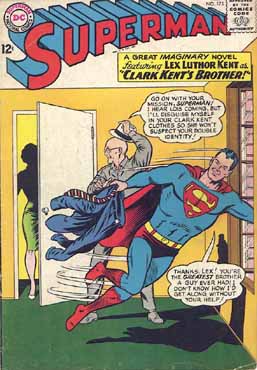
There’s a long history of alternate takes that reveal something about character too, or at least make the alternative characters memorable. For example, Superman #175, which imagines Luthor as “Clark Kent’s Brother” (Edmond Hamilton, Curt Swan, Swan cover). Following a key divergence (the Kents never catch the alien disease that kills them), Lex figures out Superboy’s identity, then gets himself taken in by the Kents as a foster kid. It’s step one in his plan to destroy his arch-foe; instead, the Kents’ kindness reforms him.
Lex and Clark become the best of siblings. Clark’s buddy Pete Ross never learns his identity and becomes increasingly  resentful that Lana crushes on Superboy, then Superman. Pete eventually tries to destroy Superman and Lex sacrifices his life to save his brother.
Or consider Avengers Annual #2 (Roy Thomas, Don Heck, John Buscema cover), “And Time the Rushing River” (which I blogged about here) has the Assemblers return from a trip to the past to discover they’re in an altered timeline where they became world dictators and imprisoned all other superbeings. It’s due to a trick by Kang convincing them this is necessary for the greater good. By the time the “real” Avengers arrive, power has corrupted their counterparts into ruthlessness. I find Thomas’ take on them going dark quite plausible.
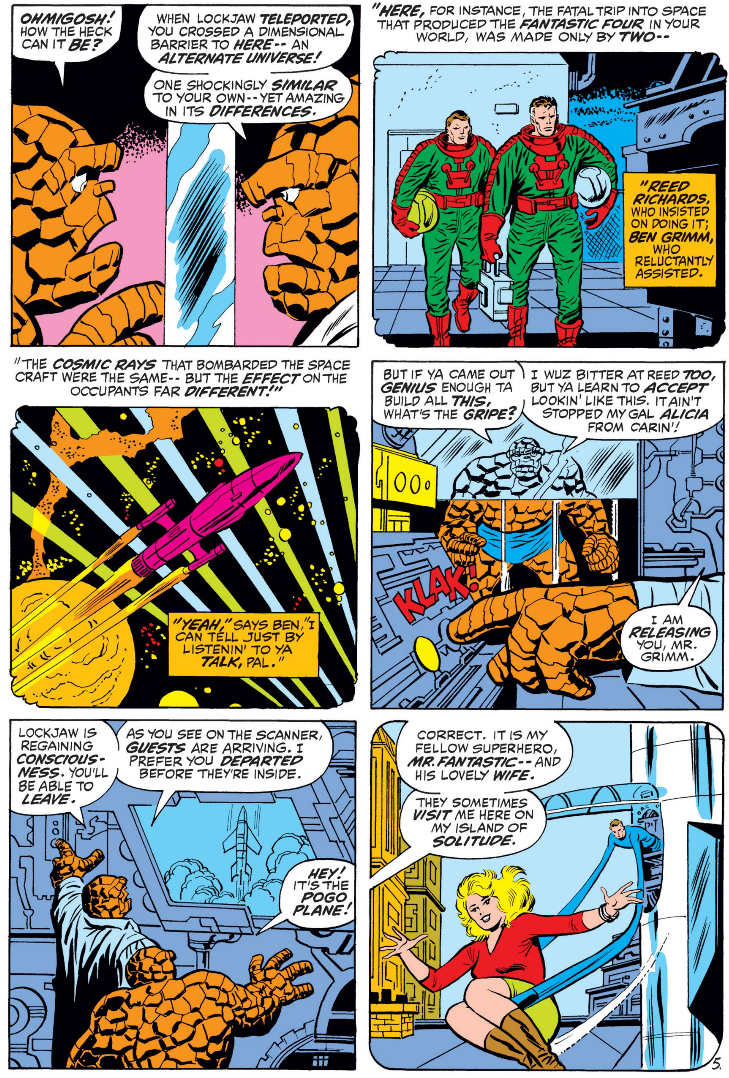
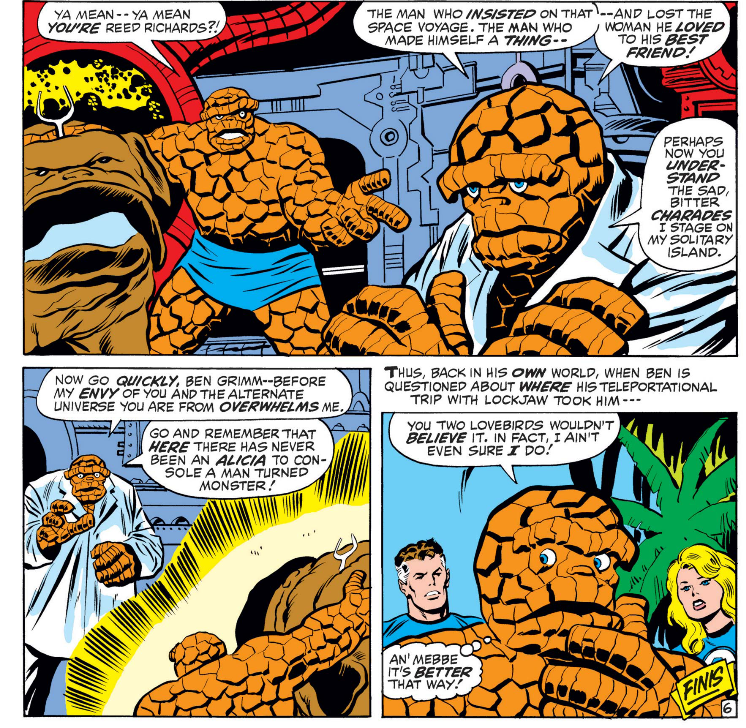
In Fantastic Four #118 we have a backup story, “What Mad World?” by Archie Goodwin and John Buscema (I discussed this outbreak of backup stories in my last post). In the main story, the FF thwart the return of Diablo, followed by the ancient temple he’s based in blowing up real good. Lockjaw of the Inhumans teleports Ben to safety but he’s in a rush and they wind up in — well, see for yourself.
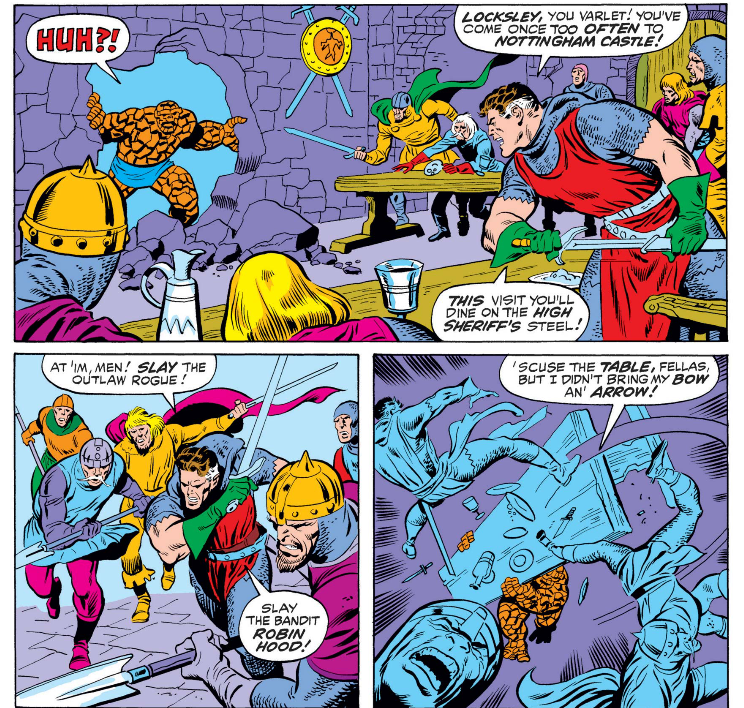
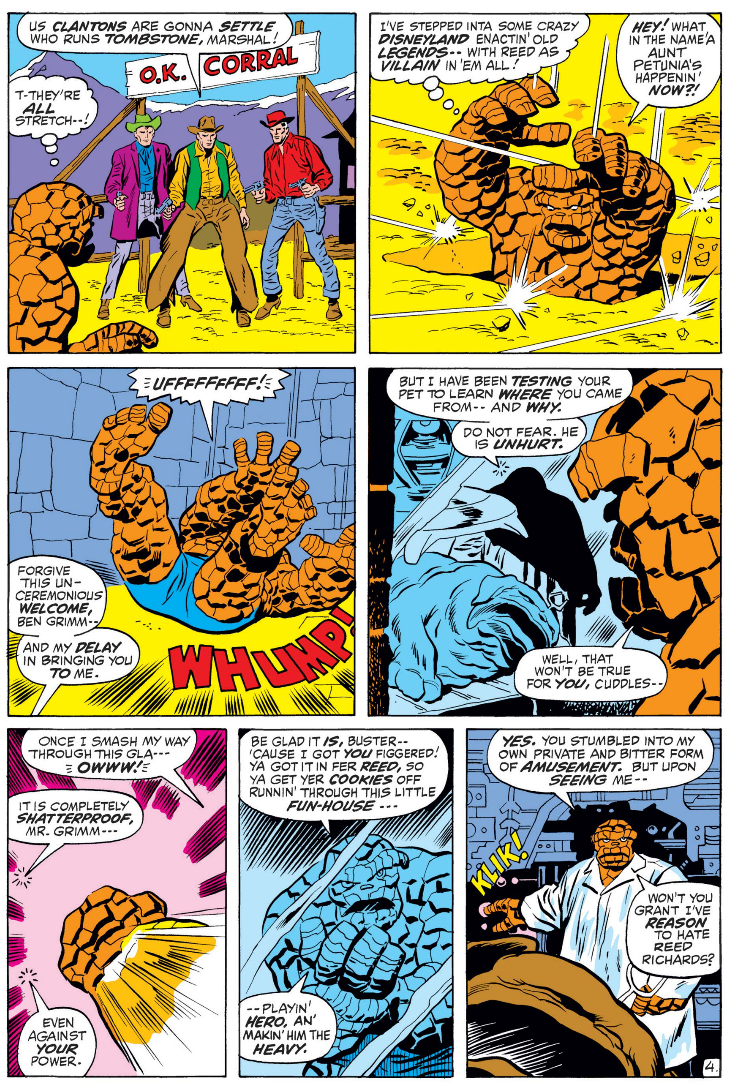
While it didn’t register when I first read this, you may notice alt.Thing doesn’t talk like Ben. There’s good reason for that.
Returning to DC, one of the commonest “What If’s” for Superman is “what if someone besides the Kents had found him?” The Amish. The richest man in Smallville (a divergence point in the 1990s Superboy series). A tribe of gorillas (cover by Nick Cardy)

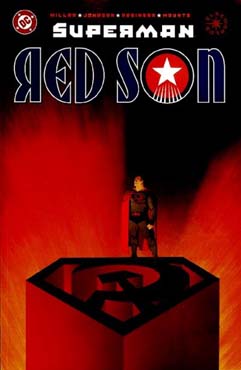
One of the better-known examples is the Mark Millar/Dave Johnson Red Son which imagines Superman landing in Stalinist Russia. Just like our world, he becomes a compassionate, heroic man seeking to serve the people, but his concept of heroism is filtered through a socialist Russian lens.
This only scratches the surface, of course. If you’ve got a favorite cool world or cool alternative character I didn’t mention, tell us in the comments.
