
As I’ve mentioned before, the early Bronze Age was an age of reprints. By 1971 DC, in particular, was all in. For the comics cover-dated August 1971, they raised the price of their books to 25 cents; to provide readers with more value for the price hike, they began adding in reprints (for some of the backstory and speculation about the change, check here).
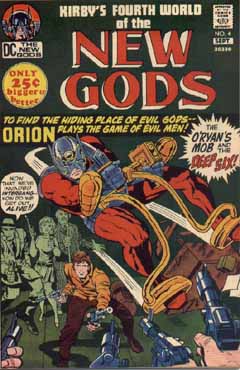
With close to 35 years of comics to pick from, the selection of backup stories was all over the map. New Gods and the other Fourth World books typically went with Jack Kirby backups (go figure). In the first month of the new format New Gods #4, for instance, included the origin of the Paul Kirk Manhunter.
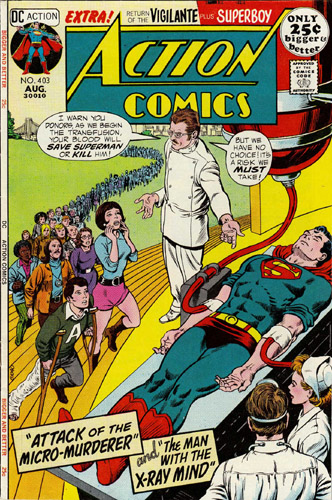
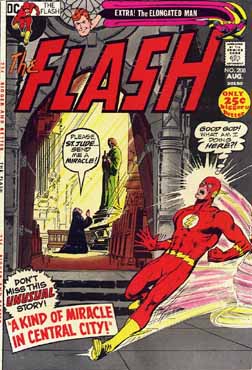
Action Comics (Carmine Infantino cover) had a Superboy and a Vigilante reprint, the latter coming from an earlier issue of Action. Flash (Neal Adams cover) went with a Flash reprint, and so on.
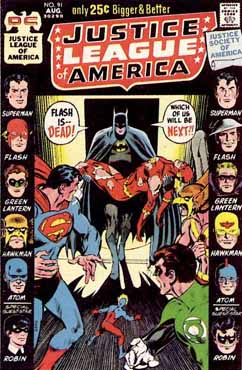
Justice League of America (Adams cover again), on the other hand, went with Knights of the Galaxy, an obscure SF team from the 1950s, and an Hourman short that had been a backup in an issue of Spectre.
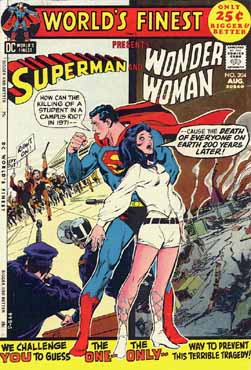
World’s Finest (Adams once again) includes Captain Comet and Green Arrow.
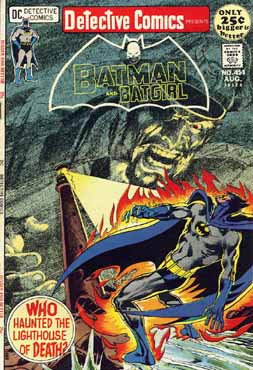
Detective Comics (yep, Neal Adams again) used two one-shot detective stories.
When I got back into comics a few months later, the backup reprints were still a thing. DC would drop them before the end of ’72, along with lowering the price to 20 cents. However back issues from the years right before my return were really cheap (even the Fourth World stuff) and I’d acquire quite a few during the decade to come. I was delighted with the reprints.
First off, adding more pages seemed more than adequate compensation for the higher price. Second, almost all the material was new to me. Third, the reprints exposed me to characters I’d never even heard of: Sargon the Sorcerer, Manhunter, the King, Mark Merlin. By the standards of my tween self, it was a crash course in cool stuff.
There were some reprints I didn’t get into, sure. Kirby’s Sandman and Manhunter stories were enjoyable but couldn’t care less about the Boy Commandos or the Newsboy Legion. Overall, though, it makes me wish I’d gotten back into comics sooner. Fortunately there was one source of DC reprints that would keep coming out for a while longer.
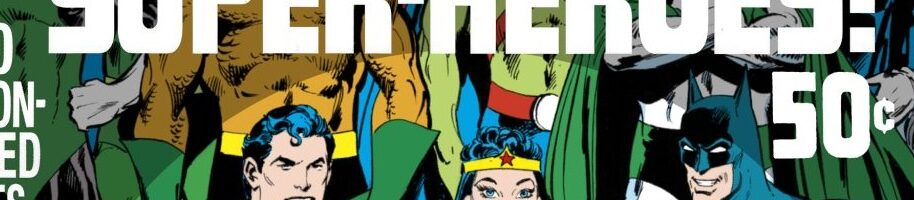
The first 100 Page Super-Spectacular came out in the summer of 1971. I don’t know I’ve ever seen it in the wild. As a non-horror fan I wouldn’t have picked up that one, nor the second, which was a romance comics collection. But then came this one (Adams cover again).
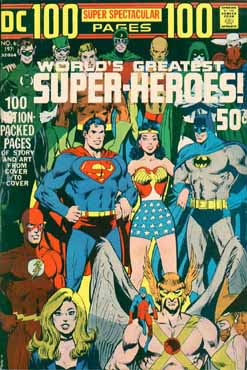
Can a reprint book be a classic? If so, this one qualifies. Reprinting “Crisis on Earth-One” and “Crisis on Earth-Two,” the original JLA/JSA crossover — it may not sound like much now but this was the era when if you missed a comic and didn’t have a convenient store selling back issues, you were lost. For backups we had a mix of less memorable but entertaining stories featuring the Spectre, Vigilante, Johnny Quick, Wildcat and the Earth-One Hawkman. As if that wasn’t enough, it included an alphabetical list of DC superhero strops. All of them! It was an enthralling glimpse of a wider comics world, and just plain useful in those pre-Internet days.
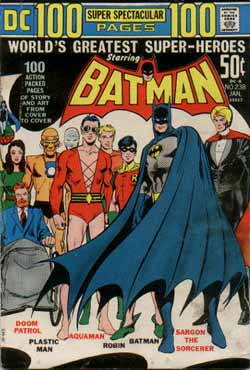 I wouldn’t buy one of these 100 page beauties until Batman #238 from a couple of months later (I think a copy somehow hung out on the spinner rack until next year, though I may be misremembering). The selling points included the Doom Patrol’s origin, Plastic Man, a Legion of Super-Heroes story and a couple of good Batman stories. From that point on, I think either my brother or I picked up every superhero super-spectacular.
By 1975 the Super-Spectaculars were gone, as were the reprint backups. As far as I can recall, DC reprint books became scarcer than they’d ever been before, though Marvel’s reprints from the Silver Age would keep going for years. If DC had done the same, I suspect they’d have separated me from even more of my money.

Those reprint titles (and backup features) were the equivalent of trade paperbacks in those long-ago days. How else were new readers going to learn how their favorite characters began?
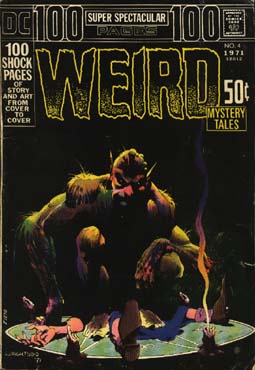
I didn’t know Weird Mystery Tales existed, but I’d buy a reprint of that reprint in a vampire’s heartbeat!
That Wrightson cover almost makes me want to do the same.