

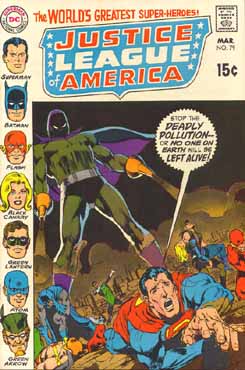
At the end of the 1960s, DC and Marvel were trying soooo hard to prove they were not just disposable funny books for children. No, they were the work of serious writers writing seriously, tackling serious relevant subjects: forget the Joker’s latest themed crime spree, superheroes are battling pollution (Neal Adams cover)!
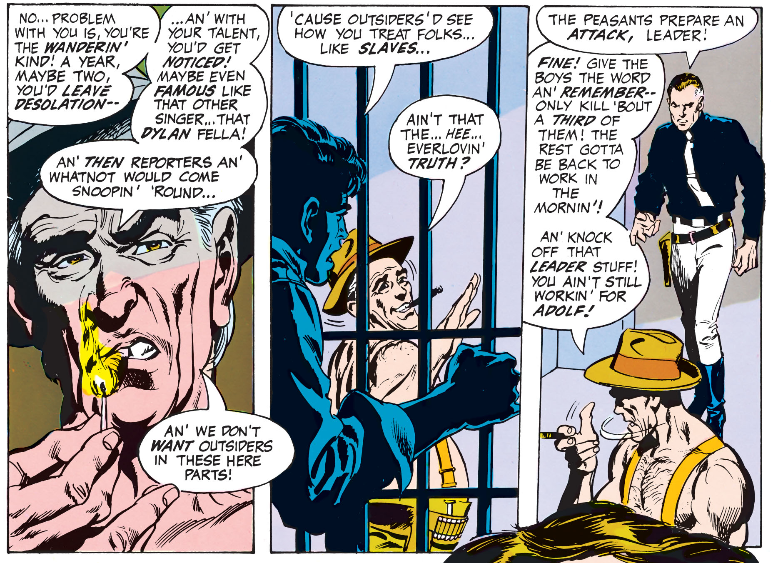
Oppressive capitalism (Adams again)!
Campus protests (Gene Colan)!

The generation gap (Irv Novick)!!

Man’s inhumanity to man (Gil Kane)!

Plus lots of stuff I don’t have images for, like T’Challa becoming an inner-city school teacher in Avengers (because what does his duty to Wakanda matter compared to his duty to American children?). I could offer lots more examples but you get the picture.
As a kid, I hated this stuff. I wanted the Justice League fighting earth-shaking menaces, not teaching life lessons about racism and brotherhood. Rereading as an adult, I’m still not impressed. The odds are good any given relevant story will be either heavy-handed or an ill fit for the medium, like Samuel R. Delany’s earnestly clunky effort at a women’s liberation issue of Wonder Woman.

Iron Man #27 by Archie Goodwin and Don Heck (cover by Marie Severin) is different: “Fury of the Firebrand” works as both relevant yarn and superhero story. The backstory is that Stark Enterprises has underwritten a community center in an impoverished black neighborhood in Bay City. Not everyone in the North Side neighborhood is on board.
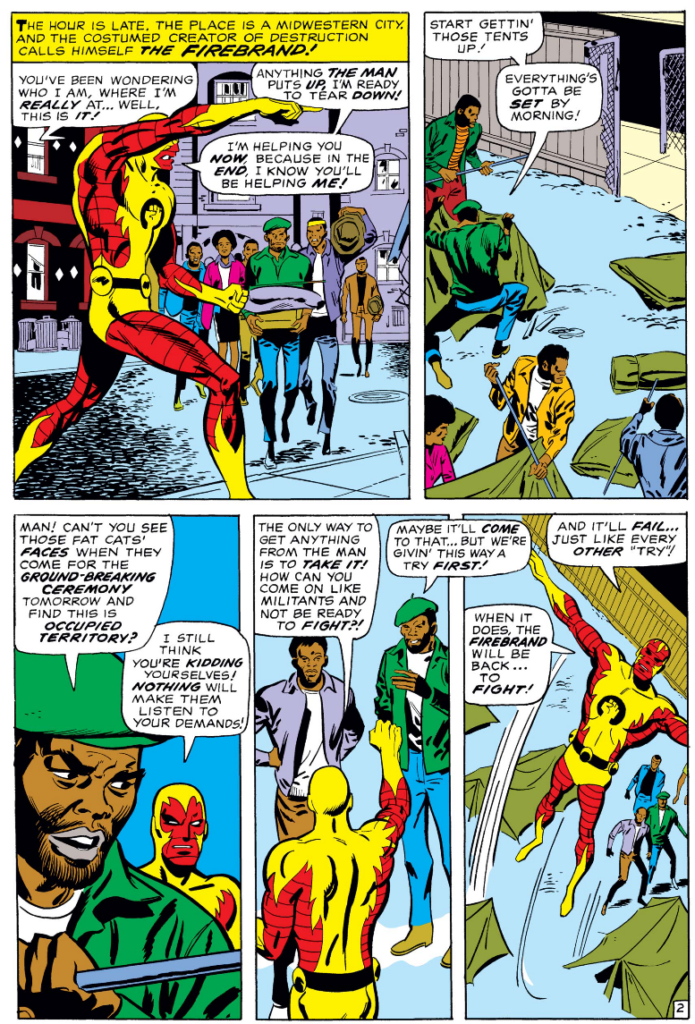
Unaware of this, Tony recruits his buddy Eddie March, who grew up in the North Side, as a goodwill ambassador to the community.
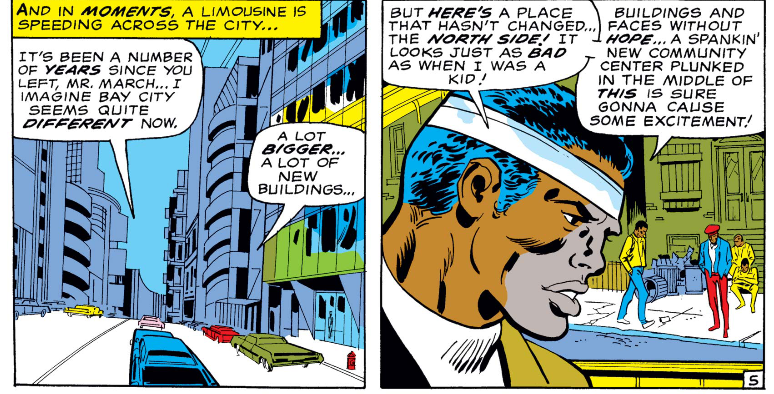
Instead of being a booster, Eddie discovers his old neighborhood has reasons to be frustrated.
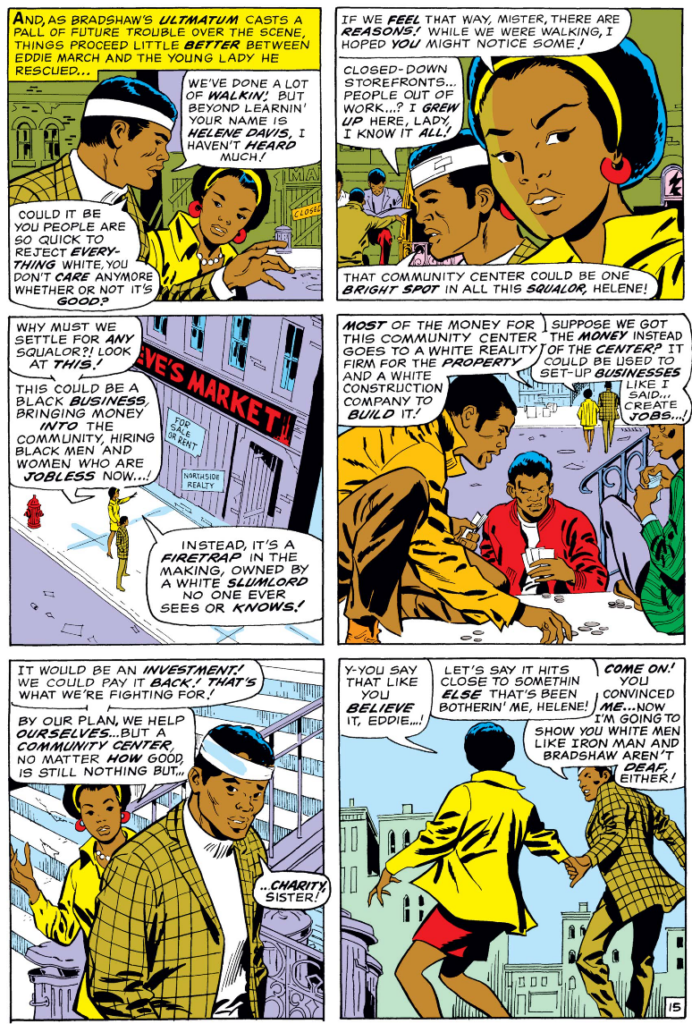
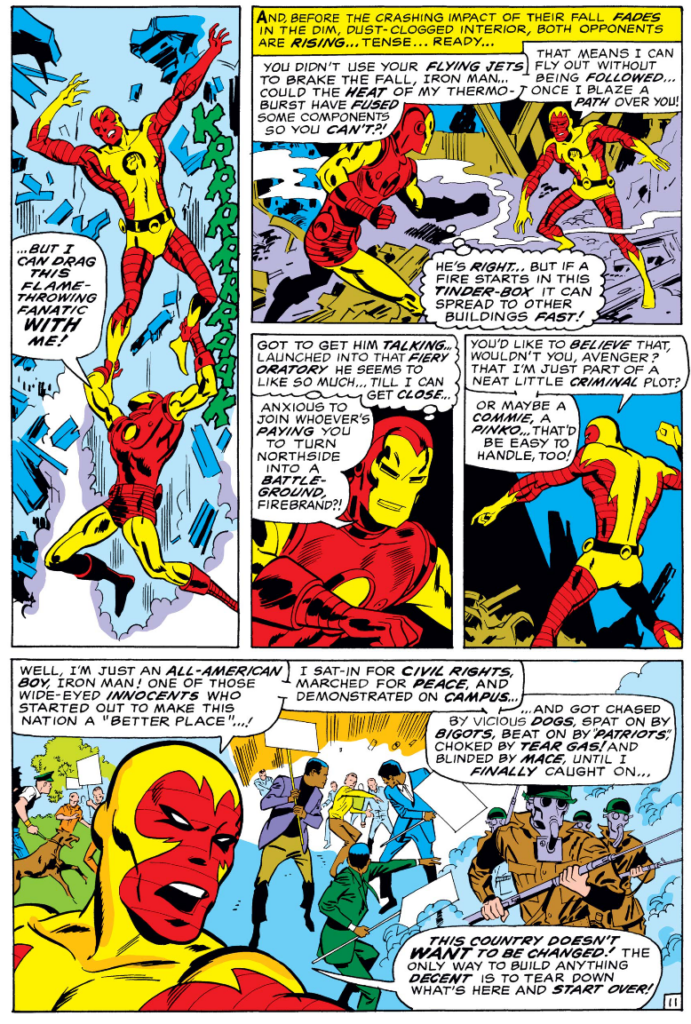
Firebrand is intent on turning this political dispute into a revolutionary flashpoint, as he explains to Shellhead (while Firebrand would later be unmasked as a white dude, my impression is that Goodwin saw him as a black guy).
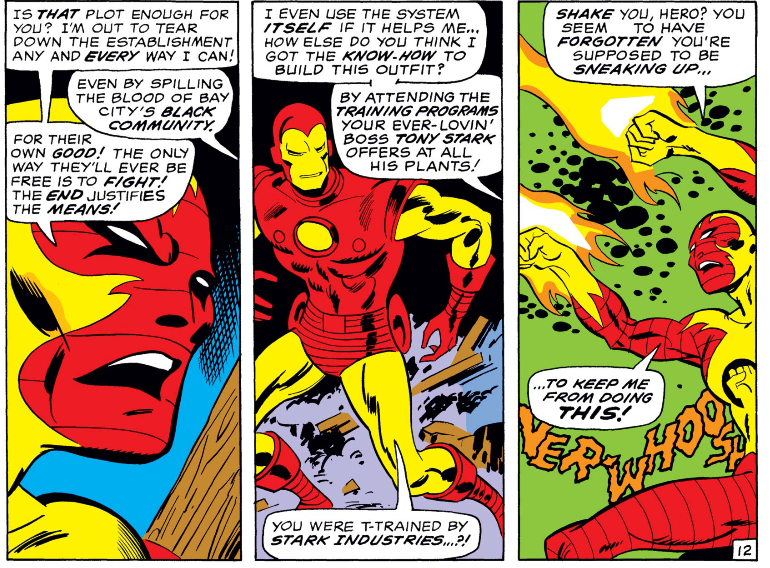
Further complicating things, the city official overseeing the community center project is a silent partner in the contractor building it. Why yes, some money has been skimmed off the top in the process. Despite this revelation Firebrand doesn’t get his revolution, though he does get away. The contractor goes down and Tony realizes he should have listened to what the black community wanted from him instead of deciding for them; Eddie decides to stick around and help improve things.
Why does it work? Partly because Goodwin keeps it low-key, without any of Ollie Queen’s sweeping oratory. And because the issues are recognizable to me as someone who lived through those years. Lots of liberal activists were disillusioned when they didn’t bring about the revolution; some of them decided violence was the way to move forward (the amount of terrorist bombings in the early 1970s was staggering). Top-down projects imposed without regard to what people want or need were a problem then and still are.
Which leads to another reason I like this: no threading the needle. Lots of relevant stories from that era tried to both-sides things. In “Cry of the Night … Is Sudden Death,” the anti-establishment teenage suspect and Robin both realize they were partly right, partly wrong. Campus protesters might have a point but so does the administration. Here, Tony’s plans for the North Side are plain wrong, the protesters right. That’s refreshing, especially when it’s the series star who’s in the wrong.
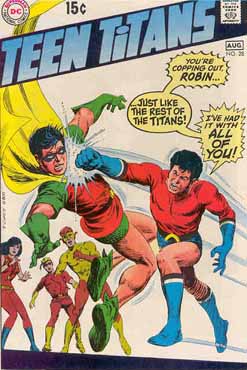
Teen Titans #28 (“Blindspot” by Steve Skeates and Nick Cardy) is fun because it’s an anti-relevance story. In #25, Robert Kanigher went big on relevance: the Titans kill an iconic pacifist philosopher, swear off superheroing and begin training with Mr. Jupiter to challenge —

— “the mystery of riots, prejudice and greed.” Kanigher’s stories were precisely the kind of “Western Union” relevance I hated, putting the message ahead of an interesting story. Though to his credit he did give the Titans their first black member, Mal Duncan.
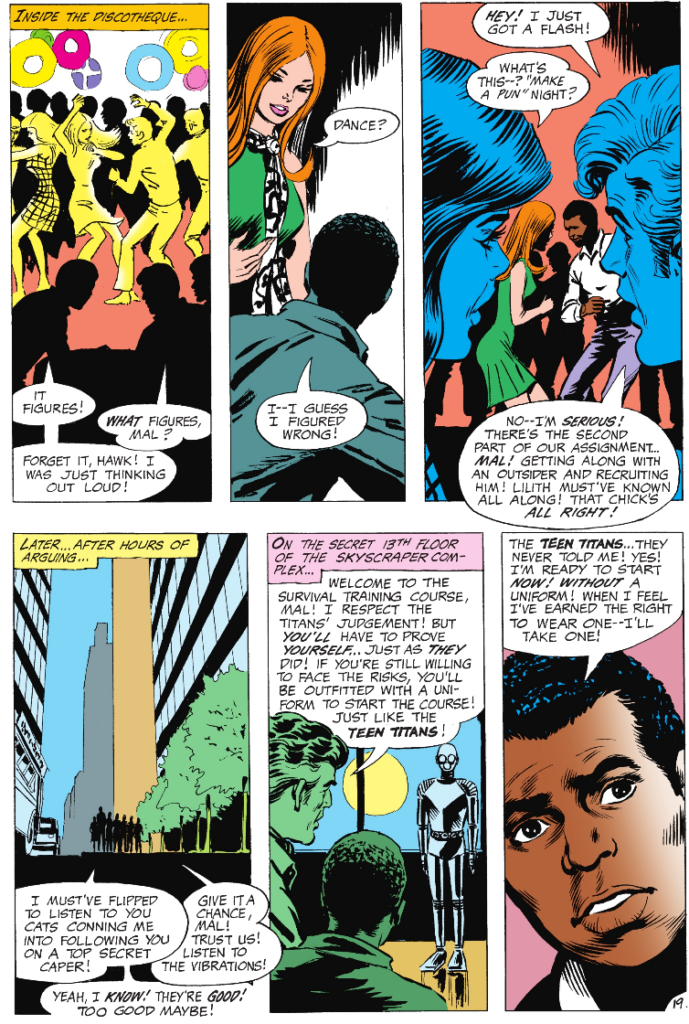
In #28, Steve Skeates takes over from Kanigher (he’d be replaced himself by Titans co-creator Bob Haney before long). He has Aqualad, who’s been busy in Aquaman (which Skeates also wrote) ask his teammates for help with a case, learn what happened to them and point out what a silly reboot it is.
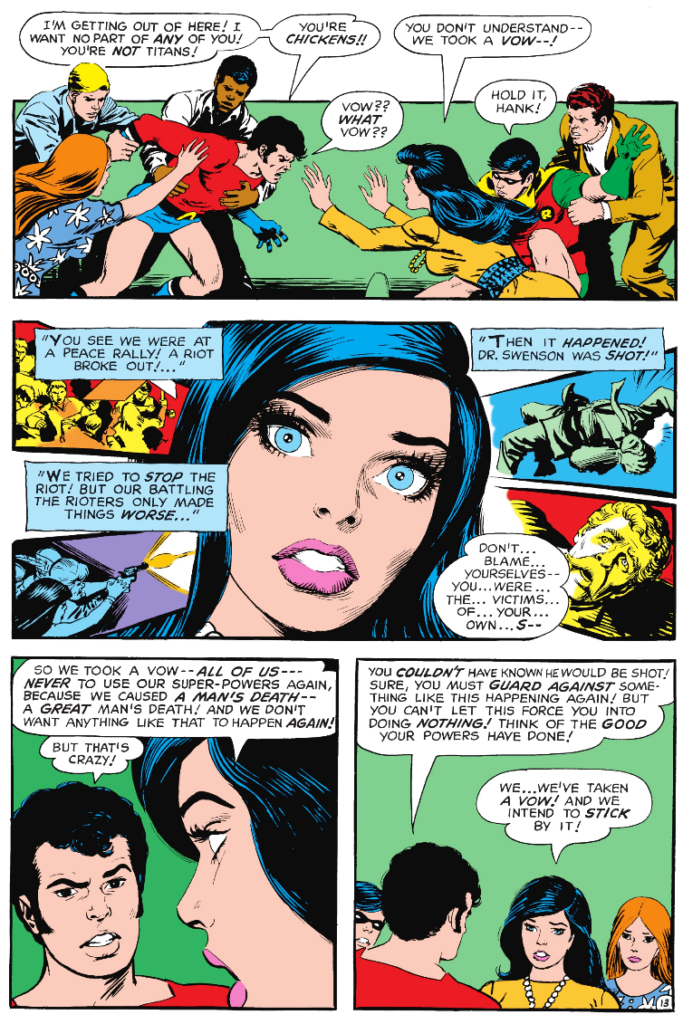
Pissed-off when his buddies stick to their decision, Aqualad heads out.

— and takes on Ocean Master, the issue’s surprise villain.
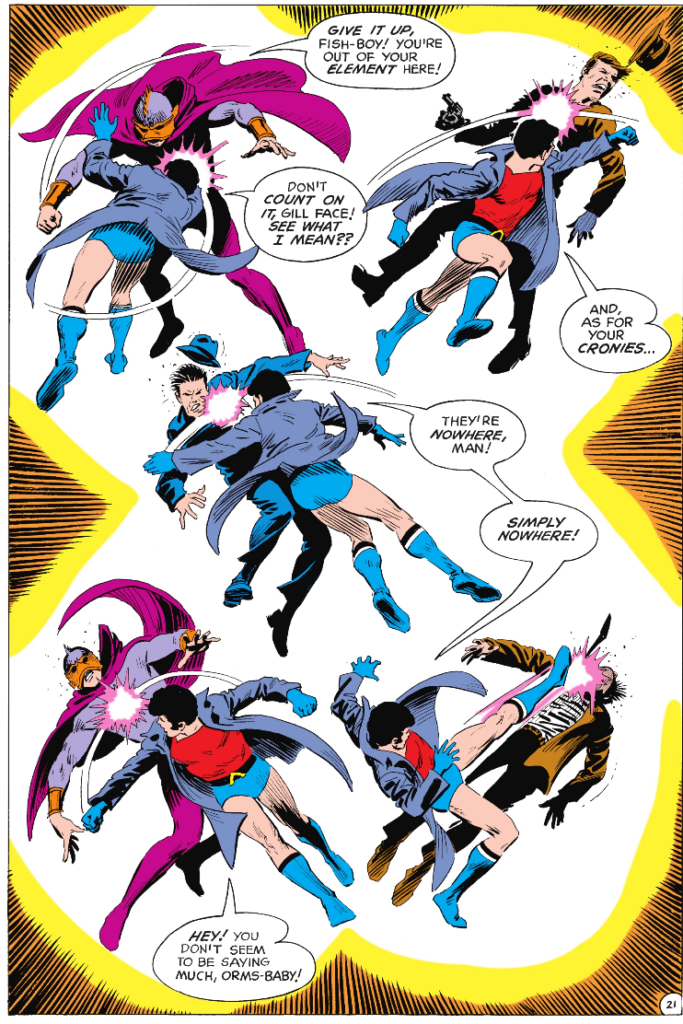
Nice work by Cardy. The Titans eventually get into uniform to help and I believe that’s the last we hear of them swearing off superheroing. Mr. Jupiter, though, would stick around training them and giving them life lessons until the original series wraps up in ’73.
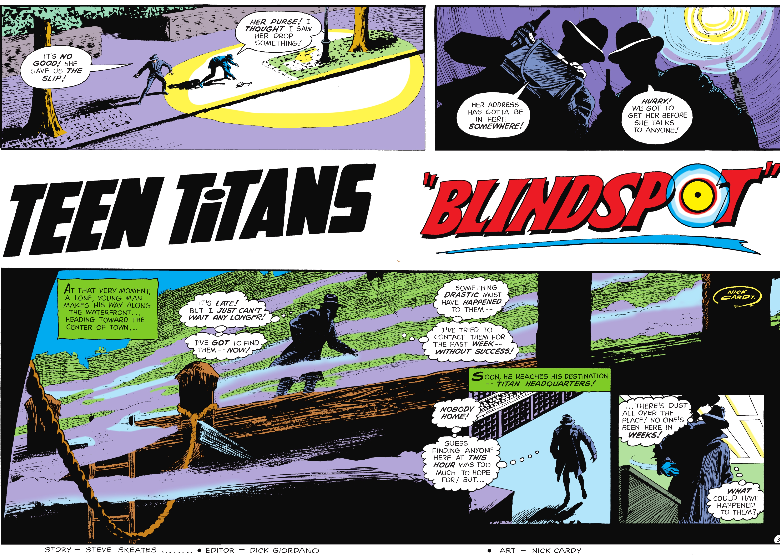
To finish this post here’s more Cardy art. First, the opening.
Then this bit of psychedelica as Lilith exerts her powers.
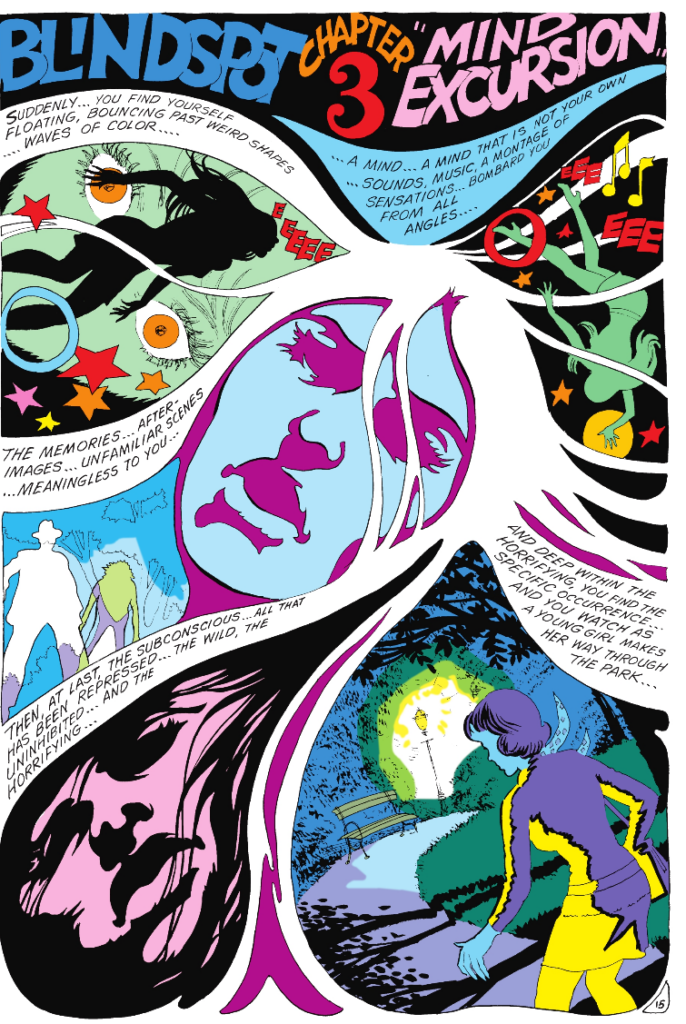
Groovy, cats!
