

“We’ve heard it said that you’re no bad loser, so we just know that you’ll have no regrets”
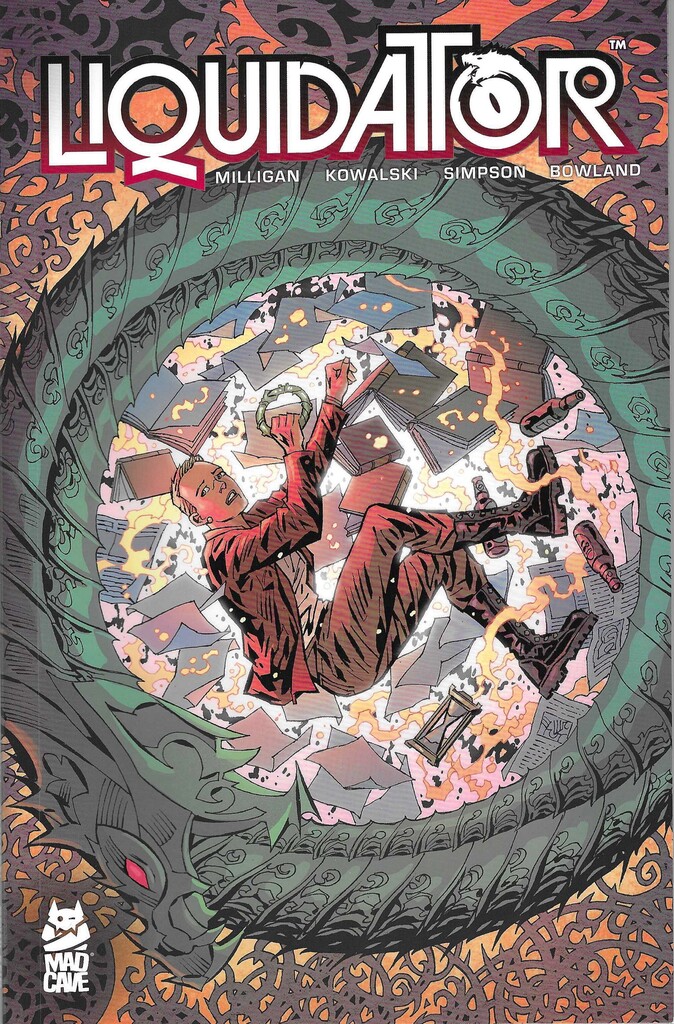
As you might recall, I don’t love time travel, not only because it’s impossible (I mean, a lot of things in fiction are impossible, but time travel feels … more impossible than a lot of things, somehow), but because a lot of times, writers don’t seem to reconcile everything that would be pertinent in time travel stories, and the loose ends drive me insane. 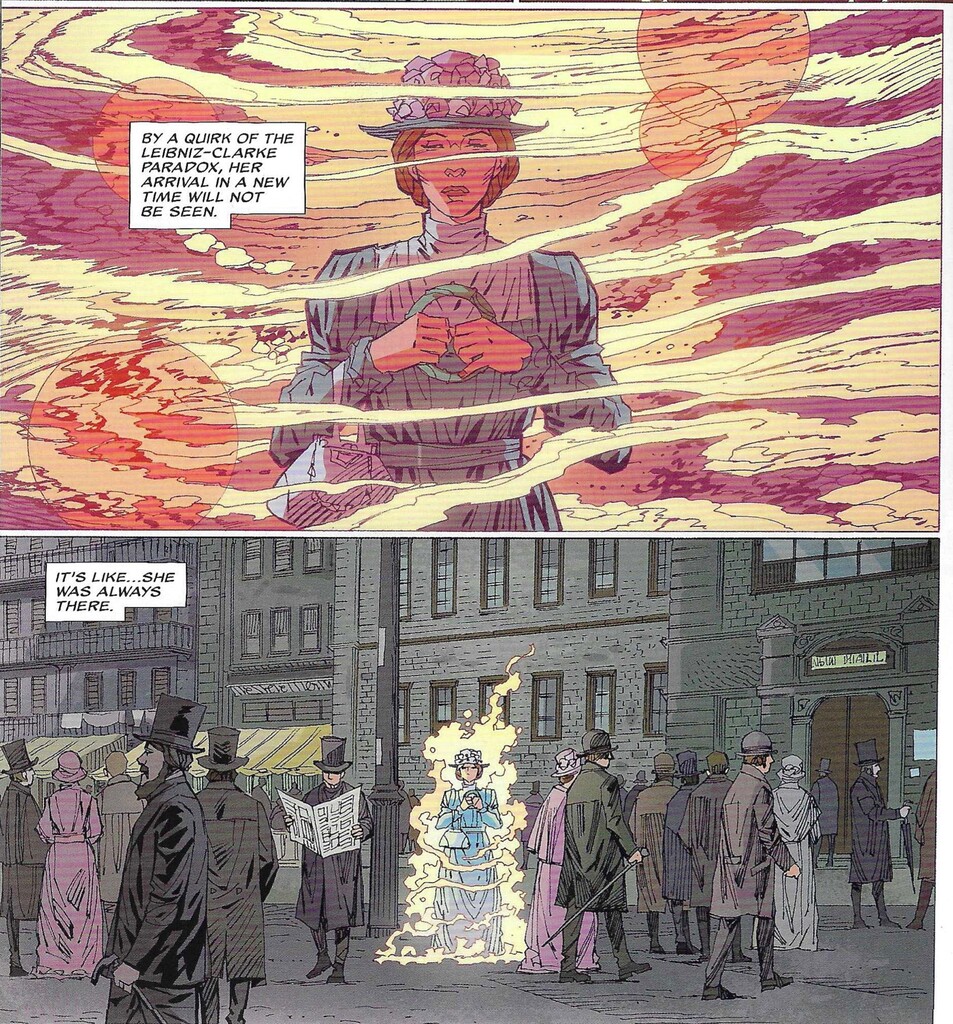 That being said (or written), Peter Milligan has a long, mostly excellent track record, and Milligan and Piotr Kowalski have done some neat comics together, so I checked out Liquidator, their time travel story. It’s from Mad Cave, costs $17.99, and it’s 100 pages long. Brad Simpson colored it, Simon Bowland and Chas! Pangburn lettered it, and James B. Emmett and Marla Eizik edited it.
There’s a lot wrong with Liquidator, unfortunately, but it’s still a pretty entertaining comic that could easily appeal to a lot of readers. Somehow, a thousand years in the future, some people — aliens? — develop time travel. So far, so good. A man brings in “liquidators” to clean up mistakes in the timeline, one of whom, Aubrey Street, is our protagonist. Again, so far, so good. She’s sent back to the late 19th century (annoyingly, two different dates are given, which seems a failure in the editing process) because a maid has gotten a hold of a copy of The Feminine Mystique, which is Not A Good Thing™. Aubrey’s job in these instances is to get the out-of-time object and kill the person “affected” before they can screw up the timeline. It’s not a bad hook.
Milligan does some interesting things with the concept of time travel and how it affects people. Aubrey’s employers tend to hire loners/losers whom nobody will miss, because it’s such a stressful job, both mentally and physically, that most liquidators don’t last too long. That leads to rebellious attitudes among the employees, and Aubrey meets a dude who decided to go rogue and live forever in the past, using some arcane rituals to keep himself alive. 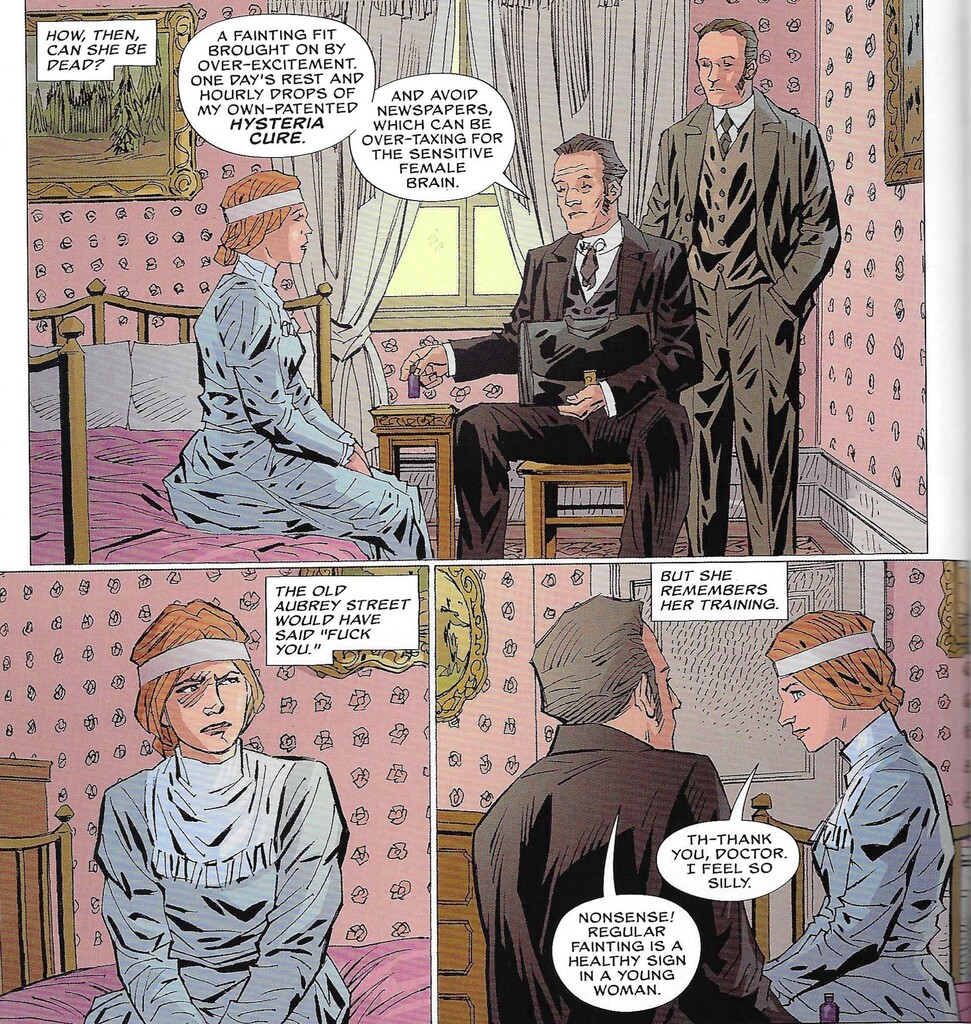 She’s repulsed by the bloodshed needed for the ritual (and, of course, the dude likes killing women for the purpose), but she’s intrigued by the possibilities of breaking free from her employers’ control. She teams up with the dude, refuses to kill the servant woman, and earns the ire of her employers. Will she be able to stay one step ahead of them?!?!?
As usual with Milligan, there are a lot of interesting concepts here, and as usual with Milligan in general, at times it feels a bit too clinical — Milligan can get into emotions well, but a lot of times, he feels almost aloof from the material, and that can hamper him sometimes. Aubrey’s dilemma should feel more emotionally difficult, but it doesn’t quite, and it speaks to a big problem with the book: it’s either too short, or Milligan stuffs too much into it. Milligan often does this, and sometimes it works, and sometimes it doesn’t, and here, it … almost does. He leaves out far too much, though, and while I don’t want everything explained, it would be nice to know a bit more about what’s going on. Why do the Horai (the group that developed time travel) need people from times where time travel doesn’t exist (our present, sure, but other times as well) to be liquidators? Why not use people from their own time, for whom the concept isn’t insane? Who’s altering the timeline, and what is their endgame (Milligan seems to imply it’s people with access to time travel devices playing pranks, which seems odd). How do these “pranksters” get access to time travel machines, which would seem to be ridiculously expensive?  If someone getting something like The Feminine Mystique 70 years before its publication will screw up the timeline so much, why not simply go back to before the maid got it and stop the person giving it to her, rather than murdering her after she’s read it? This is why time travel stories bug me — even if you try to tie off all the loose ends, there are always going to be ones. Milligan doesn’t even seem interesting in making a cursory effort to explain things, which makes me not love this as much as I want to. Aubrey is an interesting character, and Milligan, as he often does, examines identity through her and her voyages to the past, which brings in the role of women in society, so the book has things on its mind, but the very idea of time travel necessitates some more explanation, and we don’t get that. It becomes an entertaining, but frustrating, thriller, as Aubrey tries to evade her employers while trying to figure out how to stop the mass murderer who can help her hide. That part of the book zips along nicely, but the technical side keeps rearing its ugly head, and I can’t get past it. Maybe you can!
Kowalski, as usual, does nice work with the art. He has that thin line and heavy inks that give his characters a delicacy even when they’re in brutal circumstances (like some of the violent situations in the book or, you know, the 19th century in general), and he’s always done well with the details in his comics, so we always feel like we’re deeply embedded in whatever place or time he’s drawing. 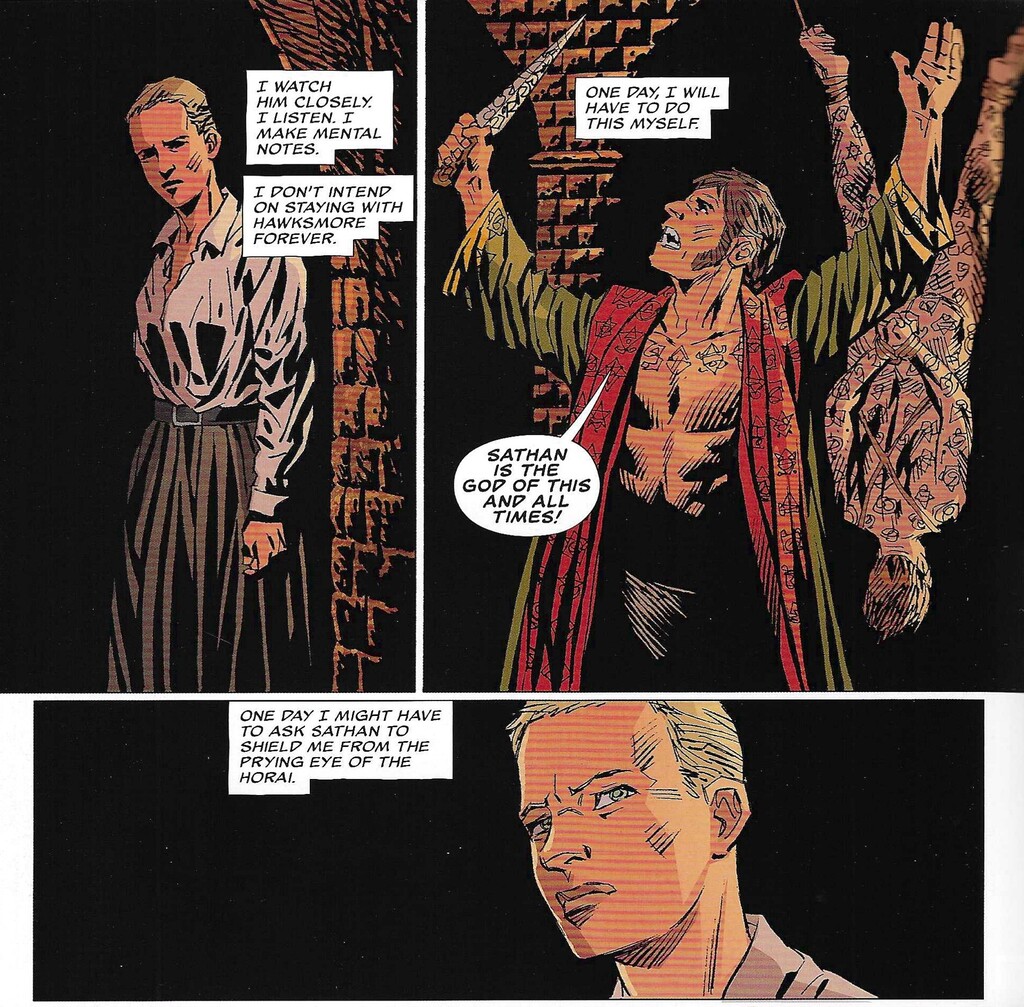 He always hatches wisely, so that he adds nice roughness to his thin line, so that everything in the scenes looks lived in and weathered, whether it’s people or objects. No one is innocent when Kowalski draws them, which makes his comics interesting to look at, as we’re always seeing people who have been through some things, whether the writer makes that text or not. Simpson is a good colorist, so even the darker sections of the book are clear and easily seen, which helps us enjoy the line work more. Kowalski is always an interesting artist, and he is here, too.
I always want to like the comics I get, and I always want to see what Milligan is up to, but Liquidator isn’t one of his stronger works. He seems to have left “Bad Milligan” behind in the 1990s, but there’s always “Relatively Uninteresting Milligan,” which isn’t bad, just not up to some of his great works of the past. Liquidator has some neat things in it, but Milligan leaves too much on the bone, and as with a lot of comics of a similar nature, I wish it had been a bit longer so it wouldn’t feel so rushed. It feels a bit incomplete, which is too bad. Oh well!
Rating: ★ ★ ★ ★ ★ ★ ☆ ☆ ☆ ☆

I do like time travel, and Milligan. This one didn’t really come together for me in the end. Lots of ideas swirling in here, but I’m not sure if he’s teasing more to come or if it just sort of peters out.