
“Some people call me the space cowboy”
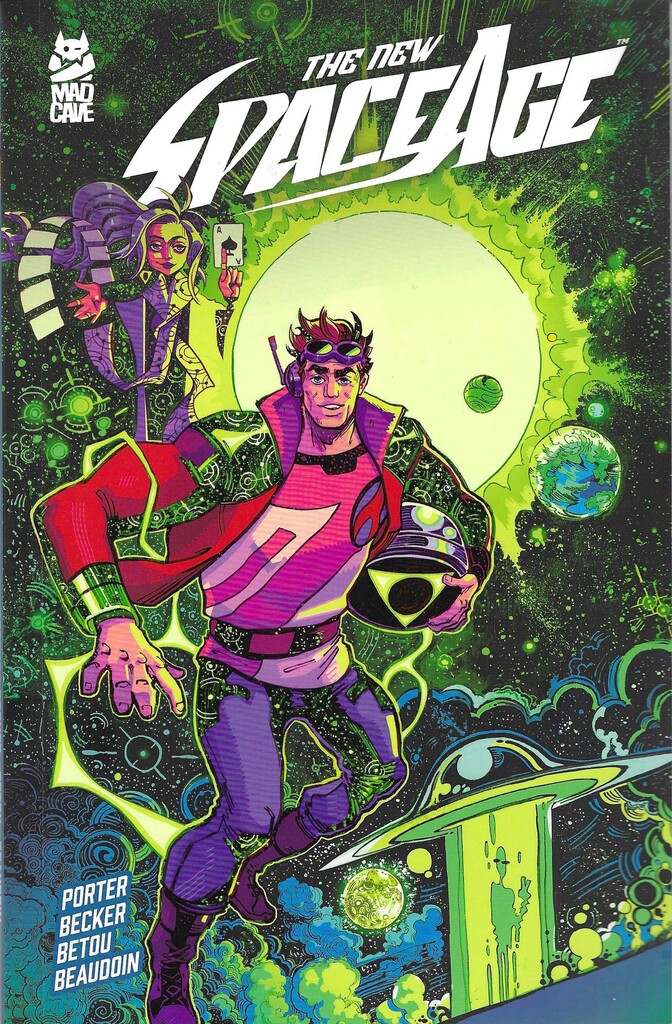
Mad Cave brings us The New Space Age, which is by writer Kenny Porter, artist Mike Becker, colorist Kevin Betou, and letterer Buddy Beaudoin (with edits by James B. Emmett). 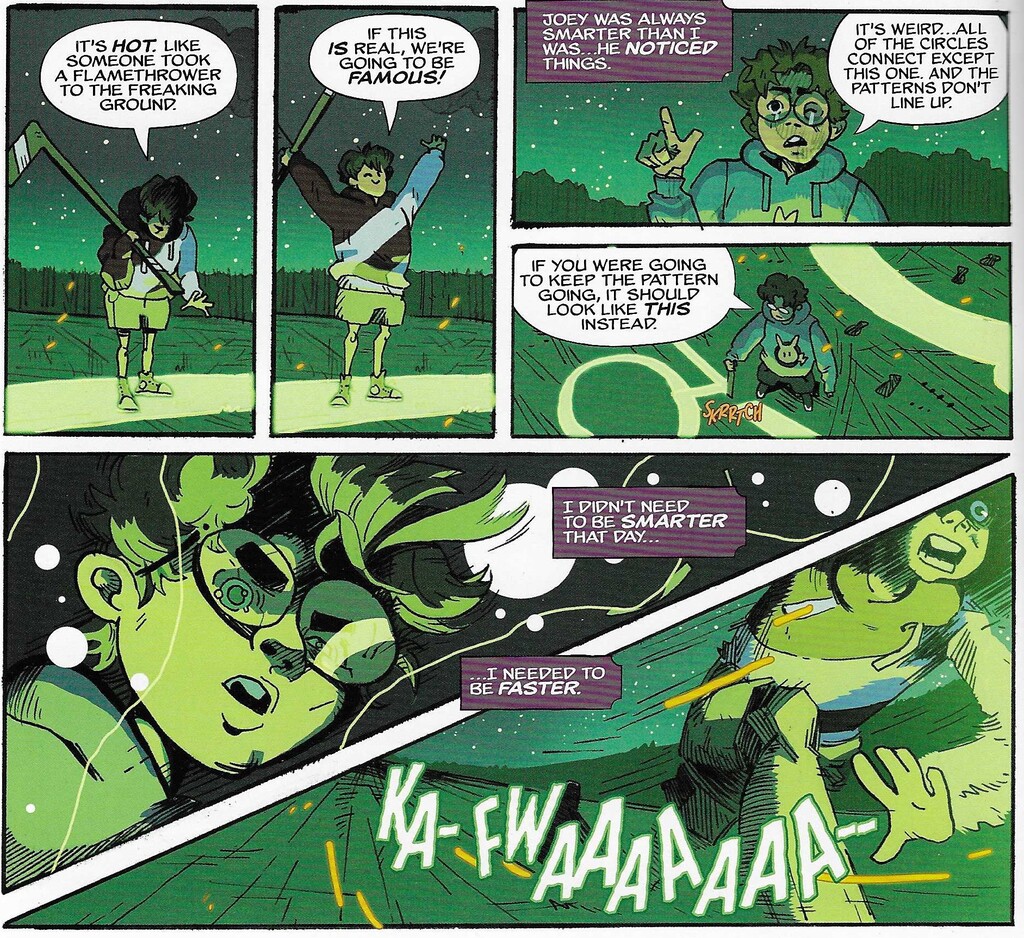 I’m not sure if I’ve ever read anything by any of those people, which is odd. It costs $17.99, and it’s 104 pages long.
The book is set thirty years in the future, and the space program dies early on in the book because there’s no money in it, which seems about right. Our hero, astronaut Mark Mitchell, gets canned in the first few pages, not only because the program goes away, but because he punches out the head of the program, so he goes back to his farm in upstate New York to continue his quest in finding his brother, Joey, who was abducted by aliens when he was young. Of course, no one believes him, but he’s desperate to find Joey, and he figures out what crop circles mean, which is keen. Apparently, the aliens use magic to propel their spaceships, which is a nifty twist in the proceedings. Luckily, his childhood friend, Stacey, happens to be a performing magician, so he recruits her to help him. Another friend, Bobby, goes to work for the sort-of bad guy of the book, General Irving, who’s using the technology from the space program to develop weapons, because of course he does, but Bobby is unhappy and jumps at the chance to work with Mark (unfortunately, he also wants the stability of a government job, so he sells out to the general once he realizes how cool the tech Mark has figured out is). Mark, Stacey, and Bobby figure out a way to use alien technology and they build a prototype spaceship, which Mark uses to zip into space … but, weirdly enough, the book isn’t really about his quest to find Joey. Bobby sends the tech to the general, who builds an almost invincible drone, which of course goes a bit rogue, and Mark needs to figure out how to stop it. That’s what the book is really about. It’s a strange pivot — Mark heads off to space, discovers some things about Joey, but then returns to Earth and the “real” plot begins. 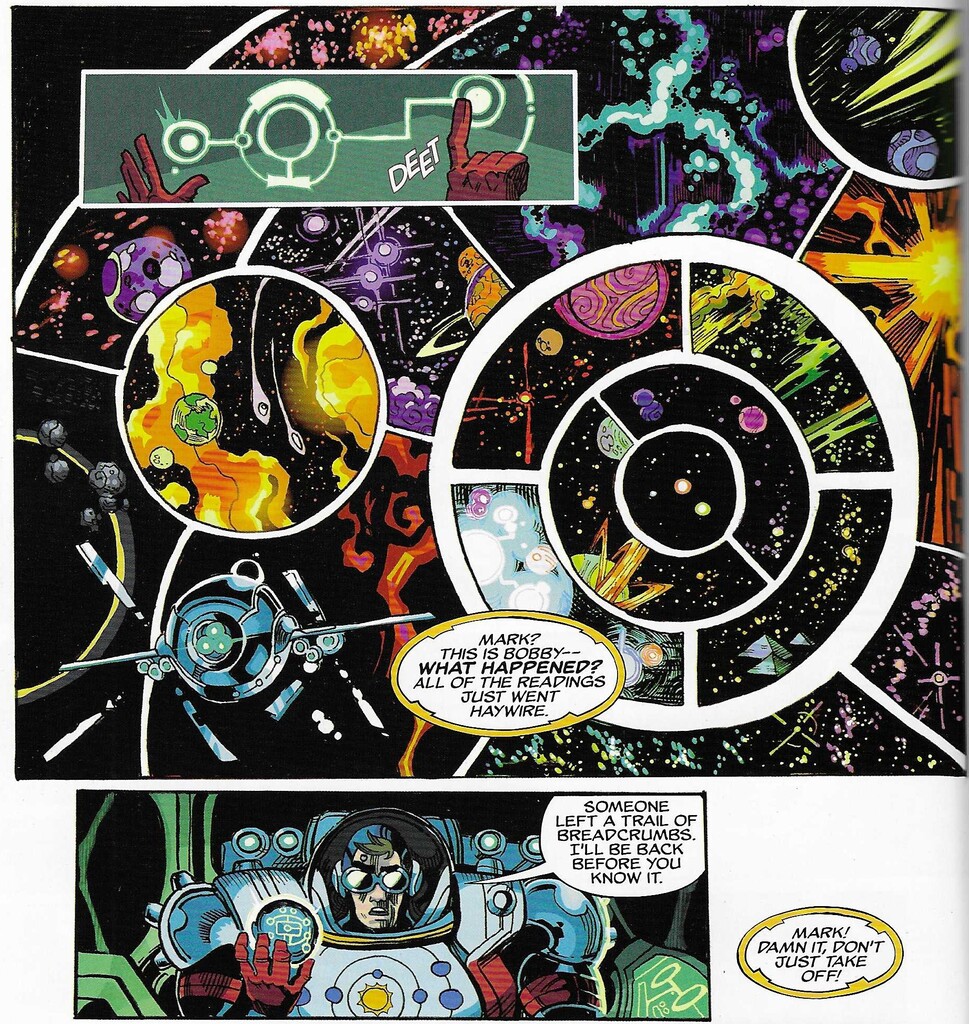 It does tie into the abduction, to a degree, but it’s a weird shift. It certainly seems that Porter has another story in him, so maybe there’s a sequel in the works, but it’s still kind of odd.
Still, this is a cool comic. The hook is neat, as Porter does come up with an interesting explanation for alien technology — why not magic? The characters are solid, and we really get a good sense of Mark and Stacey’s deep friendship — they’ve been out of touch for a while, but it’s clear they have a good bond. Bobby’s not a total bad guy, either, even if he’s weaker than the other two. His sell-out is understandable, to a point, and he quickly realizes what a bad idea it is and returns to the fold (not without getting punched for his betrayal, though). Porter does a good job giving each of them interesting personalities, so they work well together even if, say, Mark zips off to space in an untested prototype simply because that’s the kind of dude he is (I always love “damn the torpedoes” people — usually dudes — in fiction, because we’re supposed to admire their maverick tendencies, but I wonder how many of them would end up dead in the real world, because safety checks exist for a reason). Even the general, who thinks his rogue weapon is glorious for a few moments after it goes rogue, eventually recognizes that it might not be the best idea for all the technology to be in a military man’s hands, and he eventually does the right thing. Porter does a good job with all the characters, which is nifty. He also gives us a standard plot, but with some fun swerves mixed in. I mean, the military stealing technology and perverting it isn’t anything new, but because of the magical element, the plot is a bit more unusual, and Mitchell has to figure out different ways to fight the rogue drone. So the book always keeps us on our toes just a bit, which is nice.
Meanwhile, Becker’s art is the most compelling reason to get this book. Becker has worked in animation, which is not surprising, and he’s done some DIY comics, but this appears to be his first work for a semi-big publisher, and it’s really stunning. 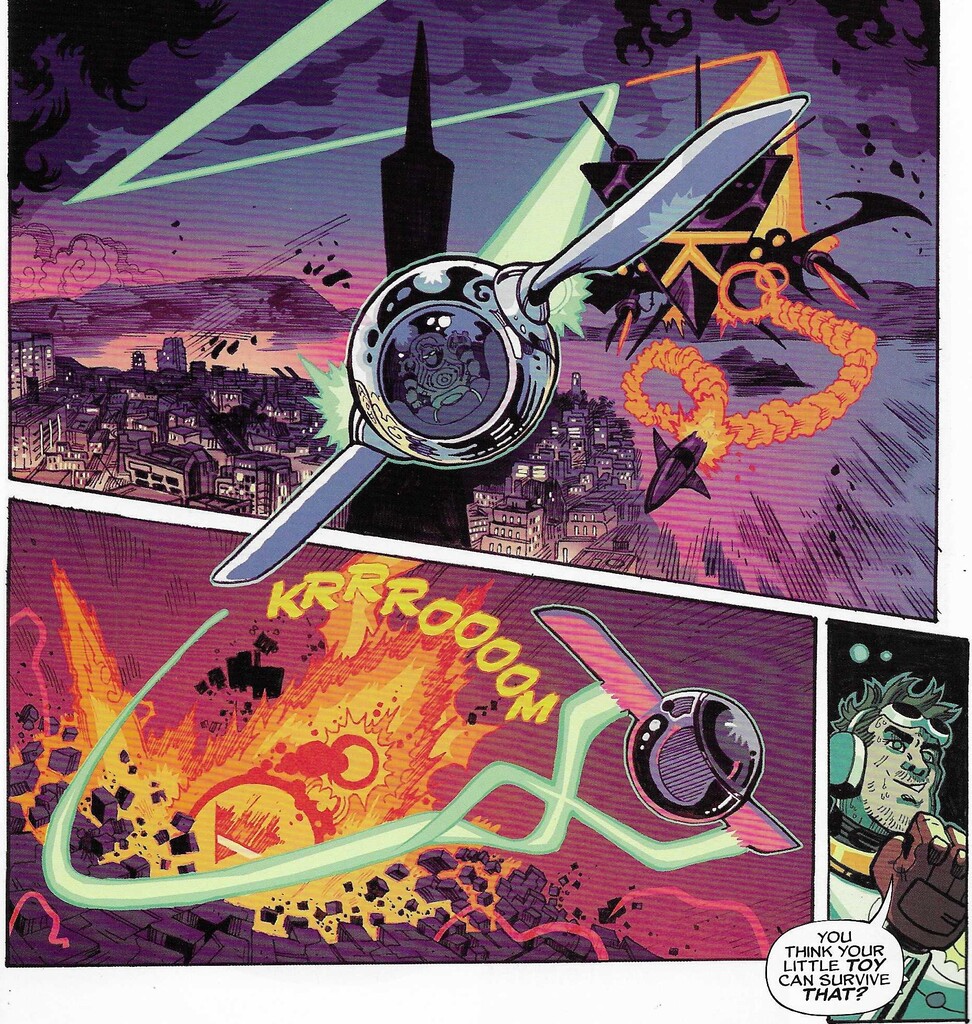 His characters are a bit cartoonish, which isn’t terribly shocking given his background, but that doesn’t mean he doesn’t imbue them with a great deal of personality and humanity — even the general is not a caricature, as Porter does give him a reason for his war-mongering and Becker makes sure we can see it on his face. He gives them each a unique look — Stacey’s wardrobe, for instance, is fierce — and he does a good job with the ancillary characters, making this future feel like a real place. Where he really shines, though, is with the weird stuff. He has a good, solid, flexible line and a superb attention to detail, so he creates these oddball situations that look bizarre yet normal, which helps with the oddness of the script. There’s some cool stuff early on, as Porter eases us into the story, but when Mitchell cracks the code and zips off into space, Becker really goes nuts with what he discovers. It’s nice and Kirby-esque, but also a bit hallucinogenic, which is a neat mix. When he returns to Earth, the military action takes over, and he’s very good at that, too. His drone is menacing, which it would be, of course, but the added touch of magical symbols on it adds to its terrifying appearance. The final battle between Mitchell and the drone over the streets of San Francisco is terrific, as Becker gives us beautiful flying scenes through the metal canyons of the city, culminating with a Quitely-esque scene over Alcatraz. It’s an amazing-looking book, with Betou’s vibrant colors (especially in the space scene) helping the art leap off the page. Becker ought to get more work with bigger publishers — I could see him and Dan Watters or Deniz Camp (or, if they like being a team, Porter) doing a very wacky Green Lantern comic.
The New Space Age has a solid story, but the art is clearly the star. Together, they make a pretty darned good comic. I wonder if there will be more of it!
Rating: ★ ★ ★ ★ ★ ★ ★ ½ ☆ ☆
