
“Cowering behind curtains and the taped up painted windows, decriminalised genocide, provided door to door Belsens”
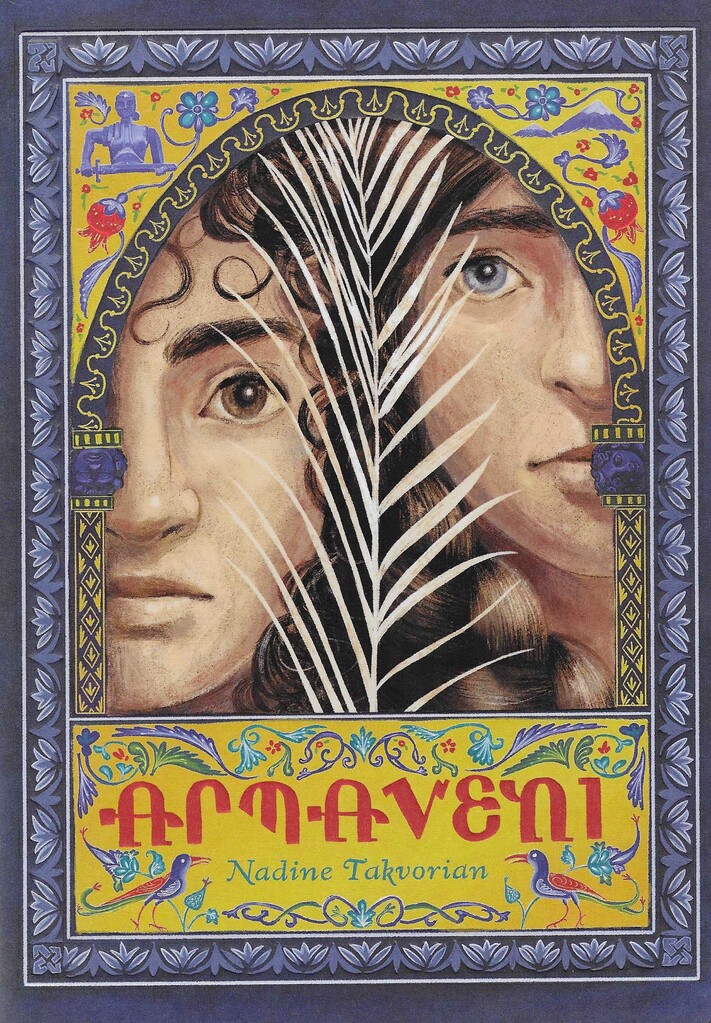
Armaveni is the first comic from Nadine Takvorian, and it’s a quasi-autobiographical work, so you know I’m bound to love it! 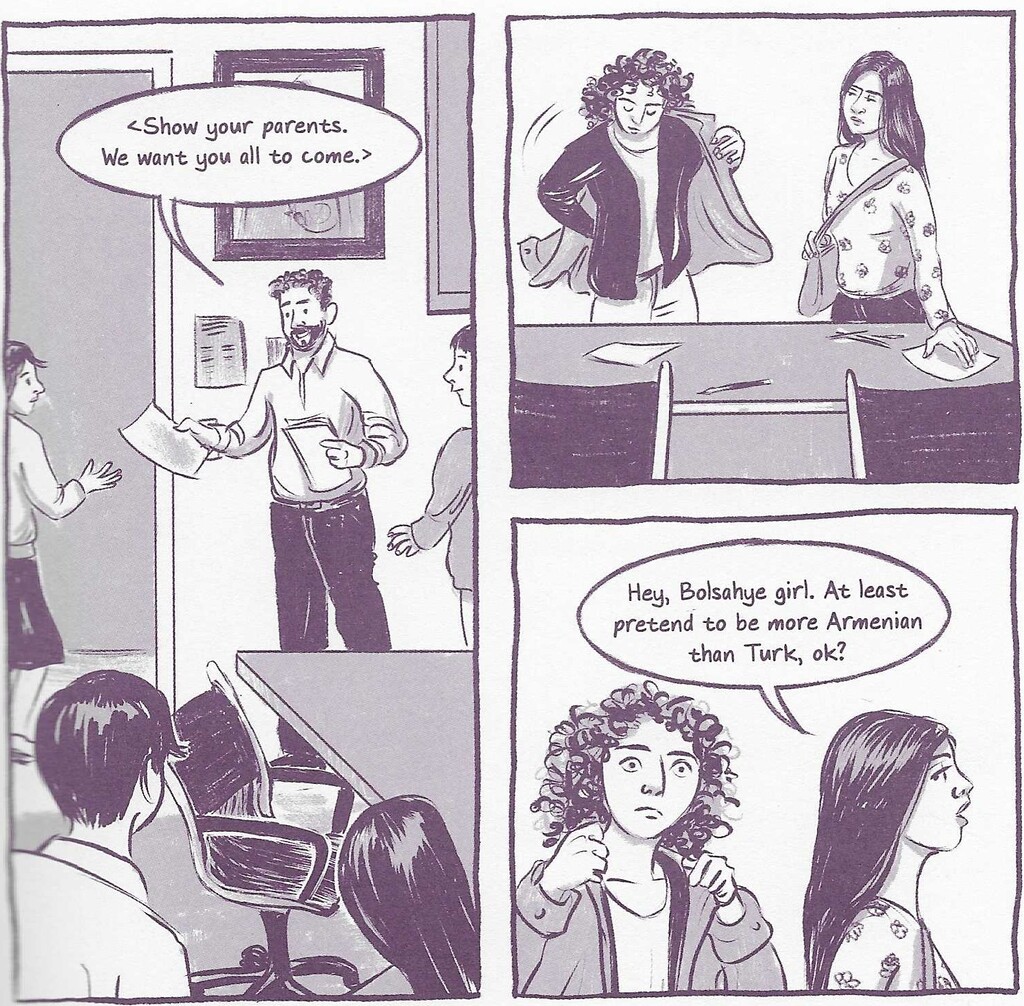 It’s published by Levine Querido, it costs $18.99, and it’s a solid 336 pages long.
Over twenty years ago (man, I’m old!), I called Marjane Satrapi’s Persepolis 2 “the asparagus of comic books.” While I was never one of those “hip” bloggers whom everyone read to find out what to think so that fun phrase never caught on, I still think of it occasionally when I read something like this. This is in the genre of comics I would say are “good for you” but maybe not that great as a story. I loathe asparagus (don’t tell me that I if cook it a certain way, it’s good, because I’ve heard them all — both for asparagus and Brussels sprouts — and it’s still vile!), but if you like it, substitute your own “good for you, but not good” edible. This entire genre usually deals with people who have been oppressed. Listen, oppression sucks, and it’s tragic that it’s still happening entirely too often these days (and seems to be on the upswing, because this timeline blows), and I think it’s excellent that oppressed people have more and more outlets to tell their stories. None of this is bad. I am very happy that Armaveni exists. That being said, is it any good?
Armaveni is a book about the Armenian genocide, in case you were wondering. Takvorian gives us a teenager named Nadine, who is, she notes in the back, not her, exactly. Takvorian is older than the character, for instance, and I assume she made her a teen simply so this could be more YA than not and she wanted to include the 11 September attacks, which occurred when Takvorian was older, so she had to youthen down her main character. 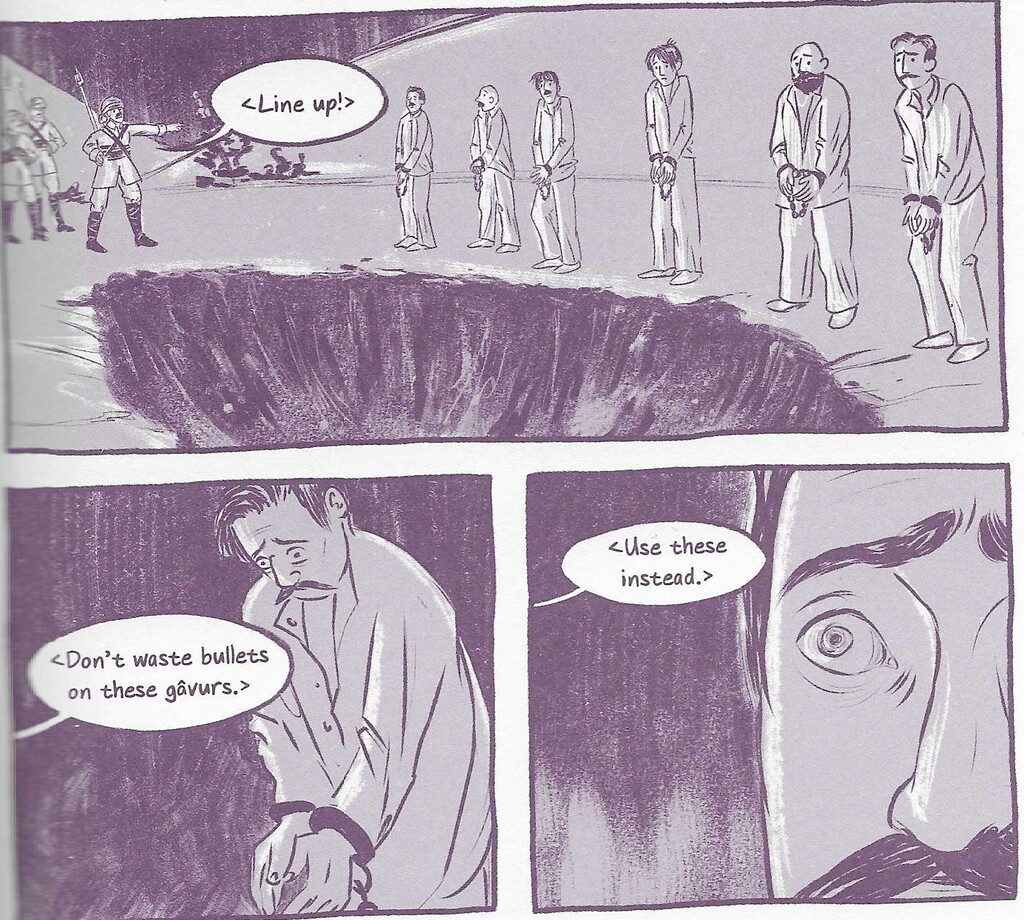 The 9/11 attacks aren’t a big part of the book, but Takvorian wanted to get them in due to the parallels she saw between the way Armenians were treated in Turkey and how swarthy people were treated after 9/11 (I’d say “Muslim,” but the Armenians are very pointedly Christian, and when have ‘Muricans cared about making distinctions between swarthy people?). The story takes place in 2001, mostly during the summer, when Nadine visits Armenia and Istanbul. At the beginning of the book, she doesn’t know about her family history, as it seems like it’s a thing among Armenians to not talk about things that might endanger their children (Takvorian makes this sound like an Armenian thing, but, I mean, isn’t that all parents?). Her grandmother, who is dead, used to tell her fantastical stories when Nadine was a small child, and her mother continued the tradition, but whenever she would ask more personal things, they would shut her down. After some badgering, Nadine gets her mother to tell them a little about the genocide, and when Nadine gets the chance to go to Armenia over the summer, she takes it. She also visits her family in Istanbul and learns that the Armenians are still not treated terribly well by the Turks. In the meantime, of course, we get flashbacks to her grandmother’s life as she and her family try to stay alive through the horrors of the time.
There’s a lot to like about the book. The Armenian genocide (which occurred in 1915, although there were pogroms before it and after it) is still a subject about which not a lot of people know (Takvorian is contractually obligated, I think, to quote Hitler at the beginning of the book, when he justified the Holocaust by claiming no one remembers the Armenians), despite a lot of scholarship being done on the topic. The biggest problem is that Turkey refuses to acknowledge that it was genocide, even though it’s obvious that it was, and as the Turks have always been allies of the U.S., there’s never been any diplomatic pressure on them to admit it (they claim the Armenians rebelled and they were just putting down the rebellion, which is — what’s the phrase? — a crock of shit). 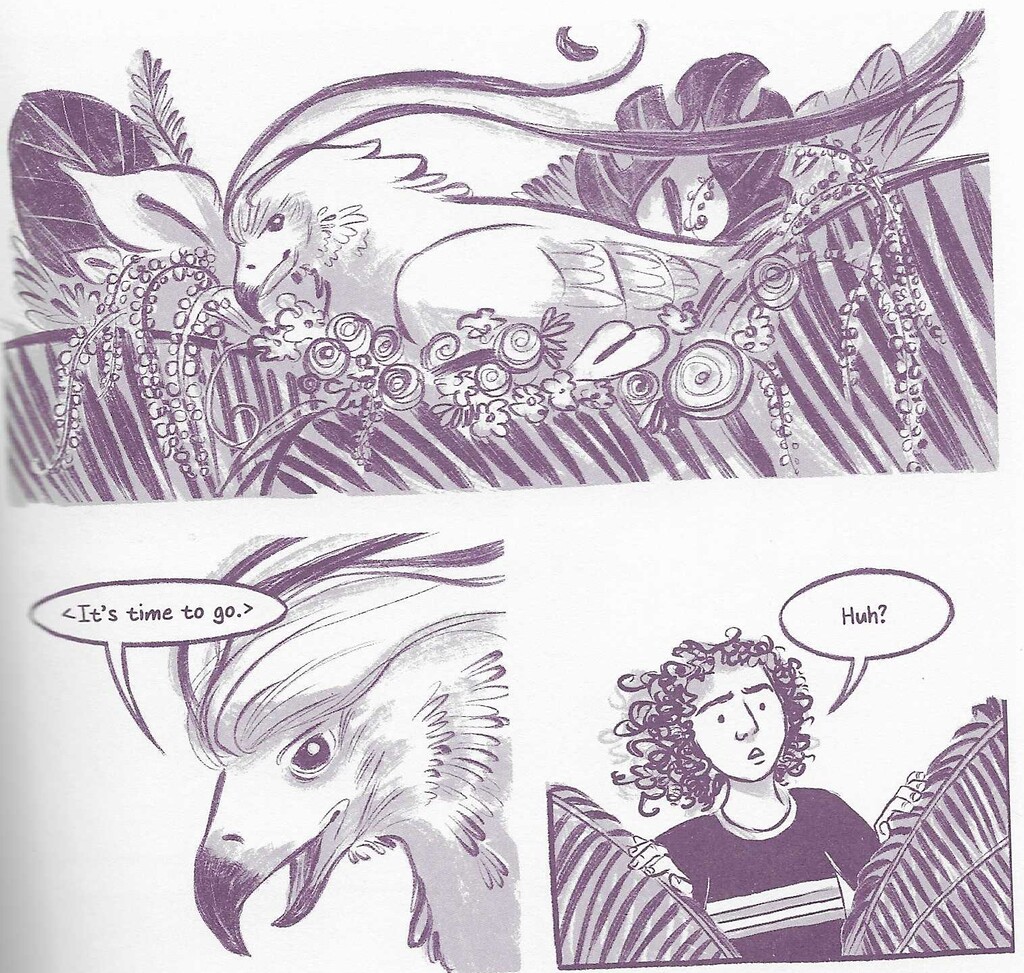 As Takvorian points out, it’s against the law in Turkey to discuss the genocide, and the government has prosecuted people such as Orhan Pamuk, who is both Turkish and a frickin’ Nobel Prize winner, for doing so. One of the contentious moments in the book comes when Nadine confronts her history teacher, who denies that a genocide occurs. Takvorian says in the back of the book that a similar incident occurred with her and a teacher in college, and that’s fine, but it also feels a bit too melodramatic. The problem is, of course, that it’s taken from real life, and if you read anything about the Armenian genocide, you’ll see that Turkish organizations do actually sponsor teachers for trips to Turkey and there’s an implicit (possibly explicit, but I doubt it) quid pro quo on the part of the teachers to downplay the atrocity. I guess it feels a bit too melodramatic because teenage Nadine actually tells her teacher off, which feels a bit too … I don’t know, heroic of her? Like, it’s what you should say to assholes, but it also feels like something someone wants to say but doesn’t. But that’s just my opinion.
Another interesting thing about the book is the division within the Armenian community. Because Nadine’s family fled to Istanbul, she is looked down upon by a girl who considers herself a “true” Armenian, someone whose family didn’t “sell out” to the Turks (despite Nadine’s brother pointing out, almost in an aside, that the girl’s family is from Beirut, which is not, you know, an Armenian city). They both go to Armenia, and Nadine manages to make the other girl realize that they’re both Armenian, which is a nice touch by Takvorian. When Nadine and her brother get to Istanbul, we see the side of their family that stayed there, and we see the prejudice they still face, so the idea of them “selling out” is laughable. 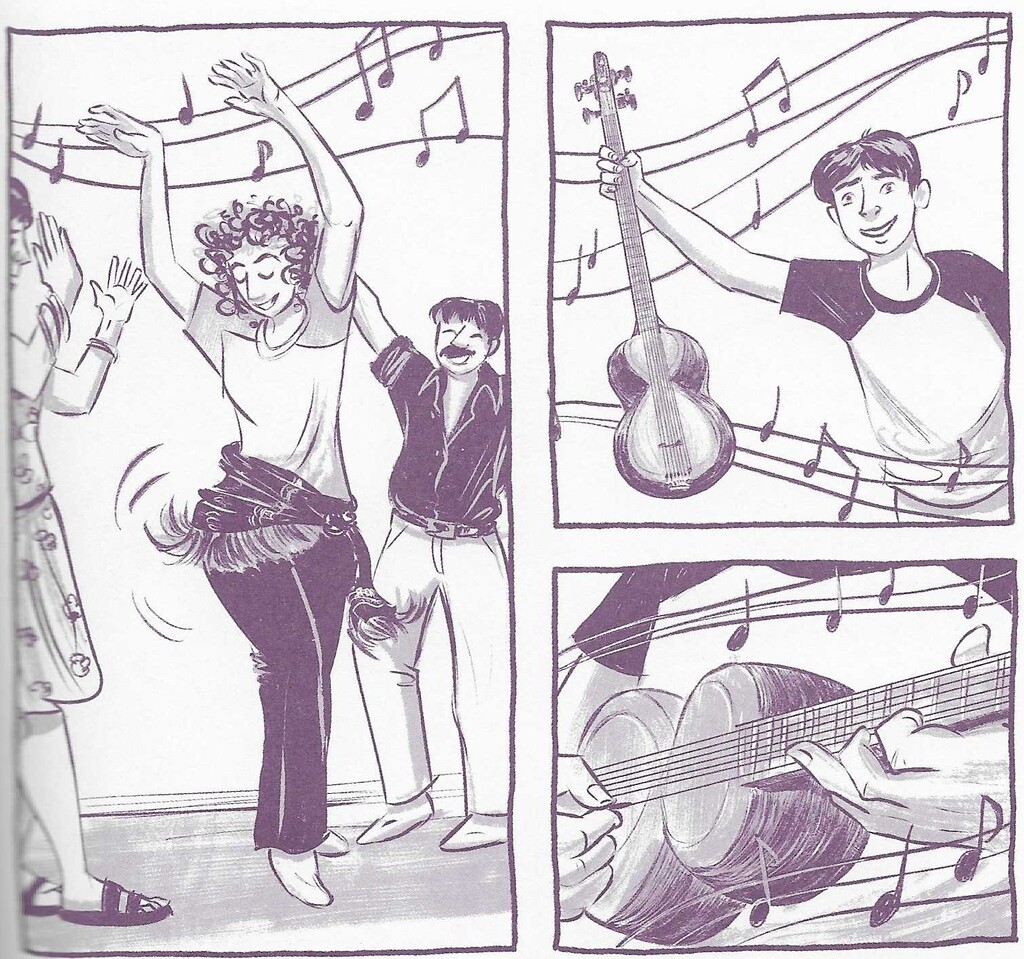 Takvorian does a good job showing how Armenian culture unites them, and it makes Nadine feel more a part of her history. Takvorian also does a good job showing how Nadine’s grandmother was saved during the genocide and how others did not. It’s not a graphic book, but Takvorian does show the horrors of the genocide and also that not every Turk (#NotAllTurks) is on board with killing every Armenian. It’s small moments of grace, but it’s something. Takvorian also points out that Atatürk, the “George Washington” of modern Turkey, who escaped the taint of the genocide because he just happened to be “exiled” from the government at the time, was not well disposed to the Armenians after he took over as president of the new republic. It’s not like he was committing his own genocide, but he wanted Turkey to be “Turkish” and he didn’t really care about the minorities in the country. Usually, you don’t read things like that about Atatürk, because he’s supposed to be the “good Turk,” but Takvorian notes that he wasn’t completely guilt-free.
I don’t love the book for the reason I don’t love a lot of these books. It’s a bit difficult, it seems, to construct a decent narrative from real-life events. As I noted above, the moment with the teacher doesn’t feel “real,” even if it happened, because it feels more cinematic than it should. Things happen, and some are horrible and some are actually uplifting, and it’s excellent that Nadine finds these things out and comes to a better understanding of her history, and the metaphor Takvorian uses in the book works perfectly well, even if it’s a bit obvious. The story of the genocide is horrible, to be sure, but it’s tough to get too into it because the characters remain a bit abstract. 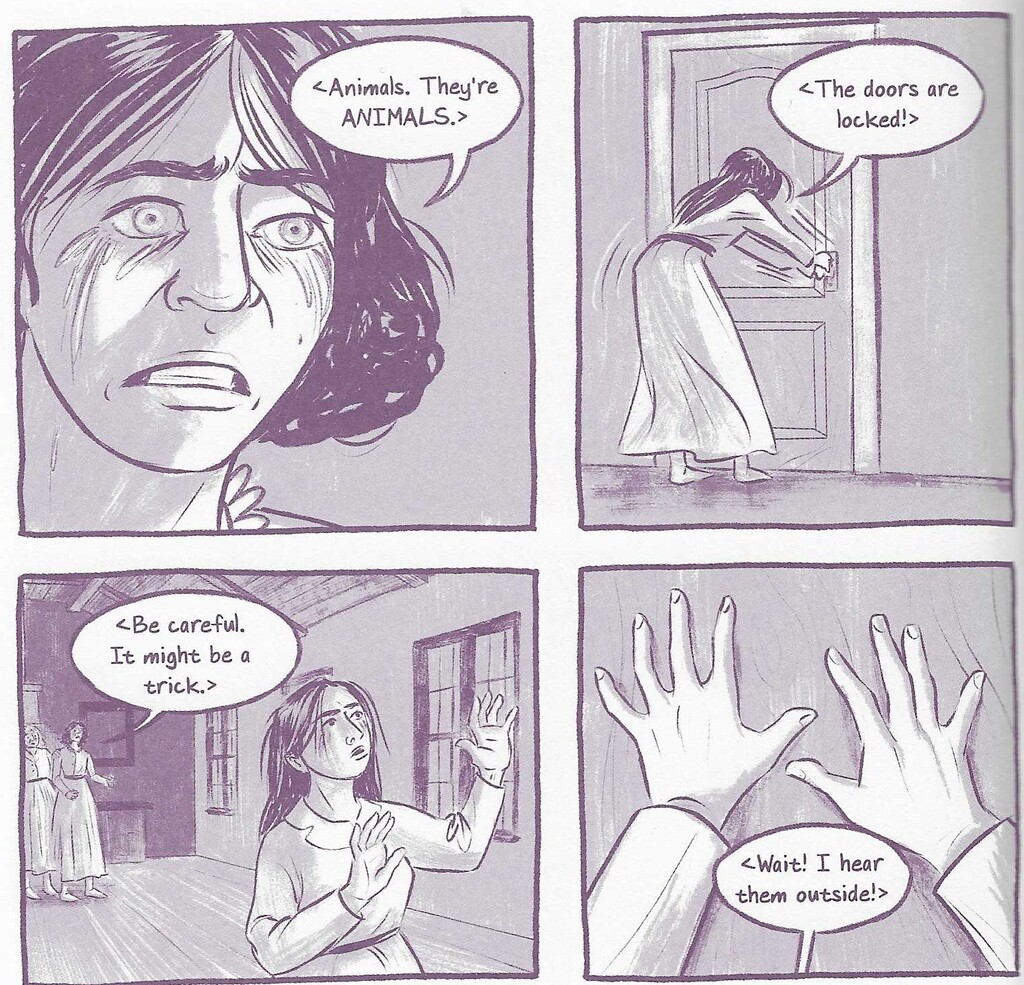 Nadine, meanwhile, simply just goes through her life, and while it’s interesting from a learning experience for her and the reader, it’s not terribly compelling as a story. I do like reading these comics, usually because they’re about things that I know about but don’t know personal stories about them, and it’s neat to see. But, in general, the stories aren’t usually that great. Sure, there are some where the stories do rise above the baseline, and those are the great ones, but Armaveni isn’t one of those. According to me, that is.
I didn’t write about the art. It’s fine. The settings are neat, and I assume Takvorian used photo reference for some of it. Some of the scenes set in the past are very terrifying, which is good (not that I want to see genocide happening, but it should be terrifying, so it’s good that they are). It’s just solid art. Nothing spectacular, but solid.
If you know nothing about the Armenian genocide, Armaveni is a neat comic that personalizes the horrors quite well. Takvorian also does a nice job with modern Armenian culture and what it means, which is nifty, too. There are, of course, more in-depth books about the genocide (Takvorian has two pages of sources in the back, and I’ve actually read one of the books she cites), but Takvorian does a good job not just focusing on the genocide, but how it still affects Armenians today. It’s not a great comic, but it is a solid one. I know, it’s not the greatest recommendation, but I am glad I read this.
Rating: ★ ★ ★ ★ ★ ★ ★ ☆ ☆ ☆
