
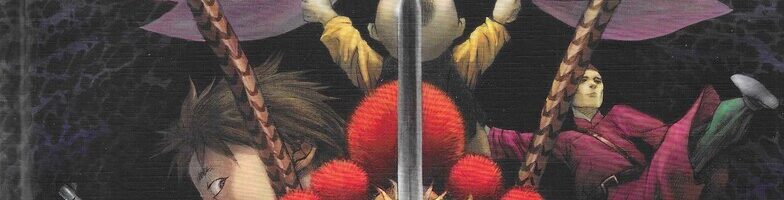
“This guy turns around and he’s pointing up the stairs; I found myself in her doorway but there wasn’t anybody there”
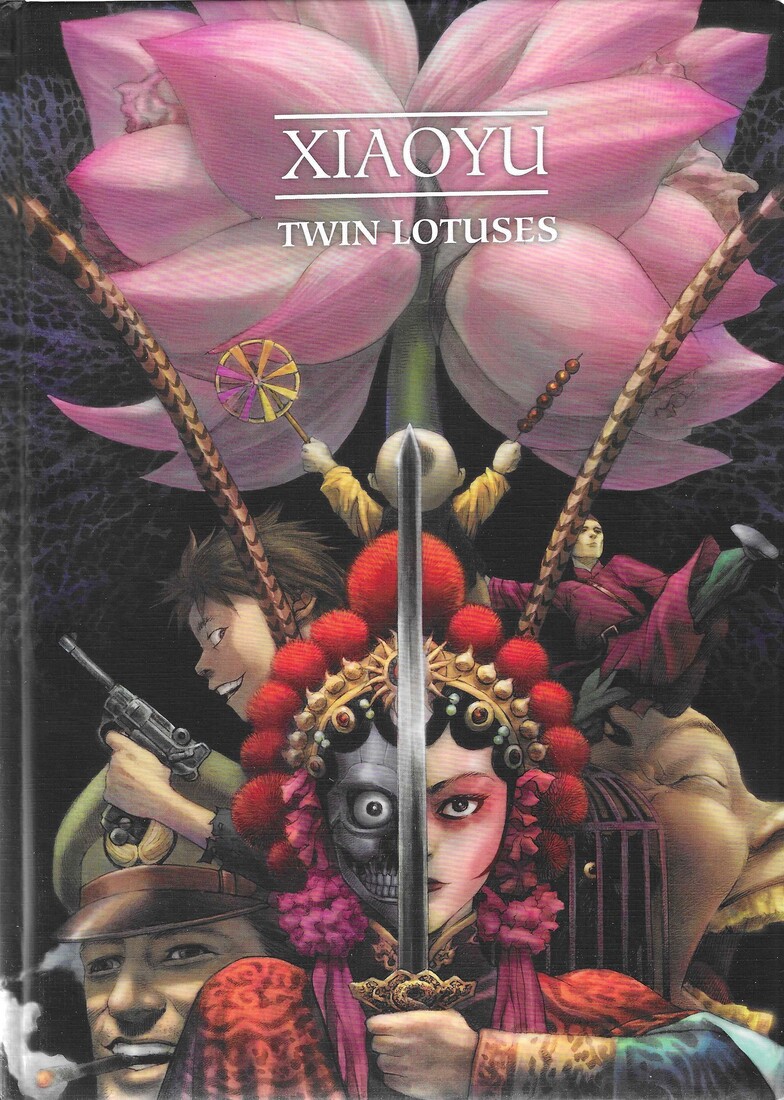
Twin Lotuses is a big, honkin’ graphic novel (it’s 319 pages long) by Zhang Xiaoyu (it was translated by Dan Christensen). It’s published by Oni/Magnetic Press, and it costs $29.99. 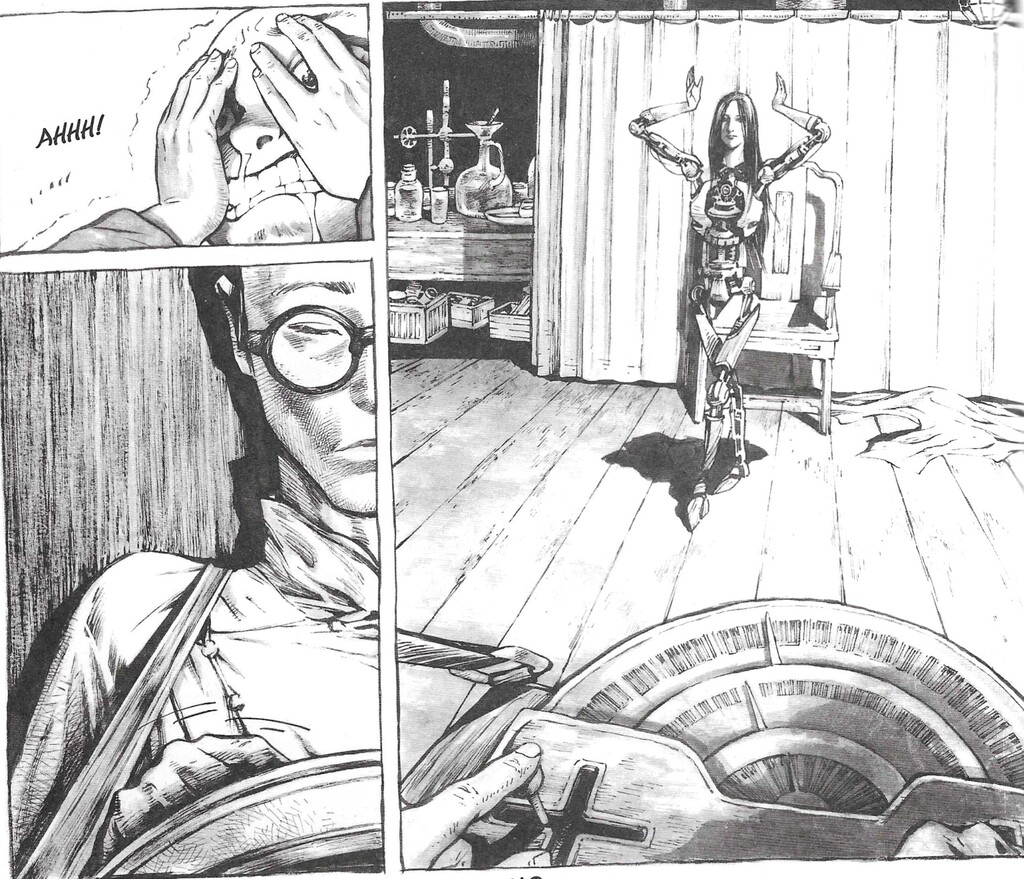 Let’s take a look!
I wanted to find a bit out about Zhang, so I went to Google, like you do. It turns out there’s a Chinese “internet celebrity” named Zhang Xiaoyu, who has been described as “China’s first nude model.” So, I mean, good for her? Anyway, our Zhang is 50, and apparently this is his first North American release? So that’s neat.
Twin Lotuses takes place in China during the 1940s (probably, based on the few context clues), so you know it’s going to be bleak — that was not a good time in China. The book begins with a Chinese ship getting bombed and sunk by a Japanese plane, an event that has serious repercussions in the book. After that prologue, we switch to a small village in southwest China (it’s never named, but it doesn’t really matter, does it?), where kids with charming names such as Snot-Nose and Stink-Head are being cruel to each other, as young boys often are. They watch the theatrical performances from the roofs, and one night Snot-Nose sneaks into the backstage and finds a human head on a pedestal. Naturally, he freaks out, but when he investigates, he discovers that the head is part of an automaton, built by a scientist named Fan Zhihuai. Mr. Fan built it to look like his dead wife — who was killed in the bombing from the first few pages — and as his wife was an actor, he has figured out a way for the automaton to act in the plays the theater puts on. He has a device to move it remotely, so it appears he’s playing a video game. If this sounds a bit far-fetched for a story set in 1930s China, well, I guess you’re just going to have to accept a little magical realism in your bleak war story. 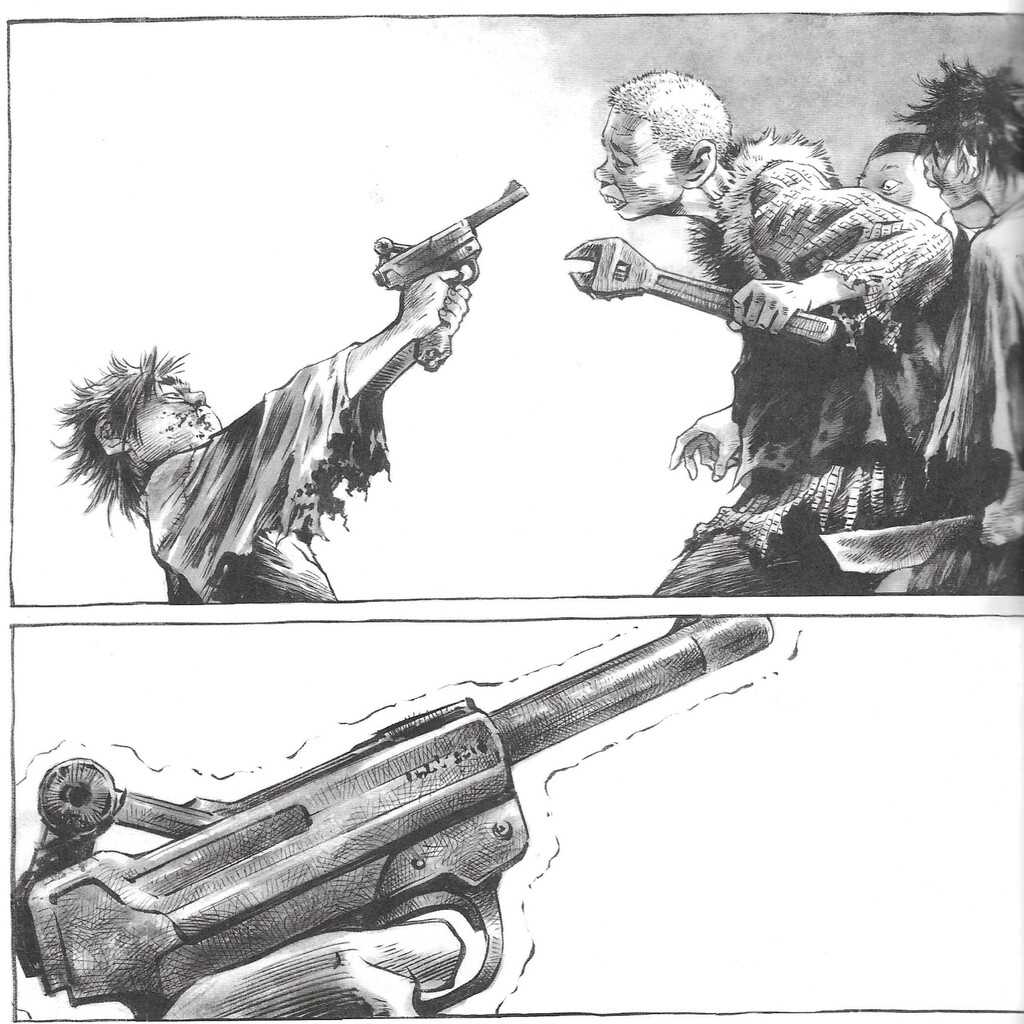 Fan is keeping this device a secret, of course, because he wants to keep “her” all to himself, but it’s hard when some petty functionaries want to “entertain” her and you can’t say no to petty functionaries because they always know more powerful people who can disappear you. Meanwhile, Snot-Nose begins a business relationship with Kane, an American pilot, who’s helping the Chinese in their war against Japan. Stink-Head, meanwhile, finds a gun and uses it to take over a gang, which brings him power (among the kids, of course, but still) but also brings him into the orbit of adults who will think nothing of killing him if they can’t use him for their own agendas. And perhaps, given the name of the book, it’s not too surprising that Fan’s wife actually survived the bombing, and she shows up later in the book and thinks his choice of project is a bit weird. I mean, she would think that, wouldn’t she?
There’s a lot going on, in other words, but Zhang has a lot of pages to work with, and the book never feels too complicated or sprawling even though there are a lot of plot points. The only place it falters a bit is with a murder that occurs, which seems to be simply a catalyst for other, more important things but seems vaguely intriguing in its own right, but Zhang doesn’t really explain it. Other than that, this is a powerful book. Mr. Fan is obviously working through grief, and not well, but he is trying, and he does bring something amazing and new into the world. We don’t get much of a sense of him as a husband, but we do know his family disapproved of him marrying an actress, but he defied them because he loved Mingfeng so much. He even attempts suicide because he’s not able to deal with his grief. Zhang does a nice job not spelling out what changes with him when his wife returns “from the dead” — it seems like he can’t deal with having a lack of control over the situation, as he’s a man of science and doesn’t like the randomness of her “death” and “resurrection,” so he rejects her in favor of the thing he can control, which is the automaton. It could be something different, but it’s clear that when Mingfeng is back in his life, his idea of love has become twisted and he’s unable to find his way back. Plus, the automaton is acting a bit strange, so maybe it’s jealous? 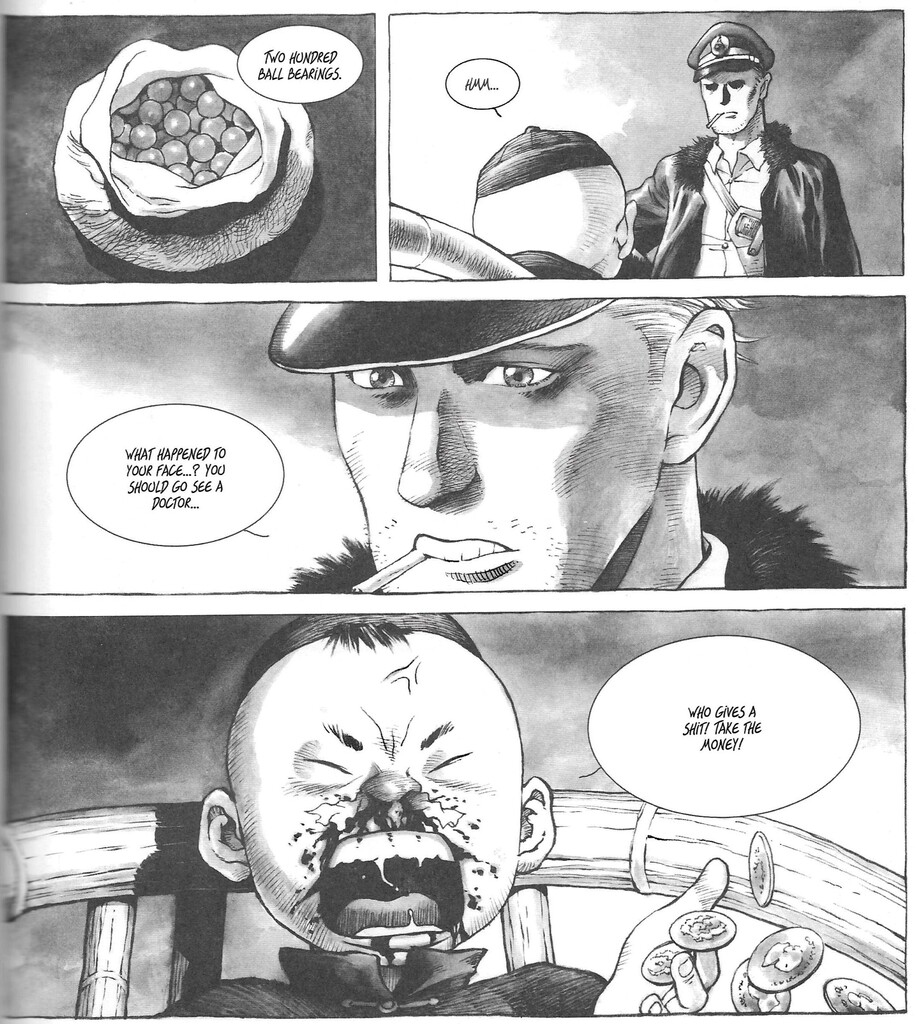 Again, Zhang does a good job keeping the story on this side of the fantastical, but the very small elements he introduces are enough to put the idea of the creation coming to life in the back of our mind.
The society in which Fan and the others live is on display, too. People rule by force or the threat of force, as Stink-Head learns all too well, and someone like Mr. Fan is adrift in this world, as he believes in science and beauty. Everyone is either violent or sycophantic, and someone who is neither is in a dangerous place. Snot-Nose, who’s our de facto point of view character, evolves slowly but surely into a stronger individual, capable, at least, of trying to see something better in the world. He chooses to help the adults, especially Fan, unlike Stink-Head, who simply tries to dominate his fellow children. Snot-Nose isn’t terribly admirable, certainly, but he does show a curiosity about life that helps him in the end. Everyone else in the book — Mr. Fan, Stink-Head, Kane the American pilot, even Mingfeng — is consumed by ugly thoughts and emotions, and it curdles everything they touch. Snot-Nose, while still remaining fairly cynical about the world, is more willing to assist those in need. In a fairly bleak book, his arc is the most redemptive. Of course, it’s war time and the Japanese are still out there and the Chinese officials are still corrupt, so horrible things happen to most of the characters, but it’s not a completely nihilistic comic, and most of that is due to how Zhang plots out Snot-Nose’s arc. Maybe even his nose will stop running!
Zhang’s art is stunning, too. It’s vaguely manga-influenced, sure, but only rarely does he veer into the big emotions and out-sized facial identifiers that manga artists often employ with such skill (I know I’m generalizing, but such is life). The art is a very nice blend of Asian and European styles, and the overall effect is amazing. His characters are all very expressive and interesting, and they’re easy to identify even though the cast is large. 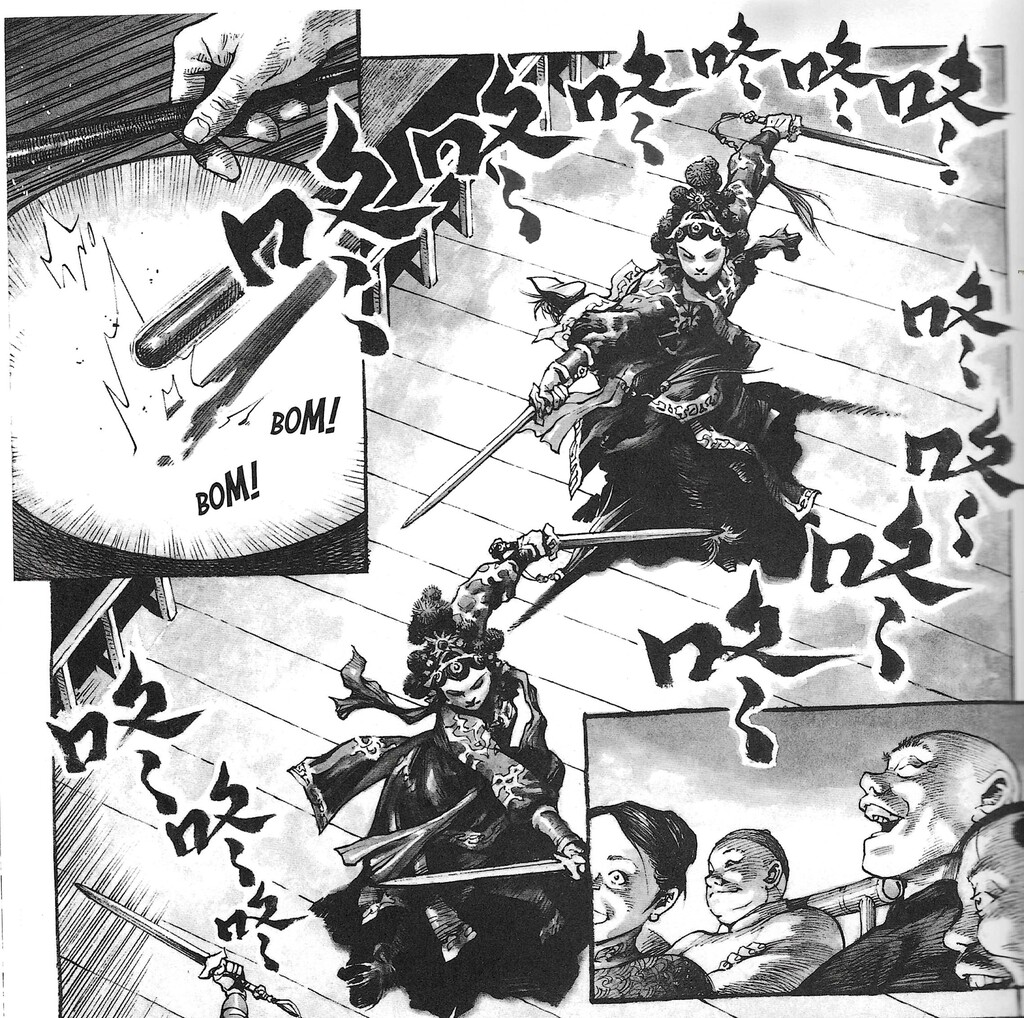 He makes the kids look like they’re out of a Dickens novel, while Fan, being a high-minded and intelligent individual, is much more put together. The bureaucrats are fat and odious, of course, but even they are distinguishable from each other. Mingfeng is beautiful, of course, but Zhang does a marvelous job showing her fierceness as she’s confronted by this creation that looks like her and might have taken her place. His automaton is astonishing, too, as she’s made up of gears and wooden slats, looking like something a man in the 1940s might have built but also eerily futuristic, as well. Her face remains expressionless, which makes her movements later in the book, when she might be gaining sentience, even creepier, and at the very end of the book, Zhang does a very clever thing with her face that makes us think there’s more going on in her head than we’ll ever know (without being too explicit about it). He brings the entire town to life wonderfully — his brush work is amazing, as his inks and hatching bring nuance and depth to the faces and details to every building. His heavier inks add heft to the darker scenes, and his designs of Mingfeng’s costumes, for instance, are marvelous. it’s a gorgeous comic, which makes the sadness at its center even more powerful.
Twin Lotuses is a masterpiece — as I noted, there are a few plot points that seem ignored, but otherwise, it’s a gripping story of war, obsession, fear, despair, and power. All fun themes, right? It’s beautiful to look at, and it’s fascinating to read. What’s not to dig?
Rating: ★ ★ ★ ★ ★ ★ ★ ★ ★ ☆
