
Oh, it’s time to check out more movies that I’ve watched recently! What will we see below?!?!?
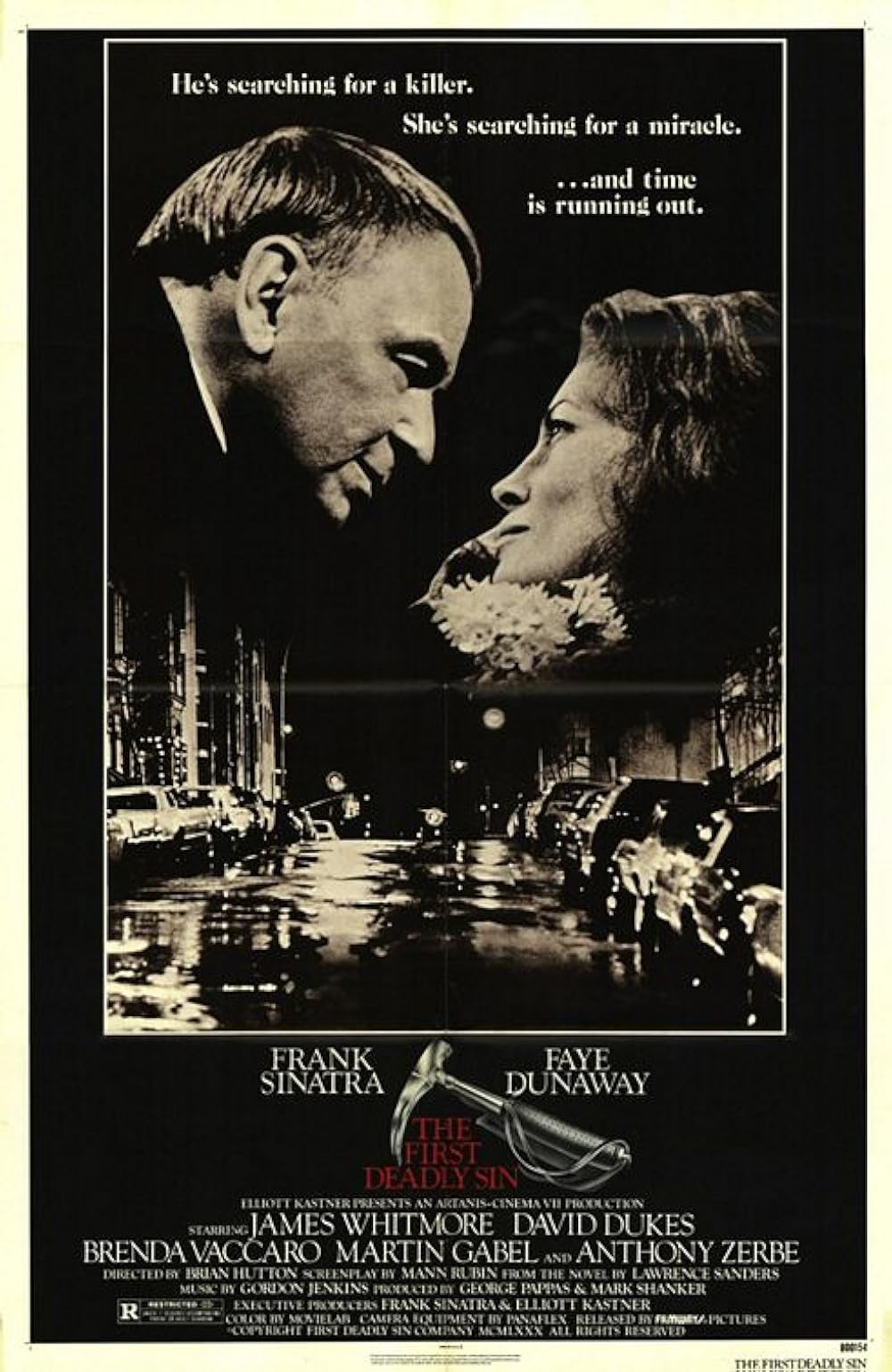 The First Deadly Sin (1980). Frank Sinatra stars in this weird cop thriller, in which he tracks a serial killer who clubs random strangers with an ice axe. It’s not very good, but, hey, I always enjoy a good cop thriller filmed in New York in the “shithole era”! This is based on a novel, and I wonder how much they cut, because the name implies that it will have something to do with religion, and at the end, the killer (played jitteringly by David Dukes) speaks in very vague terms about things that had happened to him, and it seems to be about his experiences with priests (perhaps not in a sexual way, just in a “priests are jerks” way), but nothing ever really comes of it. It’s a decent length (about 110 minutes), but given this was made in this time period, when villains were villains, we don’t get too much about the killer, which is a shame. He seems to have a compulsion to kill, yet he has what appears to be a decent job, as he’s usually well dressed, he lives in an upscale apartment building, and he drives a Porsche. What, exactly, is his deal? The movie doesn’t care, as it spends far too much time with Sinatra’s wife, Faye Dunaway, who has both the easiest and most useless part of her career here — something is wrong with her kidney, so in the opening moments of the movie, juxtaposed with Dukes killing a dude on the street, we get scenes of the doctor operating on her to take it out, and then she spends the entire movie in a hospital bed, often asleep. She — or her character — literally could have been lifted right out of this movie and nothing would have changed, and maybe they could have spent some time with the killer, who’s more interesting anyway. Dunaway represents the escape from the horrid life of a homicide cop for Sinatra, I get that, but she honestly does nothing in this movie. Anyway, Sinatra does some pretty good police work for most of the movie, trying to link the killer’s crimes together, as they occurred in different precincts around the city so nobody ever noticed his pattern (another thing about Dukes — he moves a lot, yet seems to have a good job in Manhattan, so was he just moving around the boroughs so he could hunt, or was there another reason?). He’s assisted in this by weapons expert Martin Gabel, who figures out what weapon it is; James Whitmore, the coroner who helps Sinatra link the crimes; and Brenda Vaccaro, the wife of the first victim we see (but not the killer’s first, obviously), who wants to find her husband’s killer. It’s all going well, but then … man, the ending of the movie is wild and terrible. Sinatra doesn’t really have any hard evidence against Dukes, but because he knows he’s going to kill again, he starts taking the law into his own hands a bit, and I’m not really sure if we’re supposed to think it’s admirable or not. I mean, in movies like this, we’re always supposed to think the hero is admirable even when he’s breaking so many laws, but those are usually in more popcorn movies — who cares if Stallone straight up murders bad guys in Cobra, because Stallone is awesome! — and not more serious crime dramas. It’s a very strange ending, because more than one person tells Sinatra that he has to have more evidence, but he decides that he knows best, but it’s clear he’s bummed out by his wife’s illness and isn’t making good choices. And, as usual, the climax comes so close to the end of the movie that we don’t get any repercussions for his decisions (filmmakers back in the day didn’t believe in Shakespeare’s falling action, damn it!). It’s just an odd movie. But, you know, it kept my attention, so there’s that! (Also, apparently this is Bruce Willis’s film debut, as he’s an extra in a scene and was also Dukes’s stand-in. Good for him! Also, apparently it’s Willem Dafoe’s film debut as well, in the same scene as Willis!) (Also, Polanski was supposed to direct this, but the rape charges put the kibosh on that. As despicable as Polanski is a human being, him directing this would have probably made for a better movie.)
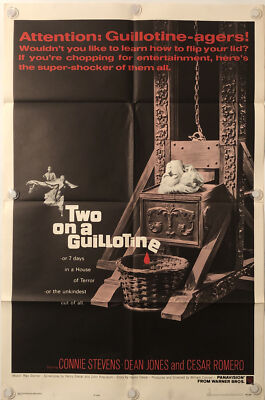 Two On a Guillotine (1965). Connie Stevens made one of her few forays outside light, romantic comedies with this brooding, psychological horror movie, and when it flopped at the box office, she fled back to her comfort zone and never left it again! It’s too bad, because this is a pretty good movie, and Stevens — when she’s not shrieking in terror, which is a staple for women before about the 1980s and is really annoying — actually does a decent job. She’s playing the daughter of a magician, Cesar Romero, whom she hasn’t seen in 20 years, since the night her mother (whom Stevens also plays, briefly) disappeared and she was sent to live with an aunt. Romero dies near the beginning of the film (a funeral attended by Richard Kiel as an extra, 12 years before The Spy Who Loved Me), and Stevens returns to Los Angeles for the burial and reading of the will. She inherits everything, but of course there’s a caveat: she has to spend a week at her father’s mansion, and if she fails, his long-time assistant and his press agent will split the money. Dean Jones, playing a reporter (which he doesn’t tell Stevens at first because she doesn’t trust reporters), manages to finagle his way into staying with her, and of course weird things start happening in the house and of course they fall in love. It’s a pretty decent movie — it’s not terribly scary, but it does have a nice, creeping, weird vibe to it. Jones speaks for the audience when he tells Stevens it’s obvious that the assistant and press agent, played by Virginia Gregg and Parley Baer, might be doing the things to steal her inheritance, but it’s not quite as simple as that. Jones is fine as the blandly handsome reporter, and Stevens is always adorably cute, but she does bring some good steeliness to the proceedings, even if they do have her scream a bit too much. Her romance with Jones develops fairly well, which is nice to see — she doesn’t trust him completely even before she finds out he’s a reporter, so she treads carefully until she realizes he’s a pretty good dude. The filmmakers used the Benedict Castle in Riverside for Romero’s house, while they built a very nice interior set for it, with winding staircases and odd, cavernous rooms and shadows everywhere. It’s weirdly (for a relatively cheap horror movie) very well shot — director William Conrad (yes, that William Conrad) uses deep focus often to encompass everything in every room, and there’s a gorgeous shot of Stevens seemingly imprisoned by vertical bars that is extremely artsy for the movie. When Stevens and Jones finally kiss, Conrad does something breathtaking that feels like it should be in a Godard movie. Overall, it’s a neat movie — sure, it’s a bit melodramatic, but, I mean, it’s a horror movie, and if you can’t be melodramatic in a horror movie, what are we even doing here?
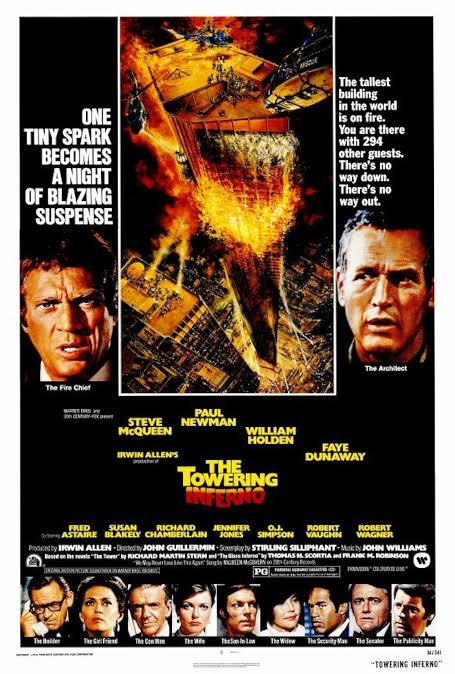 The Towering Inferno (1974). In June, TCM did disaster movies every Wednesday, and while I had already seen some of them and wasn’t interested in others, the next three movies were must-sees! Up first is Irwin Allen’s skyscraper-on-fire flick, which actually has two source novels, both written soon after the World Trade Center went up. I mean, skyscrapers on fire can’t be that difficult an idea to come up with, so why did Warner Bros. and 20th Century Fox (who teamed up to make the movie, as they had each acquired the rights to one of the novels) need to get the rights of both novels? Whatever. Anyway, this is a terrific movie (it was nominated for Best Picture back when they only nominated five movies; it lost to The Godfather Part II because, come on, and it was up against The Conversation AND Chinatown as well, so there was no way it was winning, but good job getting nominated!) that has a lot of ridiculous moving parts, but it just keeps the tension ratcheted up to 11, so we don’t worry about the silliness! Newman and McQueen do their tough guy thing, Fred Astaire got a well-deserved nomination for Best Supporting (he lost to De Niro because, come on) — the only Oscar nomination he ever got, Jennifer Jones (in her final role before she retired) is sweet as the object of Astaire’s affection, William Holden and Richard Chamberlain are smarmy as the cost-cutting builders (Holden at least feels bad about it, so he’s a bit more sympathetic than Chamberlain), Robert Wagner and Susan Flannery seem to be in this movie simply to die horribly (and they do!), Dabney Coleman is there, Bobby Brady is only a little annoying, and O.J. Simpson simply disappears from the movie after her rescues Jones’s cat (maybe he had an urgent murder situation going on that he had to get to). So much of it doesn’t make sense — the fire begins in a room that even I know was wildly unsafe; McQueen mentions that fire departments should be consulted when building something like this, but it appears that was standard practice even in the reckless 1970s; the solution they come up with to put out the fire has so many plot holes it’s just wild — but, as I noted, it’s fun as heck, it zips right along, the stunts are cool, the special effects actually look pretty good even 50+ years later, and it’s a good time all around. And yes, I didn’t mention Faye Dunaway, because much like The First Deadly Sin, she doesn’t have a lot to do in this sucker. Dunaway had already been nominated for one Oscar and she would get another for 1974 (not for this movie — that would be crazy! — but for Chinatown), so why she has little to do here except moon over Newman makes no sense (it’s worse by the time we get to The First Deadly Sin, when she was a three-time nominee and had won Best Actress for Network). It seems Dunaway might have been a pain in the neck on set, but maybe that’s because she had nothing to do! I gotta stop watching movies where Dunaway doesn’t do anything. She’s a good actor!
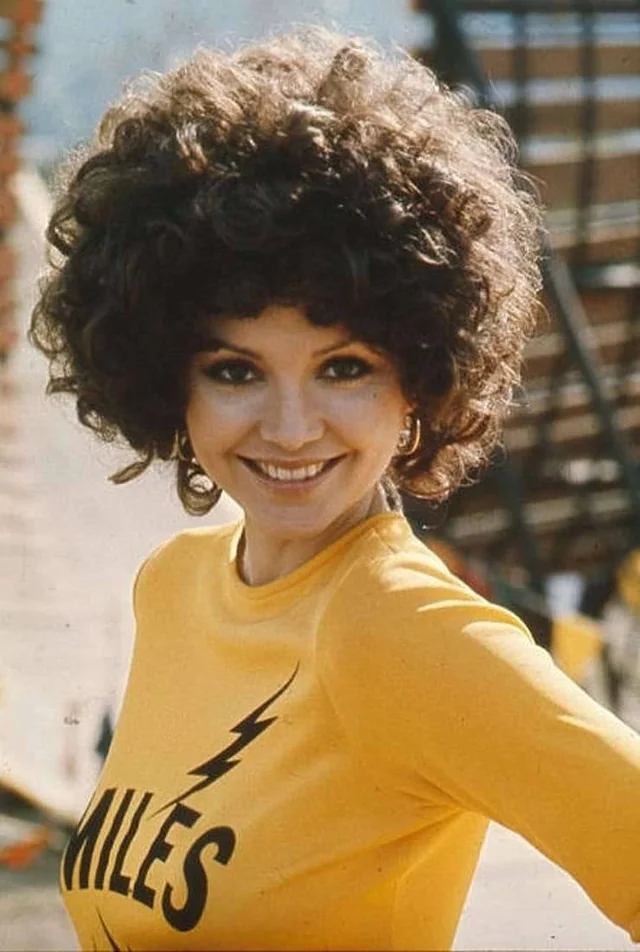
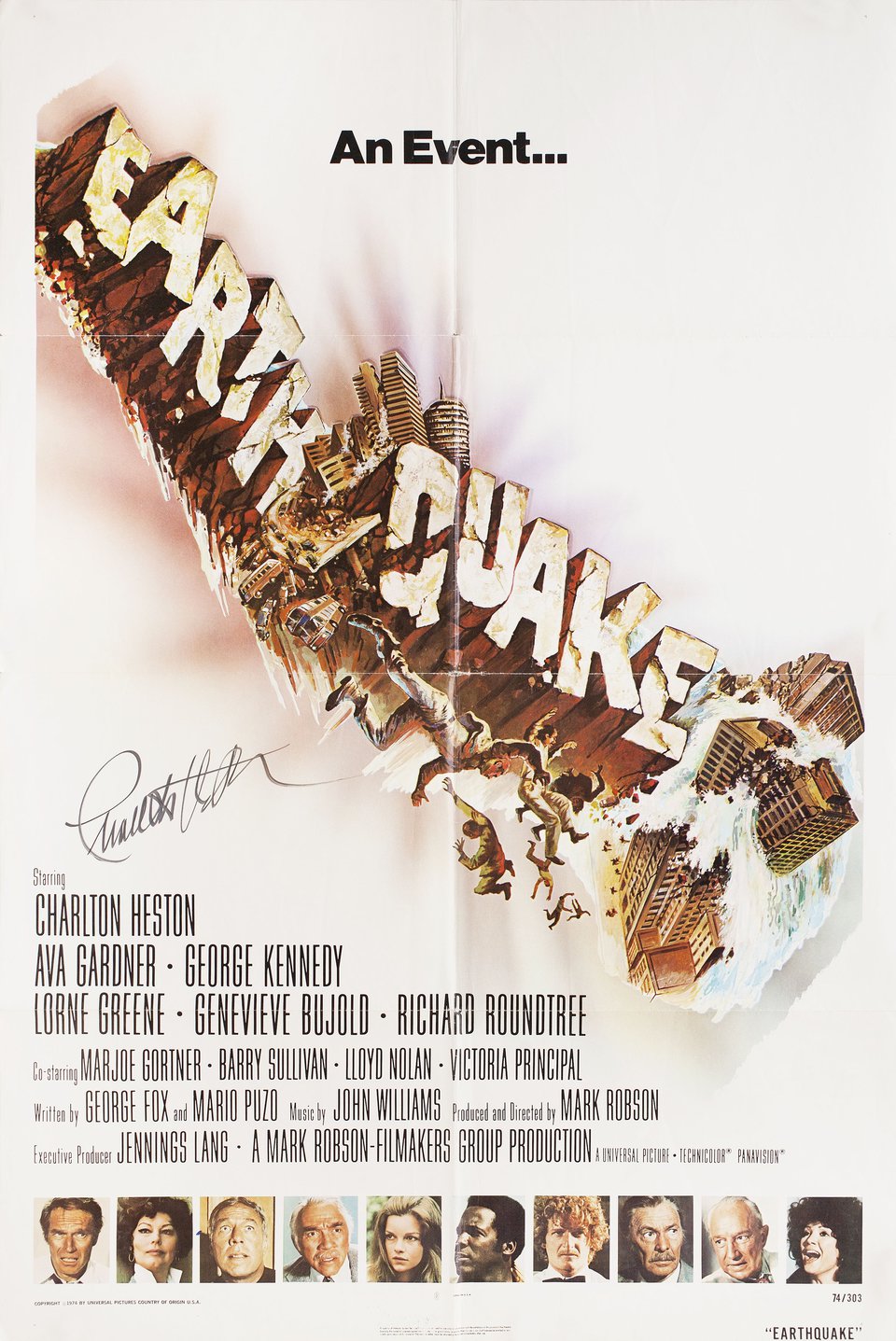 Earthquake (1974). 1974 was a banner year for disaster movies — three of the biggest films of the year were these two and Airport 1975 — which George Kennedy also starred in!), and while this isn’t quite as good as The Towering Inferno, it’s still pretty good. Heston is square-jawed, of course, and the fact that he got the ending changed because he felt it would be more moral cracks me up when he cheats on his wife Ava Gardner with the very fetching Geneviève Bujold. You can count on Heston to be kind of the same in every movie — he’s never going to wow you with his ability, but he’s a good rock around which the action can flow, and he is here. Gardner, apparently given the “Faye Dunaway” role, screeches a lot about Heston being an asshole and doesn’t do much else, but such is life. George Kennedy is a grumpy cop who gets suspended for chasing a suspect onto county land and then punching a sheriff who yells at him about it, but he’s still a decent fellow who saves a lot of people, including the extremely attractive Victoria Principal, who cut her hair and styled it into an Afro for her callback audition, which Mark Robson, presumably addled by how motherfucking hot she looked, greatly appreciated. Richard Roundtree is fun as the motorcycle daredevil who, much like Simpson in The Towering Inferno, disappears from the movie for a very long time (a conspiracy against the black man, maybe?!?!?), Walter Matthau is having entirely too much fun as the drunk in the bar (who, sadly, seems to die in the aftershock — they really should have shown him at the end to let us know he survived), Lorne Greene inexplicably plays Gardner’s father (he’s seven years older than she is), and Lloyd Nolan shows up as the doctor at the make-shift hospital. This is rougher than The Towering Inferno, which took place in a fancy high-rise with a lot of the upper crust, and this takes place on the streets, so there’s a bit more cursing, there’s a rape subplot, and it’s a bit more graphic than Inferno (not by much — it’s still a 1970s movie designed for a large audience). There’s a bit more of a class struggle and generation gap in this movie — you get the feeling Heston wants to let some of the younger punks die because they have no respect for the oldsters, damn it! — which adds some nice realism to the movie. In two different instances, “experts” don’t listen to younger and less experienced people because they’re young punks, but of course they’re right! This was nominated for four Oscars in technical categories (it won for Best Sound), but unlike Inferno, the effects don’t hold up quite as well, which isn’t surprising. It seems like it would be harder in those days to show the destruction of a major city than it would to build a set and then just, you know, set in on fire. Still, it’s not bad. What’s next on the disaster movie menu?!?!?
Also relevant:
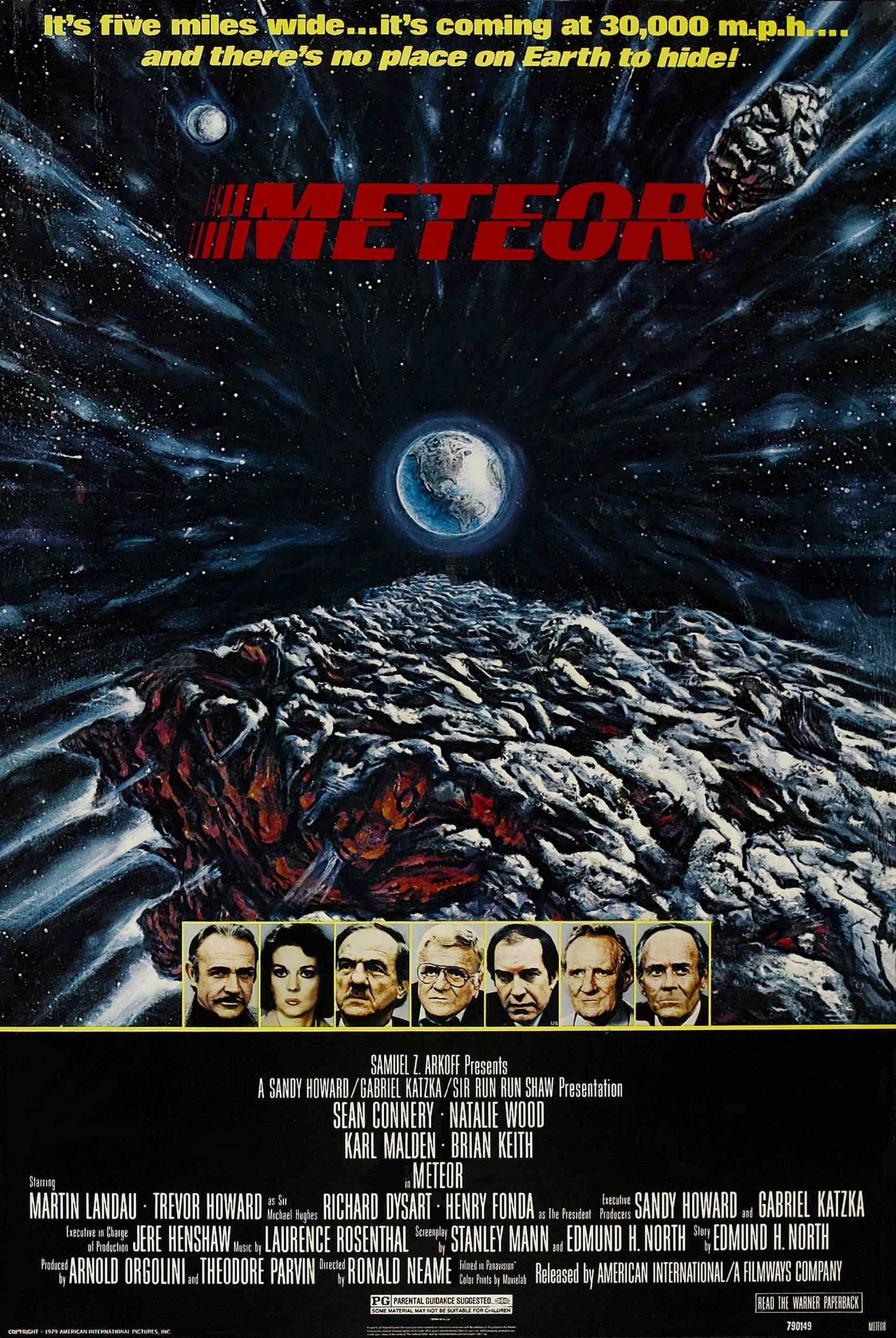 Meteor (1979). The law of diminishing returns kicked in pretty hard with this movie, which isn’t terrible but isn’t all that good, either, and it was clear that moviemakers were just running out of disasters to film by 1979! It was a box office bomb, and while it didn’t tank anyone’s career, it did wreck American International Pictures, the production company, so there’s that. Sean Connery is a scientist who helped design a satellite armed with nuclear weapons pointing into space to stop meteors from hitting the Earth, and he resigned in protest when the military co-opted it and pointed the missiles at Russia, but Karl Malden brings him back when a five-mile-wide rock breaks off from the asteroid belt (a comet hit it and knocked it loose) and heads directly toward our planet. The Russians, of course, also have a satellite armed with nukes, but neither country wants to admit it, and Connery and Malden have to convince President Henry Fonda (once again proving that he’s the most boring major star in movie history) to allow them to not only use the satellite but convince the Commies to use theirs, as only the combined strength will destroy it. Once we get past the posturing (represented by General Martin Landau, whose purpose in the movie is to whine about everything), Doctor Brian Keith, a Russian astrophysicist, and his fetching translator (and, to the movie’s credit, an astrophysicist herself) Wood come to New York to help get the nukes ready to launch. The problems with the movie is that they know exactly when the meteor is going to be in range, so once they get things sorted with the Soviets, there’s a lot of sitting around. Connery and Wood have a chaste flirtation (he’s separated, she’s a widow, so it’s all right), but the movie spends time with the asteroid shards that get to Earth before the big one, and the special effects really don’t hold up well. One piece explodes in Siberia and is relatively harmless, one takes out a Swiss skiing resort (killing poor Sybil Danning in the process), one takes out Hong Kong, and the final one almost wipes out New York, of course, because that means Connery, Malden, Keith, Wood, and the rest actually are in some peril. The scenes of them getting out of their underground bunker and up through the subways work pretty well, but the “meteor” effects look silly, and it’s hard to do avalanches and floods on such a scale when you have no computer-generated images. They do what they can, but it’s still kind of goofy. Plus, it’s just not that exciting, and it’s a disaster movie — it ought to be exciting! I guess they can’t all be winners!
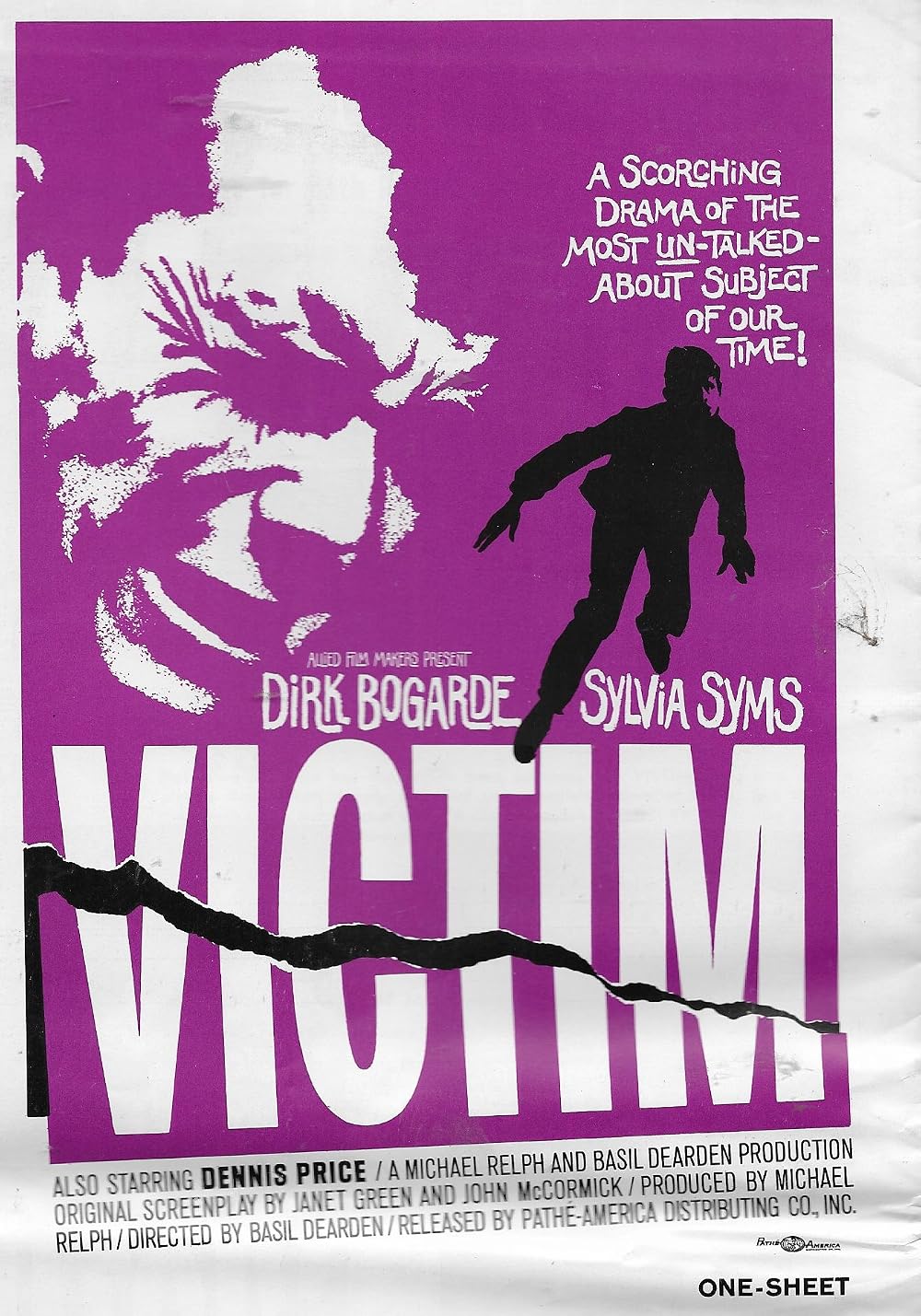 Victim (1961). Dirk Bogarde plays a closeted barrister who decides to take a stand against blackmailers in this excellent, searing commentary on Great Britain’s anti-gay law, which wasn’t repealed (and not even completely) until 1967. It’s a very tense movie, as we’re introduced to several characters early on, one of whom, Barrett, is trying to leave the country and is desperate to do so quickly. It’s unclear for quite some time what his deal is, as he’s definitely running from the cops and there’s money involved, but it’s a clever way to introduce the movie, as it feels like a well-done noir movie for some time. Finally, the cops get him, and we learn he’s being blackmailed because he’s gay (this movie is famous as the first time the word “homosexual” is spoken in an English-language movie). He hangs himself in his cell, but not before the cops link him to Melville Farr (Bogarde), who comes down to the police station and tells them he knew Barrett vaguely. Bogarde has carved out a nice life for himself — he’s a successful lawyer, on track for a judgeship, and he’s married to Sylvia Syms, who’s quite fetching. Then the blackmailers send him a photograph of him and Barrett — it’s apparently nothing too scandalous, but it’s enough. Bogarde decides to turn the tables on the blackmailers and find them, but none of the other victims want to help because, as they know, they’ll ruin their own lives and possibly go to jail. It’s an intense, unwavering movie — it’s obviously not explicit, as it’s 1961, but it doesn’t shy away from the subject matter, either. Syms knows about Bogarde’s past, but she thought she had “cured” him and isn’t happy that he was casting his eye elsewhere, but she turns out to be made of better mettle than we think. The head policeman is far more sympathetic than we think he’s going to be, too, and the movie does a good job allowing several different characters several different views without being too preachy. The anti-gay people in the movie come off as close-minded, sure, but they’re not raving lunatics. Bogarde (who was gay himself) gives a titanic performance (his famous scene is below, but it’s not the only great one), and was nominated for a BAFTA for it. He struggles with his conscience, trying to convince himself that he can suppress his nature but knowing that he really can’t, and he slowly becomes more and more willing to stand up for himself and the gay community even though he knows what it will mean. It’s really a terrific movie, and it’s too bad we’re still trying to overcome the prejudices some of the characters have 60-some years later. Sigh.
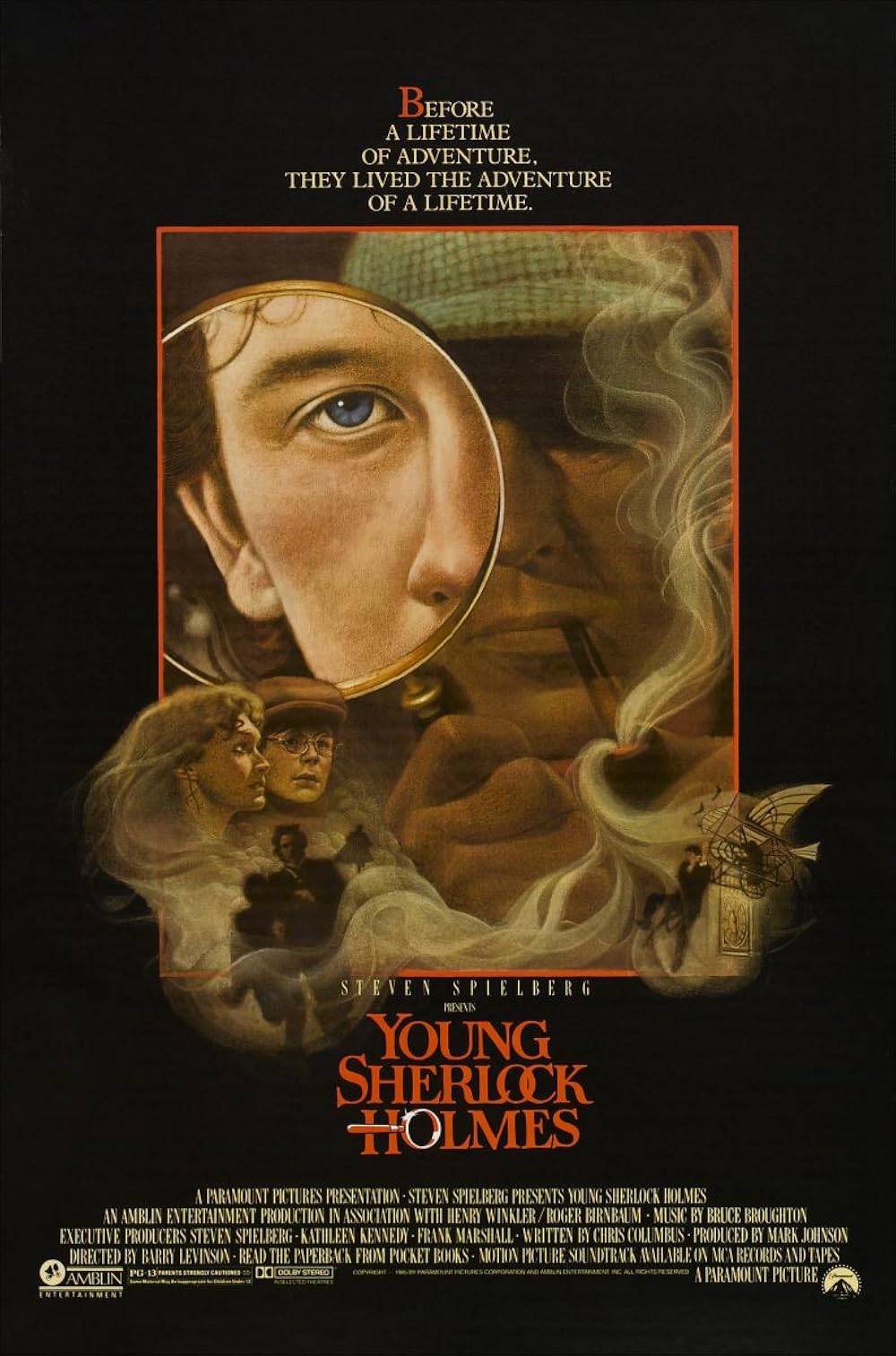 Young Sherlock Holmes (1985). I’m a little worried about mid-1980s Steven Spielberg. In both this movie and Indiana Jones and the Temple of Doom, we get ridiculously racist depictions of groups of swarthy people who just want to kill a bunch of white people (even though, in this movie, most of the group are themselves white people, but they’re pretending to be Egyptians, so the comparison holds!), and while, if you squint a bit, you can see why Spielberg did it (and, to be clear, he’s only the executive producer on this movie), but man, that’s not a good look, mid-’80s Spielberg!
Anyway, director Barry Levinson and writer Chris Columbus wanted to make a Sherlock Holmes movie, so they cast 18-year-old Nicholas Rowe and 14-year-old Alan Cox as Holmes and Watson, respectively, gave them serious mid-1980s haircuts, pretended they met in school in 1870, and sent them on an adventure! It’s a perfectly fine adventure — it’s not the greatest mystery in the world, but it’s not bad — and Rowe does a decent enough job as Holmes (Cox is fine, but a bit less successful as young Watson). Rowe has always been a bit odd-looking, so casting him as a young Sherlock works, and he’s not a bad actor, either. The history in the movie is a bit wonky, but the case is tied into England’s imperial ventures, which is done fairly well, and Levinson — who had made Diner and The Natural as his previous two (and first two) films, so this was certainly a departure for him — does a good job with the Victorian setting and the atmosphere. It’s a nice-looking picture, with lots of weird, oldey-tyme buildings and dark alleys and strange costumes and, of course, the flying machine (which is probably the most famous part of the movie). Holmes and Watson have a pretty good relationship, but poor Sophie Ward as the object of Holmes’s affection has little to do and is part of the weird bleak ending of the movie. The early parts of the movie, when things are odd and mysterious, work better than the payoff, which is usually the case, of course, but feels a bit more egregious with this movie — I’m not sure why. It feels like Columbus wants very much to indict the British Empire, but he doesn’t make it horrible enough, almost, so the bad guys’ scheme feels a bit perfunctory. Plus, I’m not entirely sure what they want to do — they pretend to be ancient Egyptians, but Egypt had been ruled by Arabs for a millennium by this point, and they had a deeper connection to their country’s past, sure, but not this deep, I expect. I don’t know — it’s best not to think about this too much, and just have fun with the Holmesishness of it all. It’s a fun movie, but nothing too special. I should point out that one of the special effects was done by Pixar, which had been around for a while at this point but hadn’t broken off on their own. Good for them!
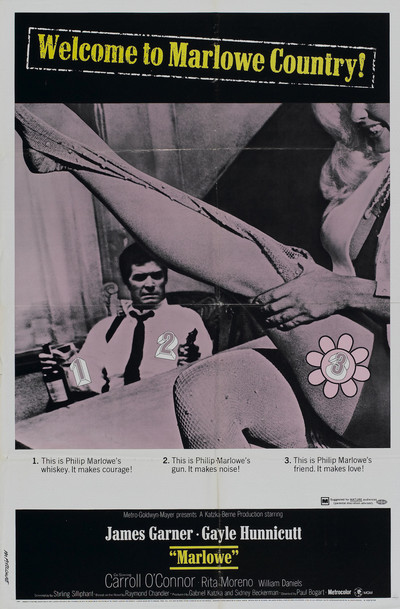 Marlowe (1969). Um … are we going to have to admit that Raymond Chandler might not be a very good writer? I mean, maybe he is (I’ve only read one of his books, and it was a long time ago), or maybe he’s such a genius that every movie made based on his works is just ridiculously convoluted and nonsensical because nobody can adapt them? I’m leaning toward the former, but I’m willing to be persuaded! In this movie, Jimmy Garner takes on the iconic Phillip Marlowe role, and … man, where to begin? I mean, sure, if you want to see Peak Hotness Rita Moreno wearing a blonde wig strip down to a diamond-studded thong and pasties, this is the movie for you, but until we get to that point, this is an unholy mess. A woman from Kansas has hired Marlowe to find her brother, who we know from the beginning has taken blackmail photos of a dude and a woman, and Marlowe tracks him to a crappy hotel. While he’s searching the dude’s room, someone ice-picks the clerk. Oh dear. Then, the dude who had taken over the brother’s room (because the brother had disappeared and the room was nicer) calls Marlowe and tells him to come to his new hotel room, but when Marlowe gets there, that dude has been ice-picked as well. There’s a woman in the room who clocks Marlowe over the head, but the clerk at that hotel gets her license plate, so Marlowe finds out it’s a famous television star. Meanwhile, a gangster in Los Angeles tends to kill people with an ice pick, so Jimmy G. suspects him, although the cops — Carroll O’Connor and his partner, Kenneth Tobey — aren’t so sure. The television star, Mavis (Gayle Hunnicutt), doesn’t want to have anything to do with Marlowe, even though she was at the scene of a murder and, it turns out, is the woman in the pictures, but one of the advertisers on her show, William Daniels, hires Marlowe to keep it all out of the papers (she has a wholesome image and the pictures — which show very little, but it’s still the Sixties — could ruin her career and, by extension, the advertisers’ gravy train). Her best friend, Dolores (the aforementioned Ms. Moreno) likes the cut of Marlowe’s jib, because who wouldn’t dig 40-year-old J. Garner in peak form? Bruce Lee (?!?!?) shows up at Marlowe’s office to offer him money to stop investigating, and when Marlowe refuses, Bruce trashes his place with his fancy Oriental martial arts, but later, at a restaurant at the top of a building, Marlowe fools him into dying in the stupidest way possible. There are so many double-crosses and red herrings, and while the final murderer (there are more than one) and their motive isn’t too hard to figure out, the rest is a mess. At no time does Garner discover the connections between some of the participants, but about halfway through, he just knows them. There doesn’t seem to be any reason for the first two deaths, or, indeed, the third, and none of them seem connected to the fourth. The doctor whom the clerk calls and who later drugs Marlowe (because Marlowe, like stupid heroes since time began, simply goes into his lair and tells him what a bad guy he is instead of, you know, gathering evidence and going to the cops) doesn’t seem to have any real role in anything. It is, simply, a mess. But hey, Garner does his thing, which is fun to see, and this feels like a sizzle reel for The Rockford Files — someone saw this and said, “We can build a show around Garner as a laconic P.I., I bet!” Hunnicutt, Sharon Farrell (as the woman who originally hires Marlowe), Lee, O’Connor, Christopher Cary as the not-at-all-gay hairdresser whose office is next door to Marlowe’s (and who is, refreshingly, not made the butt of jokes or anything — he’s just doing his thing), Corinne Camacho as Marlowe’s relatively steady girlfriend — they all do nice work, and the ladies — Hunnicutt, Farrell, Camacho, and, of course, Moreno — are very nice to look at. I just wonder if maybe Chandler was all style and no substance, because his characters are certainly cool, but they always seem to end up in plots that make absolutely no sense. It’s very frustrating.

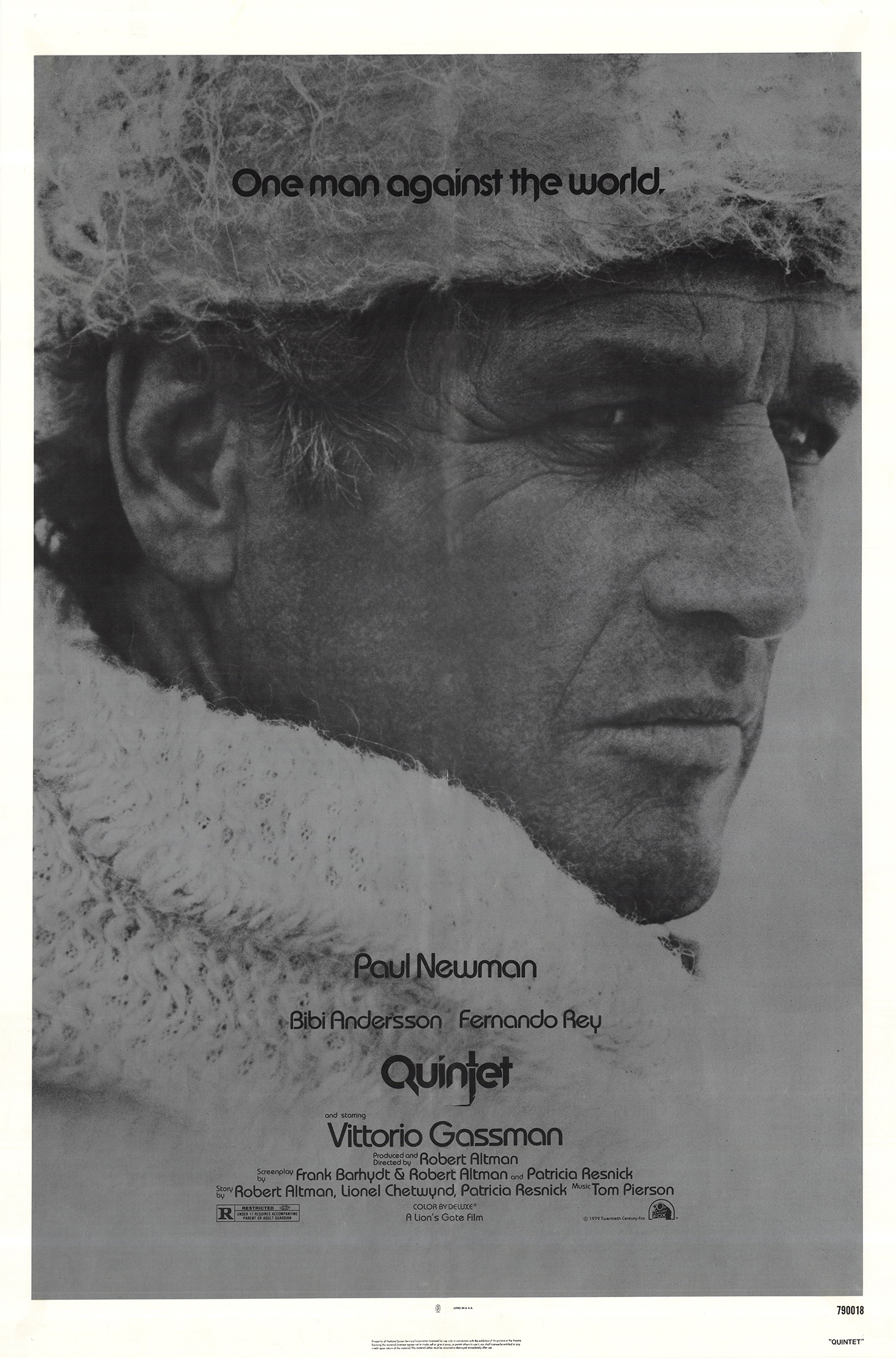 Quintet (1979). This comes on FXM Retro every once in a while, so this time around, I thought I’d watch it — it’s Newman in his late prime, and it’s a science fiction story set on a frozen Earth, which sounds kind of interesting. As the credits rolled, I saw that it was co-written, produced, and directed by … Robert Altman? Really? Listen, I know directors of great movies who have great reputations sometimes do weird shit, and Altman would, after all, go on the make Popeye a few years later, but this just seems like so far out of his wheelhouse that I wonder if he was on serious drugs when he signed on to do this or if he lost a bet or something (apparently, it was neither — this was a passion project for Altman!). Altman was in the middle of a lost era for him — after Nashville in 1975, which got him a Best Director nomination as well as a Best Picture nom (he was the producer), he did Buffalo Bill and the Indians, 3 Women, and A Wedding, and he didn’t really recover his mojo until at least 1988, when he did Tanner ’88, but if not then, then 1992, when he directed The Player. This movie did not break his slump, as it’s not very good, unfortunately. Newman returns to his home city after several years of wandering, with a young pregnant lady in tow (Brigitte Fossey, who’s still working, it seems, so good for her!). He stays with his brother and his brother’s … harem, I guess, but while he’s out looking for wood to burn, someone bombs the apartment and kills everyone. Apparently, the only thing anyone does in this city is play a board game called Quintet, in which five players attempt to “kill” each other until one is left, who then faces off against a designated sixth player. In a world that is on its last legs, it’s the only thing that gives anyone pleasure. Apparently, some people have taken the game into real life, and they must kill the other players. Newman’s brother was a player, which is why he was killed, but the person who killed him went outside the rules when he killed everyone else. Newman, bereft and lonely, takes the identity of one of the players and becomes involved in the game. It’s not as exciting as it sounds. A good deal of the movie is taken up with Newman wandering around and having fairly boring conversations with some of the other players — Bibi Andersson, Vittorio Gassman, and Nina van Pallandt — and the judge (Fernando Rey) who adjudicates the game. There’s some talk about what makes life worth living and whether life is worth living in this frozen wasteland, but it’s all very dull. The set is weird and “futuristic” (it was filmed in Montreal at the Expo ’67 site), but Altman films it as darkly and claustrophobically as possible, and his decision to smear the edges of the lens with some kind of substance to make it look as if you’re looking through a frosted window at the scenes is a poor one, because it makes everything harder to see. Newman is kind of inert, unfortunately — maybe after doing Slap Shot right before this he was sick of “cold” movies — and the rest of the cast is kind of dull, although Andersson does her level best. I’m not sure what Altman was trying to do here, but you can safely skip this one. Go watch Short Cuts instead! (Man, even the trailer is boring!)
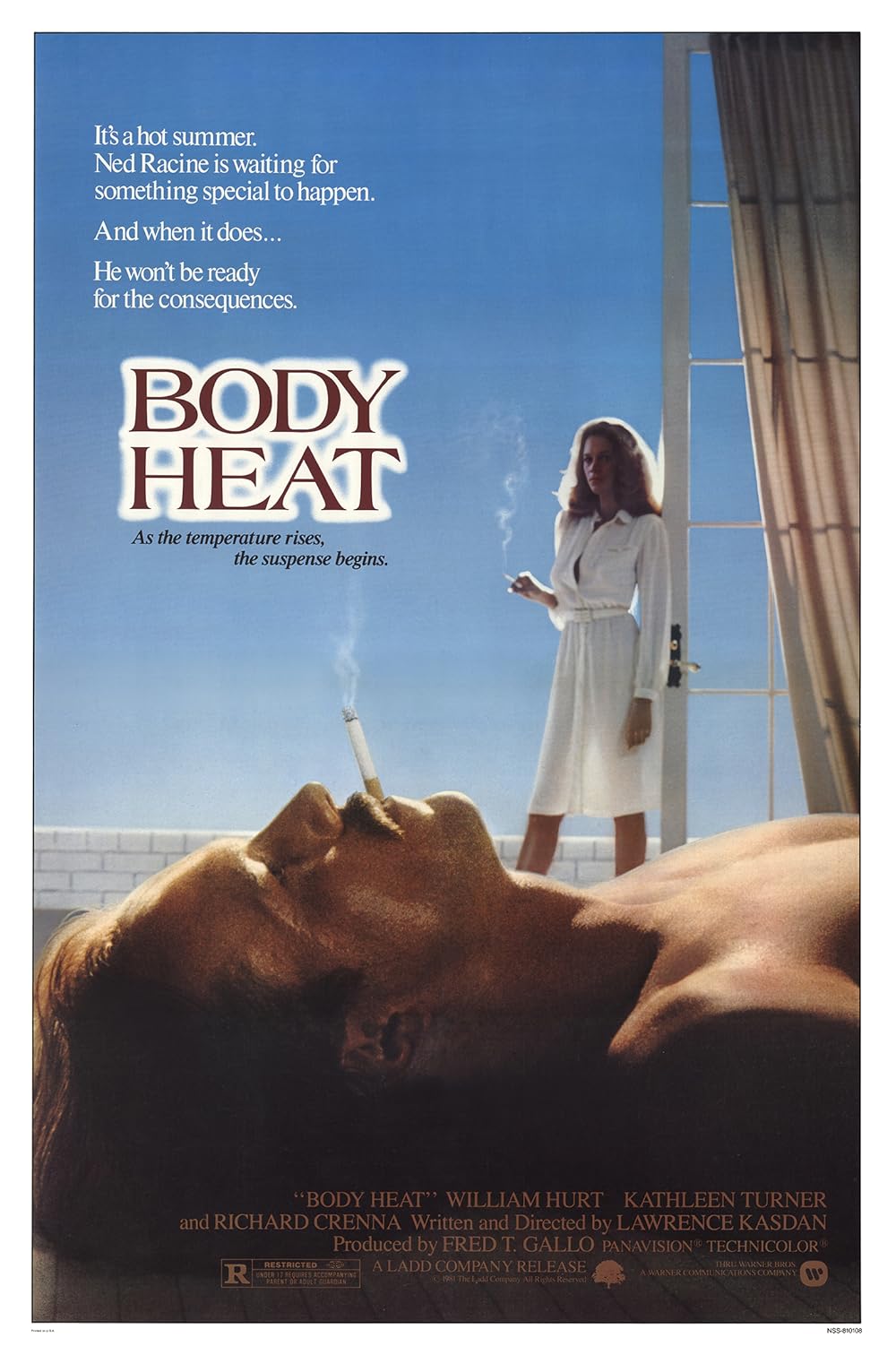 Body Heat (1981). I love noir movies, mainly because it features stupid people who think they’re smart doing stupid things that they think are smart, and William Hurt is so very, very stupid in this movie. I mean, I hate movies in which no one has ever experienced popular culture — Hurt has to know he’s in a noir story, right, and you should always consider Pop Culture Rule #1 when you’re in a noir story! I mean, he thinks with his dick, like most stupid men, and sure, he might think Kathleen Turner really digs him because Richard Crenna, her husband, is an old creep, but man, if you’re going to get into a murder plot with someone, you really ought to do some homework about them! If you haven’t seen this, I apologize for sort-of spoiling it, but, I mean, it’s a noir movie — you kind of know what’s going to happen. Hurt, a low-rent defense attorney in a kind of schlubby Florida town, hooks up with Turner when her husband is doing his business down in Miami (Crenna is involved in somewhat shady business, although we never quite learn what it is), and because he’s greedy, he eventually tells her that they have to murder Crenna so that she can inherit his money. You know where it’s going to go! It’s Lawrence Kasdan’s directorial debut and only his third writing gig (he wrote a couple of obscure films called The Empire Strikes Back and Raiders of the Lost Ark), and it’s extremely well made — Kasdan does marvelous camera work throughout, and some of his shots are stunning — and has a nice, twisty story, but it does rely on Hurt’s Ned Racine being as dumb as a bag of rocks. Hurt (in only his third feature film) is quite good, and Turner (in her very first movie after a couple of years on a soap opera) is breathtaking — this has to be one of the best movie debuts ever. Crenna has, basically, an extended cameo, but he’s quite good, and Ted Danson is fun as the prosecutor who, along with cop J.A. Preston, begins to suspect that Hurt might have done something dastardly. It’s an enjoyable movie, certainly, but it really does rely on the stupidity of the main character, and Ned Racine deserves everything he gets. What a stupid, stupid man.
Well, that’s it for now. I know I should watch more modern movies, but the older ones just keep coming up! Have a nice day!

Raymond Chandler, a bad writer?? I am curious which book you read that informed your opinion. I would say that his plotting is labyrinthine to put it mildly, but a) I don’t mind that and b) I don’t think the plot is the point for me. His dialogue is quite singular, crisp, and funny in his prose and in his screenplays for Double Indemnity and Strangers on a Train.
It was The Big Sleep, and it was some years ago — maybe it’s better than I think! I think that the plotting, while not the most important thing, does have to be comprehensible, and when the author himself occasionally says he doesn’t know what’s going on in his books, maybe he needs to reconsider some thing! 🙂
I do agree that his dialogue is quite good, but that’s not the only thing in a book!
Even Chandler admitted to problems with the story, in The Big Sleep, which affected the film adaptation. Some things that work in literature just don’t work in film and Chandler knew his way around the page. Mickey Spillane doesn’t translate well, either and Hemingway has presented similar problems to Hollywood. You usually get one of two results: either they dump most of it for their own mediocre story or they try to be too faithful and end up with dull scenes because it is a visual medium and Hemingway and his kin were not necessarily visual stylists in their prose.
The First Deadly Sin was by Lawrence Sanders and was part of a series, with the character Edward X Delaney. he continued the title conceit for 3 more books, but there were two books without that convention, before.
I’ve seen more of Earthquake than The Towering Inferno, but the original Airport is the only disaster film I watch again and again. I prefer the spoof of the genre, featured in the movie shown in the indie film Drive-In, from the mid-70s. There is a film called Disaster 76, playing at the local drive-in, where much of the film takes place and they give you occasional scenes of it, which are a hoot, as it goes from an Airplane disaster, to a skyscraper fire (after the crash, presumably, to a water disaster, by the end. Fun stuff.
I have seen Meteor, though. I recall Starlog talking it up, like every sci-fi movie of the era, so they could get pictures, then trashing it after it bombed. It’s kind of dull, by disaster standards, though a decent cast. Connery did a lot of drek around this time frame, with The Man Who Would Be King as one of his better choices.
Young Sherlock is fun, for what it is. It also has early work from Pixar, which was then part of ILM, with the stained glass knight sequence.
Hey, I mentioned Pixar! 🙂
Of these, I’ve only seen Marlowe, of which I only really remember the silly bit where Bruce Lee is dispatched. But I have been on the Earthquake ride at Universal Studios!
Jeff’s right, Drive-In is a lot of fun. Saw Towering Inferno, found it tedious.
I agree Hurt is an idiot in Body Heat. I’d probably be an idiot for young Kathleen Turner so I forgive.
I like Marlowe. Chandler’s a terrific writer but part of that is his characterization, the prose and his protagonist’s narration rather than the plot. Robert Altman later directed a version of The Long Goodbye — which was a not-good novel by Chandler — that I’ve never been able to finish. Too damn tedious.
Victim is very good.
I enjoyed Young Sherlock Holmes but at times it was too much a straight kid adventure rather than Holmesian. And no, having bad guys opposing British imperial rule was not the best choice.