
“Siam’s gonna be the witness to the ultimate test of cerebral fitness”
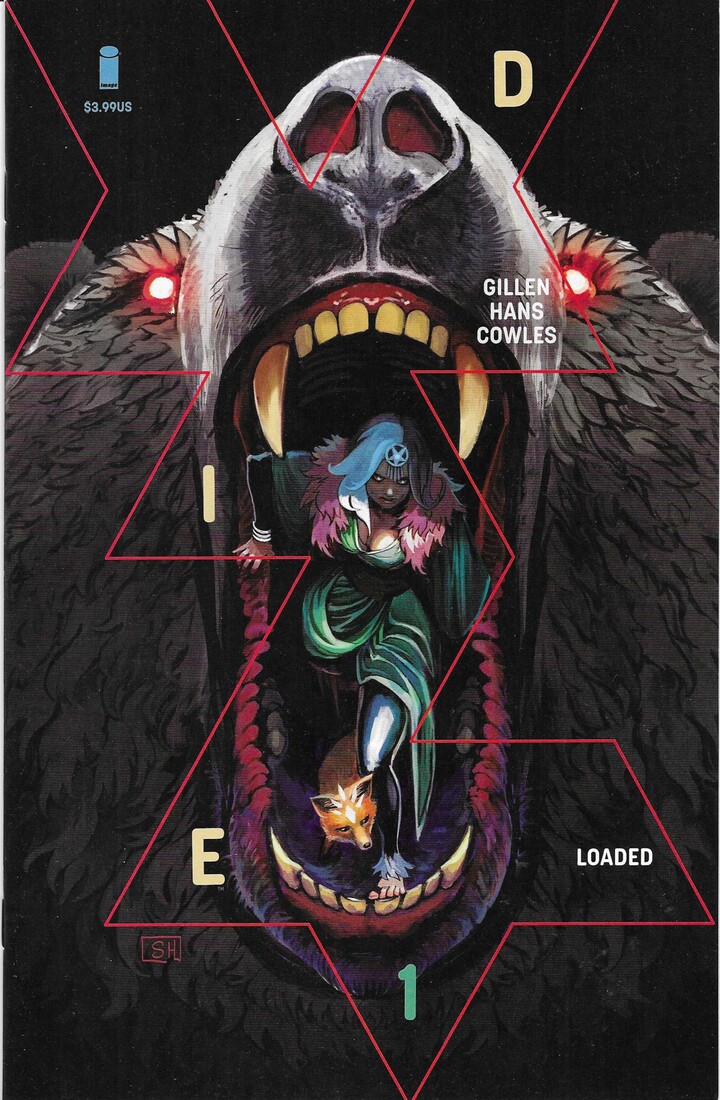
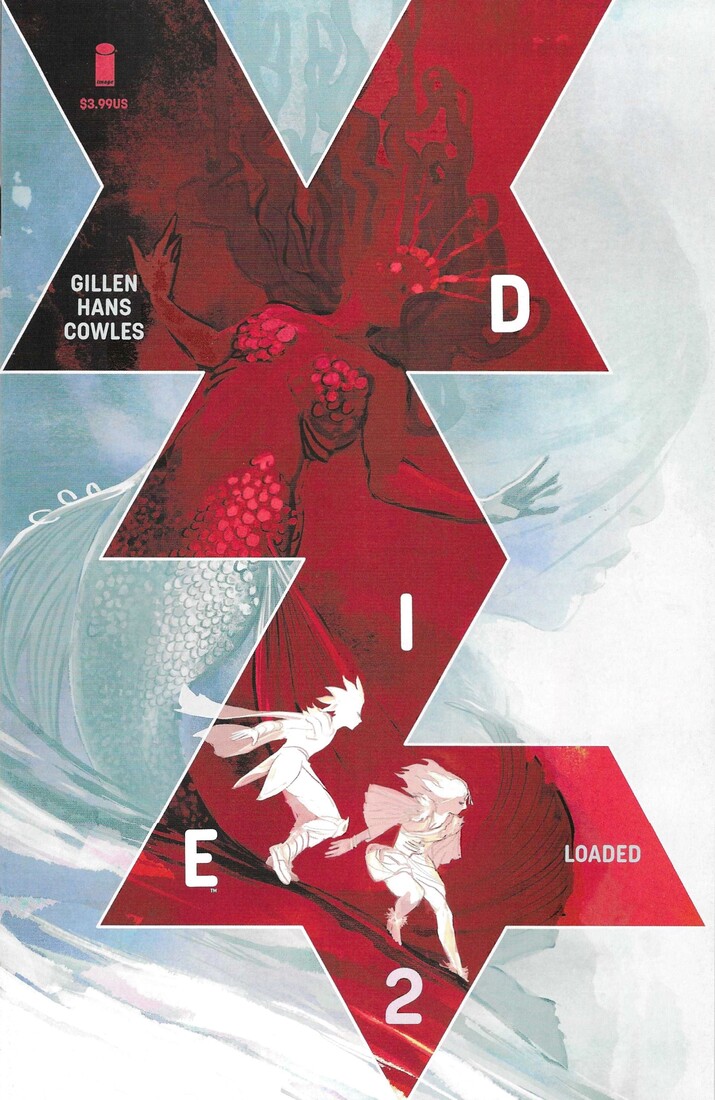
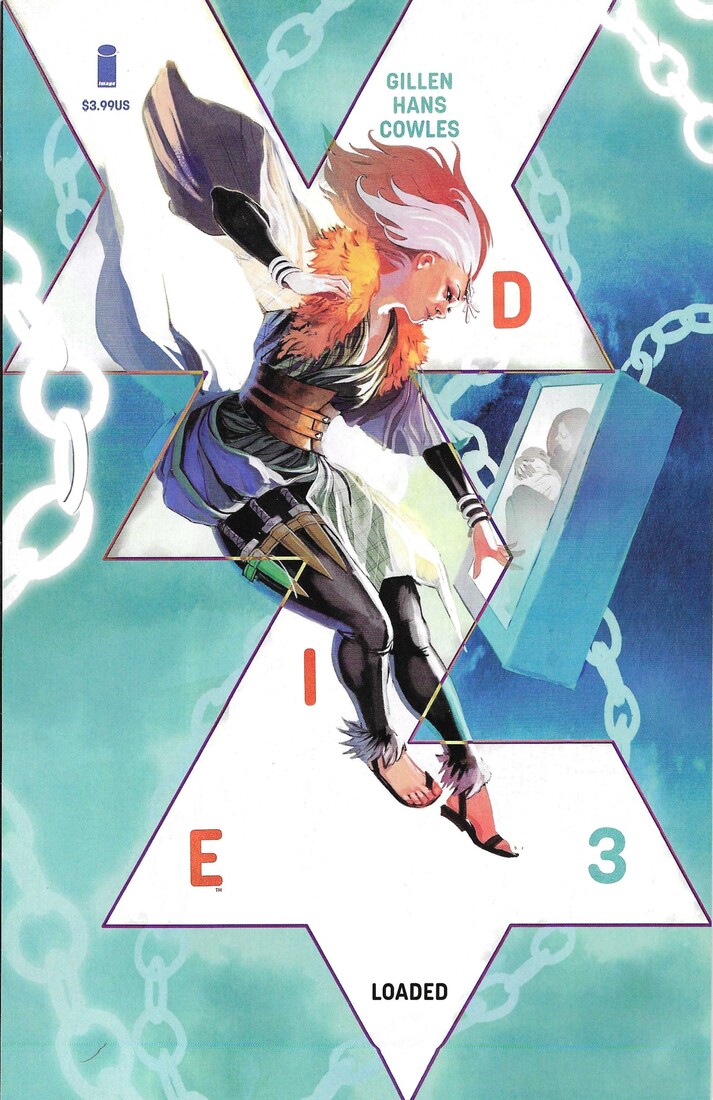
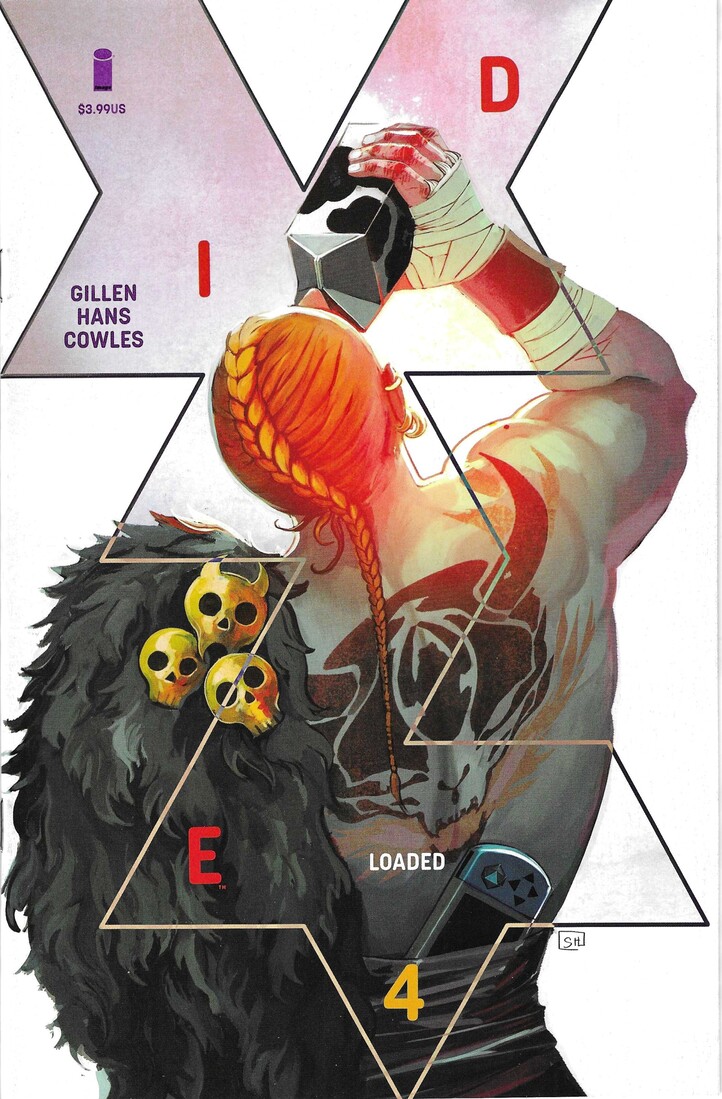
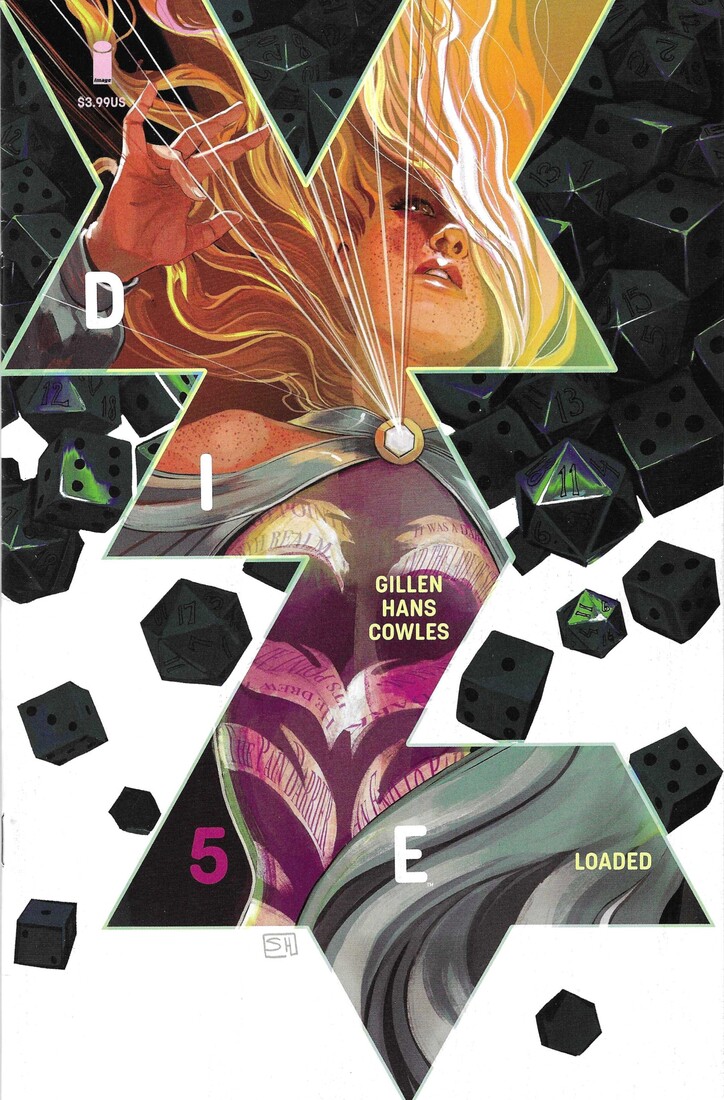
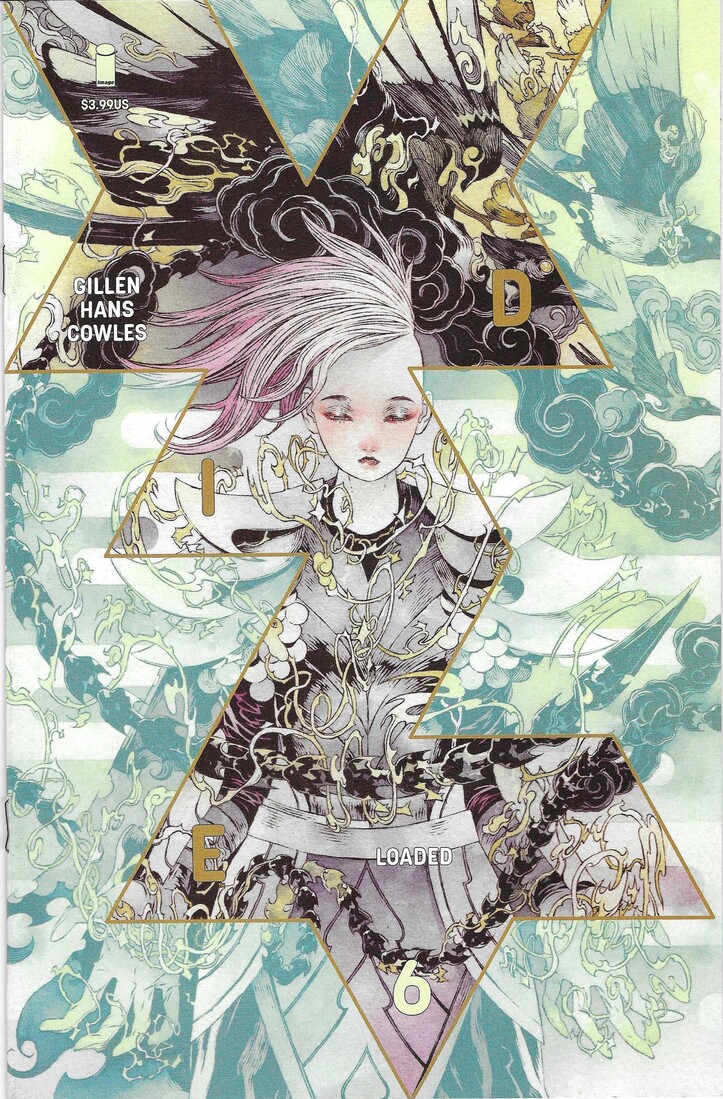
Kieron Gillen and Stephanie Hans (along with Gillen’s usual partner in crime, letterer Clayton Cowles) are giving us the sequel you didn’t know you needed with Die: Loaded, the first six issues of which will make a nice trade. This is from Image, and each issue costs $3.99, meaning it costs $23.94 for the whole thing, while a trade will be significantly cheaper (I don’t know how much backmatter is in the trade, though, as Gillen likes himself some backmatter in single issues!). 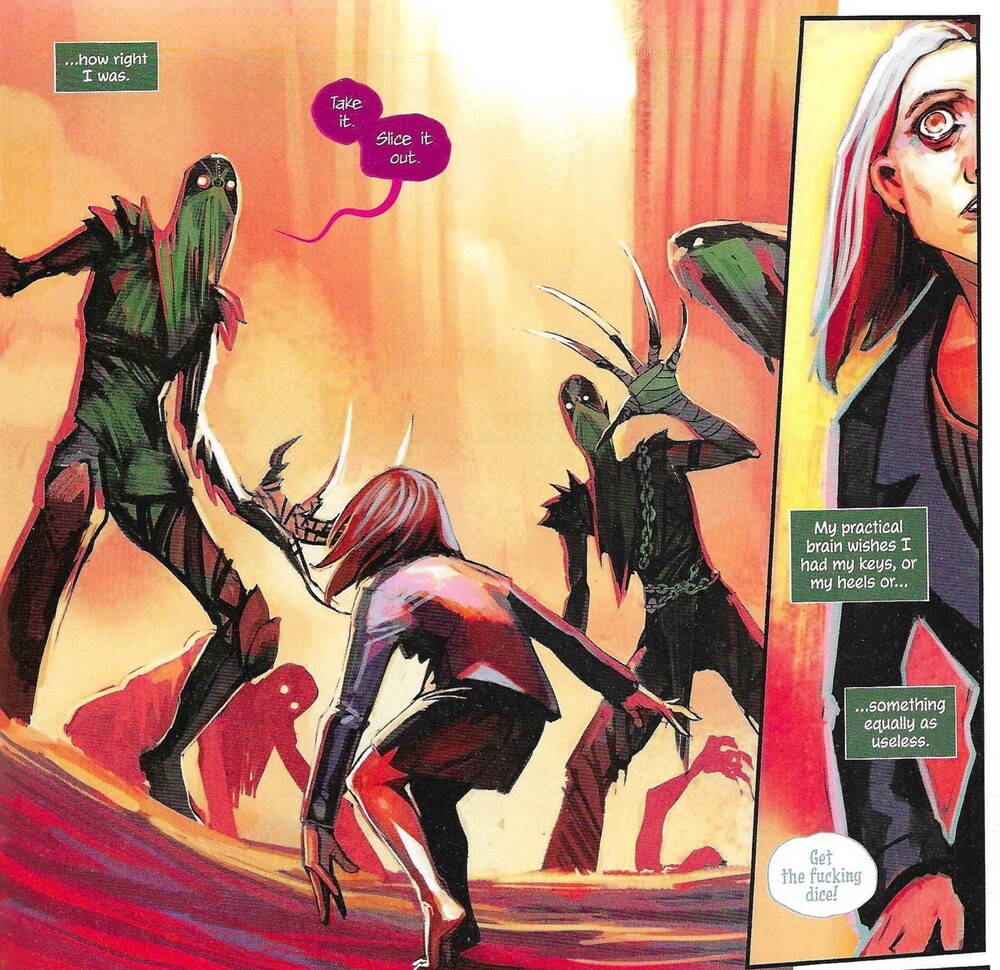 It’s 129 pages long, which is nice.
The question is, of course: do we need more Die? The original series told a complete story, and didn’t really beg for a sequel, but Gillen had an itch, I guess, and he wanted to explore the world he’d created a bit more, so here we are. The original cast is back in the “real” world, but they came back in the middle of COVID, so they’re stuck in a different kind of hell. They finally get out and go to a funeral, and while they’re there, some of the people who were ancillary characters in the original series end up in the game world. The main character is Sophie, Ash’s partner, who was stuck raising their son when Ash was sucked into the game (I’m going to call her a “single mom” below, even though I know she’s not — she sort-of was for a long time, and she kind-of thinks of herself that way). She has to figure out where the others are and gather them all together so they can get back home. So, yes, this is a superhero “gathering-the-team” origin story, in a way. Gillen is too good a writer to not make it interesting, but that’s what it is. Sophie finds the others and tries to keep them together, as they don’t really get along with each other, but at the end of the arc, something happens that will keep them in the game longer than they want. Of course it does! Gillen knows this world and the characters very well, so it’s a compelling story, and he gets to have some fun with the “fake/not fake” fantasy world he’s created — there’s a nice Frazetta homage, and there’s a mention of the Brontës and their fantasy world, because of course there is, as the Brontës and their fantasy world seemed to be in the comics zeitgeist a few years back, and Gillen uses a clever Tolkien reference late in the book. He does some clever things with the rules of the game, too, and it’s not all doom and gloom — issue #4, where Sophie discovers people on a quest, is quite funny. Hans, as usual, is excellent. She still struggles the tiniest bit with faces — they’re not bad, just not always as good expressively as you’d like — but everything else is superb. Her design work is stunning, her gods and other characters are interesting, she does well with the weirdness of the “funny” issue and does really nicely with a gut-wrenching sequence in issue #5. 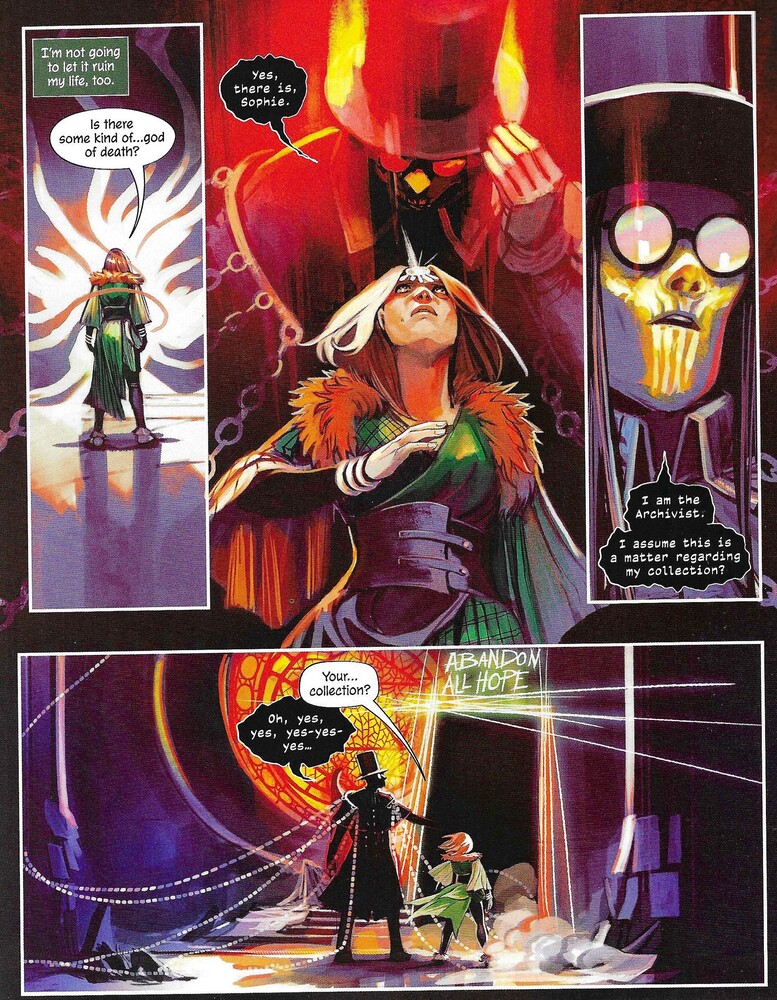 Her colors are always staggering, and they are here, too. It’s an absolutely gorgeous book.
However … I’m a bit annoyed at Die: Loaded, and I’m here to tell you why! If this were the olden days and we had a ton of people reading, I’d probably get in trouble for this, and I still might here, but I don’t care! There’s a big problem at the center of Die: Loaded, and it’s … well, it’s the White Guy. The Straight White Dude, to be clearer. One of the characters who gets sucked into the game is a Straight White Dude (SWD), and as we all know, SWDs are not good characters anymore in fiction, because they suck. I’m not here to argue that us poor SWDs are being ill-served by current fiction, for two reasons: We’re not — there’s still plenty of fiction that features SWDs in not-sucky roles; and also, whenever I stick my head into the real world, SWDs are doing horrible, horrible things, so fuck them. But I still want to expound upon this, because in this book, we have the single mom, the non-binary teen, the older woman, the Straight (presumably) White Girl, and the older black man. Plus a SWD. Guess which one is the douchebag? Oh, you get no points, you fools! Now, that’s not to say the others don’t do some bad things, but Gillen clearly means for their bad things to be … less bad? and more understandable? than our SWD’s bad things, and so they are. One of them is a Rage Knight, for crying out loud (not our SWD), but even their blind rage is not treated as something horrible. And you may say, reasonably, So the fuck what? You’ve been on top of the shitheap for centuries, so you’ll take your medicine now, asshole, and I would say, Sure. I don’t really have a problem with our SWD being a douchebag. What I have a problem with is him being a stereotype. All of the characters are stereotypes, of course, in their way, because they’re people who have been thrust into roles in a game (hey, it’s the “R” in RPG!!!), and roles in a game are, by their very nature, stereotypical (really, the Rage Knight?). That’s fine and dandy. Gillen, who made his name because of his characters, not his plots, is very good at confounding stereotypes in his comics, and he does it a bit here and I’m sure he will continue to do it as this series progresses. However, he simply doesn’t with regard to our SWD. He’s a stereotypical DoucheBro when we meet him (in the game, that is — in the “real” world, he’s only in a few panels and he doesn’t say anything, but he’s clearly a DoucheBro there, too) and he remains one throughout this arc. 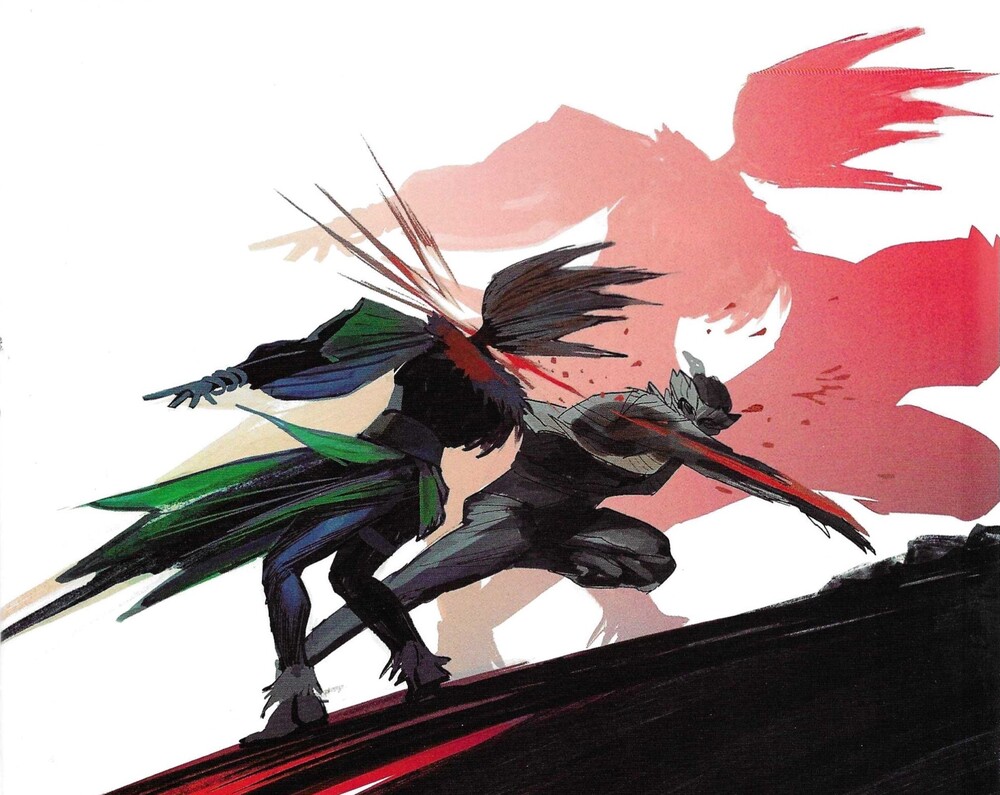 He doesn’t change even a little bit, so it’s not surprising he’s a dick throughout. Gillen, over the years, has become much better at plotting, but when you focus too much on plots, occasionally you have to fit your characters into the plot a bit, and that leads to stereotyping. He needs something to happen to keep the characters in the fantasy world, and what better way than to make your Designated Douchebag do a douchey thing? That way everyone can just nod their heads and think, Of course he would be a douchebag — he’s the Designated Douchebag! It makes everyone feel better, but it doesn’t really make for a compelling story.
In some ways, the Era of All SWDs in Fiction was better for storytelling, because if everyone is a Douchebag, then when one turns out to be truly evil or one turns out to be not bad, it’s a bit of a surprise. As I’ve often noted, I have absolutely no problem with more diversity in fiction. But we haven’t really reached a point where we’re truly diverse, because right now, there’s kind of token representation, which makes it harder to do too much with your diverse cast. SWDs are the only suitable Designated Douchebag in a cast if they’re the only SWD in said cast, so it’s boring when, hey, they really are a Douchebag! Of course the non-binary teen in Die: Loaded isn’t evil! Of course the struggling single mom in Die: Loaded isn’t evil! Of course the kindly, elderly black man in Die: Loaded isn’t evil! The only recent example I can think of where someone who might have been non-binary or might have just been delusional and was also a villain was Dagger Type, and we know how that went. If Gillen wants to be diverse but uses only one (1) non-binary person, one (1) single mother, one (1) elderly woman, one (1) young woman who seems to be nothing else, and one (1) black person in his cast, there’s no way any of them will be the bad person. Of course it’s going to be the person who everyone already thinks is a bad person! I would have been far more impressed with this series if Gillen simply didn’t include any SWD, because then he’d have to make a choice about who’s going to be the Designated Douchebag, and maybe he would have worked harder to make all of them less stereotypical so the bad stuff would hit harder. 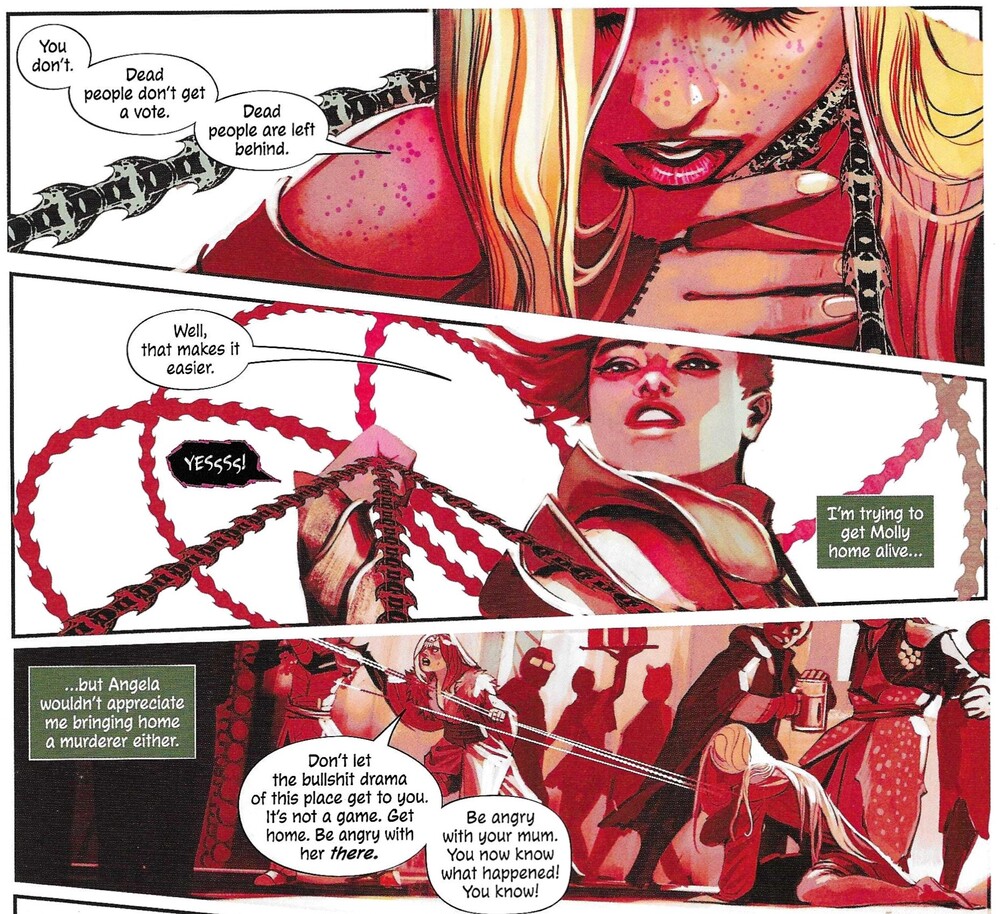 As it is, this series makes all the non-SWDs who read it (and I’m sure there are a lot of them, because Gillen seems to have a nice, diverse readership) feel good about themselves. It is, a bit frustratingly, not challenging. It’s too bad.
Am I making too much of this? Maybe. Gillen, a SWD himself, has done well with them in the past — Phonogram was full of Designated Douchebags, but the difference was that Phonogram was not concerned as much with plot, so Gillen was able to change them from the stereotypes they started as into something else. They weren’t all redeemed, certainly, but he offered more insight into them and left them with some questions about themselves, which is not a bad thing. As he got better at plotting, he needed to ease back on the characterization a bit, but he’s still excellent at it, for the most part, which is why this rankles, I guess. There doesn’t seem to be any reason to include, specifically, a Straight White Dude in this book except to make everyone look better by comparison. Maybe it will get better in the second arc and beyond. Who knows at this point? It’s just frustrating — again, not from a “I’m offended because #NotAllMen!!!!” point of view, because, as I noted above, men do really suck far too much, but from a storytelling point of view. If the SWD in your story is always going to be the bad guy, where’s the tension? Where’s the intrigue? Where’s even the entertainment? Maybe you’re entertained, but it seems a bit boring to me.
All right, I’m done now. I still mostly dig this comic and think it’s pretty cool, and the way the arc ends does make me wonder where in the hell Gillen will go with it. I don’t know — maybe I’m just a Grumpy Old Straight White Dude (GOSWD) — the worst kind of SWD!!!!
Rating: ★ ★ ★ ★ ★ ★ ★ ½ ☆ ☆

The SWD works for me because he’s a very specific type…and also a very specific type of TTRPG player.
It all ties into the meta theme of how we play games, and I trust Gillen to find a way into the kid in the long run of the game, if only to examine the different and delightful ways one bad parent can fuck up his kids.
Sure, I get that, and I’m certainly not giving up on the book because of the character. I do trust Gillen to make him (and everyone else) a bit more interesting, it was just frustrating in this arc!