
“Let me hear your balalaikas ringing out, come and keep your comrade warm”
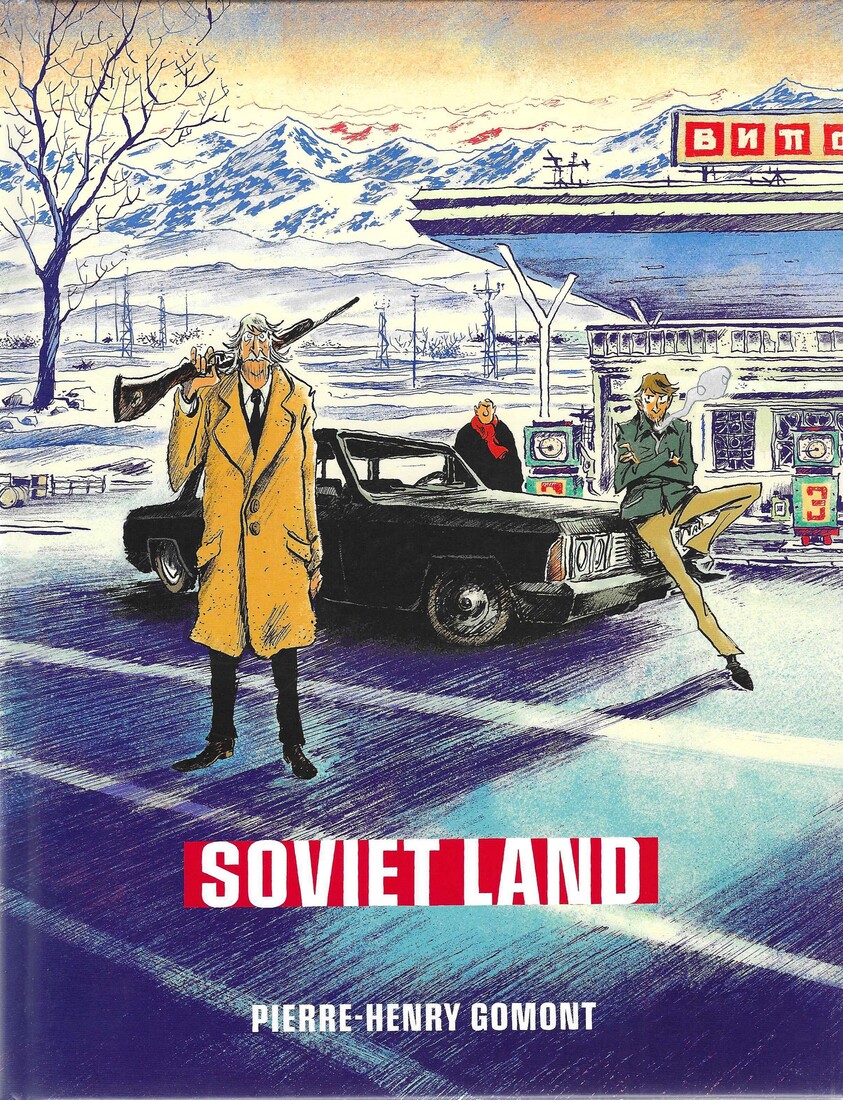
Pierre-Henry Gomont (with the irrepressible Edward Gauvin providing the translation) brings us Soviet Land, which is published here in the States by Abrams Comicarts. 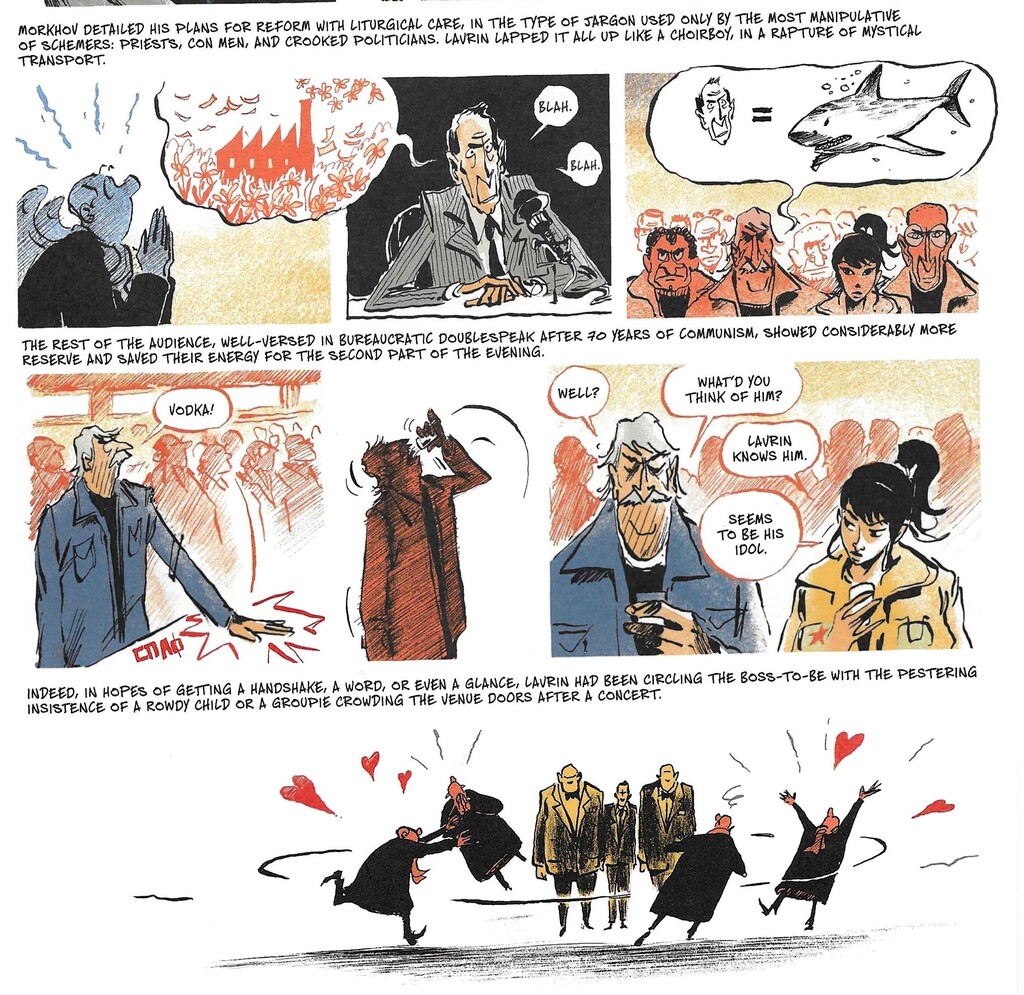 This costs $34.99 for a 314-page, beautiful chunk of comics goodness. Let’s check it out!
Gomont, as you can probably surmise, is French. He is neither Russian nor ‘Murican, yet his latest book throbs with condemnation of both the early stages of capitalism as practiced by the newly-independent republics of Russia following the collapse of the Soviet Union and the late-stage capitalism practiced in far too many places but perfected by ‘Murica. Granted, both those things are awfully similar to each other, so it’s not too big a stretch, but Gomont manages to blend them into a darkly cynical, occasionally hopeful, and fiercely beautiful graphic novel. We have Slava, the narrator, a frustrated artist who hangs out with Dmitri, a black-market hustler. Slava is the younger and less cynical of the two, while Dmitri cares only about making as much money as possible. This takes place after the collapse of the Soviet Union, in the early 1990s, and Dmitri and Slava are roaming the countryside plundering abandoned estates of anything that can be dragged away and sold to the nouveau riche in the towns. Early on in the book, they’re attacked by other looters — ones with guns — and a young woman named Nina saves them by shooting some of the bad guys and driving the rest away. Nina and her father, Volodya, work at a mine, which becomes the focal point of the plot. An industrialist wants to “invest” in the mine, but Dmitri knows him and says he’ll simply sell everything of value and leave nothing for the workers. Slava convinces Dmitri that they have to help the miners in a scheme to outwit the businessman, and Dmitri agrees because he can make money out of it. 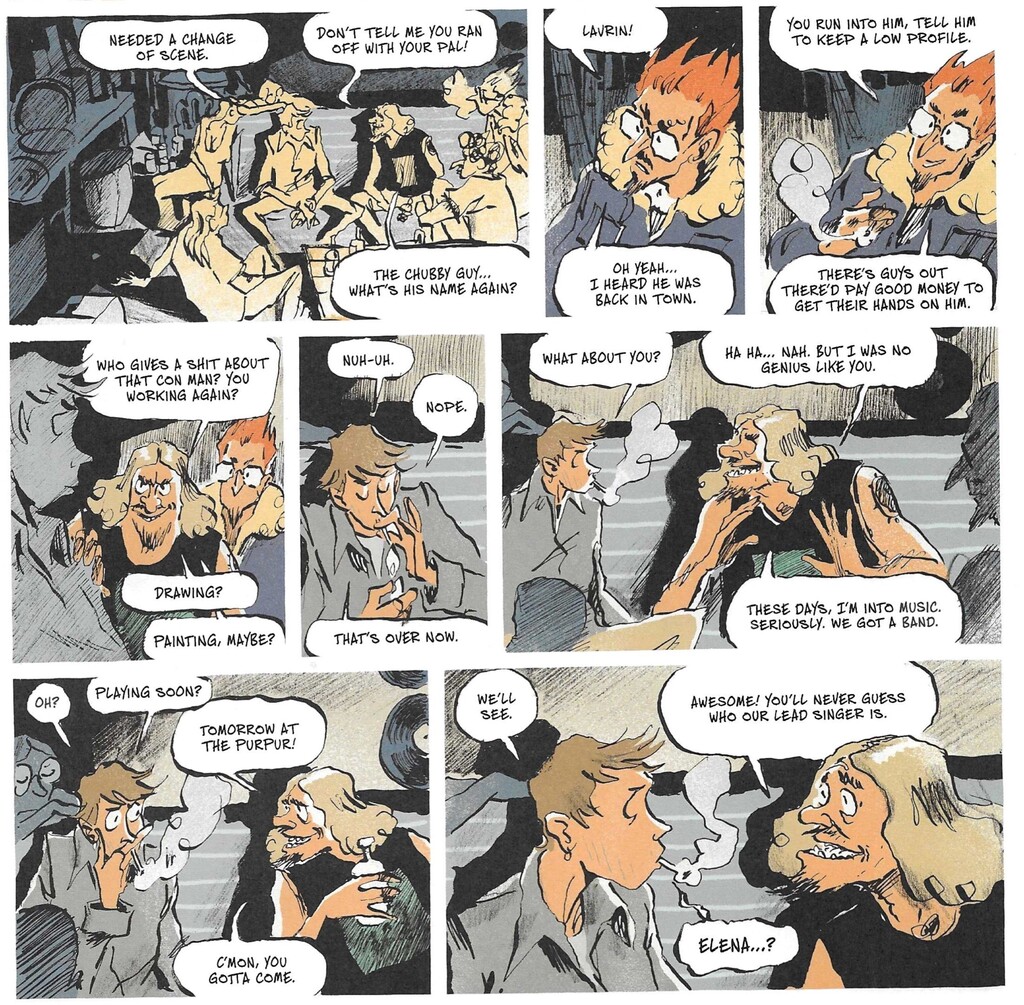 Slava and Nina, of course, fall in love, which disgusts Dmitri and makes Slava more committed to the mine. Dmitri’s past keeps catching up to him, and he and Slava get separated for several months as Dmitri goes through some bad shit while Slava tries to keep the scheme working. Of course, bad things keep happening — it’s a Russian story, and those don’t tend to end well, even if a Russian isn’t writing it!
It’s not all bleak, which is nice, as Gomont doesn’t want to write simply a tragic tale of people fighting against the system. There are some deaths, including one that annoyed me because it felt fairly unnecessary, but there’s also a lot of hope. Dmitri has a shady past, of course, and at one point it catches up with him, causing the separation from Slava as he goes through some trials that … well, they don’t make him a better person, but they do teach him some things about life. Slava wants to help the miners because he’s burned out on art, but in the course of the book, he gets back into painting, and he gets to experience the seedier side of the art world, even though he does manage to make some money out of it. Everything comes crashing down, as we knew it must, as the greedy capitalist who wants the mine fights back and has the “law” on his side, so he does so with impunity, but the book does end on a somewhat hopeful note. That’s something, considering how much the book feels like a comment on the current situation in the world.
Gomont spent time in the Caucasus to capture the vibe of the place, and the book feels both historically accurate and sadly current. 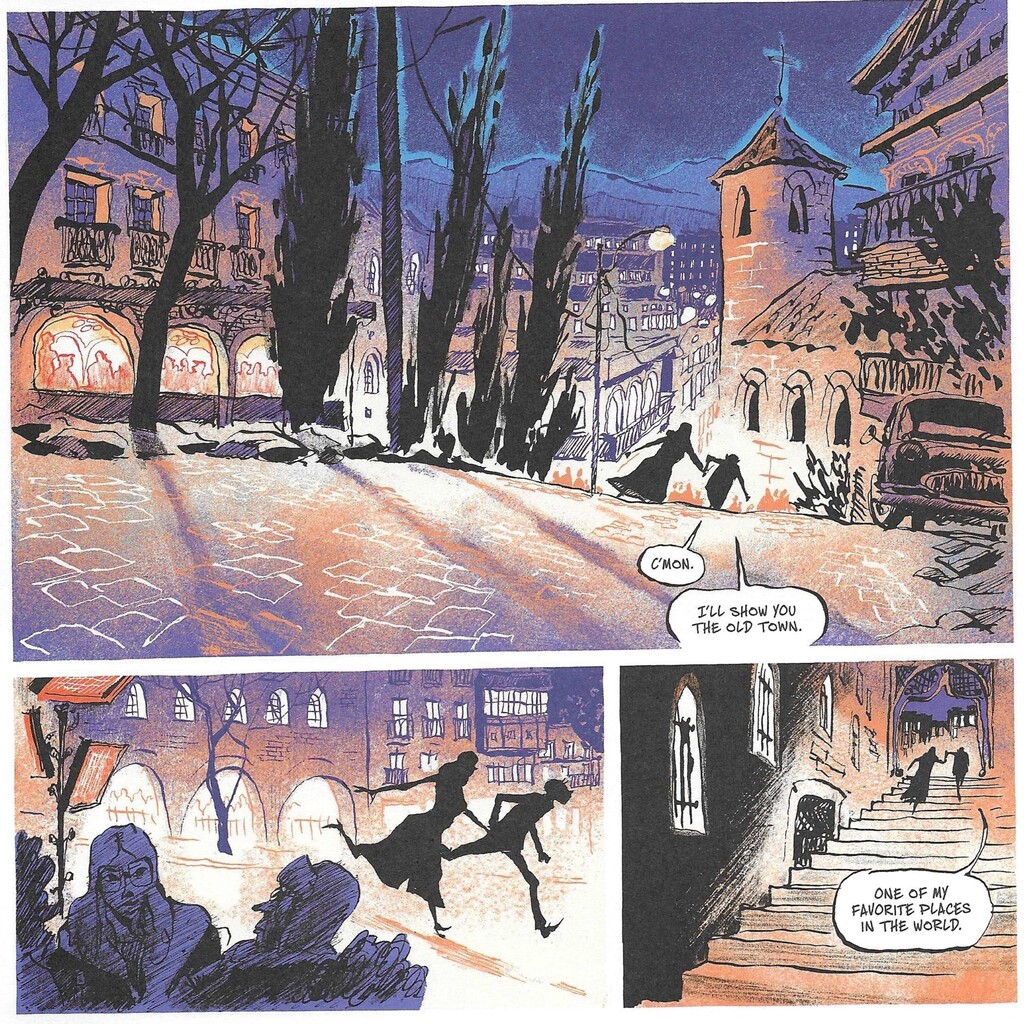 After the fall of the Soviet Union, the various republics broke off on their own, but the imposition of iron-fisted rule from above had wrecked their cultures and societies, and many are still struggling with that, Russia itself not the least of them. Robber barons thrived, of course, because the only law, it seemed, was “get what you can,” an ethos that Dmitri, of course, embraces. Gomont makes the point that a lot of the old-school miners had absorbed the utopian lessons of Communism without becoming jaded about the way they were carried out by an oligarchy that was not interested in them, if they ever had been, and so Slava and Dmitri don’t understand why they don’t want to just take the money. (And yes, there is the implication of “rural = good; urban = evil” that we see in far too many books, but it’s not pushed hard at all by Gomont, which is appreciated.) Slava eventually understands — you have to take a stand somewhere in life, so why not choose that? — but it takes Dmitri far longer, and even at the end, it’s unclear if he really comprehends it. The roiling beginnings of capitalism can always be compared to the decadence of late-stage capitalism, because in both cases laws don’t exist — in the former case because they haven’t been formulated yet, and in the latter case because the businessmen have become powerful enough to ignore them — and in this case, Gomont, writing in the first post-Trump era (the book was originally published in 2024), could not fail to draw parallels between the way American — and, to be sure, international — oligarchs have destroyed so much of the economies that made them what they are, tearing away tangible assets for ephemeral value that gives nothing back. In the aftermath of the U.S.S.R.’s dissolution, nobody knew what the laws were, so there was no law. But the Russian businessmen, which includes Dmitri in this book (even if he begins a road to redemption at the end), would feel right at home in Donald Trump’s America. Many of them from the early 1990s are probably still around, and no doubt thriving in a world where the law has been warped to protect them utterly and destroy the people like Nina, her father, and Slava.
 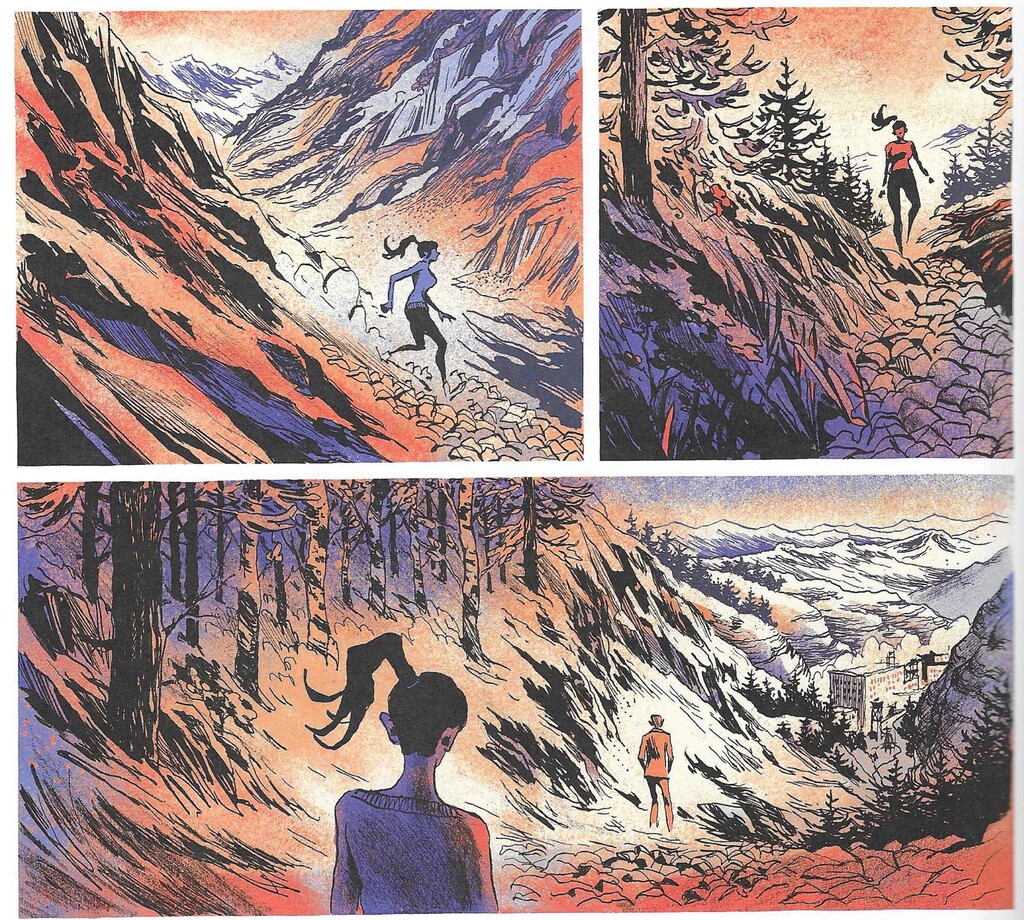 Gomont grounds the book very clearly in the early 1990s, but it still has a universal theme, one that has become depressingly more relevant as the years have gone on.
Gomont’s art is in that fine tradition that I think of as “European” — slightly cartoonish and often sketchy, but also rich in details when needed, and this book brings to life the hardscrabble world of southern Russia beautifully. The characters are wonderfully distinctive: Dmitri is shorter and rounder than Slava, which reflects both his hustling for a better life, which leads to him being a bit better fed than Slava, as well as Slava’s more marginal existence as an artist and then mine worker, as he never quite knows where his next meal is coming from. Volodya, Nina’s father, is an example of an old-school Communist who still believes in its principles — he’s an honorable person who backs down from no one — and Gomont both admires him and makes him the focal point of the book’s humor, as Dmitri, particularly, lives in a world of half-truths and façdes, which are completely foreign to Volodya. A lot of the humor of the book comes from the art, as Gomont draws these characters so expressively that he doesn’t need words to convey their feelings. He uses a rough, heavy line to create the rural landscape, which is harsh and unforgiving yet starkly beautiful, and the man-made objects placed in it — even the mine, which is a symbol of the working man — look like works of violence incongruously scarring it. His cities are a depressing blend of abject poverty and oblivious opulence, but even the mansions and apartments of the rich have a seedy, decayed vibe to them, as the plutocrats wrecking the world can’t seem to move on from the czarist trappings of the pre-Communist era, but that means they’re occupying places that have been ignored for decades and have not been replenished in any way. 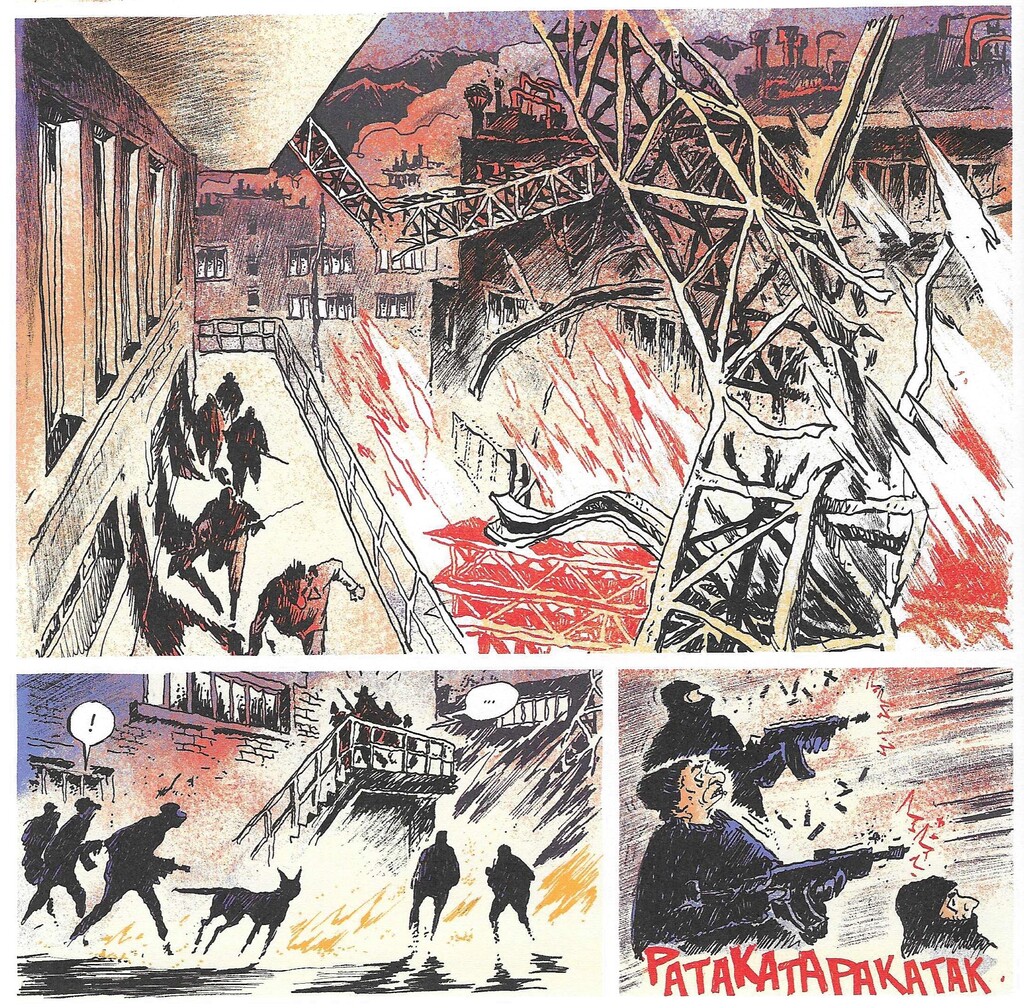 Only in Moscow, where Slava goes to sell his art, is there a feel of modernity, yet it’s that sleek, predatory modernity that feels like it will kill you a thousand cuts rather than crushing you outright. The art on the book is expansive and gorgeous, and in some places, Gomont gives us amazing, heartbreaking images that sum up the themes of the book wonderfully in just a few panels. The story is good, but the art makes it come alive.
This is a powerful book, and it’s sadly all too contemporary even if it depicts a time 30 years in the past. Gomont doesn’t teach us any new lessons about how to attempt to deal with oligarchs who believe the law doesn’t apply to them, and he doesn’t offer any new solutions, but he does reinforce the lessons and solutions we already know and shows why they’re important. It’s not a “fun” book, certainly, but Gomont doesn’t make it all cynical and depressing, either. I don’t know how it was received by those snooty Europeans, but it ought to be received well here in ‘Murica!
Rating: ★ ★ ★ ★ ★ ★ ★ ★ ½ ☆
