
“I switched on the radio and nearly dropped dead, the news was so bad that I fell out of bed”
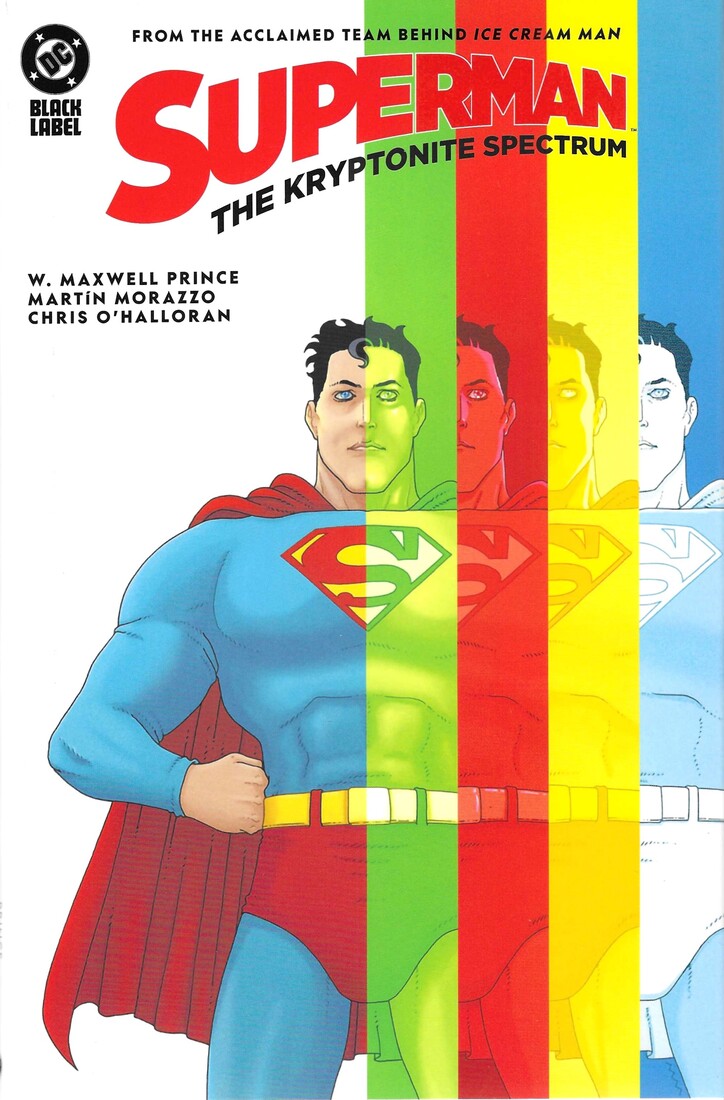
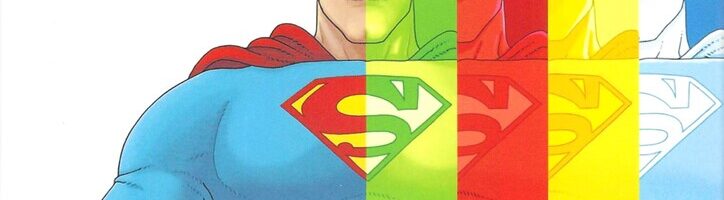
W. Maxwell Prince and Martín Morazzo have been doing Ice Cream Man (which is not, shockingly, the basis for the new Eli Roth movie, which means, I mean, shouldn’t Prince and Morazzo be suing the pants off of someone?) for some time, and they had done some comics before that, so they know each other pretty well, and now DC throws them a Superman comic, and who knows what they’ll do with that? Well, we do, because Superman: The Kryptonite Spectrum is out and about and in a nice collection! 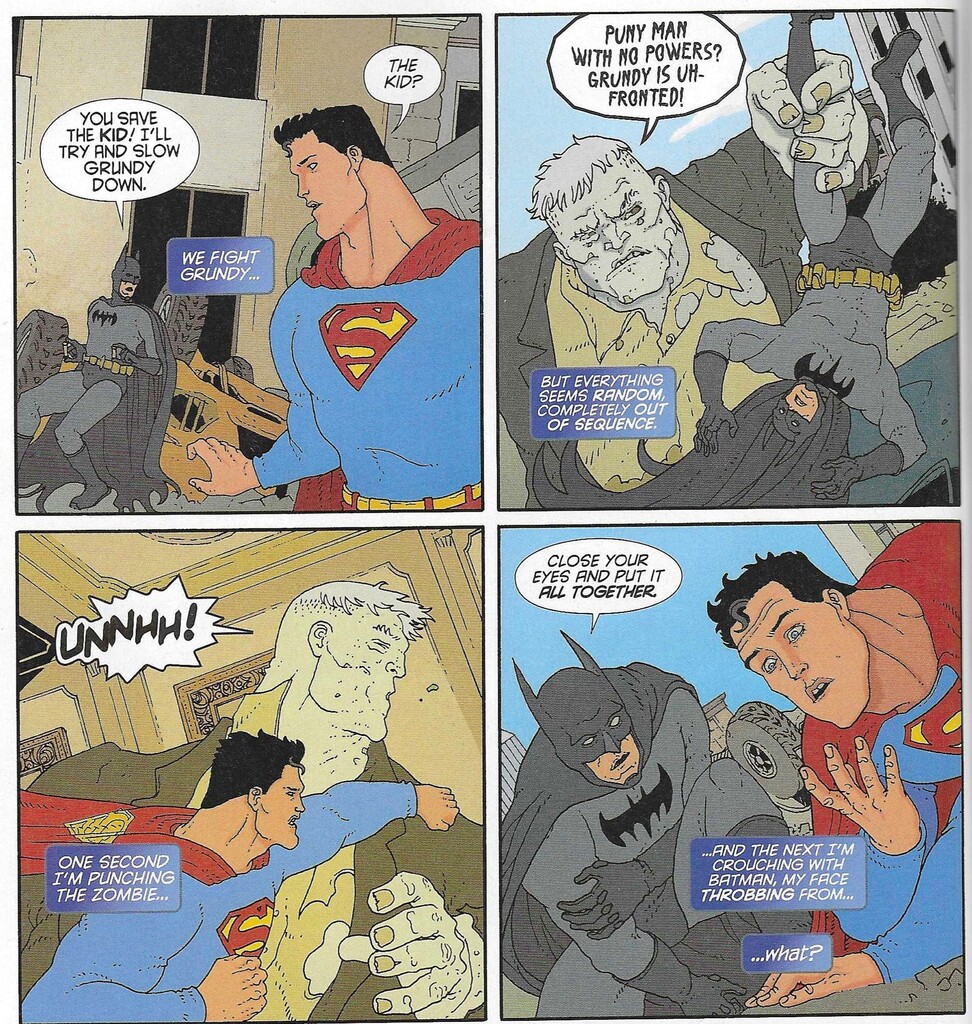 Chris O’Halloran colored it, something called “Good Old Neon” lettered it, and Paul Kaminski edited it. My nice hardcover costs $29.99, so it’s a bit more than the single issues cost, but I imagine a trade will be 20 bucks, if you want to wait for it. It is 160 pages long, though, so that’s nice (that works out to 8 issues in DC’s regular format, which probably would have been 32 bucks for the whole thing, so maybe the hardcover is worth it?).
If you’ve been missing Morrison and Quitely’s All Star Superman, you might want to pick this sucker up, because it channels that story and the wacky 1950s/1960s Superman stories quite well, and who doesn’t love that kind of Superman story? Prince is kind of a nastier version of Morrison (who can be evil, certainly, but tends not to be), and Morazzo’s thin line, lack of fluidity, quirky sensibility, and ability to twist his storytelling recalls Quitely quite a bit. So, yeah — this is a spiritual successor to ASS, as Prince gives us a few new iterations of Kryptonite and what Superman might do if he discovered them. Why, he’d call his good buddy Batman and perform experiments on himself to see what they do, of course! Bats. wisely, tells Supes they should just destroy the pieces, but Supes, sentimentally, can’t fathom wiping out more pieces of his home (a home, he notes in the first line of the comic, that exploded before he “gained object permanence,” so why does he care?) So, in order: Purple Kryptonite messes up the way Superman experiences time; Cobalt Kryptonite makes him grow to giant-size; Speckled Kryptonite makes him shrink; and Rainbow Kryptonite … well, it has something to do with the Fifth Dimension, where Clark ends up, but I don’t want to give too much away with that. Of course, Luthor is around, trying to get his hands on the new Kryptonite and doing dastardly things, and of course Mxyzptlk and Bat-Mite show up, because we’re in the Fifth Dimension. 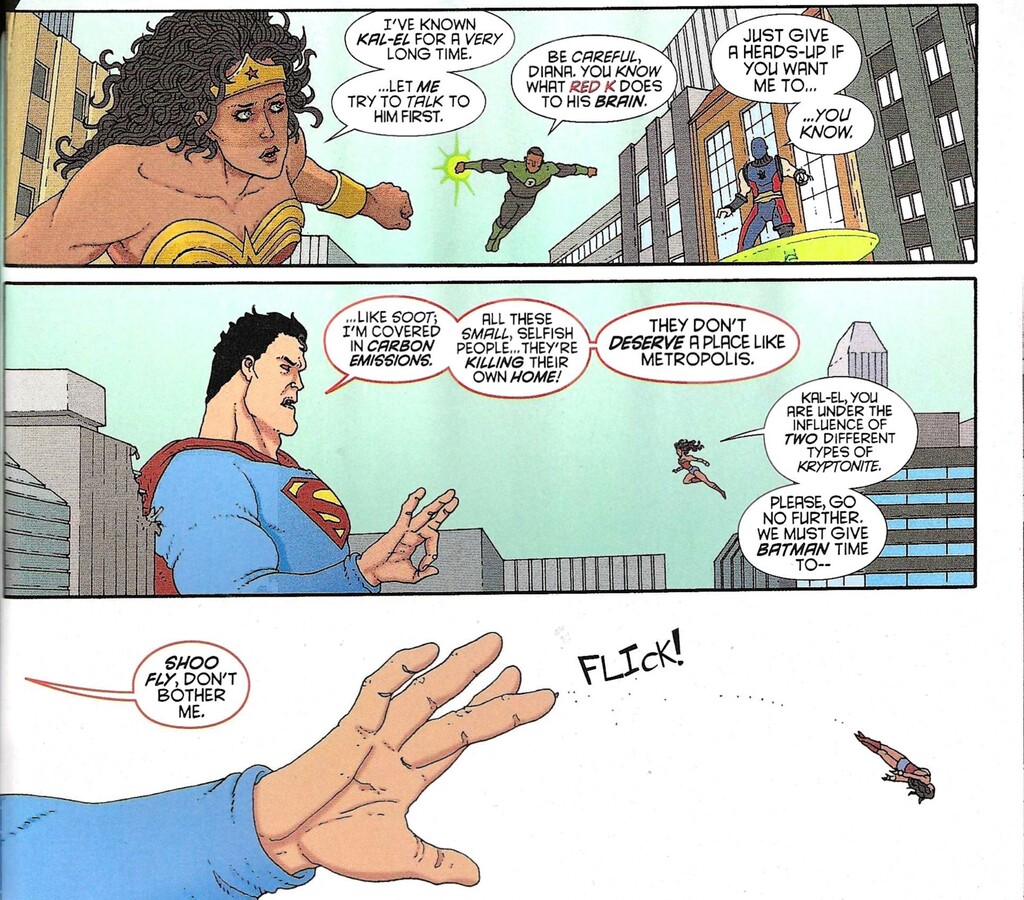 It’s not the strangest story in the world, but it is fairly weird, as you might expect.
The first issue is probably the weirdest (I mean, the Fifth Dimension stuff is odd, but still pretty straight-forward), as Superman and Batman have to fight Solomon Grundy while Superman’s perception of time is messed up. It’s a clever comic, as Prince and Morazzo place panels “out of order” so that we experience the book the way Superman is, in a disjointed fashion, and because Grundy’s life cycle is linked to the calendar, Superman can use his perception of time to subvert him by skipping around on said calendar. The idea of time comes into it when Lois breaks up with him (which I don’t love, because it’s not really addressed in the story, so why do it?), as she is aging and wants a baby and doesn’t think she’s going to get that with Superman. While I don’t love the plot point, I do like how Prince introduces the idea of aging into a story about time, especially as Superman himself doesn’t age (I mean, it’s a comic, so Lois doesn’t either, but as a human, theoretically she would). He keeps it up when he de-ages Superman, as he hangs out with Billy Batson in issue #3. This twisting of time reaches its apotheosis in issues #4-5, when Supes goes into the Fifth Dimension and returns to find that Lex, naturally, is wreaking havoc, because Prince gives us a Fifth Dimension that is driven by imagination, so Superman needs to become less a man of science and more in tune with his childlike nature. His regression to childhood in issue #3 helped him with that, of course, and he’s able to defeat Lex, naturally, but the aging/de-aging theme ends the book on a bit of an odd moment, one I don’t completely love. Still, Prince ties it into Alice in Wonderland, which was also a bit about growing up or not growing up. There are many references to the Alice books, and Prince does pretty interesting work with it. In the Fifth Dimension, the evil person is a kid who pooh-poohs imagination altogether, and it’s clear Prince is working through this idea of imagination helping keep people young. 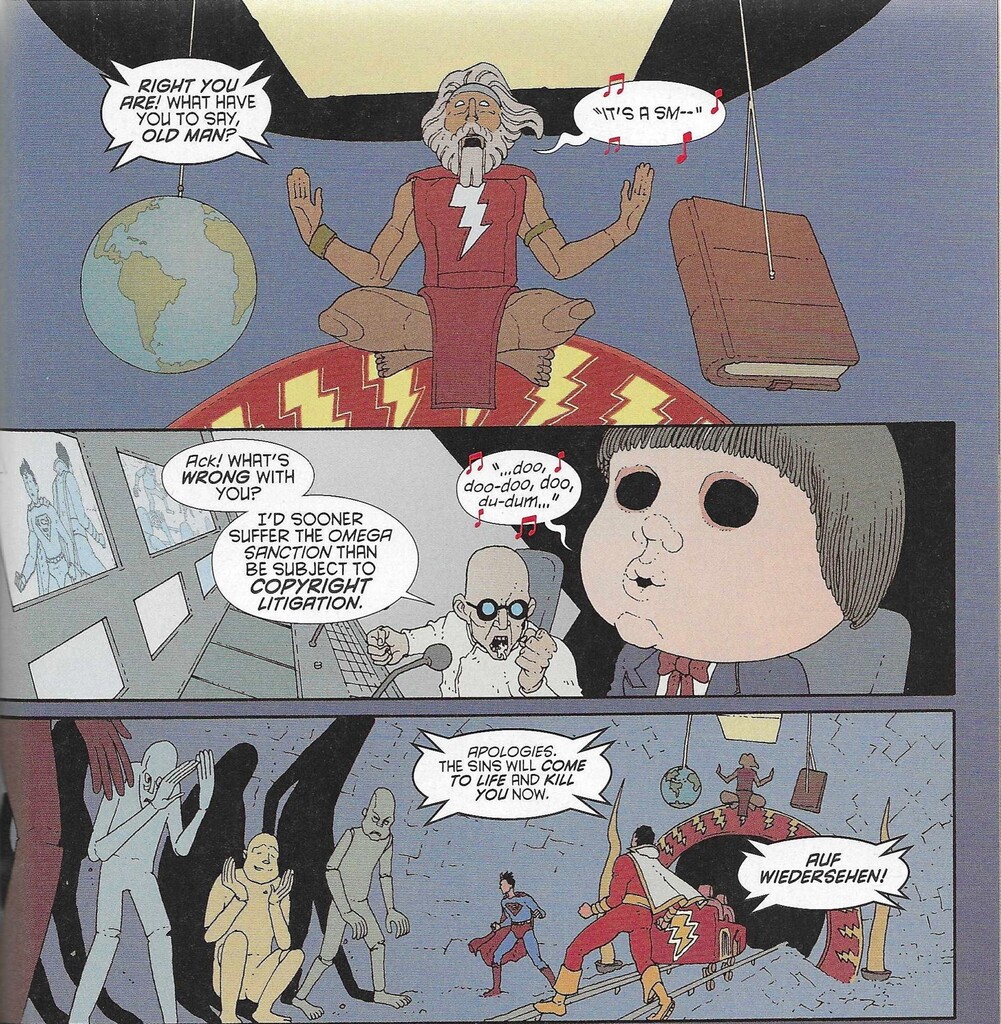 There’s an interesting idea in this book about adults ruining anything, and Superman has to tap into something different to fight back against this. Even in the smaller moments, we get Lois dumping Superman because she wants a child (which is kind of the epitome of growing up), we get Sivana and Toyman turning an amusement park into a deadly place, we get a scientist worrying about his 401(k). There’s an undercurrent of sadness running through the book, as there often is when Lex Luthor shows up, because his tragedy is that he’s too “adult” to see the benefit of Superman. Superman, unlike Batman, is a kids’ hero, and Prince understands that, and Lex never can. He will always fail because of that.
Prince and Morazzo tell a decent story, certainly, although, as I noted, I don’t think they end it very well. I get that this book isn’t “in continuity,” and that’s fine, but I’m not even sure the ending works in the continuity of this universe. It’s very odd. But that’s ok — it does fit the theme of what Prince is going for. So the story is fine, but what makes the book so keen is how it’s told. Morazzo has been doing fun stuff with page layouts for a while, and he does neat things here, too. The first issue, which is told a bit out of sequence, is clever, and Prince and Morazzo do a good job keeping it uncomplicated while still making it a bit puzzling. When Clark is regressed to adolescence, Morazzo gives us a few pages where he and Billy use colored pencils to draw scenes from their youth, and Morazzo does a good job making it look like it’s something drawn by youngsters. He has a ton of fun with the Fifth Dimension issue, using photographs, the “colored pencils” of the earlier issues, even a screen shot of an Excel program (which ties back into a very funny moment earlier in the series), which creates a crazy-quilt kind of world that Clark has to figure out. The book becomes a comic aware of itself, which Prince has done before but which is always fun to see, and Morazzo has a few pages that lean into that nicely, with an infographic about surviving the Fifth Dimension and another that resembles the style of ads from old comics. His design of “Kal-Elf” (Superman’s equivalent to Bat-Mite, which is NOT Mxyzptlk, in case you’re wondering about him) is very fun — it’s like if Superman decided to go to a slumber party, and it works. 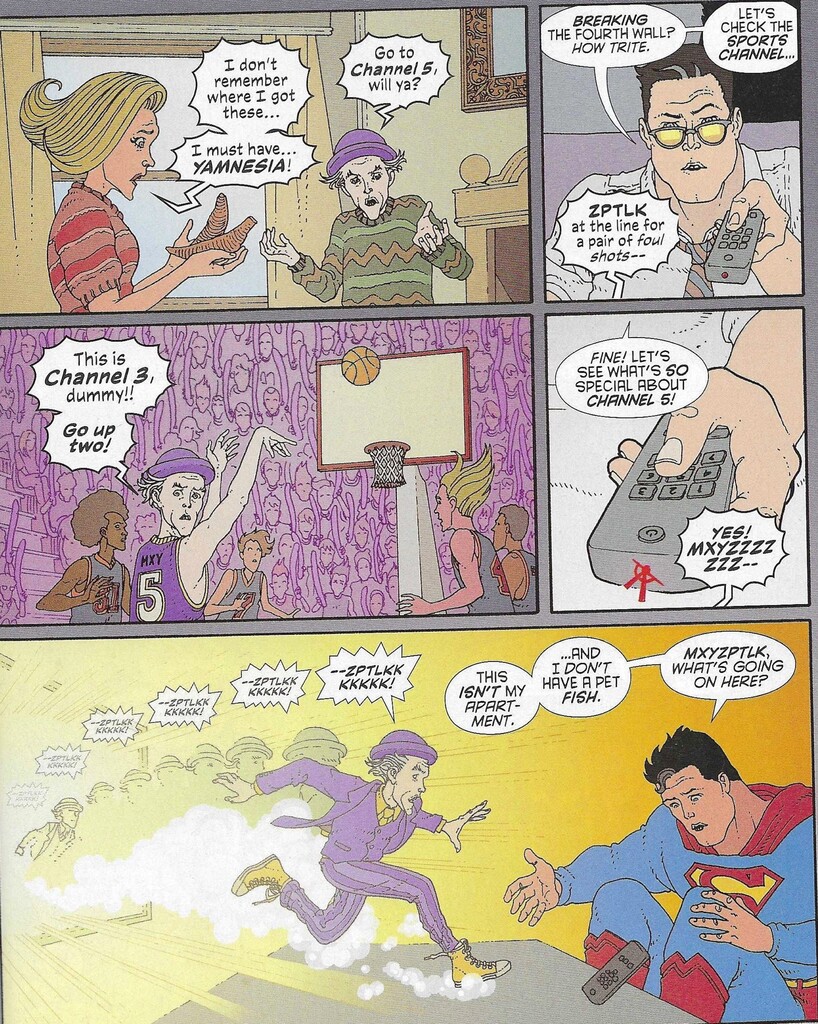 Honestly, the one thing I don’t love about Morazzo’s art is his depiction of Batman. His bat-design on his chest is too weird, but more than that — his Batman is wiry, almost stringy, and he moves like a kid who’s wearing an ill-fitting Batman costume, kind of awkwardly. With all the Alice in Wonderland motifs in the book, I can’t help but wonder if Morazzo did this very deliberately, but if he did, I don’t love the choice. For the most part, though, I do like his style, and I think its weird sensibility works well on superhero stories. He’s not as fluid in the action scenes as he could be, but that hasn’t stopped artists from drawing superhero comics before, and it shouldn’t stop Morazzo! I am curious to see if DC keeps giving Prince and Morazzo work after their Deadman series finishes. I think they go do some neat things with the icons of the DC Universe.
There are some flaws in Superman: The Kryptonite Spectrum, to be sure, but in general, it’s an excellent comic. It has some fun with the weirdness of the concept of Kryptonite (which, let’s be honest, has always been a bit weird) and gives us a nice friendship between Superman and Batman, and the storytelling — both the writing and the art — is clever and interesting. It might boil down to “Lex Luthor is a big jerk,” which is what far too many Superman stories boil down to, but it’s fun to get to that point!
Rating: ★ ★ ★ ★ ★ ★ ★ ★ ½ ☆

I loved about 80% of this series, but that ending… I don’t think Lois would be happy with those circumstances! It reads like the end of an EC comic or the Twilight Zone, as if Lois was the main character and her desire gets twisted, despite the fact that nothing in the rest of the series leads the reader in that direction.
Still, the imagination and skill on display made the rest of the series a highlight of the past year. The first issue of Prince’ & Morazzo’s Deadman series was great, and I hope they stick the landing.
I had a lot of fun with this one. I’ve read a handful of Ice Cream Mans, and some of them I think can read a little… glib? Sardonic? But I like the formal experimentation, and there’s a playfulness here with the Silver Age ideas. Definitely in conversation with All Star Superman. A lot of dialogue reads like Morrison’s style. Morazzo’s art is like Quitely spliced with Steve Dillon.
I liked the ending. And the motif about the “asterisk.”
Also the single issues were 5.99, so you’re breaking even with the hardcover MSRP.