
“Butterflies from all around settled on his paper crown”
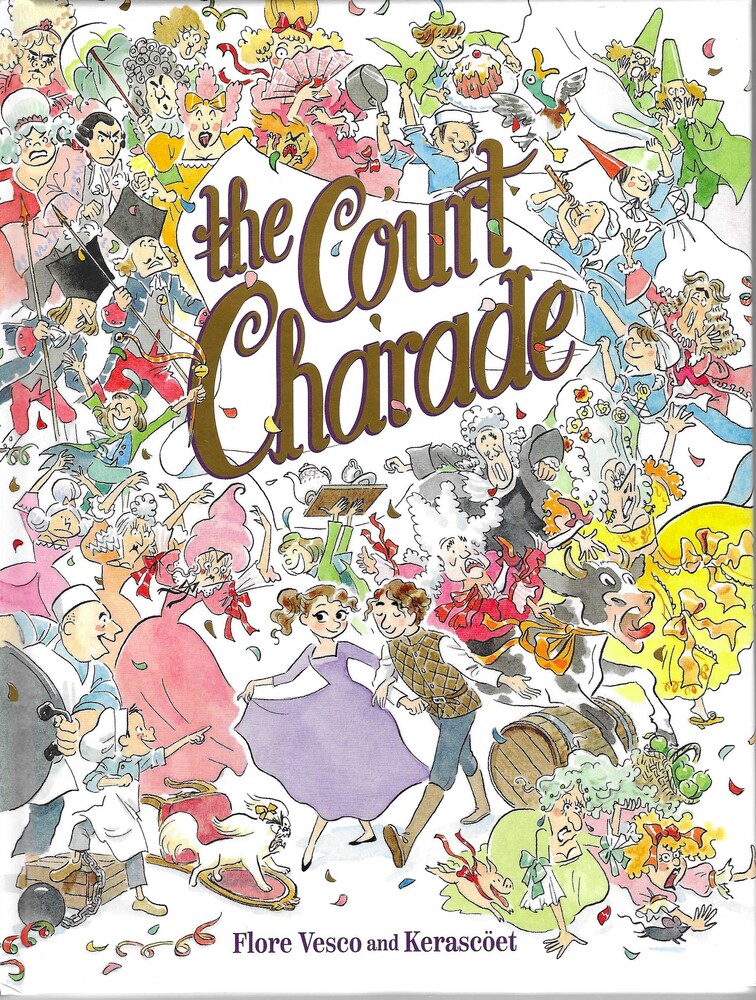
The Court Charade, which costs $22.99, is 98 pages long, and comes to us in this country from Abrams ComicArts, is the latest fun comic from Kerascoët, the French pen name of Marie Pommepuy and Sébastien Cosset, who generally put out fun comics. 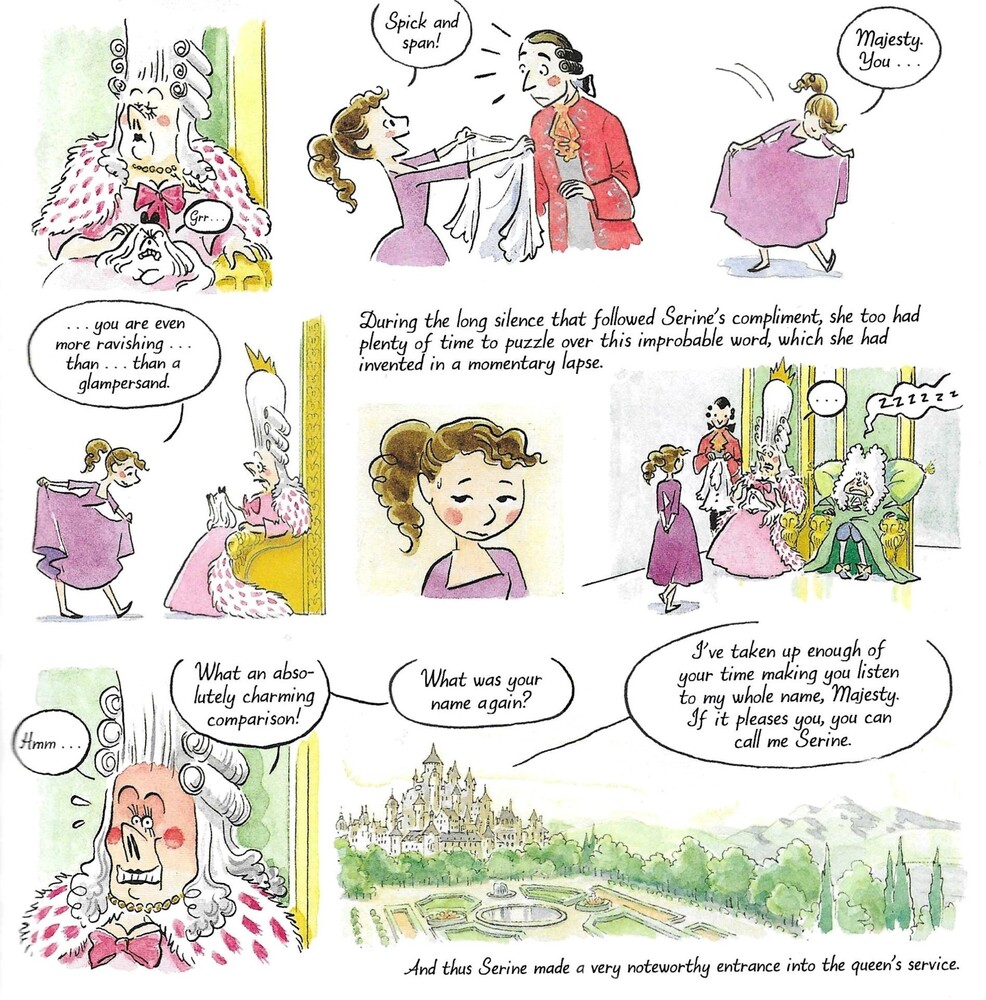 It’s actually written by Flore Vesco, and it’s from 2022 (when it was called De Cape et de mots, which means … “Of capes and words”?), but it’s now in English (translated by the mysterious “L. Benson”), so I can read it, because I’m just a mouth-breather English-only reader!
This is, unsurprisingly, a delightful comic. A young lady named Serine (who, significantly, can’t read or write) lives in a run-down manor with her officious mother and several brothers and a weak, kindly father who dies pretty early on in the book. Serine’s mother wants to marry her off quickly, but she wants to go to the court and become one of the queen’s ladies-in-waiting, which her mother thinks it very foolish. Serine decides to run away to court anyway, so off she goes!
The reason the book is delightful, despite the presence of an unpleasant queen and a torturer, is because the creators deliberately keep the tone light and Kerascoët’s art is always deliberately light. Even the torture parts are drawn in a fun manner and Vesco makes it clear that the torture … isn’t too bad? It’s odd, because I’ve noticed — and yes, I’m generalizing, forgive me — that Europeans, at least, are a bit better at introducing dark elements to the narrative without allowing it to overwhelm the lighter elements. Maybe that’s wrong, and maybe I’m foolish, but that’s what it seems to me, and Kerascoët is quite good at this, also (even though they’re not writing this one). It’s also delightful because while Serine is very smart, she also gets ahead through many series of odd and unlikely events, which are quite fun. Just as an example: when she gets to the palace, she bumps into a washer-woman and she accidentally grabs some of the laundry. 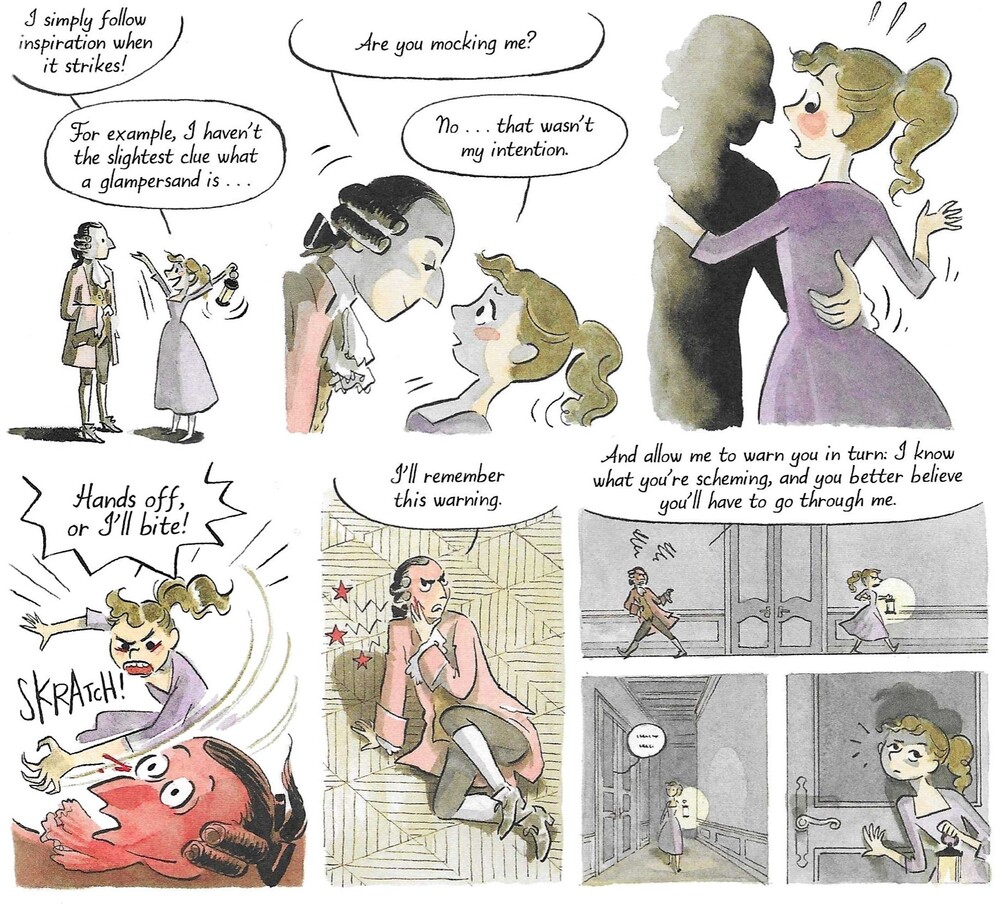 A nobleman (who becomes somewhat of her bête noire later) hands her a shirt, and she takes advantage of it by joining the washing staff, which gives her access to the palace when she has to take the laundry to the queen’s ladies. When one of them asks who she is, she says she wants to become a lady-in-waiting. She does not back down in any situation, which endears her to the queen (to a degree, as the queen is very unpleasant but, like a lot of high-class people, easily flattered) and gets her into the inner circle. Eventually, she falls afoul of the nobleman who handed her the shirt, who attempts to kill her, but she escapes and pretends to be a jester, which endears her to the king. She befriends the torturer’s apprentice (who seems like a nice enough fellow but seems to really enjoy torturing, which is where we get the odd tone shift I noted above that Europeans seem so good at), and they uncover a plot to kill the king. Of course, the king turns up dead, and Serine (as the anonymous jester) is the prime suspect. Oh dear. It all ends happily, of course, but I won’t say how!
The charm of the book comes from the way Vesco writes the characters — despite the darker parts of the narrative, she manages to keep things light because of the way she has the characters interact with each other. Serine bluffs her way through the story, as she initially tells the main lady-in-waiting that she’s a countess (with an absurdly long name) and she compares the queen favorably to a fictional thing, which the queen, vain as all queens, takes as a wonderful compliment because she doesn’t want to admit that she doesn’t know what Serine is talking about. 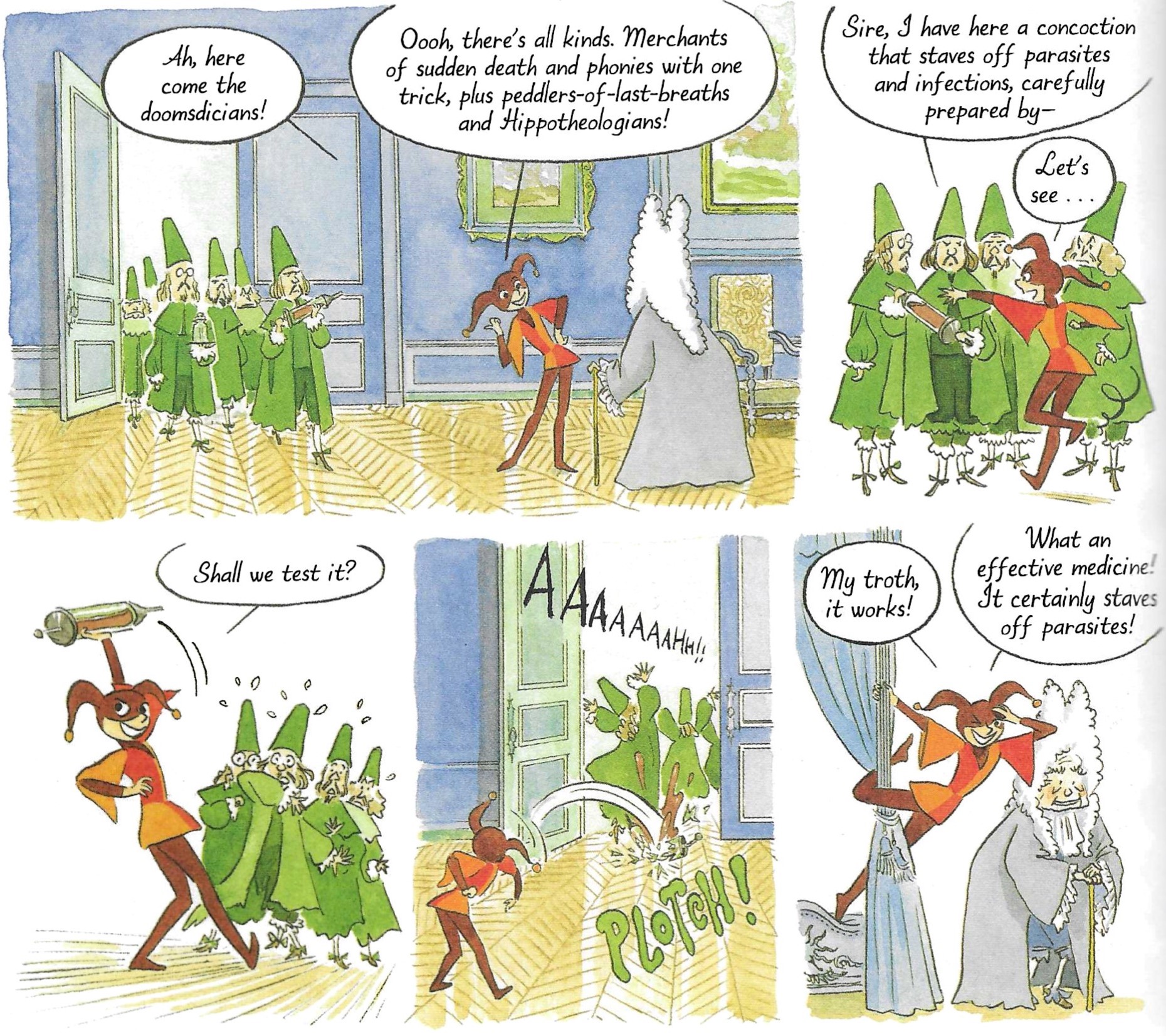 It’s difficult to write a story set in the Baroque period these days, even a serious one, without parodic elements coming into it, as the nobility of the 17th and 18th centuries tend to look far too ridiculous to modern eyes, and Vesco certainly leans into that. Serine remains a simple, rustic young woman, a salt-of-the-earth lady who skewers the pretensions of the upper crust without being obvious about it — she knows that her future depends on the good graces of the queen and, when she’s playing the jester, of the king, so she remains deferential even as she (and Vesco) show how ridiculous the pretensions are. As she is willing to hang out with the lower classes at the palace, she gets to know some of the secrets that the servants always know (as the upper class never pays attention to them) and she uses those secrets when she has to. She and Leon, the torturer’s apprentice, have a nice relationship, as she continually asks him why he has to torture people when that’s not very nice and he shows that he’s a nice guy even though he’s a torturer (to be fair, he never seems to torture anyone, even though he talks about all the fun ways to torture people). Vesco has fun with the weirdness of the court, certainly, but she also shows how things get go badly very quickly, and how nimbly people have to navigate the relationships at the palace. The undercurrent is that everyone is terrified of getting on the royals’ bad side, so because Serine is so bold, she’s able to outshine everyone else. Audaces fortuna iuvat and all that. There are, of course, secrets at the court, and we get to them all, but the fun of the book comes from Serine simply daring to be different. It works well for her!
Kerascoët’s art is always excellent, and that’s the case here. There’s a very good sense of the two worlds of the palace — the high and the low — as Serine moves between them, as they give us plenty of sumptuous details when they’re with the nobility in the fancier parts of the palace and they show the squalor of the less-fancy parts. 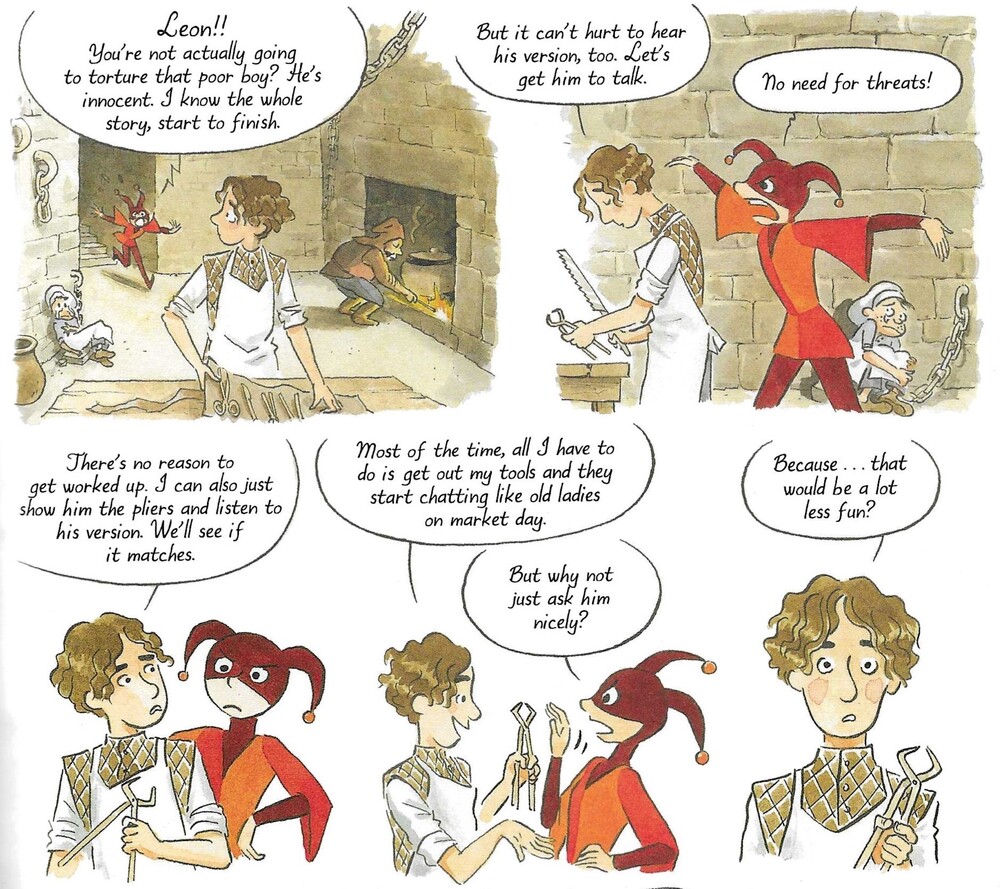 Even the colors are different, as the upper class lives in brightness while things are a bit dingier in the basements. The palace itself is gorgeous and imposing, a mini-town itself, and the few glimpses we get of its exterior in all its glory reminds us of the crushing weight of the bureaucracy inside it. Of course, because it’s Baroque and a bit parodic, Kerascoët can have fun with the wigs (ridiculous) and the outfits (complicated) and even the makeup (excessive). Serine, of course, zips through this world in a simple purple dress and then a jester’s outfit, providing a contrast to the artificiality of the court. They do a nice job keeping her “innocent” — not that she doesn’t know what she’s doing, but she never succumbs to the temptations of the court — as a counterweight to the silliness of the courtiers. They contrast Serine’s serene nature with the overreactions of the queen and some of her ladies — everything is the worst crisis ever to these people, while Serine just accepts it and figures out what to do. When she becomes the jester, they do a nice job with her movements, as her face is half-covered by a mask. She becomes even freer in her anonymity, and we see that in the way she moves through the court, hiding in plain sight. it’s not surprising the book looks great, but it is gratifying that it is!
The Court Charade isn’t going to change your life or anything, but it’s a very neat comic with a bit more on its mind that you might think. If you’ve never seen a Kerascoët comic before, it’s a good one to check out. It’s a fun book!
Rating: ★ ★ ★ ★ ★ ★ ★ ½ ☆ ☆

I really enjoyed this, although I have the version released by Europe Comics.
I would take a book like this any day of week over anything Marvel is currently releasing.
But Marvel is coming out with a line in which all their characters are vampires and such! That’s cutting edge, man!!!! 🙂
I’m pretty sure they said the same thing about ‘Imperial’.