
For my next entry, I’m taking a look at another book for teens that I loved when I was a teen. Does it hold up now that I’m an adult? Let’s have a look!
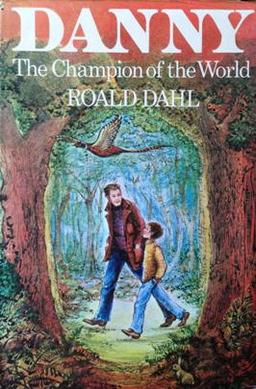
I’m certainly aware that Roald Dahl is a bit problematic in today’s cultural and political environment, but the dude did die 35 years ago, so maybe we could cut him a break and just read his books instead of arguing over his legacy. Dahl is famous, of course, but I’m not sure how famous this book is (I mean, they made a movie based on it starring Jeremy Irons and Robbie Coltrane, so obviously it’s known, but I’m talking about these days) — Charlie and the Chocolate Factory and James and the Giant Peach seem to get most of the accolades when we talk about Dahl. It’s too bad, because while I haven’t read everything he’s written, of what I have read, Danny is by far my favorite of his books (with the absolutely bonkers Charlie and the Great Glass Elevator coming in second, I think, but that might be a post for another day!). I hadn’t known about the movie before I re-read it this time, but whenever I read it in the past, I always thought it would make a terrific movie. After 50 years (and 37 since the movie, which was made-for-TV and not a feature film), I think it might be time to try again!
One of the things I love about the book is how grounded it is. Dahl could certainly do fantastical stuff very well, and his fantastical books are well done, but the small scale and humanity of Danny just hits me in the right spot. Because of the wackiness of his plots in other books, the characters are often cartoonish — again, there’s nothing wrong with that, but someone like Willy Wonka is not a real person, he’s just a cartoon. He works for the books he’s in, but we know nothing about him because we don’t need to — he’s a plot device. Even Charlie Bucket and his family aren’t fleshed out terribly well, nor is James Trotter (whose parents, remember, were eaten by a rhinoceros, because the book is slightly ridiculous). But Danny and William, his father, are real characters, and even the cartoonish characters in Danny — the villain, Victor Hazell, certainly, but we can probably count some others, too — are grounded in this rural English setting, and Dahl gives them personalities that, while a bit parodic, aren’t so far beyond reality. There certainly are bloated businessmen who suck up to those in power, desperate to be included in the ruling circle. There are officious yet slightly goofy policemen. There are martinet teachers who think their classrooms are dictatorships run by them. Despite Dahl emphasizing the odder traits of some of these characters, they’re still part of a normal world. It gives the book more emotional heft than the other Dahl books I’ve read, even if I’ve enjoyed those, as well.
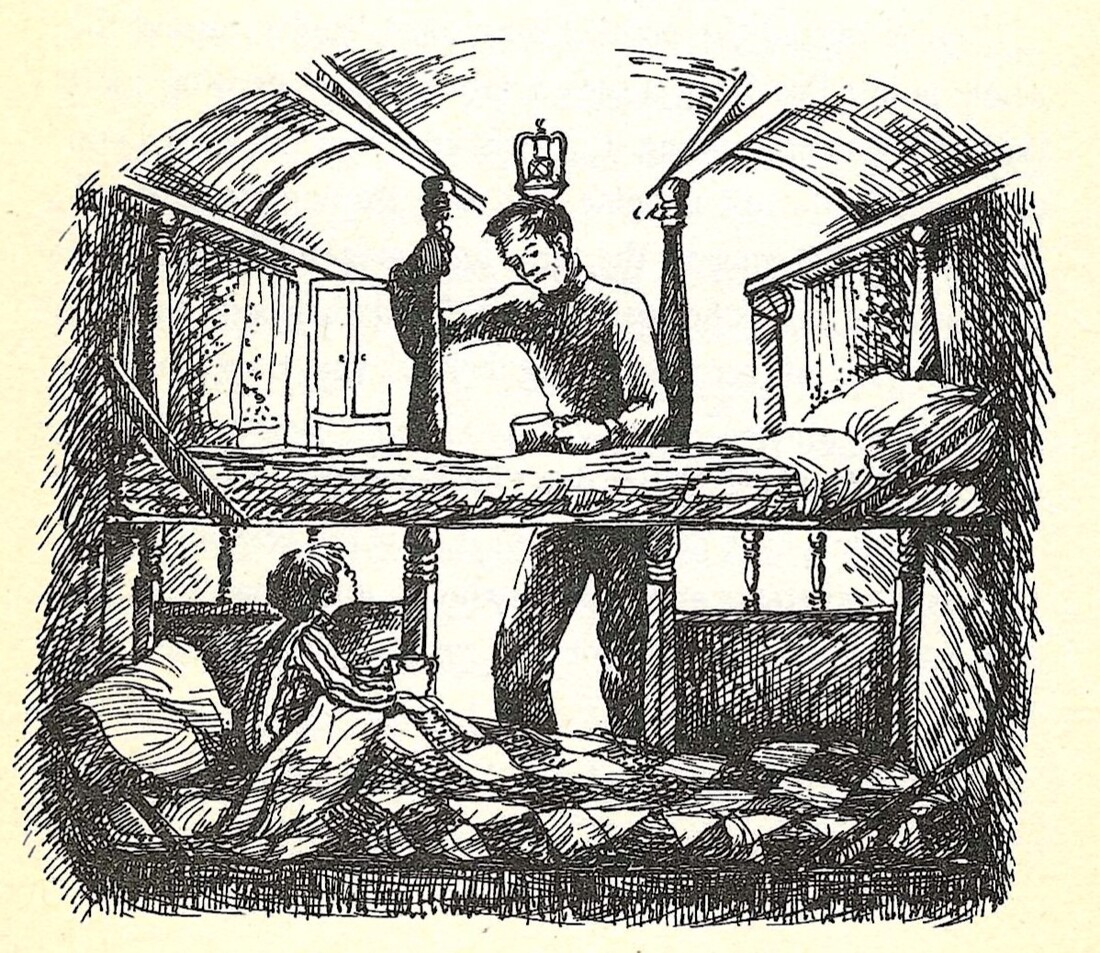
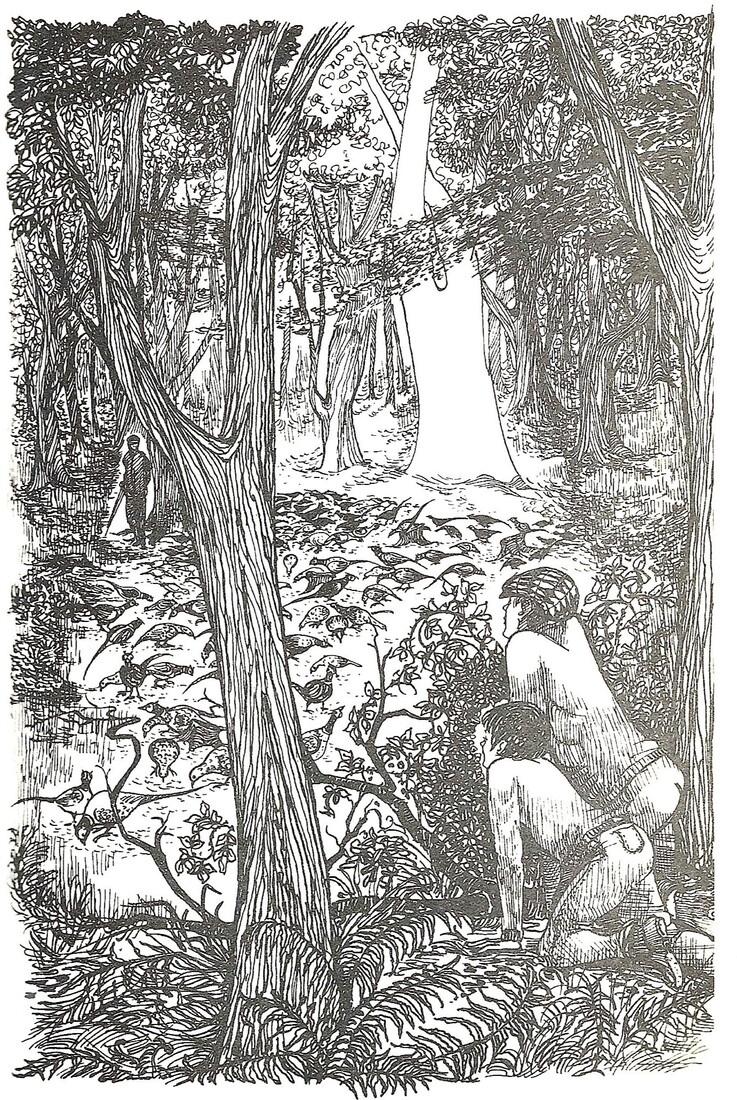
Danny is our narrator — he’s a 9-year-old in 1970s England (it’s clear the book is contemporary with its publication date, which is 1975) with a wonderful father, William, who owns and operates a filling station on a lonely rural road. They live near but not in a village, and their small patch of land — the filling station and a small meadow behind it — is surrounded by the land of Victor Hazell, the owner of a large brewery. Danny’s mother died when he was a baby, so it’s just Danny and his father. They have a grand time living life, but one night, Danny wakes up in the middle of the night and his father isn’t there. He panics and waits up for him, and when he gets home, his dad tells him his secret: he’s a poacher. He goes into the woods on Hazell’s property and tries to poach pheasants. He tells Danny his father was a poacher, and he just picked up the family business. Danny is shocked at first, but soon accepts his father’s predilection. But then, one night, his father doesn’t come home when he said he would, and Danny knows he’s in trouble. He manages to get to the forest, which is six miles away, and finds his dad in a large hole, which had been dug by the gamekeepers to trap poachers. His dad’s ankle is broken, so he can’t get out, but Danny manages to get him out and back home. He calls the doctor — who’s done a bit of poaching in his day — and Danny’s dad goes off to the hospital to get a cast. When he comes back, he tells Danny about Hazell’s big shooting party — every year, Hazell brings in a bunch of pheasants and invites all the bigwigs he wants to impress to come shoot them. William would really like to ruin his party by poaching all — or most of — his pheasants. The reason Danny is the “champion of the world” is because he comes up with a way to do it. It works, but things do get complicated. I won’t spoil anything else, but it’s a nice adventure.
The book is a really nice mix of adventure and character work, as Dahl spends a while getting to William’s poaching secret, so that we know quite a bit about Danny and his dad and their life together before the main plot really kicks in. It’s an idyllic life for Danny, certainly, and while it’s clear Dahl is viewing the world through some rose-colored glasses, it’s not like the life they have would be impossible to experience, and he does bring up Danny’s mother and the sadness William feels over her death. Danny also mentions a very unpleasant moment at school with his hateful teacher, Captain Lancaster, who canes Danny and his friend for cheating (I mean, technically they were, but come on, Captain Lancaster, ease up a bit!). It’s not a completely unrealistic portrait of childhood, but it is quite a nice one. Dahl also doesn’t forget to give us memorable characters. He’s good at this in his books, but usually, as I noted above, by making them outrageous. Here he throttles down a bit — we get Doc Spencer, who’s very kind and mischievous; we get Danny’s teachers, who are barely in the book but make a impression (bad in the case of Captain Lancaster, good in the case of the others); we get Enoch Samways, the constable, who is wonderfully delineated in his very brief time on the page; and we get Victor Hazell. Dahl had some kind of issue with large people, it seems, and Hazell is an example of an overweight person being detestable. Hazell is in the book a bit more than the other characters, but still not that much, and Dahl does a marvelous job making him awful. He drives a Rolls-Royce arrogantly around on the country roads, he threatens Danny if Danny gets smudges on his car’s paint, he sends inspectors to the filling station to shut it down (this gambit fails, because of course William runs an impeccable business), and at the climax of the book, he acts even more despicably, if ineffectually. Dahl does such a great job with all these characters, and it fills out the world really well.
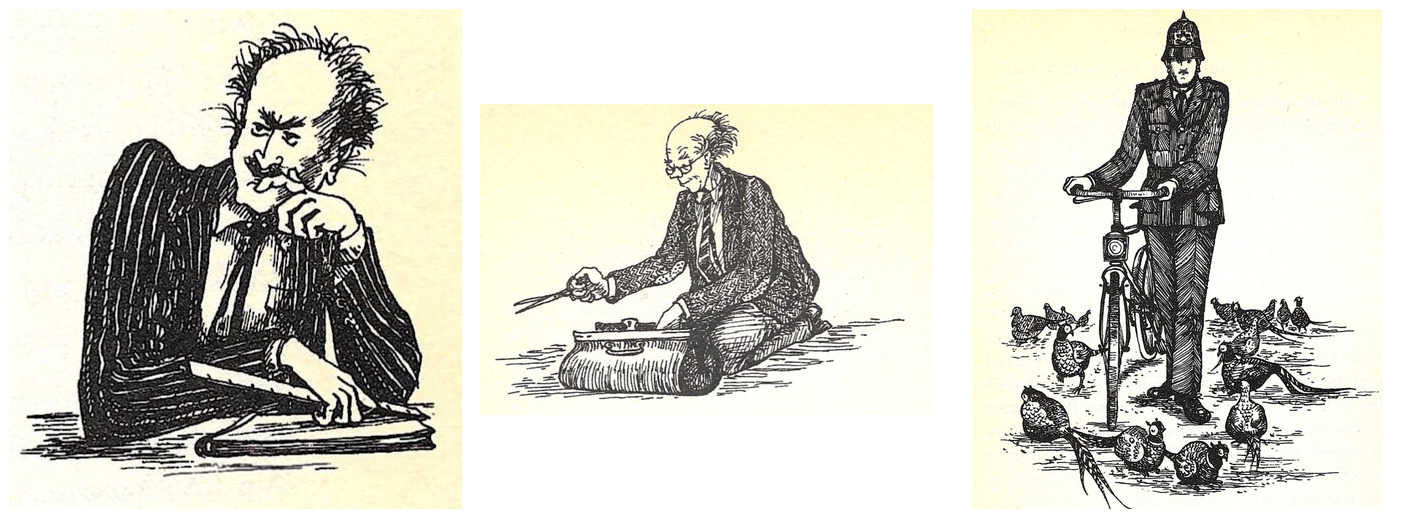
Of course, the main theme of the book is fathers and sons, and the expedition to poach all the pheasants is at the heart of this, as William and Danny sneak into the woods and do their thing. It’s thrilling to read as they go through what they need to do, and it also shows the bond they have and how much love they have for each other. The fact that Danny is a perfect son and William is a perfect father is a bit unrealistic, but it’s still a kids’ book, and Dahl is trying to show both kids and adults how wondrous the world is. We should love those who deserve love and stand up to bullies — which Hazell clearly is — and try to care for our community. Sure, William and Danny are breaking the law. But the only person they’re even remotely hurting is a cruel man who only wants to step on everyone’s backs as he climbs the social ladder. Such people, Dahl tells us, are not to be trusted and certainly not to be respected. Hazell might be a cartoonish villain, but he’s all to indicative of the kind of people who were destroying society back in the day and, of course, still are today.
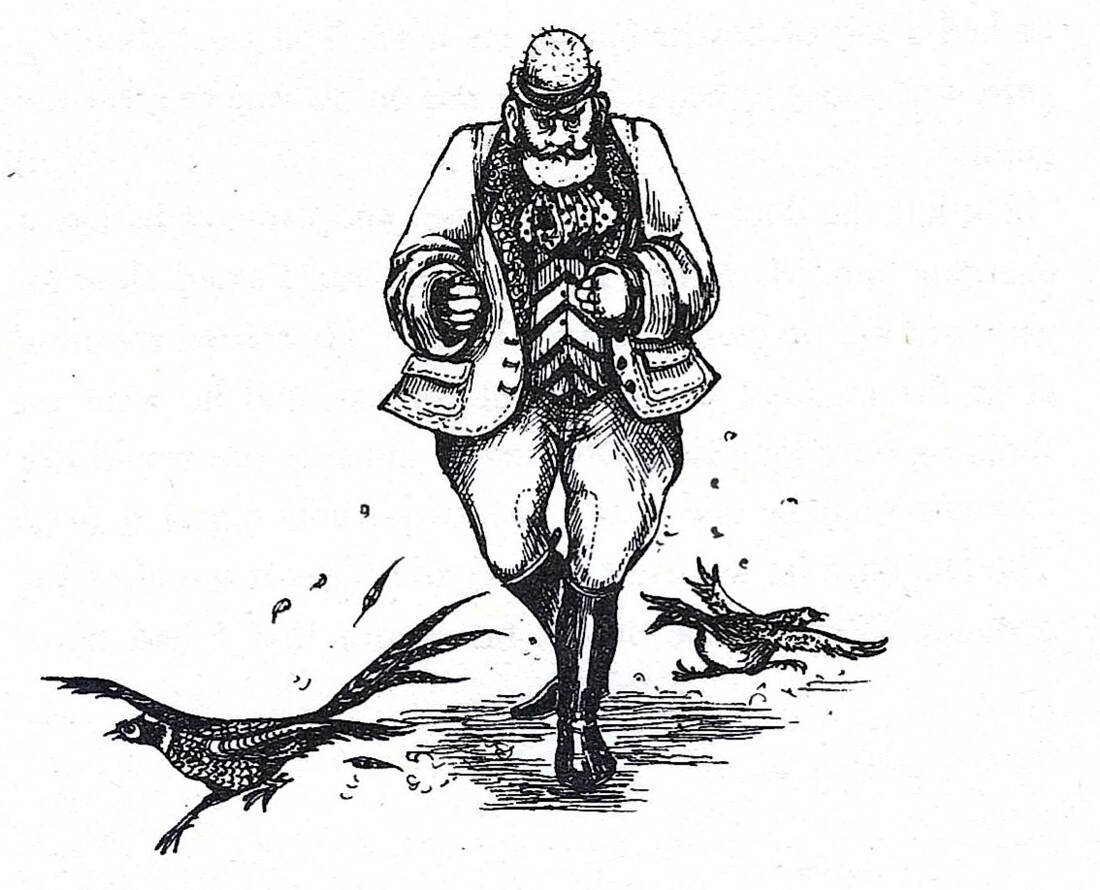
Like my last entry, this is the kind of book I like to take out and read every decade or so. It’s quite short — my copy is less than 200 pages, and the type is fairly big — and it reads fast, so I can zip through it pretty quickly. I like a lot of Dahl’s books, but if anyone ever asks me which one to read (sadly, no one ever has), I would tell them this one before I would tell them Charlie and the Chocolate Factory or even James and the Giant Peach (which I do like, after all). It’s just a really charming story, and you get to learn all about poaching!

A very nice review, quite surprised to see a review of this on here, but very welcome as it is one of my favourite books too. Probably the only one of Dahl’s children books that I would still enjoy reading as a middle-aged adult.
I was wondering, what makes you say with confidence that “it’s clear the book is contemporary with its publication date”. I can’t say with any certainty as I’ve not read it recently, but everything I remember about it just shouts late 1940s / early 1950s setting to me. It would be interesting if it was canonically set in the 1970s, as that was a very different time.
I had to search for it a bit, but when Dahl first writes about what a horrible person Victor Hazell is, he notes that Danny’s dad was working on a car that was built in 1933 but still ran sweetly even though it was over 40 years old. It’s the only indication of the time in the book!
Thanks for the nice words!