

[Greg dives into house ads in this column from 14 June 2015. Not a lot of comments, but man, all of the books he highlights look fun as hell. Enjoy!]
This is just a silly little something that I came across during our recent trip along the Strait of Juan De Fuca, and it tickled me so that I thought it deserved its own post … especially since it reminded me of an honorable old comics tradition that is largely gone today.
The tradition I’m speaking of is the ‘house ad.’
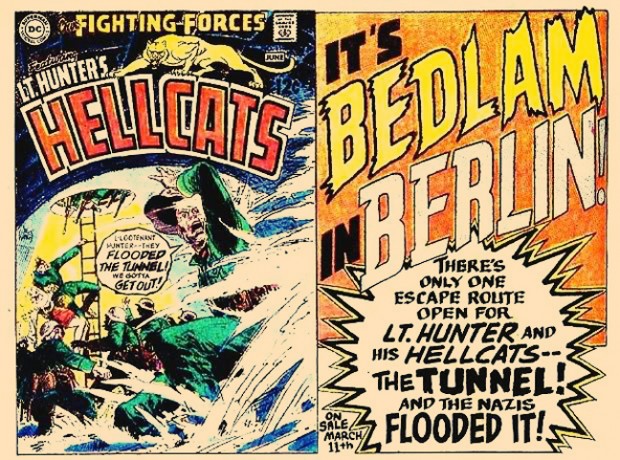
Oh, you can still find ads for other comics in any given issue of a comic book, but they really don’t have the in-your-face panache that the old-school ones did.
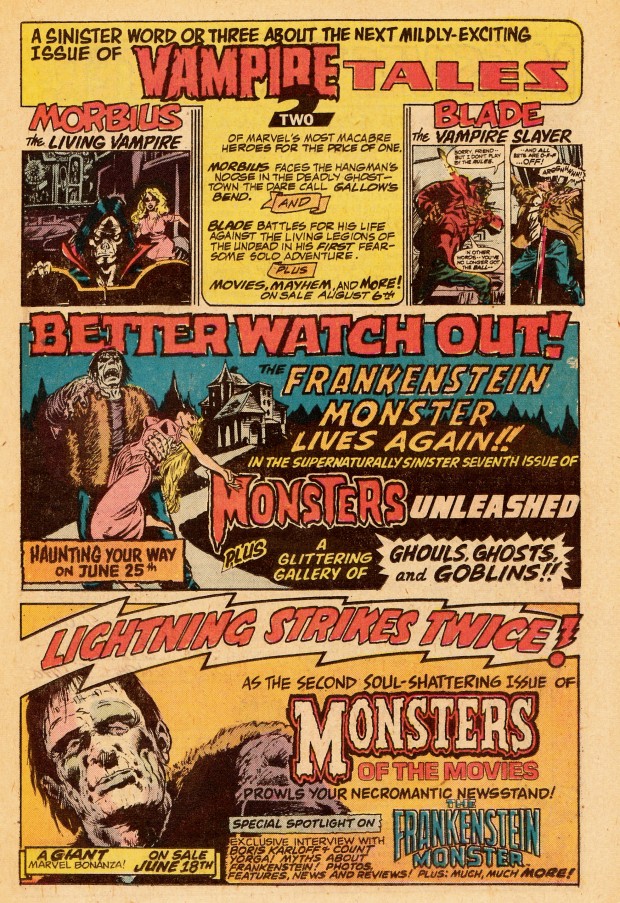
There were many times I picked up a book completely unfamiliar to me simply based on the house ad that showed a cool picture and an intriguing line or two of copy. Because, back in the day, publishers knew we all DID judge a book by its cover.
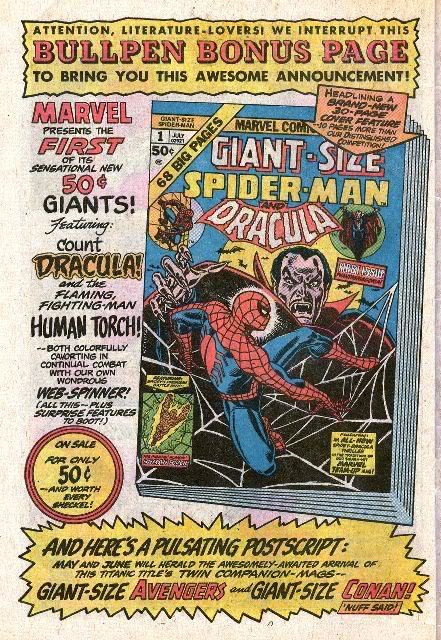
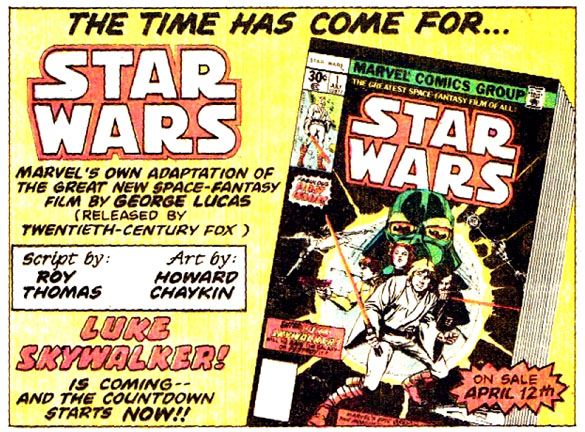
For me, they were practically “recommended reading” lists. As I’ve explained in this space before, I grew up in a time when our entertainment options were far more limited — no cable television, no internet, no smartphones, none of that stuff. Even more limited than that, though, were the entertainment news options. Even mainstream stuff was confined largely to movie trailers and maybe some guy doing press-tour interviews on talk shows or with magazines. Rarely if ever did those things cross over into what I was interested in. Geek culture could only reach me through house ads like these — especially since, for the most part, of the small group of friends I had that were into this sort of thing, I was far and away the most voracious reader, so I was rarely GETTING recommendations. People were always ASKING me. As a result, I was always on the lookout for what was new and a good house ad almost always owned me. (That was actually how I found out there was going to be a movie called Star Wars — it was the Marvel comic that hooked me.)
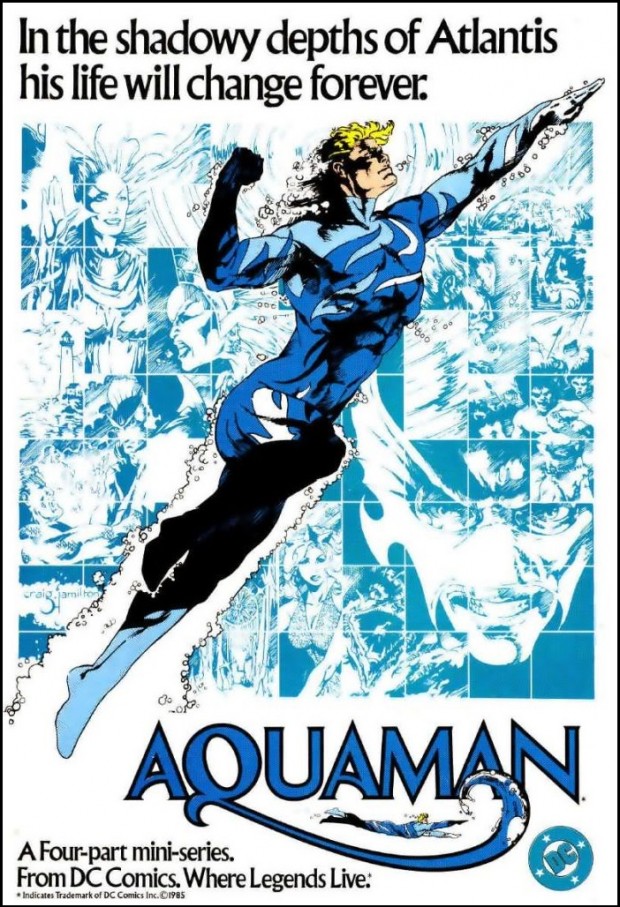
This stayed true for me well into the 1980s. This ad for the 1986 Aquaman absolutely sold me and got me excited about a character that I’d practically given up on. (Thankfully, it lived up to its promise.)
However, all this is preamble. What triggered all this reminiscence was this wonderfully trashy little paperback that I found in the course of our Memorial Day excursion, at a thrift store in Port Angeles.
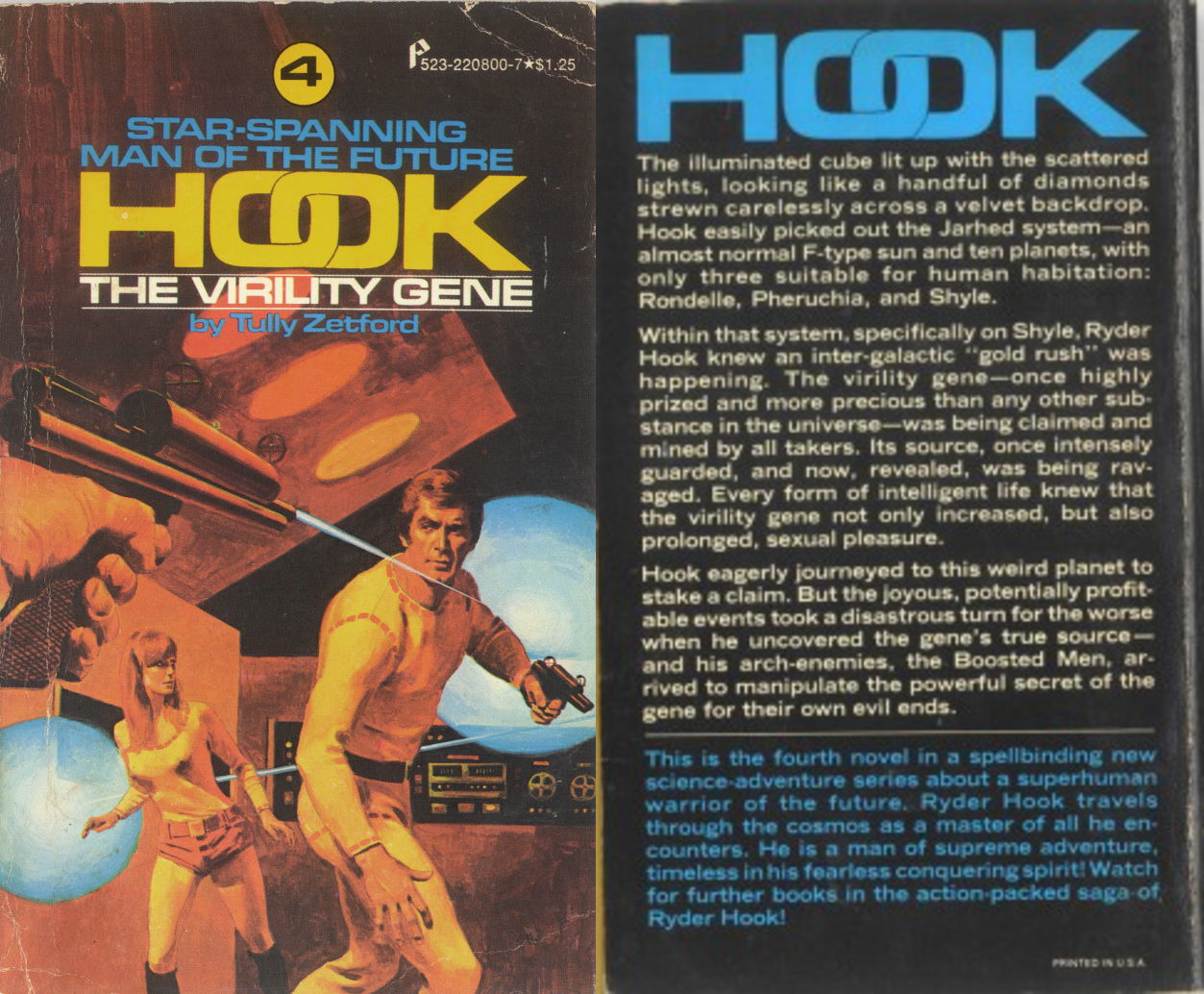
Now, I have to be honest — Hook: The Virility Gene is a terrible, terrible book. Even I, with my admittedly low standards for pulp paperback adventure, found it to be a pretty lame read. (My gut reaction on finishing it was shock that this series had even made it to a volume four.)
But the nostalgia it awoke in me was overwhelming. Spinner-rack paperbacks and spinner-rack comics in the seventies had a virtually symbiotic relationship — not just obvious stuff like the Doc Savage paperbacks leading to Doc Savage comics, or the Conan paperbacks from Lancer leading to Conan the barbarian spearheading an entire sword-and-sorcery revival at both Marvel and DC, but there was a huge similarity in overall sensibility between superhero comics and “men’s adventure” paperbacks. With the genre stuff especially, there was also a similarity of design — very much the same kind of packaging, cover design, and even series numbering as you’d see on a DC or Marvel comic.
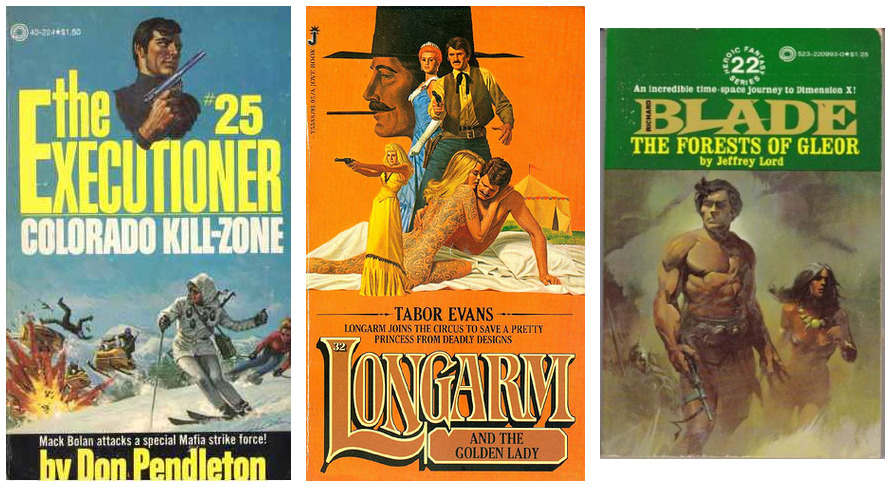
And also … they too invariably had a bunch of house ads brimming with tantalizing teaser copy.
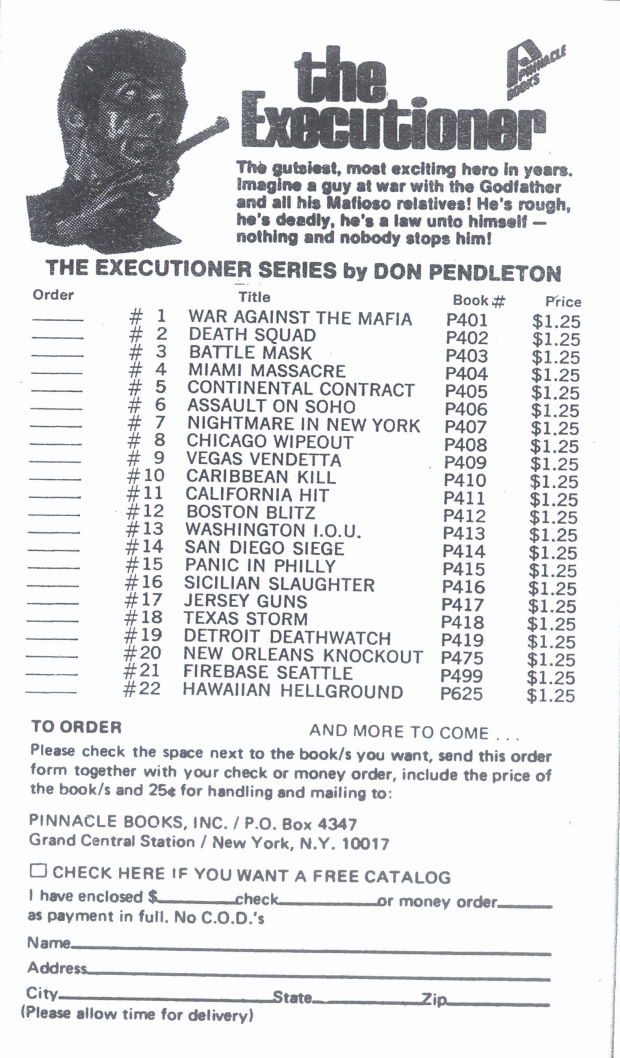
That was what delighted me so about Hook. The back of it was loaded with about six pages of that stuff. We started with Bolan, and followed that with Remo Williams, the Destroyer …
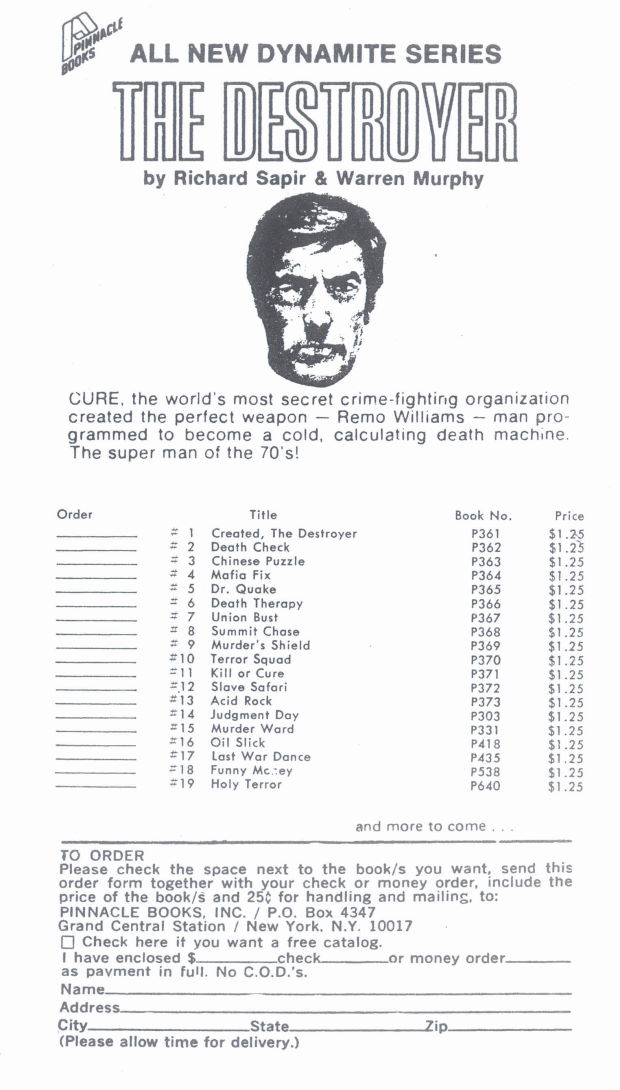
Those were both pretty standard. But then it started to get interesting. Suddenly I started to see ads for adventure series I’d never heard of — and for someone like me who can tell you all about Attar the Merman or Cap Kennedy, Secret Agent of the Spaceways, that’s saying something.
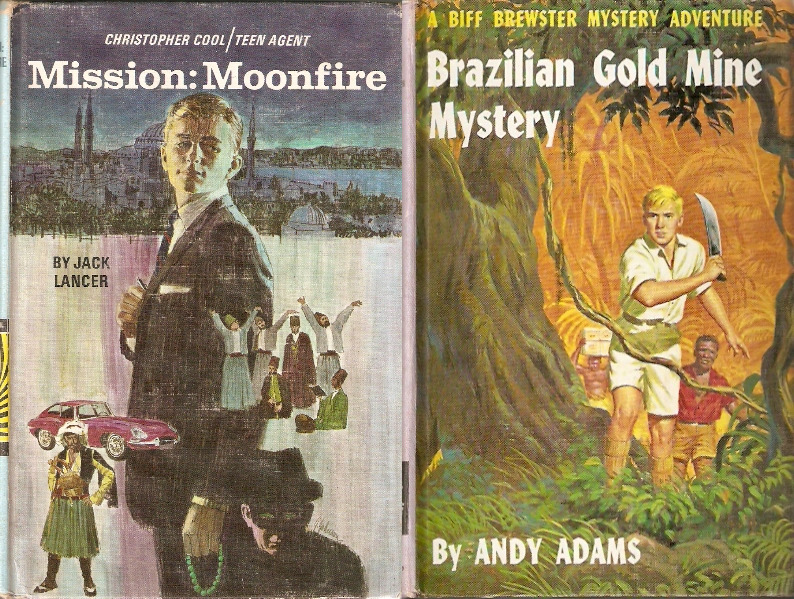
Admittedly, I have a real soft spot for weird little orphan adventure series … always have. Even when I was a kid I was much more interested in offbeat stuff like Biff Brewster and Christopher Cool TEEN Agent than I ever was in more famous series like the Hardy Boys or Tom Swift.
I guess I have always gravitated to the obscure. So when I saw this ad for Fox, the Toughest Bastard on the High Seas, I was immediately intrigued.
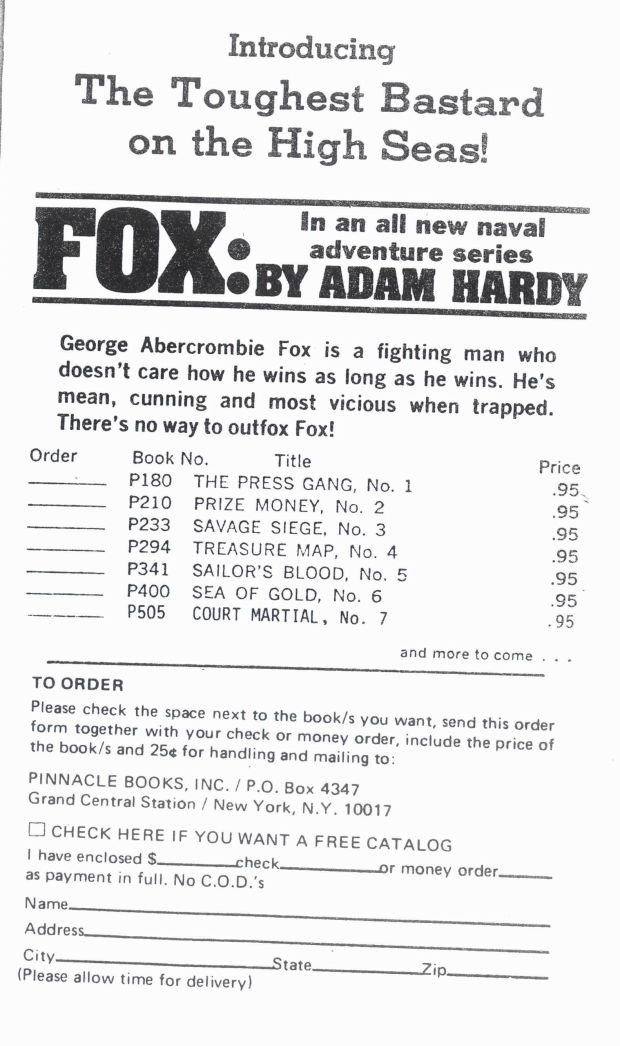
Some digging around on the internet revealed that George Abercrombie Fox was basically a riff on Horatio Hornblower, but with more sex and violence.
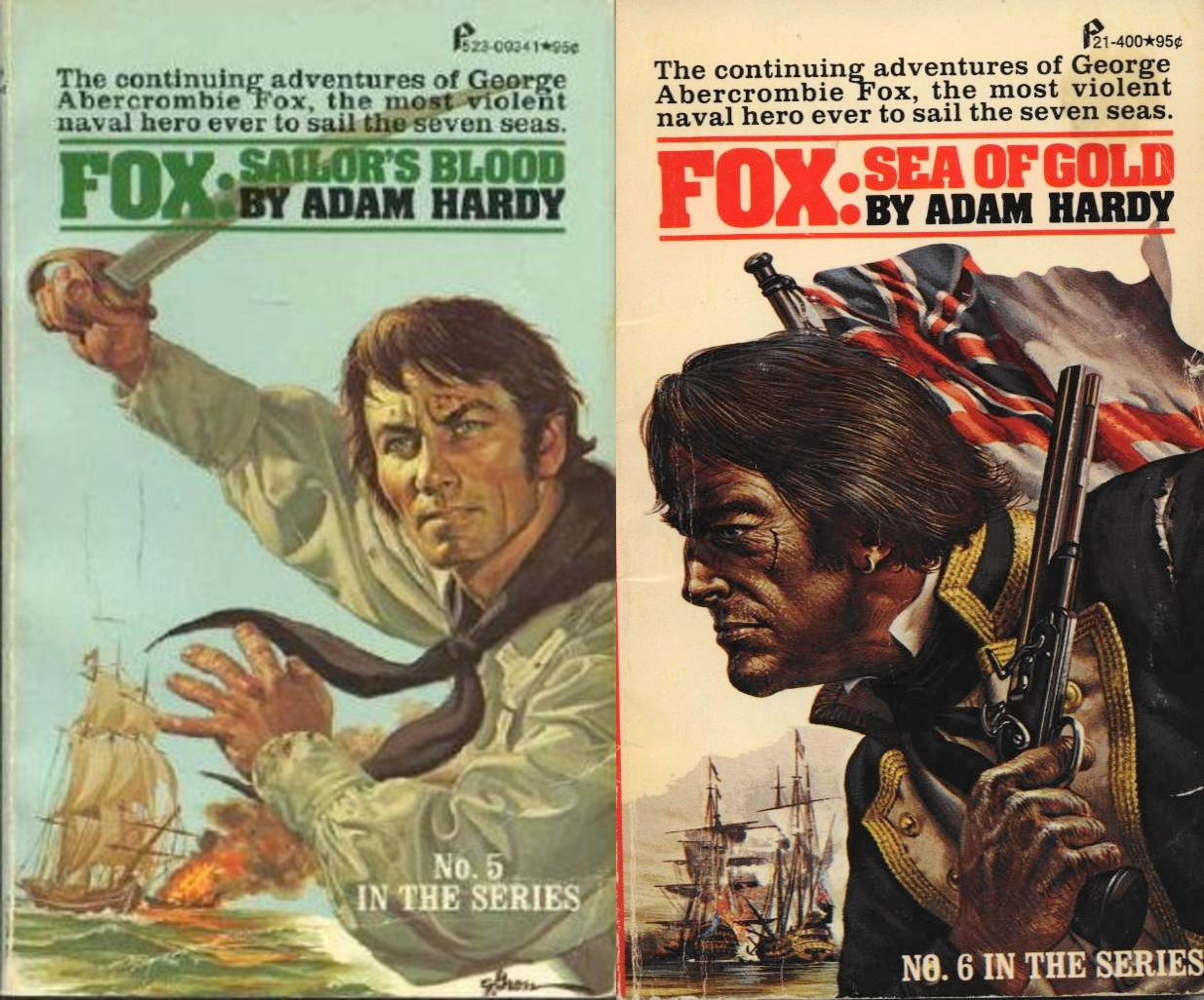
There were fourteen of them in all and it was a moderately successful series, it’s been in print from several different publishers over the years and currently is enjoying a second life on Kindle. “Adam Hardy” was actually the pseudonym of two guys working together, Terry Harknett and Kenneth Bulmer. They also did another series in 1985, Strike Force Falklands, which was not nearly as successful.
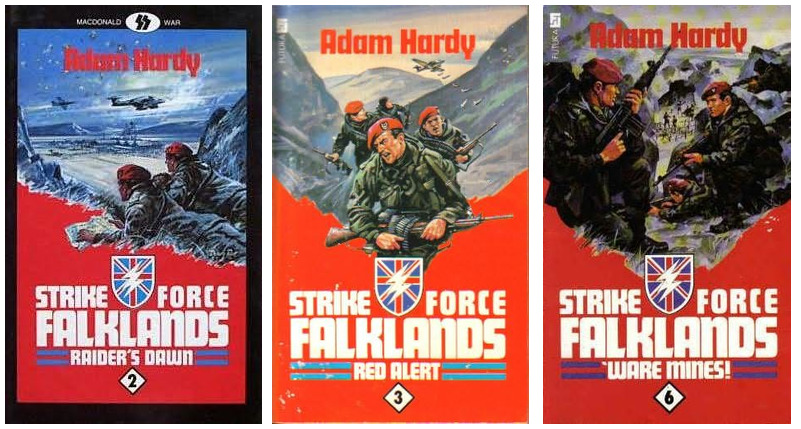
Still, they got through six of them and I kind of want to read at least one of them now. (Even with an author as unknown today as “Adam Hardy” I’m inexplicably drawn to the more obscure of the two series. I’m starting to think it’s a compulsion.)
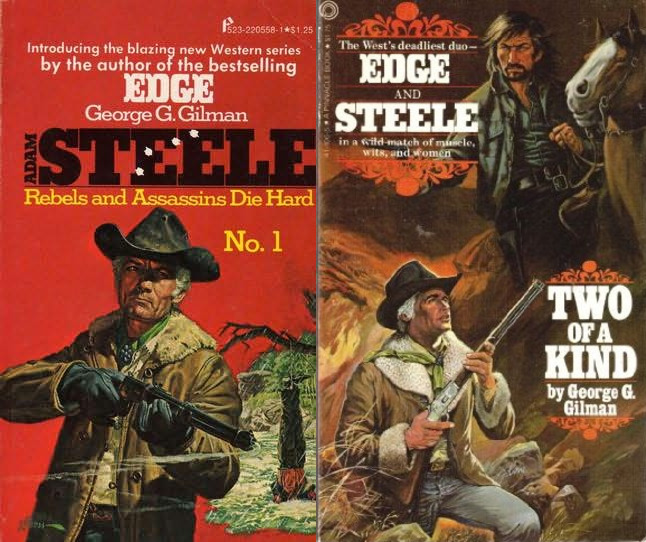
Then on the following page there’s this ad full of savage, gun-toting promise …
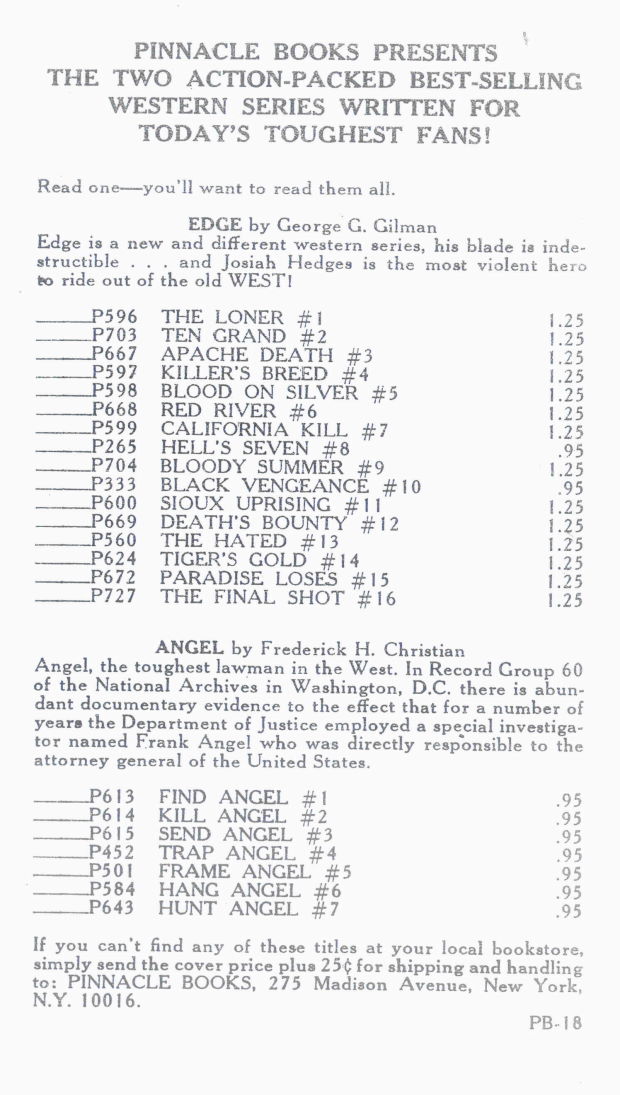
You gotta love that these books are only for “today’s toughest fans.” No sissified English majors need apply — these are books for MANLY men. Which leaves me out, I guess — I’m afraid my brother got all the athletic prowess in the family.
Anyway. Upon researching the subject, I discovered that Edge was a pretty successful series, and today has quite a following among Western aficionados from what I understand. There were sixty-one of them published between 1972 and 1989, all of them by “George Gilman,” who was actually the aforementioned Terry Harknett.
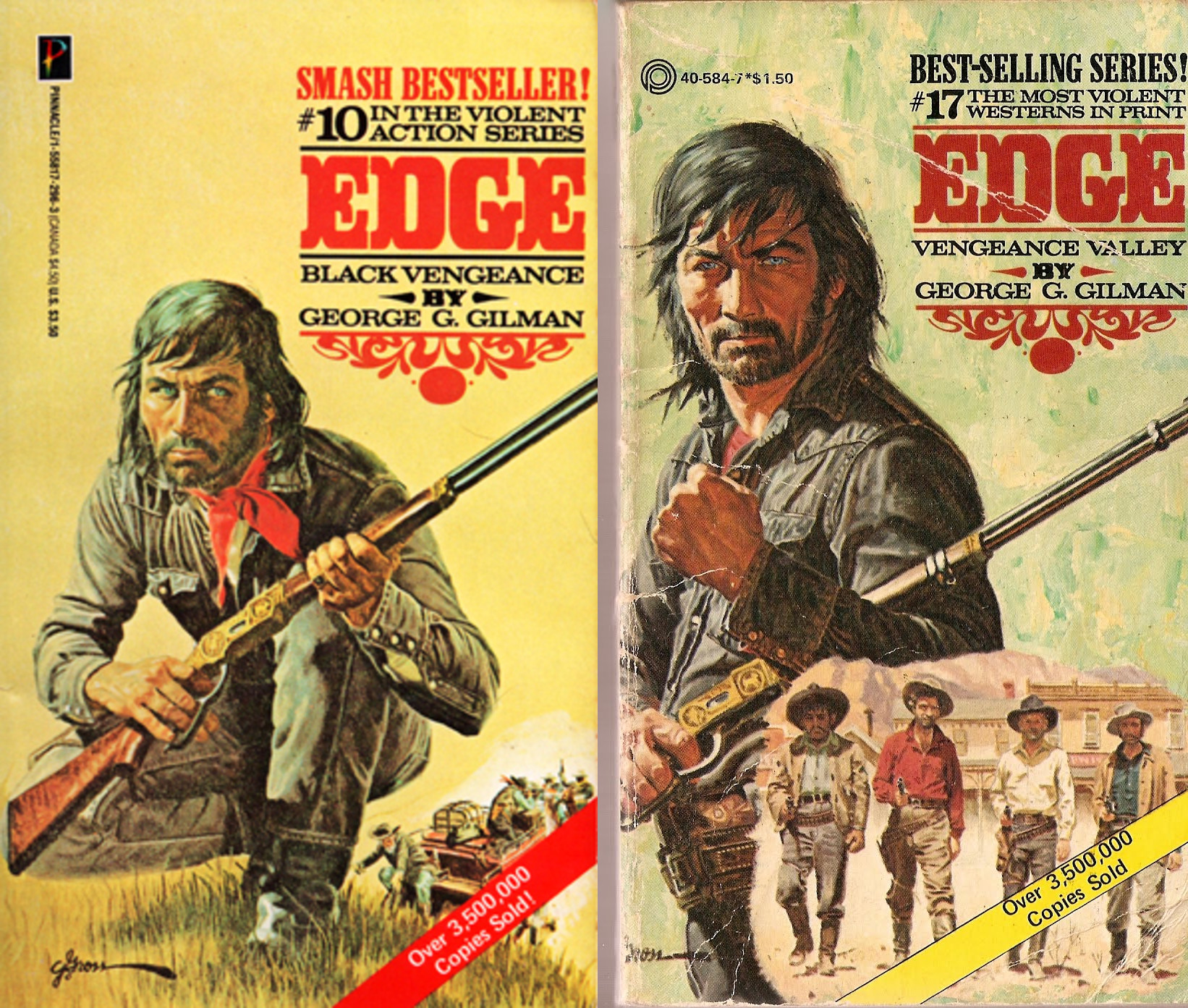
Edge was hugely influenced by Sergio Leone’s then-current spaghetti western films, and Edge himself is described by several different reviewers as “amoral,” “a sociopath,” “a remorseless killer,” and so on. “Psychopathic anti-hero” was one particular assessment I ran across. And these are from FANS of the genre. I admit it makes me curious.
Harknett followed this up with another Western series, Adam Steele, a marshal-type hero who was slightly less nasty than Edge. This was also a pretty fair success, running for forty-nine novels in all, and Harknett even had Steele team up with Edge a couple of times.
I wasn’t able to find out much about the other series advertised, Frank Angel.
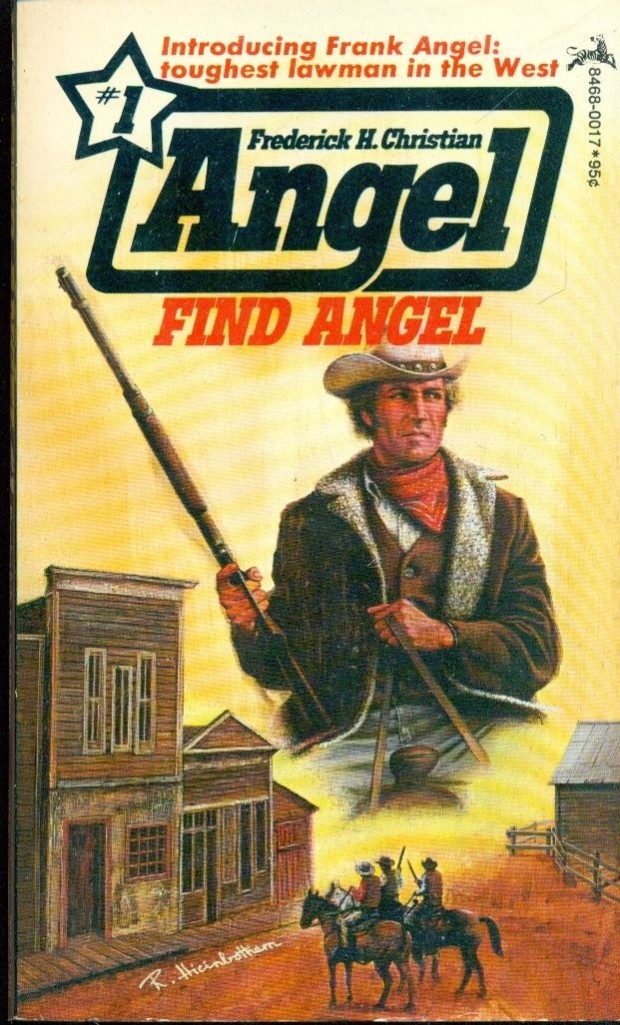
The author was another British fellow, Frederick Nolan, writing as “Frederick H. Christian.” In the early seventies there were quite a few of these British writers churning out pulp westerns and they got to be known as the “Piccadilly Cowboys.” They’ve had a recent resurgence in the eBook world … a lot of these old pulp series are being re-discovered and offered in omnibus packages for the Kindle.
But it was the following ad pages in the back of Hook that were my favorites. First you had this …
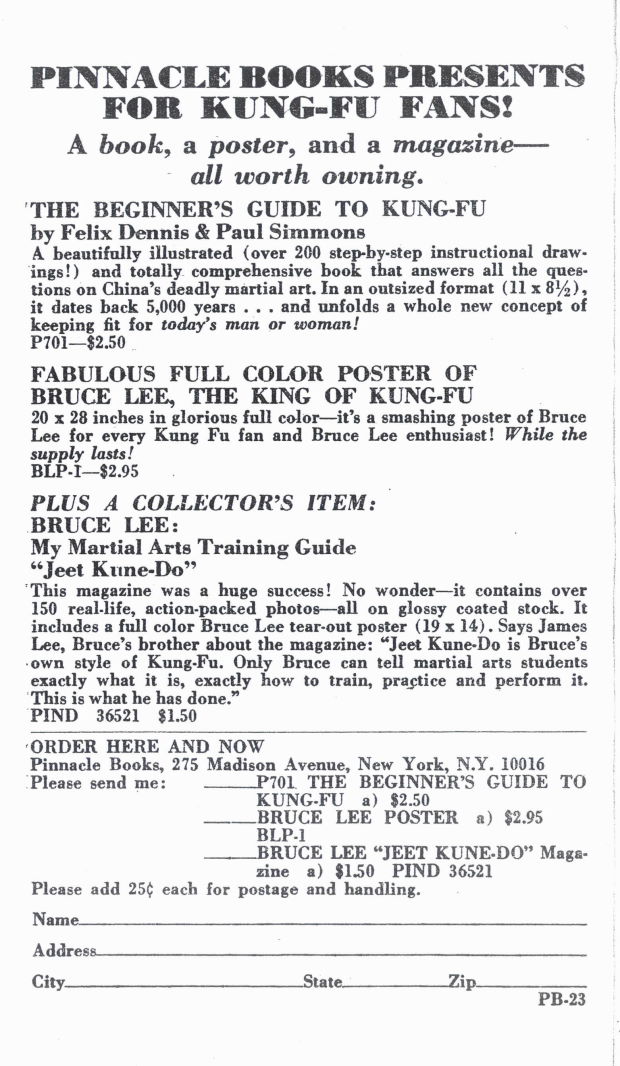
Kung fu, between David Carradine on television and Bruce Lee on film, was huge in the 1970s. Huge. Literally, it became its own adventure-fiction subculture for a while in paperback series, comics and movies, and you can still see echoes of it here and there in places like Jackie Chan’s film career. But in the mid-seventies, far more than today, it was very much A Thing. So ads for stuff like this were very common.
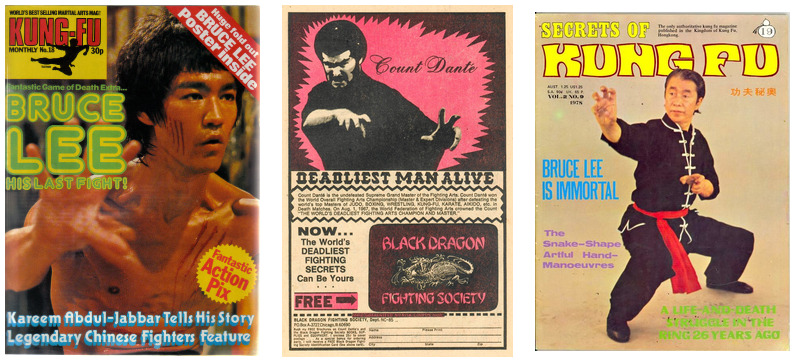
I knew that with my awkward bookworm physique, I would never be able to remake myself into a deadly wielder of the Dim Mak Death Touch no matter HOW many Secrets of Kung Fu I became privy to, so I generally eschewed the various instruction manuals. But I was all over the poster magazines like Kung Fu Monthly and, of course, I adored Marvel’s Deadly Hands of Kung Fu. Not just the comics — I was also quite taken with all the earnest reporting from Don McGregor and David A. Kraft on virtually any movie even brushing up against the martial arts.
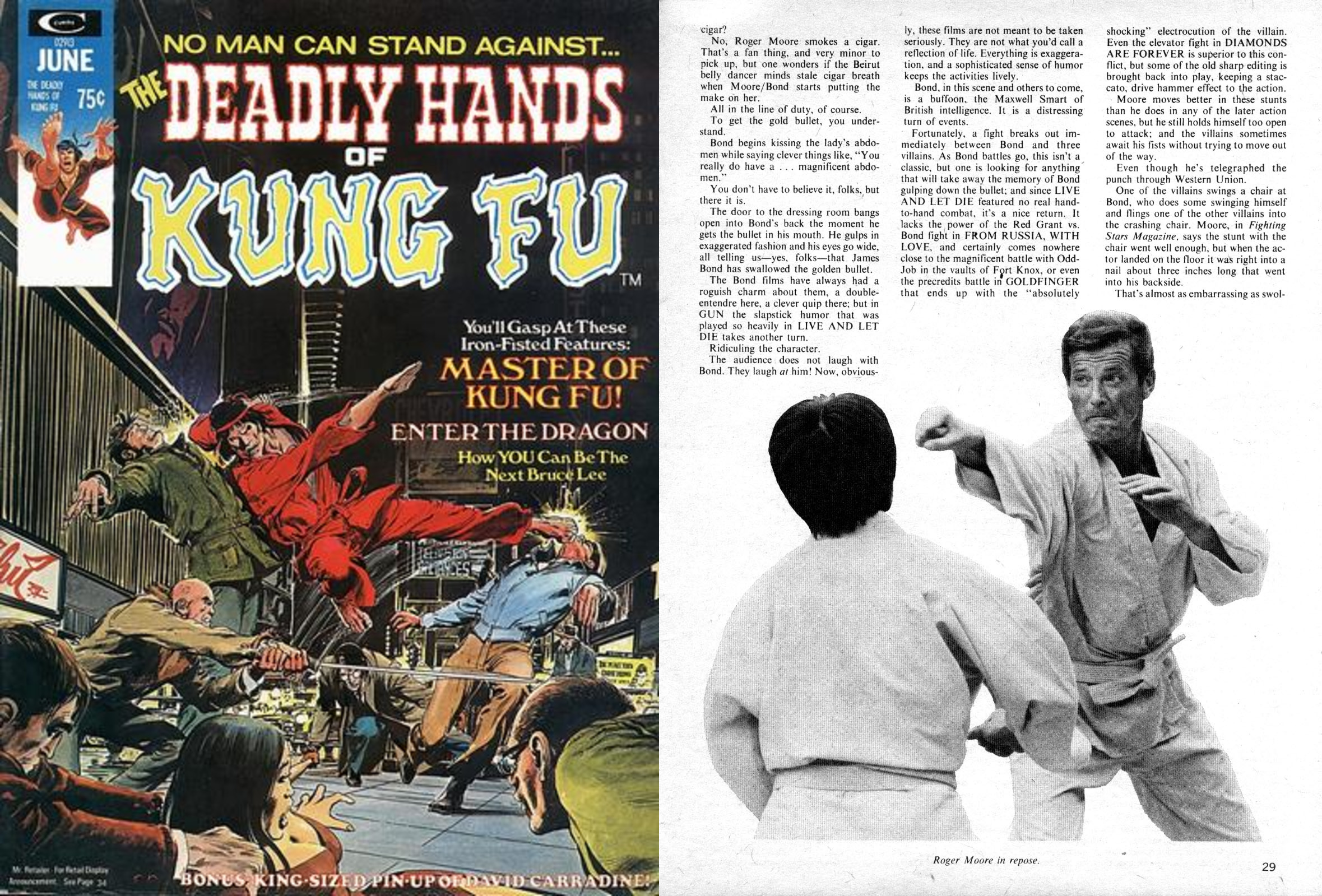
But it was the next ad page in the back of Hook that delighted me beyond all measure.
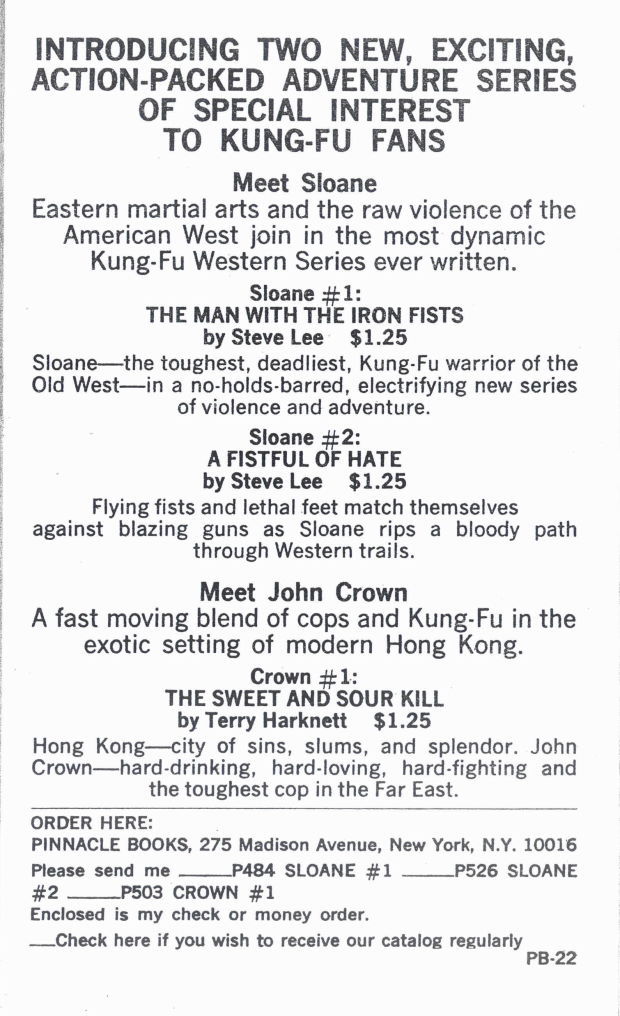
The two Sloane adventures listed are apparently the only ones ever published. Of all the schlocky paperbacks I’ve mentioned here, these two are the ones I long to own.
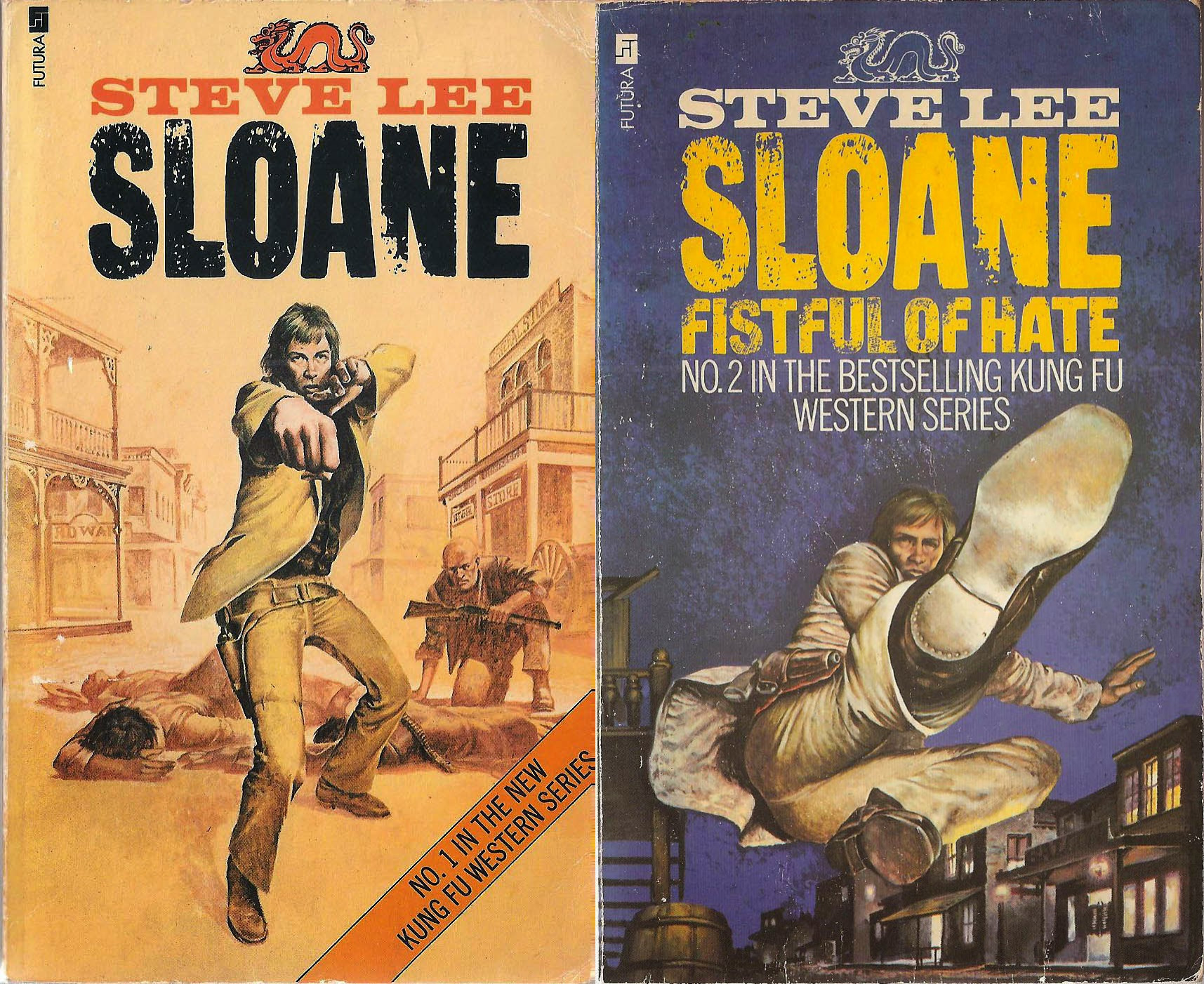
I am overcome with collector lust for them. (I have to own up: a title like A Fistful of Hate is more than enough to seal the deal.)
But really, look at this blurb — what’s not to love?
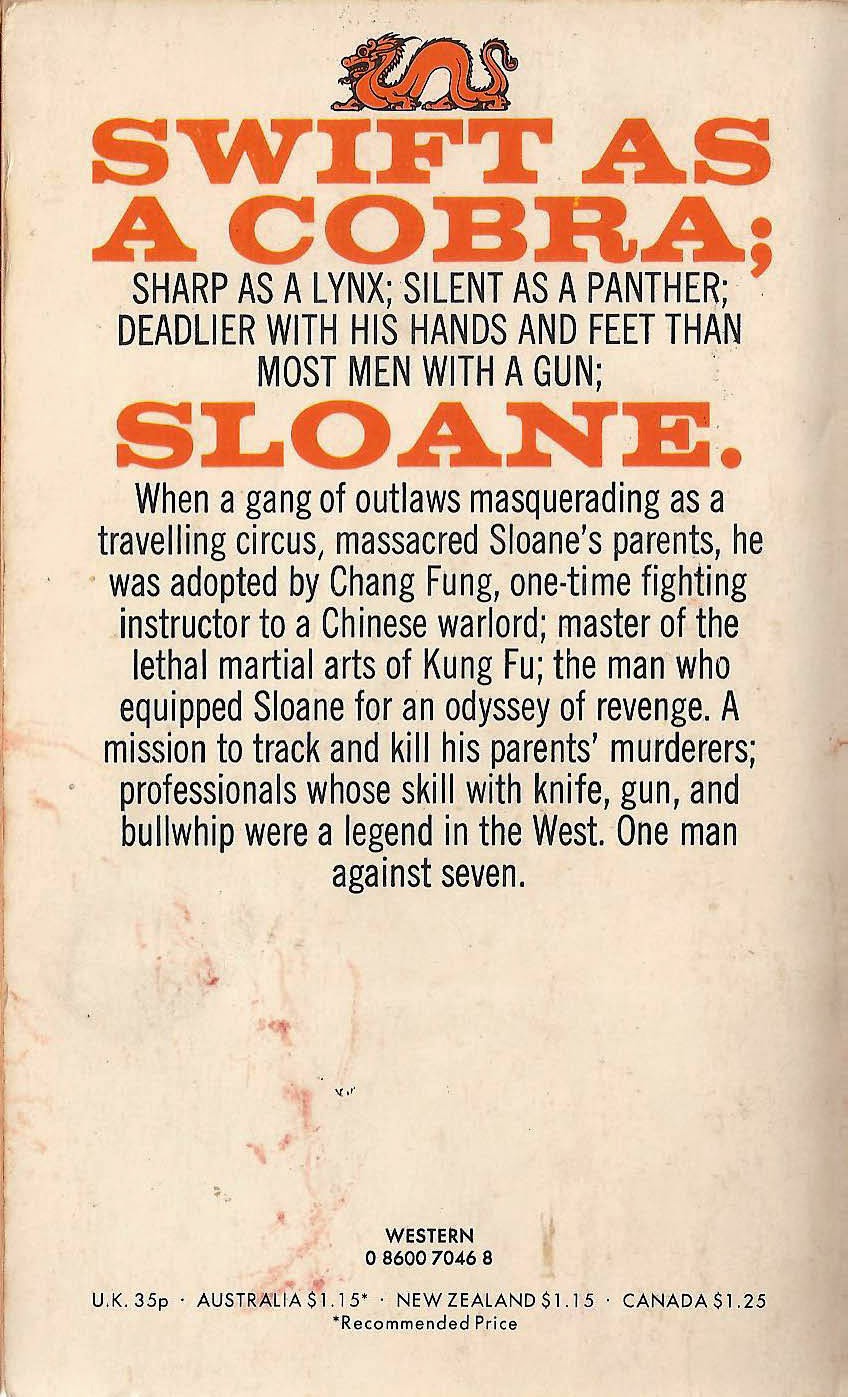
An ANGRY KUNG FU VIGILANTE versus an EVIL CIRCUS. IN THE OLD WEST. Sold.
If I needed any more incentive, this writeup here convinced me … and it made me laugh so hard that I’m sharing it with you all. Pete Doree is clearly a man after my own junk-lit loving heart.
I have to admit I’m also intrigued by the series listed beneath Sloane’s on the ad page, the debut of Crown, from– who else? Terry Harknett, amazingly writing under his own name for once.
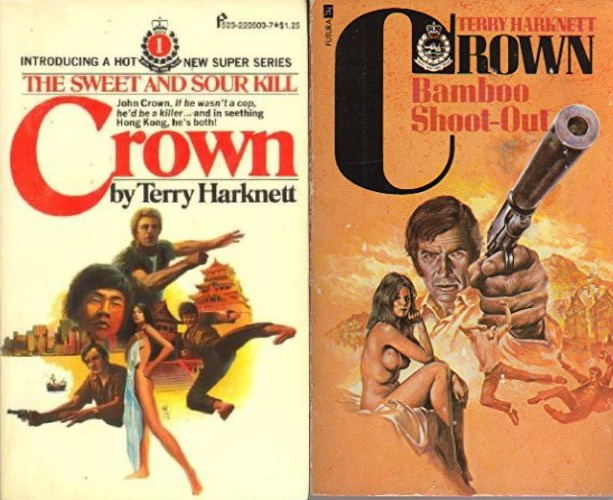
Crown was only a moderate success, a series that ran three books in all. For Terry Harknett that’s barely a before-breakfast workout.
Harknett was apparently a fiction FACTORY. His big successes were Edge and Adam Steele, as noted above. But he wrote over 200 books in a variety of genres, most of them between 1972 and 1989 under the names George G Gilman, Adam Hardy, Jane Harman, Joseph Hedges, William M James, Charles R Pike, William Pine, Thomas H Stone, and William Terry.
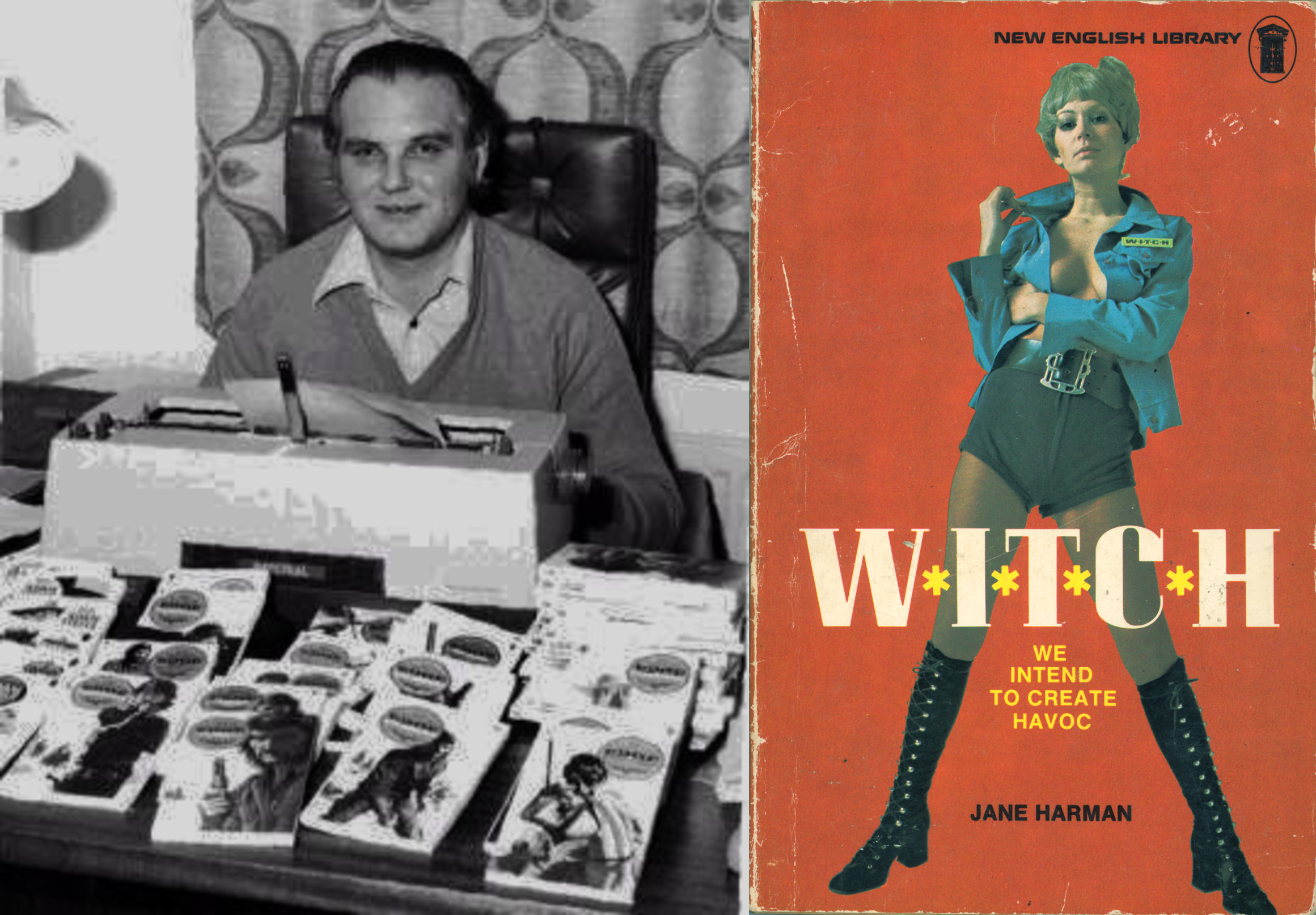
He averaged, literally, a book a month. I thought Ron Goulart was the king of 1970s paperbacks but Harknett makes him look like a piker. I’m thinking I might have to check his stuff out — a guy that published that much adventure fiction with so many different series going had to be pretty good at it. (And I fell in love with the cover of W*I*T*C*H as soon as I saw it.)
So even though Hook was a dog as a novel, I only spent fifty cents on it and I’ve CERTAINLY had that much entertainment value just out of the ads … and from writing this and looking up all these other books. Even after all these years, it turns out that a good set of house ads can still get me a recommended reading list.
See you next week.

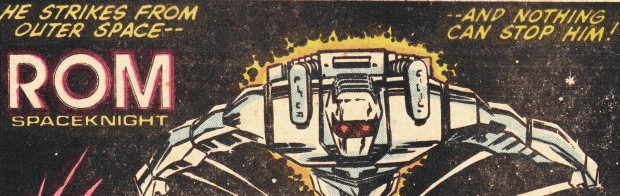
My all-time favorite comic house ad is (no surprise) that full-page ROM Spaceknight one.
Hatcher always raved about those old pulp paperbacks, but I almost never see them in the wild. The one time I came across them, I made sure to pick up a couple Executioners, Destroyers, and Docs Savage. So I do own a beat-up copy of Hawaiian Hellground…
I commented before about the old DC house ads, in the 70s, with the various covers, from the time Wonder Woman returned to costume and the rest of the JLA spied on her, to make sure she was okay (creepy and sexist beyond belief). I recall some Unknown Soldier, as well as several DC 100-pg covers (especially the Detective Comics ones, with the Manhunter face featured). One that stood out was a a creepy World’s Finest cover, with superman reaching for a doorknob, with a face on it, which turned out to be Metamorpho. My favorite, though, was the house add for All-Star Squadron #1, with the cover, featuring JSA members looking at a pile of photographs of various mystery men and women. That grabbed your attention!
I used to read the Mack Bolan books, so I recall those mail order forms, at the back. I actually used on to get an omnibus edition of the first three books. I also later used one to order missing volumes from Bernard Cornwell’s Sharpe series, before he came back to it and expanded things. Then, I became a bookseller and could order what I wanted via our special order distribution channels.
Sloane does sound wildly compelling. And I’m curious about WITCH (though not curious enough to get it online based on the prices I’m seeing).
Harknett’s career is a reminder that “nobody can write four books a year, they must be AI!” or variations of the same is nonsense.
A series about the Falklands War? Reminds me of SNL’s joke ad about “The Time Life History of The Grenada War”
I occasionally picked up a Destroyer book. Way too sexist, even for paperback men’s action (like Reno having a soliloquy on how women are too emotional and irrational to ever give them a gun). The Blade series was bad in that regard too.
To this day I’m still intrigued by W.I.T.C.H. (as I was when this column was originally posted back in 2015), but as you noted, it’s impossible to find it online for anything approaching a reasonable price for a book like that.
one unusual thing about the Richard Blade series is that while it ended after 37 books due to low sales it sold well in France so the French publisher bought the rights to continue the series eventually ending it with 206 (in 2012) .
I got the impression that book 30 may have been intended to be the final book (and is quite glaringly written by a different author)