
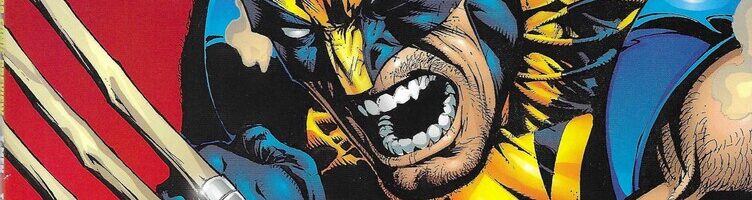
Anddddddd … we’re back, with Wizard #90, as the mag begins a countdown to … the millennium!!!!! Oh, we had such hopes for the 21st century, didn’t we? Where did it all go wrong? But, for now, we’re just going to check out the issue from early 1999, when we were all ready to go! Leinil Francis Yu’s Wolverine is ready to go!!!!
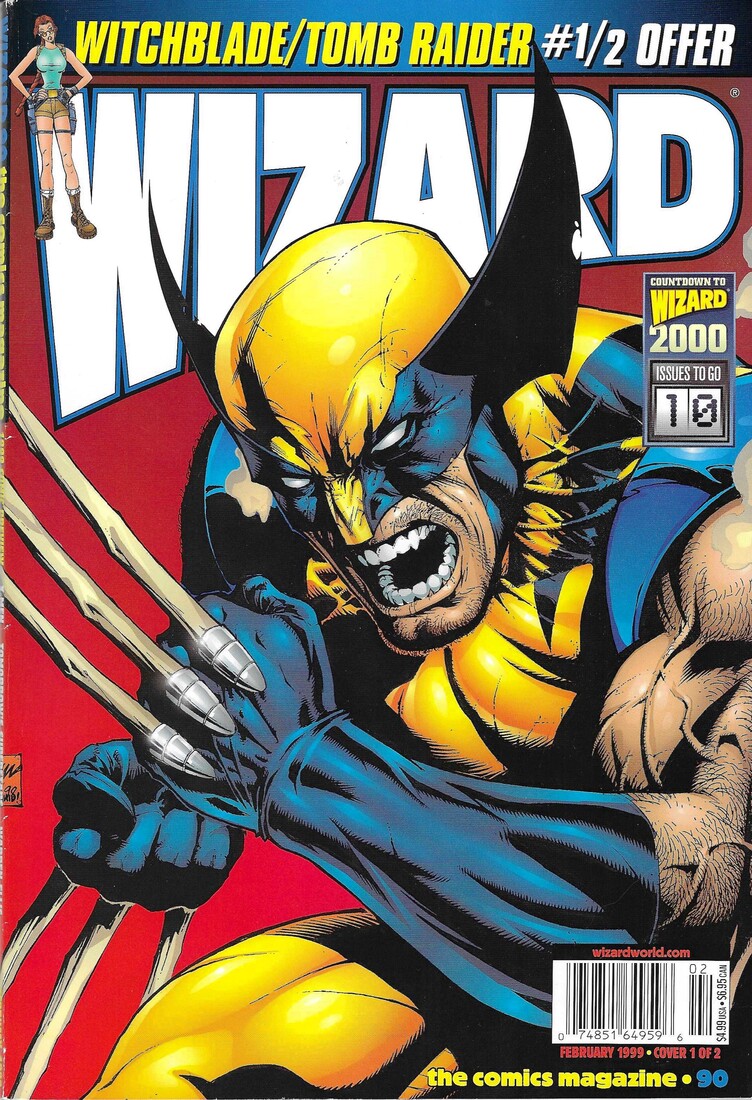
Gareb Shamus gets us started with his publisher’s letter, in which he basically says 1999 is going to be awesome because they’re counting down. Fine. But then we’re on to the letters! A guy writes in about Christopher Priest’s Black Panther — he’s a black comics fan, and he wonders why “black” comics don’t sell. He notes that at the end of Milestone, only he and a few other black customers at his store were buying it, but I would argue that it’s possible that the books weren’t great at that point and black customers were only buying them to try to prop them up. Maybe? He wonders why white people can’t relate to black characters even though they can relate to a “multi-millionaire paraplegic who has a flying wheelchair, can read minds and is engaged to an alien bird-wonder” — I’m sure I don’t know who he’s talking about. Wizard gets Priest to answer, which was nice of them, and Priest claims that he’s not writing a “black” comic, which seems a bit disingenuous to me. I get he wants to work with the idea that “the race of the hero is the least relevant thing in the book” and that Everett K. Ross is almost the second main character, and sure, Ross is a main character, but Priest is being a bit silly, because the book is definitely about race to a large degree. It’s not the only thing, sure, but it’s not nothing. And that’s fine, at least I think it is — different perspectives in fiction are always cool — but I guess Priest didn’t want to scare away the white folk, but that’s pretty sad. Anyway, Wizard tells people to buy Black Panther, because it seems cool. As I always do, I have to note that in this series, Ross sells his soul for a pair of pants, and that’s a great scene. Another person writes in saying that they don’t “get” Kirby, and Jimmy Palmiotti tries to set him straight. Another person wonders both why Kelley Jones draws Batman’s cape so weirdly (because it’s cool, Jones basically says) and whether Adam Warren was going to do a Dirty Pair/Superman crossover, as was rumored, but Warren says that’s been shot down. Another person asks is Jerry Ordway is still alive. Man, go on the internet, sir! Oh, wait, it might not have been on the internet back then! It’s kind of an odd question, as Ordway was only 41 about this time, so unless this dude thought he was a lot older than he was, that seems like a ghoulish question. Come on, people, don’t put Ordway in an early grave!
On page 18, Wizard checks in on the X-Men, because of course they do. Adam Kubert was taking over Uncanny X-Men, and Brandon Peterson was taking over X-Men, but of course that didn’t last long. Man, the late Nineties X-Men were a mess. Peterson did do Magneto Rex, which wasn’t too bad, but the ongoings were just weird for far too long. Wizard has more about the wackiness of the main titles later in the issue! A few pages later, there’s a small item about Toy Biz officially owning Marvel, which went into effect on 1 October 1998. Of course there were lay-offs! We also got news about Darkness/Batman and JLA/Witchblade, which were coming down the pike. I like how they say that Jackie Estacado and Batman are going to be adversaries, which, I mean, Estacado is a freakin’ mobster hitman, for crying out loud. JLA/Witchblade did come out almost two years later, and it changed a lot from what Wizard was saying it was about. I didn’t read either of these, but they exist! There’s also an item about Bob Layton and Dick Giordano working on something called Last American Warriors, which would star the Charlton characters. This does not appear to have ever come out, according to the interwebs. Does anyone know if it did? On the next page, the sidebar listing upcoming comics has two things for DC: The Weinbergs, the Devin Grayson book that Wizard brought up in an earlier issue and which never saw the light of day, and a book called Qaliban by John Ostrander, which is about a dude who manipulates the quantum field and becomes a magician. That never showed up, either — did it have anything to do with the somewhat charged title? If so, just change it, people! There’s also a longer item about The Witching Hour, the Loeb/Bachalo book that … was fine, I guess. It came out right at the time when Bachalo was at Peak Busyness, so while it’s not quite as incomprehensible as Steampunk, it’s close. In the “Thumbs Up/Thumbs Down” section, they praise the Paul Jenkins/Jae Lee Inhumans, which is a very cool book, and denigrate the “Punisher fights demons” story that Garth Ennis could not wait to move past. What a time to be alive!
On page 27, they have a brief eulogy for Bob Kane, who died on 3 November 1998. Bill Finger, interestingly enough, is not mentioned at all. The quotes in the sidebar are interesting — they’re all about, naturally, the influence of Batman, but nobody really talks about Kane’s ability, and I wonder if enough pros already knew how little work he did on the character. Will Eisner’s quote is the best passive-aggressive shit you can imagine: “Bob and I saw this field differently. He viewed comics as entertainment and an extension of Hollywood movies, while I saw it as a literary field. For Bob, the dream came true! He invented comicdom’s most theatrical character, Batman.” Wow, that is some backhanded excellence, there. Well done, Will Eisner!
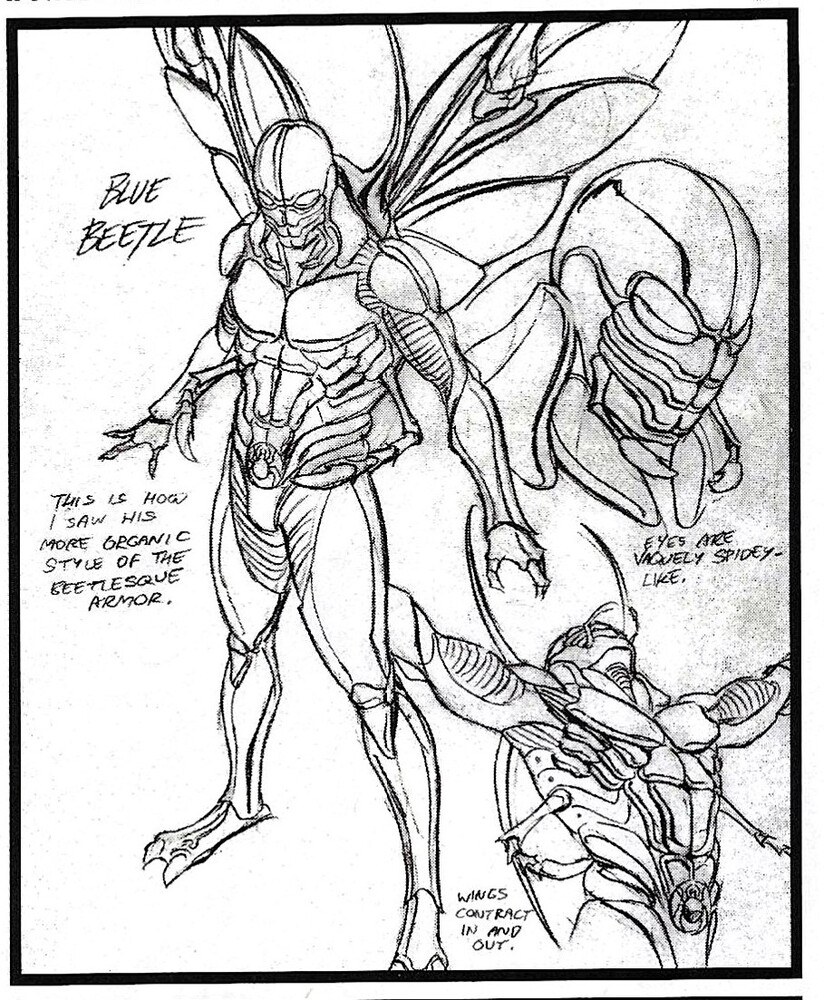
On pages 28-29, Wizard reveals Alex Ross’s plans for the sequels to Kingdom Come, which were coming out about this time but without Ross’s involvement, as he had left the project over “creative differences.” Wizard was always huge fans of Ross in general and Kingdom Come in particular, so Ross not being a part of the sequel must have galled them. They show some of Ross’s designs, which are, of course, very cool, and he shares his thoughts on two characters he wanted to redesign, namely, Wildcat and Blue Beetle. Wildcat was going to be an Egyptian cat god who’s a kid who finds Ted Grant to mentor him, while Beetle was based a bit on the manga character the Guyver. What’s interesting is that, a few years before Geoff Johns decided that DC needed to forget its fun past and embrace its edgy future, Ross noted that he did not like when they turned Blue Beetle into a “joke” in the 1980s. Ross was about 16/17 when the Giffen/DeMatteis Justice League launched, and maybe we shouldn’t take the butthurt feelings of obnoxious teens into account too much.
As they do in these preview issues, Wizard checks out some artists to watch. First up is Randy Green, who had just started penciling Witchblade. Wizard is 0-for-1, I guess, because Green never really became a superstar, although it seems like he’s had a decent enough career. Pat Lee is next, and Lee made some noise for a little while, but apparently there was controversy at Dreamwave over Lee not paying the creatives, and he’s faded back into obscurity. Tom Raney, who had just started drawing Mutant X, is next of the list. Raney’s had a decent career, but oddly enough, perhaps his best work came before Wizard spotlighted him, as his run on StormWatch is very good. Next they check out Alex Maleev, who had drawn the beginning of “No Man’s Land” for DC. A few years after this, Maleev wisely hitched his star to Bendis’s and brought us one of the best Daredevil runs ever, so maybe he was a superstar for a while? Up next is Steve Firchow, who was drawing More Than Mortal at the time. Firchow is another guy who’s worked steadily for years but never became a big star. Finally, they spotlight Jay Anacleto, whom they had already raved about in an earlier issue. Anacleto is another one of these dudes who never quite became a superstar, but he has done a lot of work over the years — he seems to stick to covers these days, because why be a storyteller when you can make money drawing poses?
Wizard has a nice article (pages 38-42) about the problems the X-books have been having keeping a writer around. The article was prompted by Joe Kelly and Steven Seagle abruptly quitting the books in October 1998, citing problems with editorial. Considering that Bob Harras, who has to one of the worst editors in comic book history, was in charge of the X-books at the time, maybe Wizard should have put more of the onus on him! According to Kelly, the editors had basically become the writers. “If somebody told me from Day One, ‘We’re going to work out the story and hand it to you, and you just plot it and dialogue it,’ I’d have had no problem with that, because it’s very up-front. When that evolves over time, it becomes frustrating.” Fabian Nicieza says, “You’re not really writing the books per se, you are caretaking the books.” The editors, of course, note that they have a lot of keep track of, and they have to coordinate a lot of books, which means they always need to know what’s going on and its impact on other books. Fair enough. Claremont notes that back in the early days, the editorial process was more “freewheeling.” I mean, of course it was — the book hadn’t sold well before Claremont got there, and nobody cared about it. Of course, Marvel couldn’t leave well enough alone, and the proliferation of the X-Universe eventually broke Claremont: “I was being called to task on elements of the storyline which I had created, but which were no longer under my control.” In theory, everyone works out plots at “summits” with the creators and editors working together, but according to Kelly, both Mark Powers (the current editor) and Harras (as E-i-C) tried to control all parts of the process, including changing plots mid-script, erasing sub-plots, and re-writing dialogue. Kelly and Seagle claimed they worked well with the editors when they came on board, but their plans began to fall apart when the editors — with perhaps some higher-up pressure — began to insist on keeping the two titles linked (which Kelly and Seagle did not want) and using all the popular characters in one line-up. Harras poo-poos this, claiming it’s all about the fans and what they want (the restoration of Gambit as a good dude, for instance, which proves that fans are often completely wrong). Wizard doesn’t know how to solve this, and as we know, it got a bit worse before Marvel hired Morrison, but once they left, it degenerated a bit again and has been something of a mess ever since. Even when there’s good stuff (I would argue the two main titles are very good right now), there’s so much ancillary stuff that Marvel refuses to give up on, so we’re always going to have this push-pull. It seems like fans no longer care too much about continuity, so I guess that’s one problem taken care of!
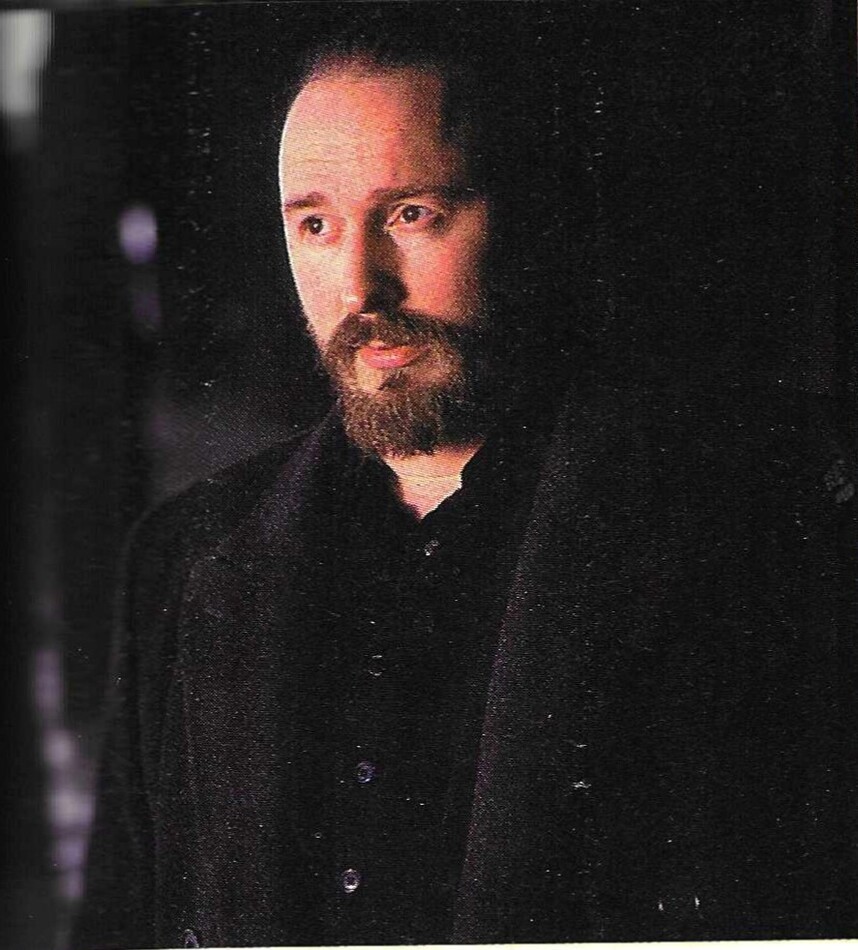
Pages 44-48 have an interview with Warren Ellis, whose career was just taking off at this point (Planetary and The Authority had yet to launch, but they were about to). It’s not a terribly incendiary interview, as he talks about what Planetary and The Authority are about, but he does say he’s had some projects canceled at Marvel because of their ownership ructions and he tells Wizard how he would kill all the major superheroes. So, you know, there’s that.
There’s a 1999 preview, which is nice. Wizard tells us what’s going to happen in Avengers (the usual) and the Bat-books (“No Man’s Land,” Harley Quinn shows up in “regular” continuity, there’s a new, unknown Batgirl), and then … Battle Chasers. Surprisingly, they do NOT write “Uh, yeah, we’ll see if any issues come out,” which would have been accurate! (Also surprisingly, TWO issues came out in 1999!) They have Captain America’s two books, Danger Girl (which managed a whopping THREE issues in 1999!), Daredevil, and The Darkness. Was there ever a Darkness #2000, as Wizard told us there would be? It does not seem so. We get updates on the Fantastic Four and Fathom (which actually got out SIX issues in 1999!) and Flash and Green Lantern. Marvel was relaunching Hulk, because of course it was, and there would be a continuity-fixing one-shot about Iron Man. Because that’s just what we need! Morrison was still doing their thing on JLA, and the countdown to the end of Preacher had begun. They keep tabs on Spawn and try to explain what’s going on in Spider-Man at the moment, which sounds dreadful. Superman is Supermanning, and Jurgens is trucking along with Thor. Busiek keeps having fun with Thunderbolts, and Witchblade exists. Wolverine was getting his adamantium back, something Wizard tracked like they were mission control keeping tabs on Apollo 11, and the X-Men, as detailed elsewhere in the magazine, were a mess.
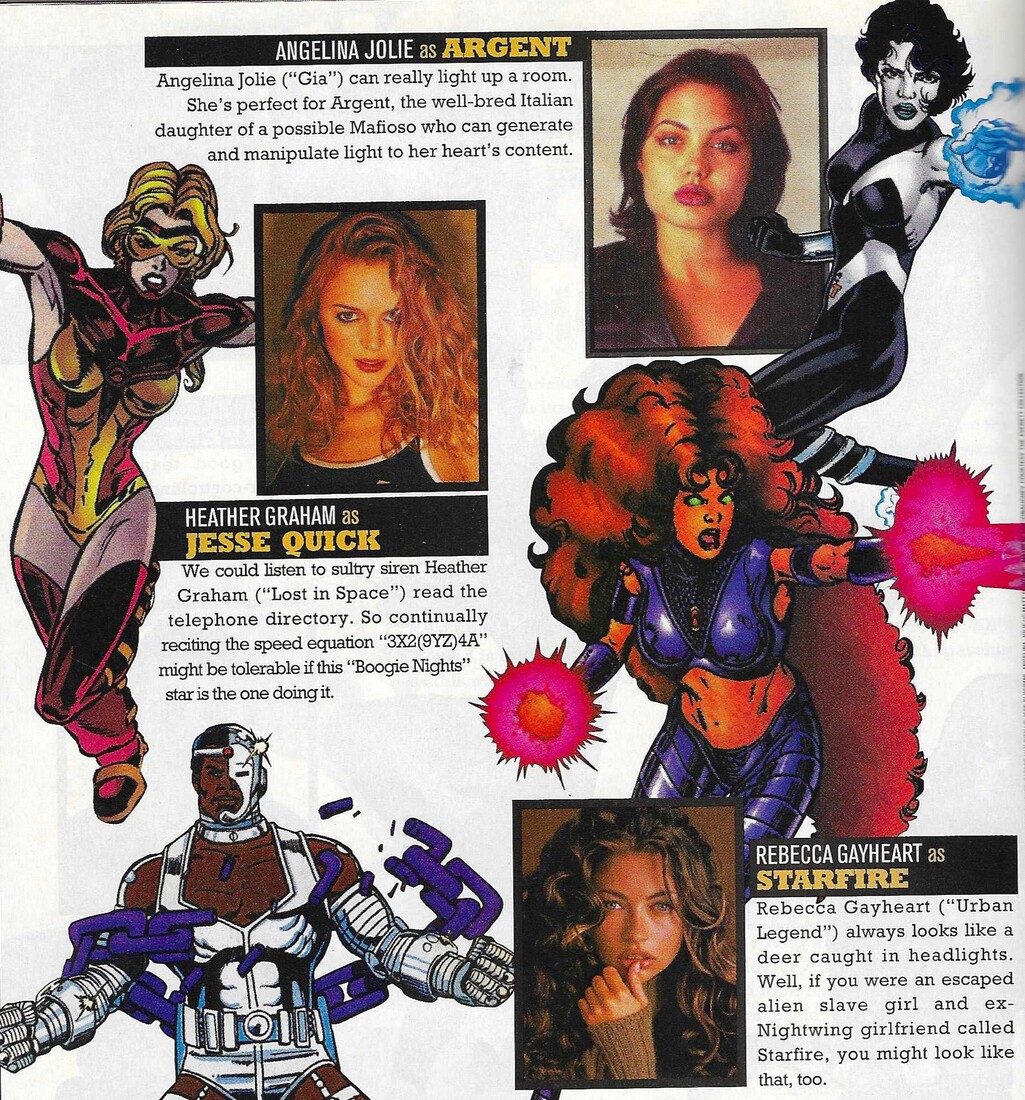
It’s time for another movie casting, and Wizard, to be honest, kind of nailed the Titans cast. Ok, I’m not that sure about Jason Gedrick as Nightwing (whenever I’ve seen Gedrick in something, he’s kind of a douchebag, but maybe that’s what Wizard is going for!), but he looks the part and he was 33 at the time, so sure. They put Mr. Alright-alright-alright, Matthew McConaughey, as Wally West, which, come on, that’s awesome. McConaughey was 29 at the time, and he would have nailed this. Fred Savage as Tempest is a bit odd, but Wizard is always simply trying to match the “look” of the character rather than worrying about the skills of the actor, and Savage — who was 22 at the time — might have worked. They give us Casper van Dien as Arsenal, which is brilliant. Van Dien was 30 or so, so the age is right, and even Wizard admits that van Dien is a bit of a douchebag, which is perfect for Arsenal. Catherine Zeta-Jones as Donna Troy is also brilliant. Again, she resembles Donna, she was 29 at the time, and she was in the midst of a brief moment when she was vying for the title of Hottest Woman on the Planet, so good job, Wizard! I don’t know much about Argent, but 1998 Angelina Jolie seems like a good fit. She was 23 and had not won her Oscar yet, so they probably could have gotten her for not a lot of money. I also love Heather Graham as Jesse Quick. Graham was 28 and well established (she had already made Boogie Nights) and had not become the trainwreck that it seems she became a bit later in life. I’m not sure if Rebecca Gayheart is all that good an actor (Wizard actually writes that she “always looks like a deer caught in headlights,” which, oof), but she looks the part of Starfire quite well. She was 27 at the time and hadn’t done a ton of work, but she looked good. For Cyborg, they put Michael Jai White in the role, which is also quite a good fit. He was 31 and had already done Spawn, so comic book movies were nothing new to him! Finally, they cast Joshua Jackson as Damage. Jackson was only 20 at the time, but he had a decent resumé and he’s a pretty good actor. I do like how Wizard usually casts some villains, but there are so many Titans they just stick to them! I don’t know — I think this is a pretty decent cast!
Moving on, we get to Hollywood news. Bryan Singer was having issues with X-Men, because corporate suits at 20th Century Fox were nervous about his vision. He wanted to bring it to the screen in the summer of 2000, and what do you know? that’s when it showed up, but I guess things were a bit dicey back in late 1998. He didn’t have a cast yet, although he definitely wanted Patrick Stewart, but there wasn’t a script yet. Here is the rumored cast: Russell Crowe as Wolverine, Angela Bassett as Storm, Sarah Michelle Gellar as Rogue, Edward Norton as Cyclops, and Julianne Moore as Jean Grey. Dang, that’s a weird alternate reality there. Meanwhile, Lucas made the announcement that he was going to film Episodes 2 and 3 in Sydney. Good for him! There’s an item about Mystery Men beginning shooting, which was nice. That’s a fun movie.
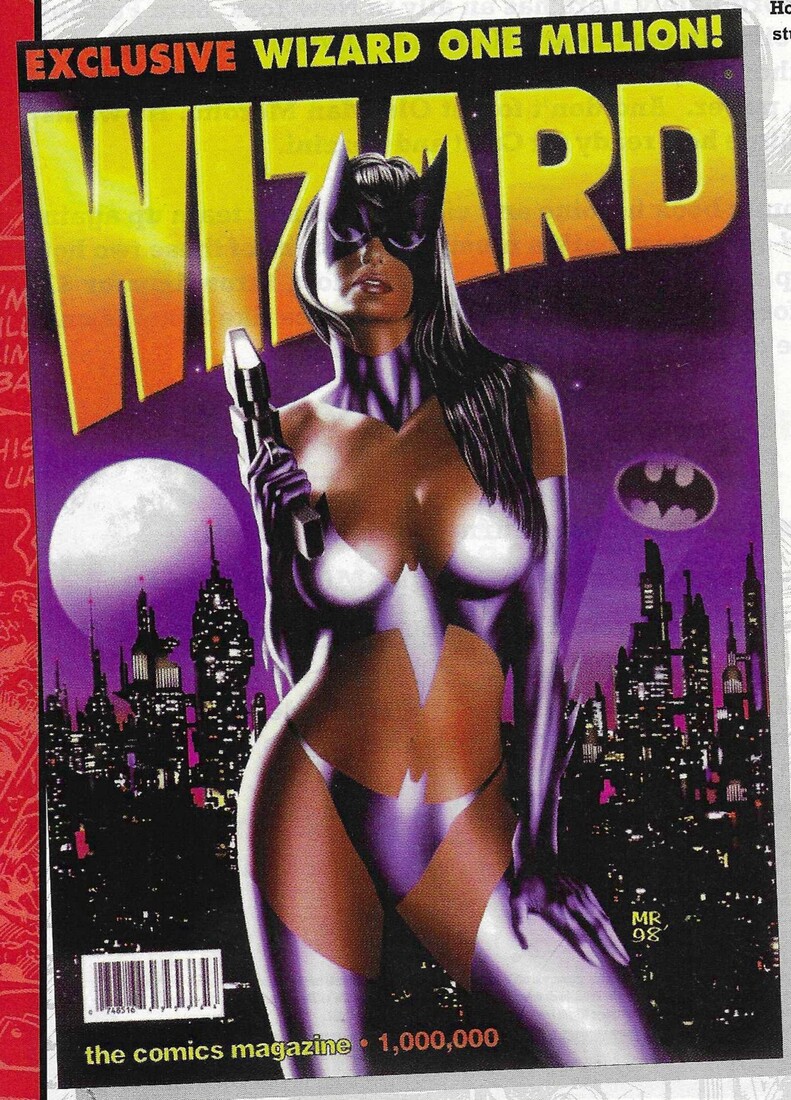
For the fan art section on page 82, Wizard asked people to draw a cover for their magazine starring characters ostensibly existing in the “DC One Million” story. The winner was this Batgirl, which is neat but also just made Kelly Thompson’s head explode:
Meanwhile, over in the “fans make action figures” section, someone created a “Beaten to a Bloody Pulp Robin” figure:
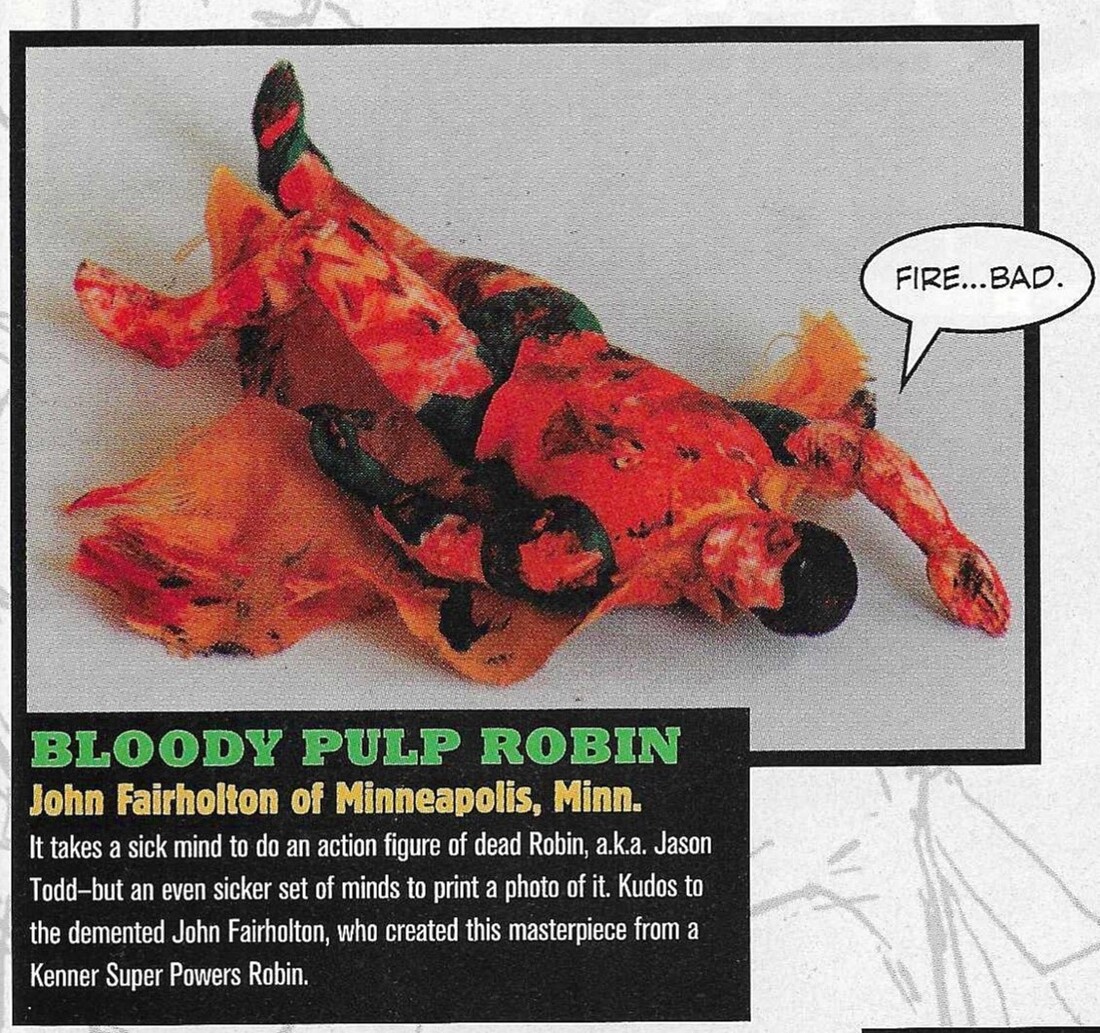
How that didn’t win stupefies me.
Wizard gets to its reviews, which are always fun. They don’t love Spawn, which they think has been spinning its wheels for a while with regard to Spawn’s purpose (somehow, Spawn is still going all these years later, so I guess its wheels aren’t spinning too much anymore, unless they are and its fans just don’t care); they really don’t like X-Man, but, I mean, Terry Kavanaugh and Roger Cruz are not going to set anyone’s worlds on fire; they really dig Star Wars: A New Hope, the manga, which is nice; and they like but don’t love Batman: Gotham Adventures. I do like one of their objections to B:GA … “This Batman’s a little too friendly. He’s not as dark, mysterious and unstoppable as he used to be. Instead, he comes across as a protective older brother, taking care of his siblings and teaching them how to fight.” Wizard loves the grimdark Batman, dang it! I just like how Wizard kind of criticizes a book that is clearly aimed at kids, even if that’s not its exclusive audience and kids like things bloody anyway. I mean, what a weird criticism, unless you think Frank Miller’s Batman is the only Batman.
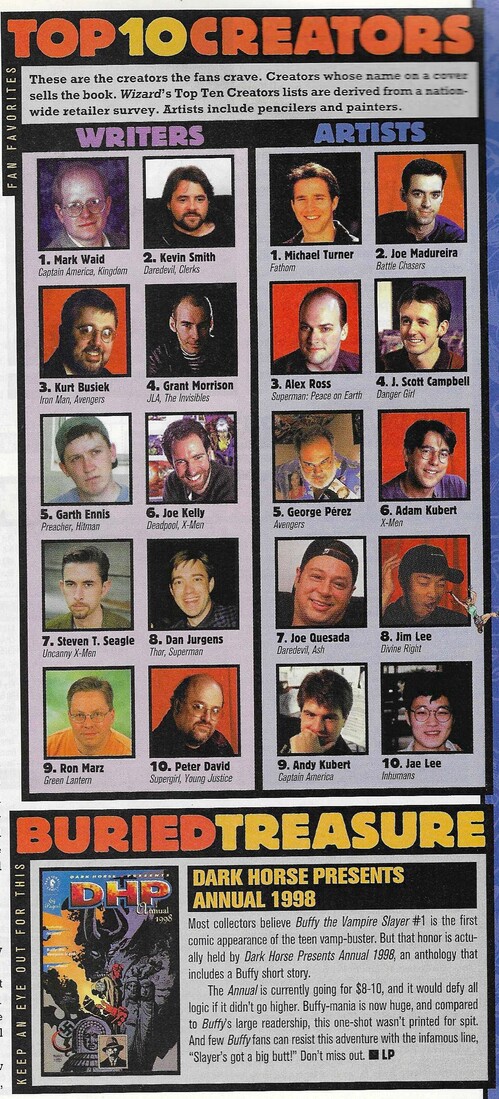
Oh, hey, it’s Wizard‘s Top 10 Creators list. Those are always fun! And check out that “buried treasure” issue!
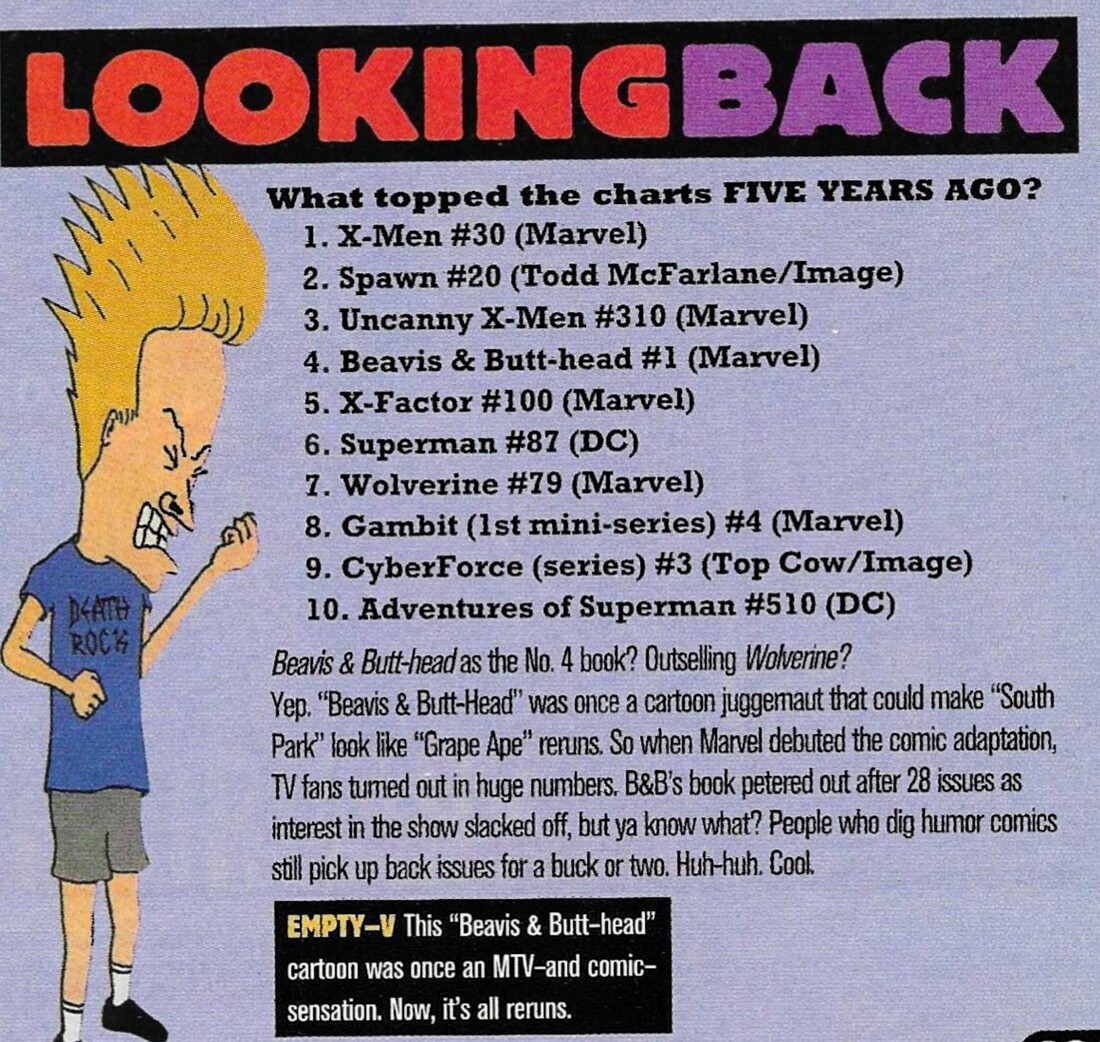
They also do their “five years ago” thing of top 10 books. What’s that outselling Wolverine?!?!?
Speaking of five years ago, for their last page of the mag, Wizard goes back five years to the debut of Marvels. Dang, Marvels is a good comic. They note that in January 1994, Schindler’s List was in theaters, The X-Files was in its first season, and “All for Love,” the song from the Three Musketeers soundtrack by Bryan Adams, Rod Stewart, and Sting, hit #1. Man, that was a time, wasn’t it?
All righty-o, that’s another fun issue of Wizard! As always, we need to check out some advertisements from the mag!

Thanks for reading, everyone. Continue our trip down memory lane in two weeks! Be here or be square!

I think I had this one too. Weird how my old issues of Wizard are like the only comics-related thing I’ve ever gotten rid of. Does the Ellis interview have a photo of him trying to stab the viewer with a bunch of pencils?
L.A.W. did come out from Layton and Giordano with the Charlton characters, but they changed it to “Living Assault Weapons.”
That’s an impressive memory, tough guy. Yep, that’s the big photo of Ellis in the article.
I hadn’t heard of Living Assault Weapons. I’m sure it was awesome!
Adequate. Not terrible. Suffered from including Sarge Steel who’s one of those old characters people just keep using and using even though he’s utterly uninteresting.
“maybe we shouldn’t take the butthurt feelings of obnoxious teens into account too much“ could be applied to just about any monthly superhero comic after the 70s honestly
That is entirely too true, sir! 🙂
“Qaliban by John Ostrander” I see that and think “Taliban.” Ostrander did a version of the quantum magic-mage for the Tangent Universe.
“I mean, what a weird criticism, unless you think Frank Miller’s Batman is the only Batman.” Years ago I heard a criticism that Bat-creators think the only direction to go is Darker and Grimmer. Which is to say, they may indeed think Miller’s Batman is The One.