

A few years ago I decided to reread Doc Savage.
I had the entire run in the Bantam paperback reprints so why not get some use out of them? For extra fun, I’d read them in the original publication order.
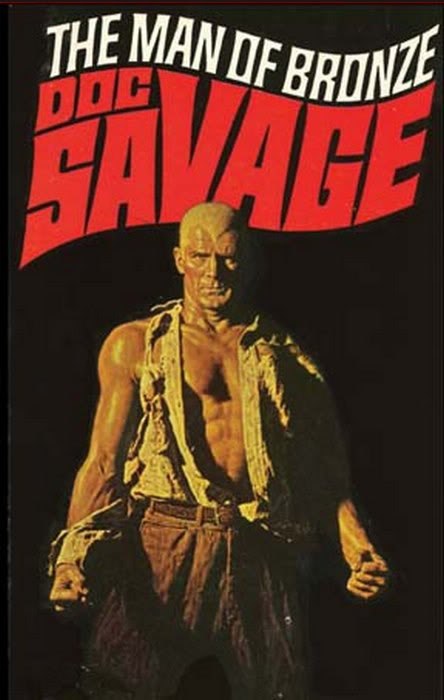
At the rate of two books a month, it took me a while. I blogged about them, wrote the blog posts into a book and now I”m in the process of proofing and polishing the manuscript of The Savage Adventures.
What I’m here to talk about today isn’t my writing but a part of the Doc Savage adventures that hasn’t aged well (there are others, as you’d expected for something nigh a century old). To wit, Doc Savage’s Crime College. Usually referred to in the series as Doc’s “institution,” but the Crime College name is the one that stuck. The place where criminals have their minds wiped surgically, then learn respectable trades before they’re sent back into the world with new identities.
The first reference to the College is in Doc’s second adventure, The Land of Terror. In the opening, a gang disintegrates Doc’s friend Jerome Coffern with the mysterious “Smoke of Eternity.” Doc relentlessly hunts the killers down, sending them to their maker if they resist. Doc’s code says crooks either reform when he catches up with them or they die, no mercy to the unrepentant (Doc’s no-kill policies would evolve over the next few books). To ensure they reform, anyone Doc takes alive goes to a private mental hospital where they undergo years of intensive psychotherapy to kill their criminal urges.
Apparently Dent or his editor decided that wasn’t dramatic enough because two issues later The Polar Treasure retconned the psychotherapy away. Now the Man of Bronze’s staff reform patients the way I remember it: brain surgery to induce amnesia about their criminal pasts, then re-education in ethical behavior and instruction in a legal trade. Doc’s aims are clearly humanitarian — cure evil, just like he cures diseases with medical research — but it still raises questions of ethics that psychotherapy doesn’t.
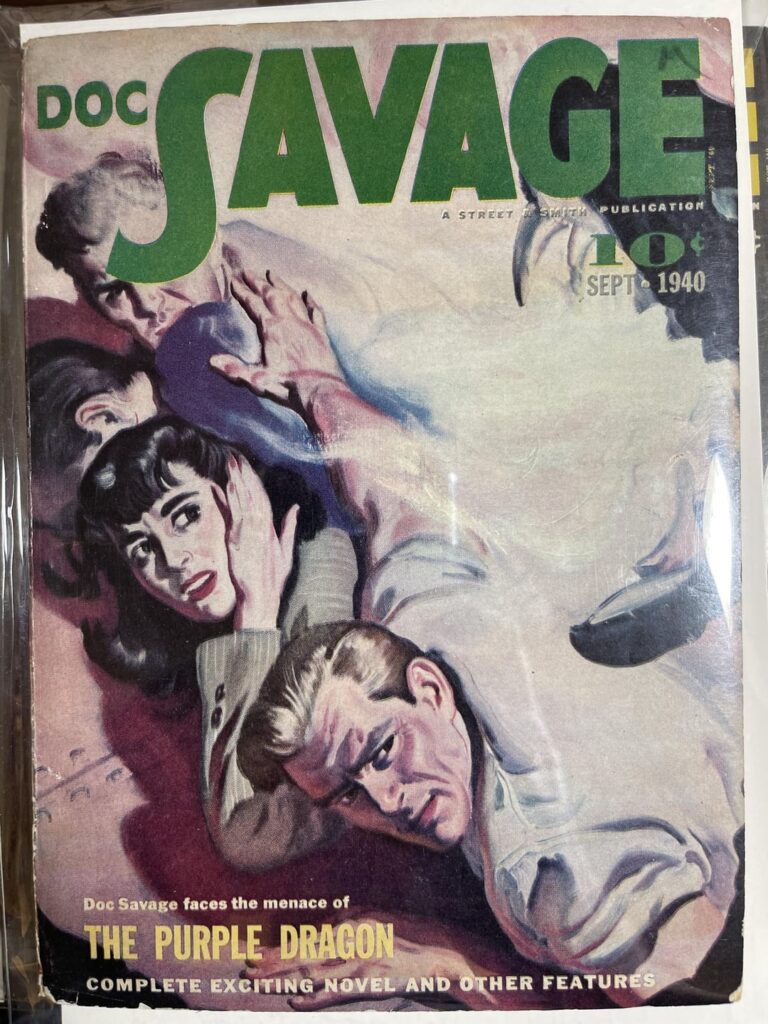
The two versions can’t be reconciled. It’s not that Doc made a surgical breakthrough between the two books; The Purple Dragon shows the institution was performing brain surgery back in 1929, before Doc officially launched his adventuring career in 1933’s The Man of Bronze. The inconsistencies don’t stop there.
 The Annihilist gives us a completely different take. The book’s villain, Boke — written as obviously gay, though never actually stated as such, of course — explains that evil results from glandular dysfunction that destroys our moral sense. Doc reforms people by treating the defective gland; Boke plans learning the reverse treatment, then turning law-abiding bank presidents and others into crooks who’ll happily partner with the underworld.
Obviously the brain-surgery method of reform wouldn’t have worked for Boke’s plan. Dent simply ignored continuity to get a better story. However the changes raises the obvious question of why Doc erases criminals’ memories.
If Doc can turn them compulsively honest, it doesn’t matter whether they remember their old lives or  not. Indeed, in the later The Deadly Dwarf (Repel in the original pulps), Doc reforms two criminals and sends them back into mastermind Cadwiller Olden’s crime ring as double agents. Clearly being around their old colleagues won’t cause them to revert to old ways.
Several later stories, such as Dagger in the Sky, confirm the Crime College doesn’t have to induce amnesia. However it’s clear the institution wipes memories just the same. In The Flying Goblin, criminals bust homicidal Birmingham Jones out of the College. Jones’ memory is gone but the surgeons haven’t been able to reform him — his urge to kill is to great. At the end of the book, Doc announces he won’t return Jones to the institution and “all understood what the Bronze Man meant.” We get no further explanation which makes it sound like Doc’s going to put the mad dog down.
We never get an explanation of what law enforcement makes of all the crooks Doc captures and doesn’t turn over to the law. Cops in some stories, such as The Phantom City, are apparently aware Doc does something with the hoods, They choose to turn a blind eye. Doc gets the criminals off the street, that’s good enough, and saves the state the cost of a trial. Who cares about the details?
The underworld knows full well if you go up against Doc Savage, you die or disappear. A few crooks who run into college graduates they used to know realize Doc can transform criminals into completely different people. They can’t explain it and treat it as one more reason to steer clear of the bronze man. The criminals who figure it out (in The Flying Goblin, The Annihilist and The Talking Devil) apparently never tell anyone. Like consistency in the institution’s methods, it would get in the way of a good story.
Paperback covers by James Bama, pulp cover by Emery Clarke.
