
It’s the series that put Scott Snyder on the map!
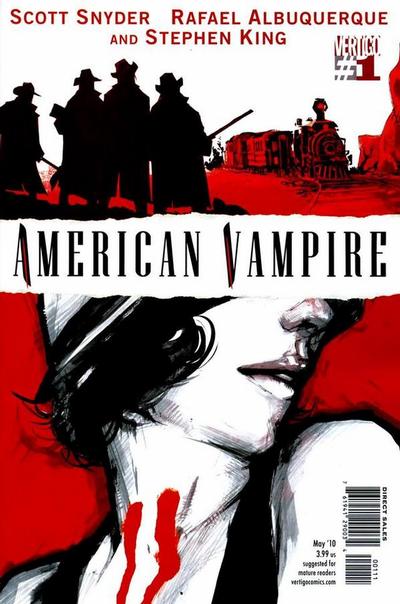
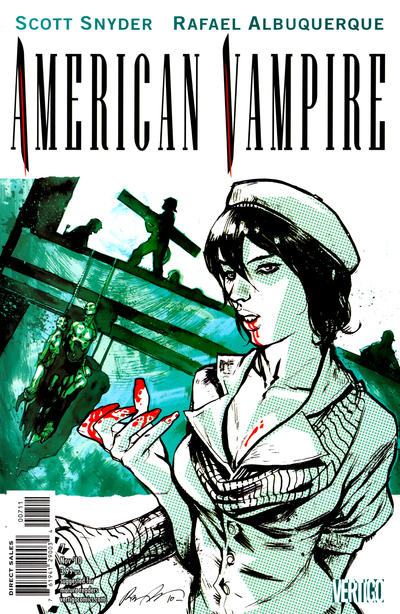

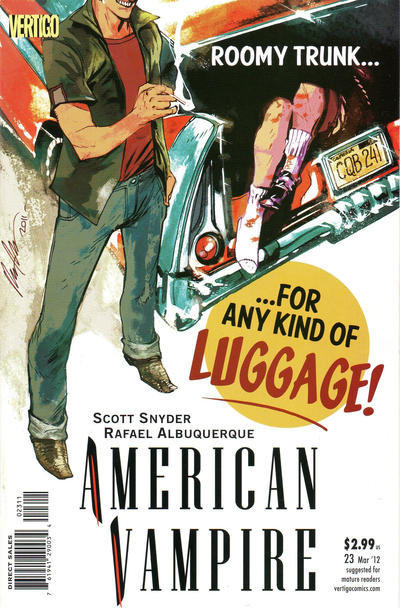

American Vampire by Scott Snyder (writer), Stephen King (writer, “Bad Blood” in issues #1-5), Jason Aaron (writer, “The Lost Colony”), Jeff Lemire (writer, “Canadian Vampire”), Becky Cloonan (writer/artist, “Greed”), Francesco Francavilla (writer/artist/colorist, “The Producers”; artist, “Trunk”), Gail Simone (writer, “Essence of Life”), Gabriel Bá (writer/artist, “Last Night”), Fábio Moon (writer/artist, “Last Night”), Greg Rucka (writer, “Portland, 1940”), Rafael Albuquerque (artist, issues #1-9, 13-18, 22-25, 28-34, The Long Road to Hell, “The Man Comes Around,” Second Cycle #1-4, 6-11, 1976 #1-6, 8-10; writer, The Long Road to Hell, “Bleeding Kansas”), Mateus Santoluoco (artist, issues #6, 9-11), Danijel Žeželj (artist, issue #12), Jordi Bernet (artist, issues #19-21), Roger Cruz (artist, issue #26), Riccardo Burchielli (artist, issue #27), Sean Murphy (artist, Survival of the Fittest #1-5), Dustin Nguyen (artist, Lord of Nightmares #1-5), Declan Shalvey (artist, “The Lost Colony”), Ivo Milazzo (artist/colorist, “Bleeding Kansas”), Ray Fawkes (artist/colorist, “Canadian Vampire”), Tula Lotay (artist/colorist, “Essence of Life”; artist, “Root”), John Paul Leon (artist, “Portland, 1940”), Matías Begara (artist, Second Cycle #5), Ricardo López Ortiz (artist, “Limb”), Dave McCaig (colorist, issues #1-34, “The Man Comes Around,” “Last Night,” “Portland, 1940,” Second Cycle #1-11, 1976 #1-10), Dave Stewart (colorist, Survival of the Fittest #1-5), John Kalisz (colorist, Lord of Nightmares #1-5), Jordie Bellaire (colorist, “The Lost Colony,” “Greed”), Steve Wands (letterer, issues #1-13, Lord of Nightmares #1-5, “The Man Comes Around,” “Last Night,” “Portland, 1940,” Second Cycle #1-11, 1976 #1-10), Pat Brosseau (letterer, issues #14-19, Survival of the Fittest #1-5), Jared K. Fletcher (letterer, issues #20-34, “The Lost Colony,” “Essence of Life”), Taylor Esposito (letterer, “Bleeding Kansas”), Travis Lanham (letterer, “Greed”), and Dezi Sienty (letterer, “The Producers”).
Published by DC, 67 issues (American Vampire #1-34, American Vampire: Second Cycle #1-11, American Vampire: 1976 #1-10, plus American Vampire: Survival of the Fittest #1-5, American Vampire: Lord of Nightmares #1-5, American Vampire: Long Road to Hell, and American Vampire Anthology), cover dated May 2010-February 2013 (AV), August 2011-December 2011 (AV: SotF), August 2012-December 2012 (AV: LoN), August 2013 (LRtH), October 2013 (Anthology #1), May 2014-January 2015 (AV: SC), December 2020-October 2021 (AV: 1976).
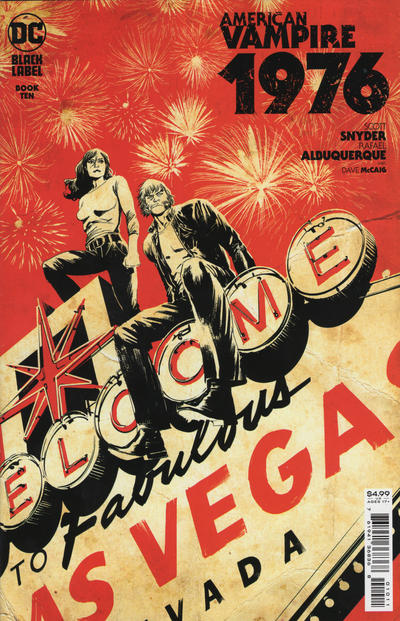
SPOILERS, I guess? I mean, I try not to, but you never know! Beware! Be aware!
When we consider which four-color masterpieces deserve to live in the hallowed halls of Comics You Should Own, we think about different things for each potential entrant. For something like American Vampire, which is Snyder’s longest comics work, even now, we could consider the hook, which is clever: a man who grew up in the United States and was turned into a vampire in the States becomes something different and unusual from your standard vampire, and things get weird. 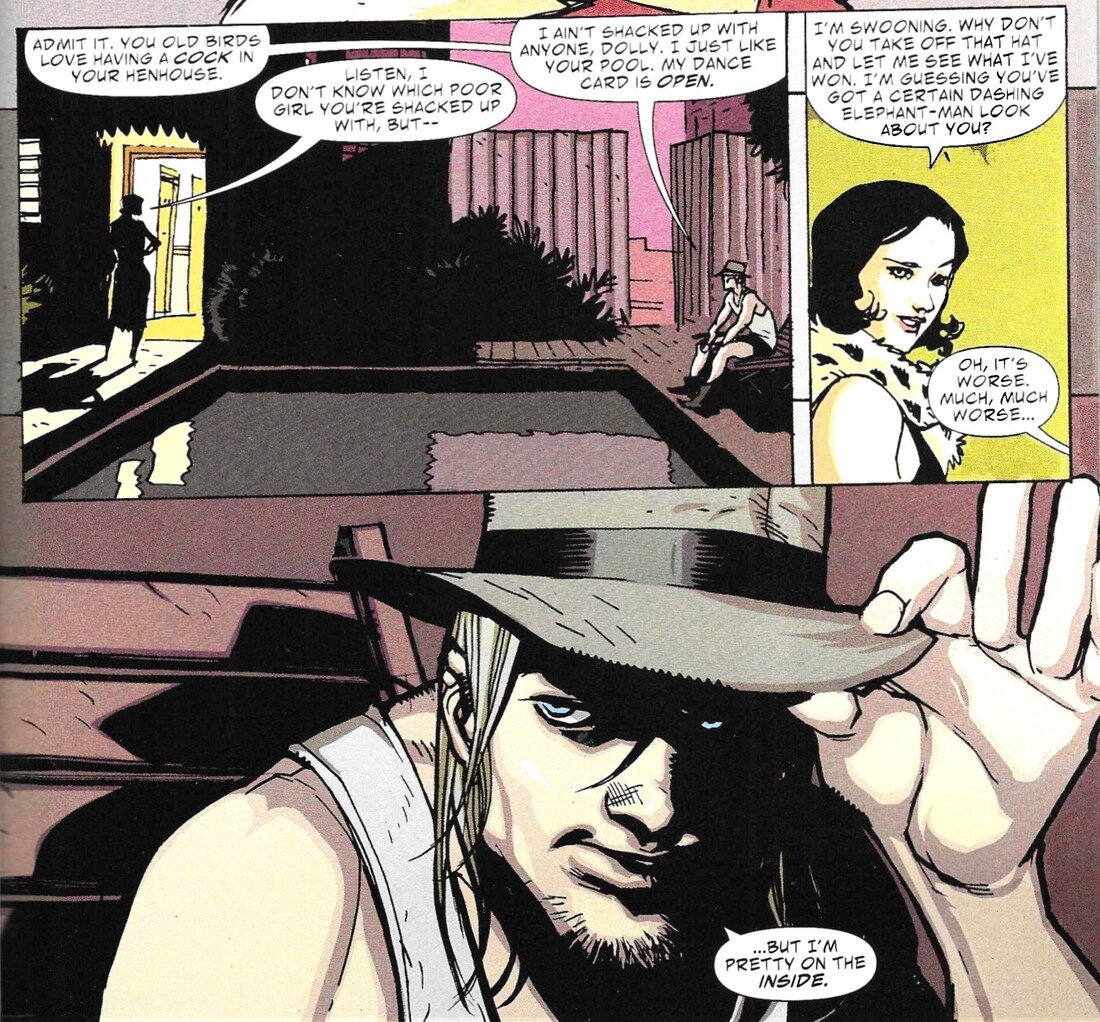 Snyder clearly knows the “rules” of vampirism, and he gleefully shatters them with Skinner Sweet, who can walk around in the daytime and has only one weakness (which I’ll get to). From that hook, Snyder builds a rousing horror adventure-thriller, as Sweet and the other American vampires become involved in centuries-old wars and fights against the Most Ancient Evil Of All and other such scary things. The plot of the comic is well done, certainly, and very tightly plotted, but it also feels a bit too tightly plotted, as if everything slots into place just where you think it will. Generally, the people who we think will survive do, the people we think will betray someone do, and the people we think will rise to the occasion do, too. This isn’t necessarily a criticism, mind you — comics that tell a solid story can be very good — it’s just that you don’t necessarily read American Vampire for the plot. That it has a pretty good plot doesn’t change that.
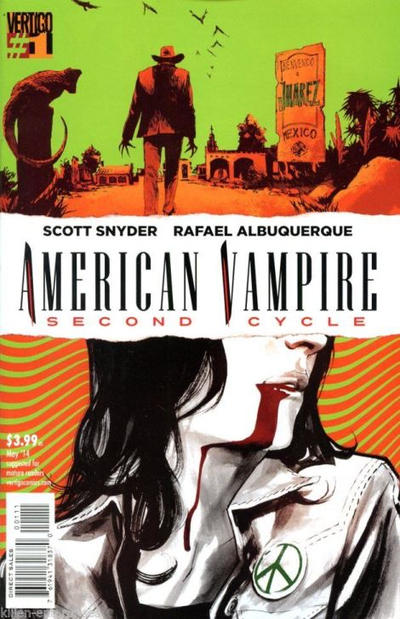
You could, of course, read it for the art. Albuquerque is superb on this book, and because it was the crown jewel of Vertigo at the time, DC got some good guest artists to work on it, too. But it’s Albuquerque’s art that is the draw, of course, and it’s a very good reason why the book was as successful as it was. He really does well with the horror aspect of it all — his vampires are truly terrifying, not like the romantic figures they’ve become in popular culture, but very scary monsters. Albuquerque gets around this for most of the book by positing that they only look like vampires when they want to do vampire things — most of the time they just look like regular humans. It’s helpful for the plot, because they have to exist in society, but it also makes the moments when they shift pretty keen, too, as it adds a nice sense of thrill and danger to the proceedings. When Pearl first “turns,” for instance, Albuquerque does this nice job on the page turn:
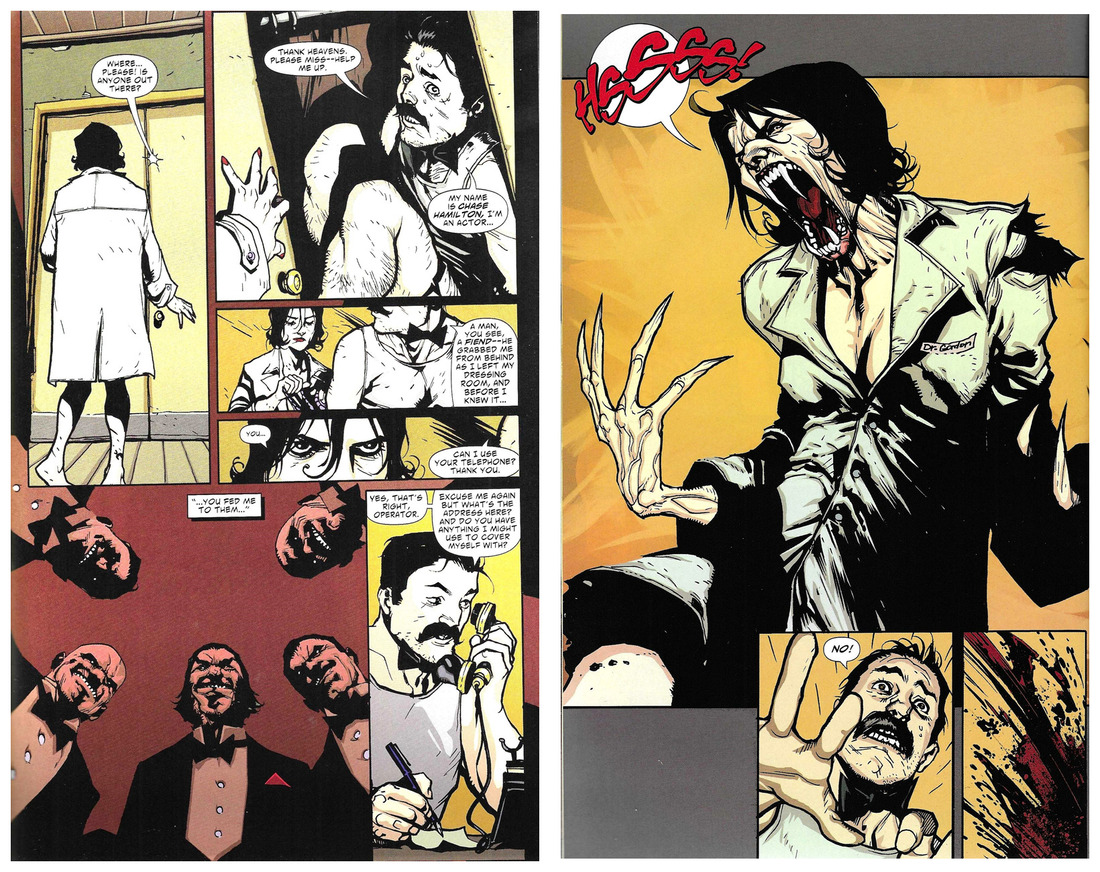
He does this a lot, with clever ways to show the vampires “turning,” and it makes the book tenser than it would have been otherwise. Albuquerque is excellent at action scenes, so the fights in this book are expertly done, and it’s nice to see how the characters become monsters so quickly, as Albuquerque does such a good job with that aspect of the art. He contrasts Pearl and Skinner Sweet well, too, as Skinner was not a terribly nice person even when he wasn’t a vampire, so when he’s vampire, he looks far more evil in his “human” aspect than Pearl does. 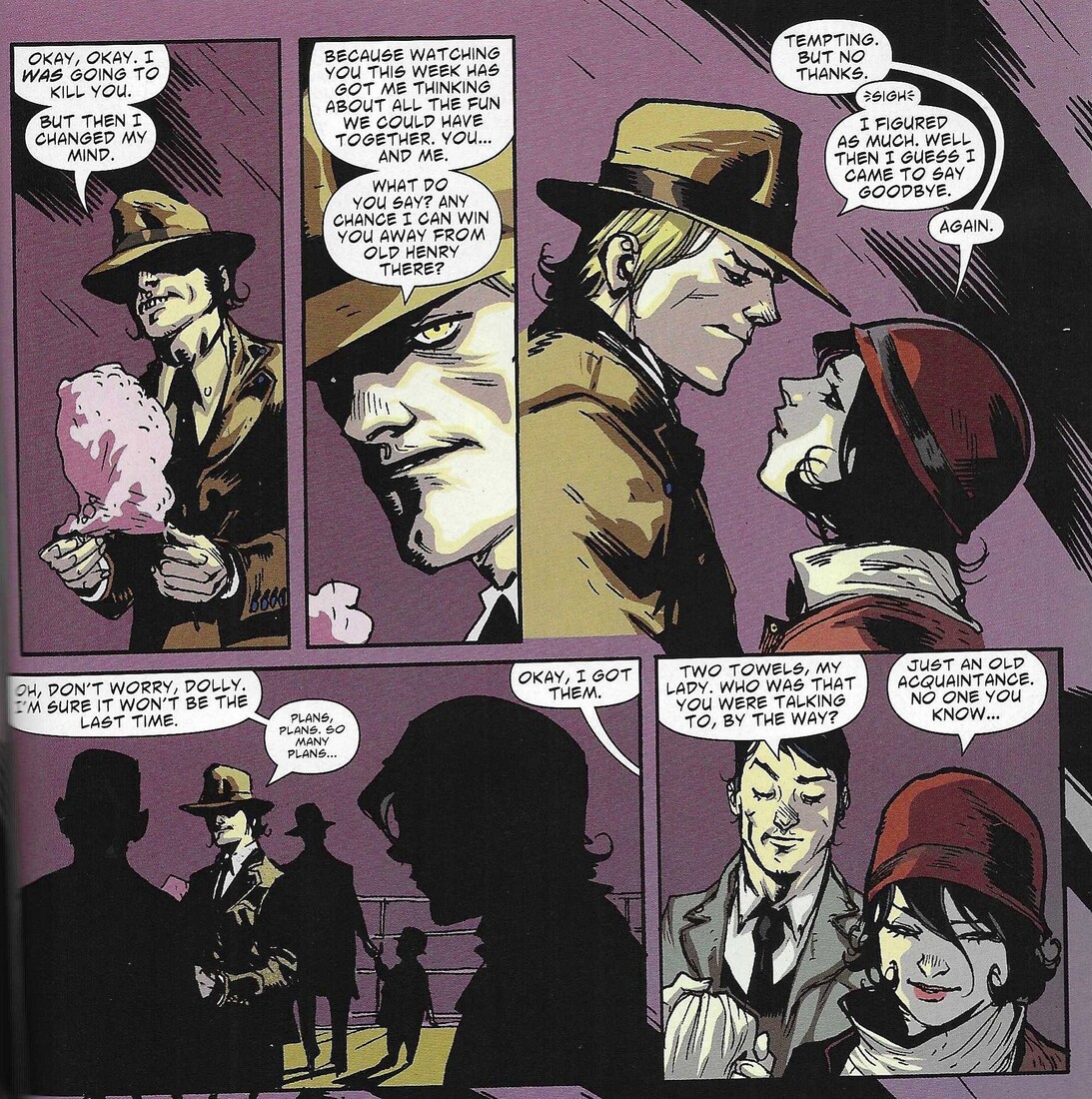 He doesn’t try to hide his vampirism as much, which makes him look much more indomitable. It allows Albuquerque to show not only Skinner’s evil, but Pearl’s toughness, as she is not scared of him at all when they face off, and because Albuquerque draws her as a much sweeter-looking human, their confrontations stand out nicely.
Albuquerque does a good job with the shifts in the book’s timeline, as well. The main story occurs over about 50 years (the mid-1920s to 1976), and Albuquerque draws most of that (plus a few issues set in the late 19th century), and he does well with the styles of the times. Hairstyles change, cars change, and Albuquerque gives a nice sense of that. As the book is partly a meditation on Americanism, Albuquerque also does well with the different cultures that make up “America,” from the car culture of the 1950s to the disco culture of the 1970s to the Hispanic culture that’s an indelible part of the American Southwest, and he is able to make it all feel natural. He gives us a very good sense of the visual life of 20th-century America without going overboard with the clichés that can accompany it.
One other aspect of Albuquerque’s art that fascinates is its evolution over the course of the series. It took over 11 years to finish the series, and Albuquerque’s style shifted as the years went on. Early on, he draws in two slightly different styles, as the first trade is split between the “present day” of 1925 and Skinner Sweet’s “origin,” “Bad Blood” (written by Stephen King), set in 1880. 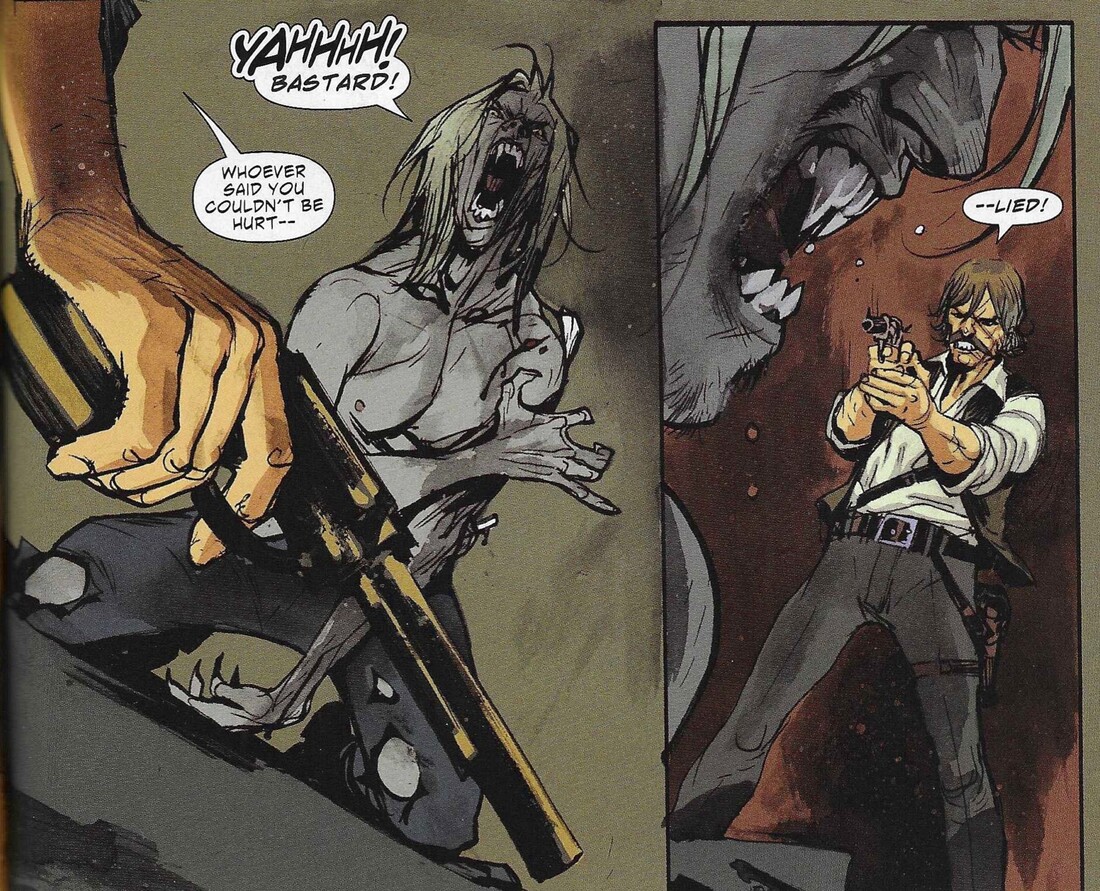 In the 1925 section, Albuquerque draws in his “regular” 2010 style — he uses thick, bold, slightly rough lines, and his drawing is just a bit angular in places, although that doesn’t stop him from drawing very good action scenes (Albuquerque was several years into his career when he began American Vampire, and this style was similar to what he had shown on his indie work for Boom! in the years just prior to this and on Blue Beetle, which is when most people started noticing him). McCaig’s colors are a bit flatter and more vibrant. In the 1880 section, he uses a thinner, slightly looser line — it’s still obviously Albuquerque, but it definitely has a “seen through the gauze of memory” vibe going on, and McCaig uses more rendering and not quite as bright colors to add to the effect. It’s an interesting contrast. By “Ghost War,” which begins in issue #13, his art has evolved a bit — his line work is a bit thinner, like it was in “Bad Blood,” but it’s not as loose as it was in that story. Albuquerque has gotten more confident, it seems, and when that happens with artists, they tend to go a bit more abstract, as they don’t feel the need to draw in every little detail. Albuquerque is still a very detailed artist, but you can see him becoming a bit more sketchy around the edges, as he doesn’t need to be as detailed as he was. He amalgamates a bit in “Death Race” (beginning in issue #22), as his lines are again thicker but his style is a bit looser. This style continues through the end of the first series in late 2012 and Long Road to Hell, which came out in the summer of 2013.
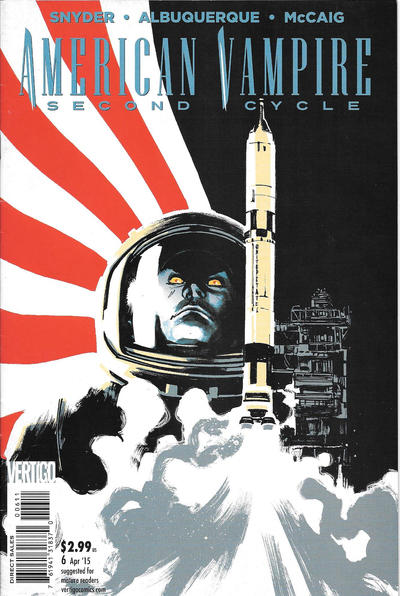
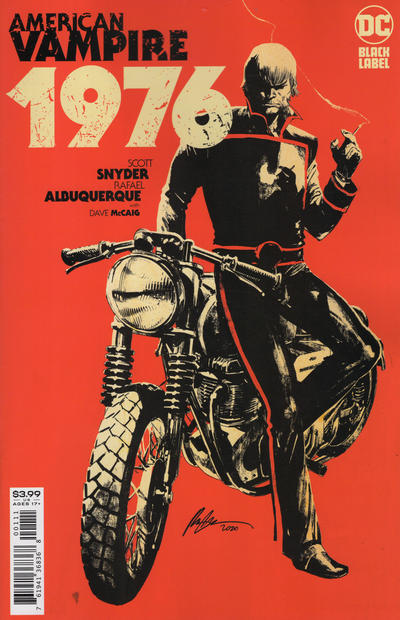
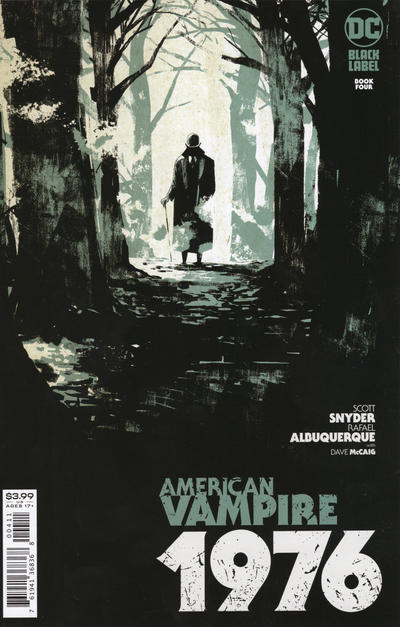
  A big shift occurs between summer 2013 and Second Cycle, which began early in 2014. Albuquerque is using fewer lines, although they’re still pretty thick, and he’s gotten a bit more abstract. McCaig’s coloring is heavily rendered, which isn’t a great fit with Albuquerque’s softer line work — everything is muddier than it has to be, and due to that, the art on these issues is the nadir of the run. By 1976, which launched over five years after Second Cycle ended, Albuquerque’s style has shifted again. His line is noticeably thinner, which, due to his slightly cartoonish style, clashes occasionally in the way he draws faces, but he’s found a good balance between detailed and abstract, while his brushwork is more refined and quite gorgeous. McCaig has also evolved, as his work is less rendered and back to being a good fit with the way Albuquerque draws. Albuquerque’s spot blacks are always excellent, and McCaig does a good job making sure the colors work with the blacks, rather than trying to overrun them, which it felt like was going on in Second Cycle. Due to the breaks between series, it’s very interesting to trace the evolution of Albuquerque’s art. Some of it is better than other, but overall, it’s high quality work.
As I noted, you can certainly read and enjoy American Vampire for the plot, but it’s not that reason that makes it such a good comic. As we learn in King’s story, “Bad Blood” (which was, of course, plotted by Snyder), Skinner Sweet is an outlaw out West who runs afoul of a banker who happens to be a vampire.  The vampire bites Skinner, but only briefly, as Skinner is able to push him off. Some of the vampire’s blood drips in Skinner’s eye, and then the vampire slashes Skinner’s throat. His burial site is flooded and Skinner lies under a lake for almost 30 years until someone accidentally sets him free, but he’s a new kind of vampire — he has no aversion to water and he can walk around in the sunlight. It’s never quite clear why Skinner becomes a vampire or why he becomes a new kind of vampire, but Snyder implies that it’s the land that does it — where a vampire is made dictates what kind of vampire they become. In 1925, Pearl Jones, an aspiring actor, is turned at a Hollywood party that’s basically a front for vampires looking for food. Skinner is hanging around in Los Angeles at the time (he’s there for “business” with the vampires that attack Pearl), and he makes sure that she becomes the kind of vampire he is, but he’s certainly not there to mentor her. The entire story is essentially about Pearl and Skinner, as they separate, come together, separate again, and finally reunite in 1976 to fight the Ultimate Evil. There are a lot of other things going on, of course — there’s a vampire-hunting organization that both Pearl and Skinner (ironically) eventually join, and Snyder introduces several other characters who are important to the overall story, but it’s basically Pearl’s and Skinner’s story. Pearl wants to settle down with Henry, the dude who digs her early on in the book and stays with her even after her transformation, while Skinner just wants to have a good time. The clash between them is usually about what they want out of life and that each holds the other’s desires in contempt. Snyder does a good job with it, but it’s nothing we haven’t seen before.
So, while the plot is well done and exciting and gives us big moments of violence and heroism, it’s not really why this is a Comic You Should Own. 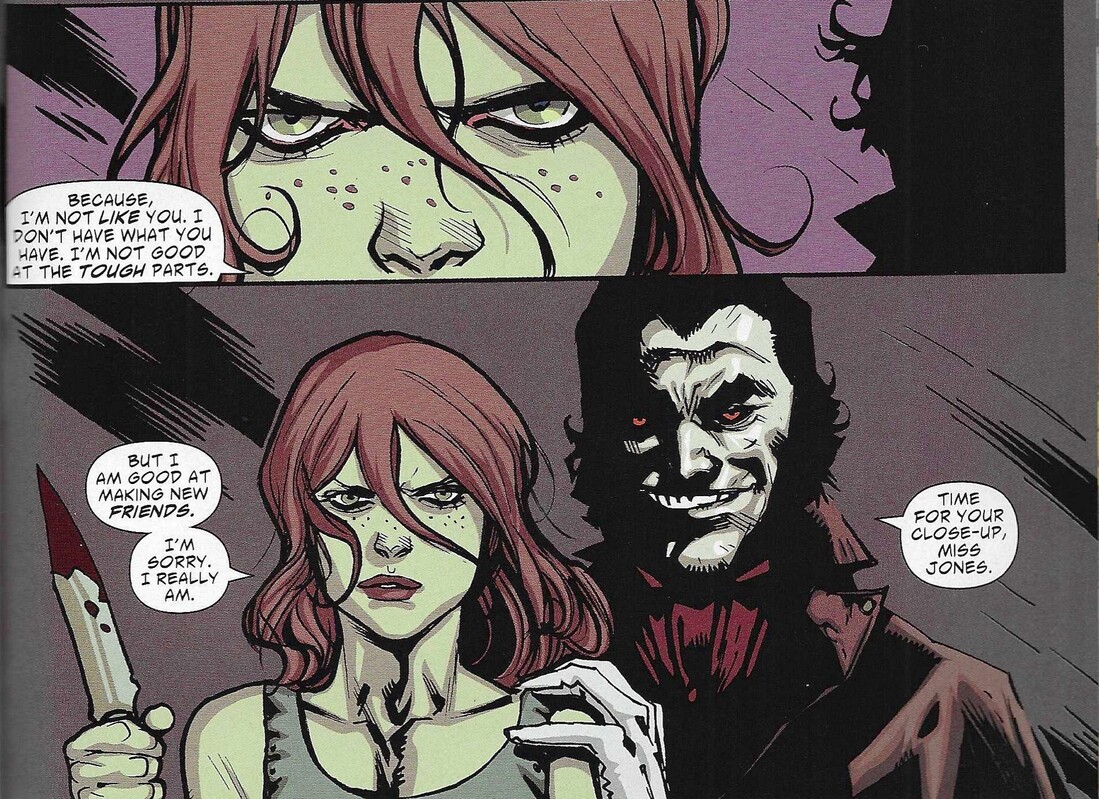 What makes it that is the main theme of the book, which Snyder wisely keeps as subtext until the very end, when he lays it all out for the readers, not trusting them to pick up on the ideas. Skinner narrates a lot in the final issues, and he — ugh — writes a letter to Pearl that tells her what the comic is really about. Sigh. It’s frustrating, because Snyder had done a very good job with the theme up until then. I mean, obviously the book is about the United States and what it means, and Snyder does a wonderful job examining this contradictory country through the characters. We meet Pearl and her roommate, Hattie, first, because while Skinner is the “bad-ass” of the comic, Pearl’s story is much more interesting. Pearl and Hattie have come to Hollywood in 1925 to be in the pictures, and Snyder isn’t shy about making that a metaphor. Pearl represents the “good” kind of American, while Hattie, as it turns out, represents the “bad” kind. Both want to be famous, but Pearl wants to be an actor for the art, while Hattie wants to be famous. Pearl is enthralled by the beauty of movies, and Hattie is seduced by the power of fame. Meanwhile, Skinner represents another aspect of Americana — the outlaw. He’s a vicious killer, but because he has charm, he can be captivating to readers and characters in the comics, and Snyder does a good job showing both sides of his personality. Americans have a long history of admiring outlaws, and Snyder plays on this well.
 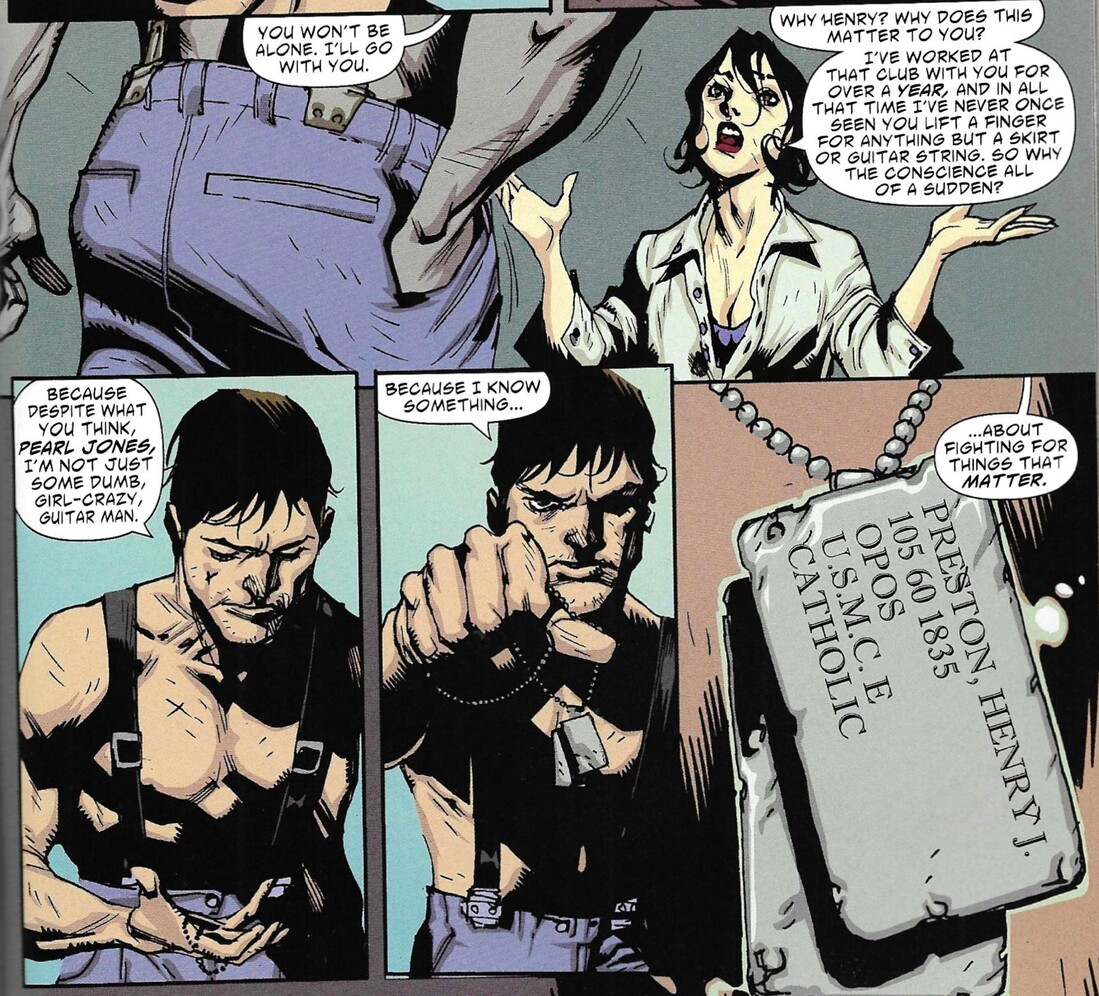 Skinner is introduced early in issue #1, sitting by the pool at the boarding house where Pearl and Hattie are living (we already know he’s an “outlaw” because the boarding house is strictly for young women, but Skinner doesn’t care about that). He warns Pearl about the party she and Hattie are going to, because he knows she’s going to be a target of the vampires, so he’s not all bad, and he helps her “recover” by turning her into his kind of vampire, which comes with perks like being able to exist in sunlight. He’s also a murderer (and has killed at least one child) and probably a rapist, but, far too often, Americans ignore that sort of behavior if the outlaw is attractive and charming. Pearl’s husband, Henry, is another archetype — he’s a World War I veteran (and, eventually, a World War II vet) and a white guy who likes jazz in the 1920s, which means he’s a progressive dude. He isn’t disturbed (too much) by Pearl’s transformation into a vampire, and he stays with her even though she doesn’t age and he does. He also refuses to become a vampire, because he wants to live his life to the fullest. He’s so decent he makes your teeth hurt a bit, but he’s an idealized version of an American man, and he’s a good contrast to Skinner. With regard to the American vampires’ one weakness, Snyder cleverly makes it gold … which is a bit on the nose, but works well for the theme he’s working with.
 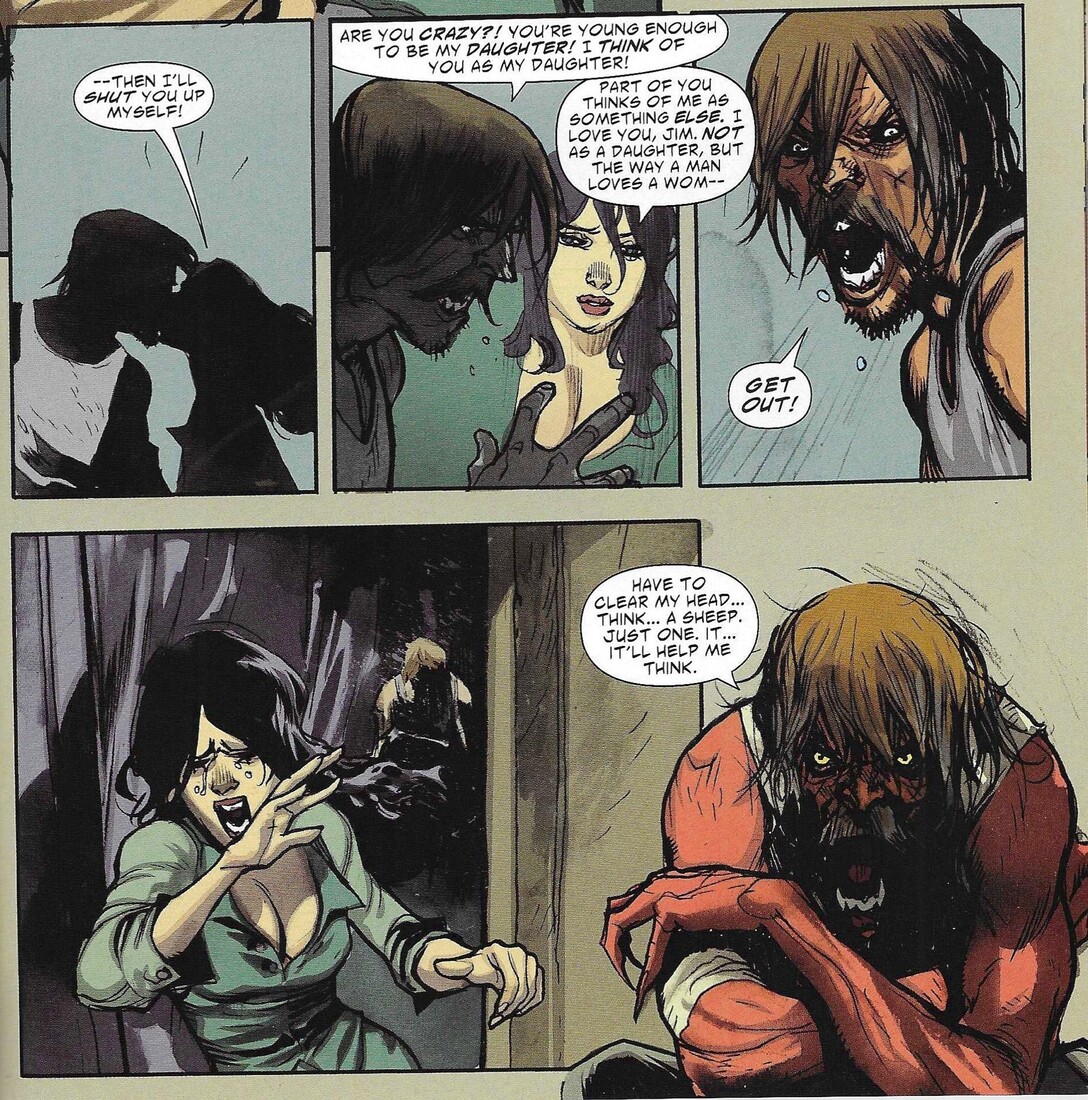 Skinner does not appear to appreciate the irony.
Snyder extends the theme to the other characters, as well. Jim Book, the Pinkerton who hunts down Skinner (in an added twist, they were childhood friends), is a prototypical “Old West lawman,” in that he’s a decent, somewhat conservative fellow who has a fairly rigid definition of right and wrong. At some point before he’s captured, Skinner kills Book’s fiancée, and that casts a shadow over Book’s life. His deputy is Hispanic, which feels somewhat progressive in 1880, and he’s godfather to his deputy’s daughter, Abilena … which doesn’t preclude him from having sex with her years later and fathering a child with her. Book also becomes an “American” vampire when he fights Skinner and gets some of Skinner’s blood in him, and his and Abilena’s child, Felicia, has some unusual abilities due to her father’s vampiric blood. Abilena kills Book rather than let him turn, but years later, she brings him back to life, and while it seems like he’s fine (or as “fine” as you can be with blood of a vampire in you), eventually he betrays humanity, and it feels like Snyder is making a point about conservatism curdling into hatred for anything different. Book makes a speech about the Great Evil that they’re all trying to stop, and how it’s basically anti-evolution, as it wants everything to regress to a primordial muck. Book, whose life did not turn out like he wanted it to, thinks this sounds good. It feels like Snyder is using Book to show how some conservatives, as they age, become even more rigid and resistant to change than they were in their youth, when they could have evolved. Book doesn’t want to evolve, and he’s willing to destroy humanity to return to an age of peaceful obeisance. 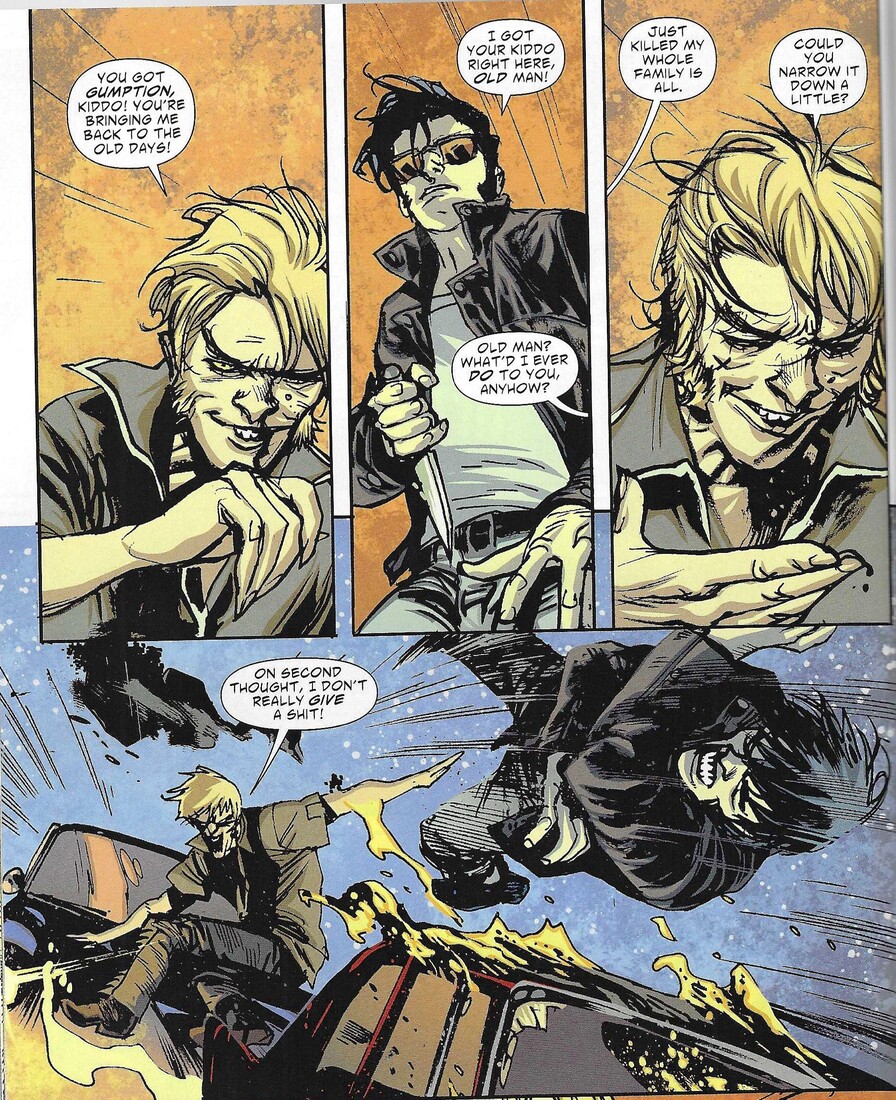 Calvin Poole, who works for the vampire-hunting organization (the Vassals of the Morning Star) and meets Henry on a mission to Taipan in World War II (a mission than Skinner Sweet is also involved in), also becomes a vampire, and as he’s the only important African-American in the book, he becomes an archetype of the black experience in America during the mid-20th century. As the book moves into the 1950s, Snyder introduces Travis Kidd, another vampire hunter, who represents the rebellious youth culture of that decade. In the final arc, Travis is still fighting the good fight, and it’s interesting to see how Snyder makes him older and wiser but not quite as cool as he was in the 1950s, because that’s what happens as you get older. Finally, even though Skinner represents a new kind of vampire, we discover that he’s actually not the first of his kind, as Snyder introduces Mimiteh, a Shoshone vampire who, of course, was unknown to the Europeans. Mimiteh later joins the Vassals and the fight against the Big Evil, and it’s clear Snyder is creating a coalition of all the people that make America great in order to stop the creature that wants to drag us all back down into the darkness. Again, it’s not the most subtle thing in the world, but Snyder smartly leaves it in the subtext … until Skinner Sweet writes his letter to Pearl. “Skinner” writes: “[T]o be an American vampire isn’t just to be me, or you, but both of us at once. Hell, to be American at all is to be the monster and the hero, the outlaw and the priest. It’s to want it all for yourself and for everyone else. To be truly of this place is to always feel the tension between those twin fucking flagpoles.” It’s so nice that after a decade and almost 70 issues, Snyder doesn’t think we get it, and he has to hammer it home. It doesn’t wreck the book, certainly, but it’s frustrating that Snyder couldn’t leave well enough alone. The characters he’s created, while archetypal and occasionally stereotypical, do the work for him.
 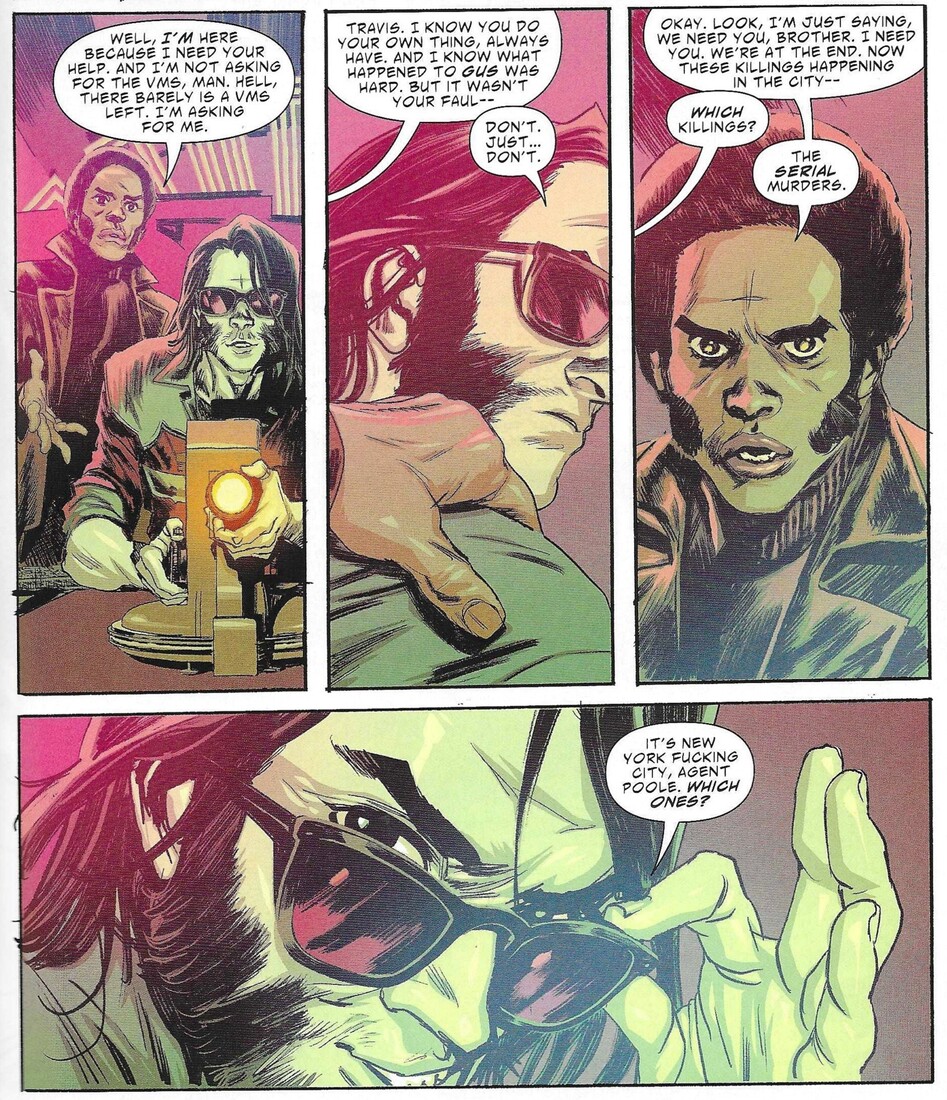 He just couldn’t help himself!
I’ve already mentioned Albuquerque, but DC got a lot of good artists to work on the book, as well. Žeželj does excellent work on issue #12, in which Skinner meets some old friends in 1919. Bernet draws issues #19-21, which is the flashback that introduces Mimiteh, and if you’re writing a Western, you could do a lot worse than getting Bernet to draw it, as the dude just has a good “Western” vibe to his art. Cruz and Burchielli do a very nice job on a two-part story about Calvin Poole in 1950s Alabama. And, of course, Murphy and Nguyen do amazing work on the two mini-series associated with the main book, Survival of the Fittest and Lord of Nightmares. This was Vertigo’s pride and joy in the early 2010s, so it’s not surprising that DC got good artists on it, and they make the book a wonderful exhibition of comic book art.
American Vampire isn’t the deepest comic in the world, but it’s a very good addition to the abundance of vampire stories out there, because Snyder tries to do something different with the vampires themselves. He contrasts Skinner and Pearl’s “American” vampirism with the stolid and secretive European vampires 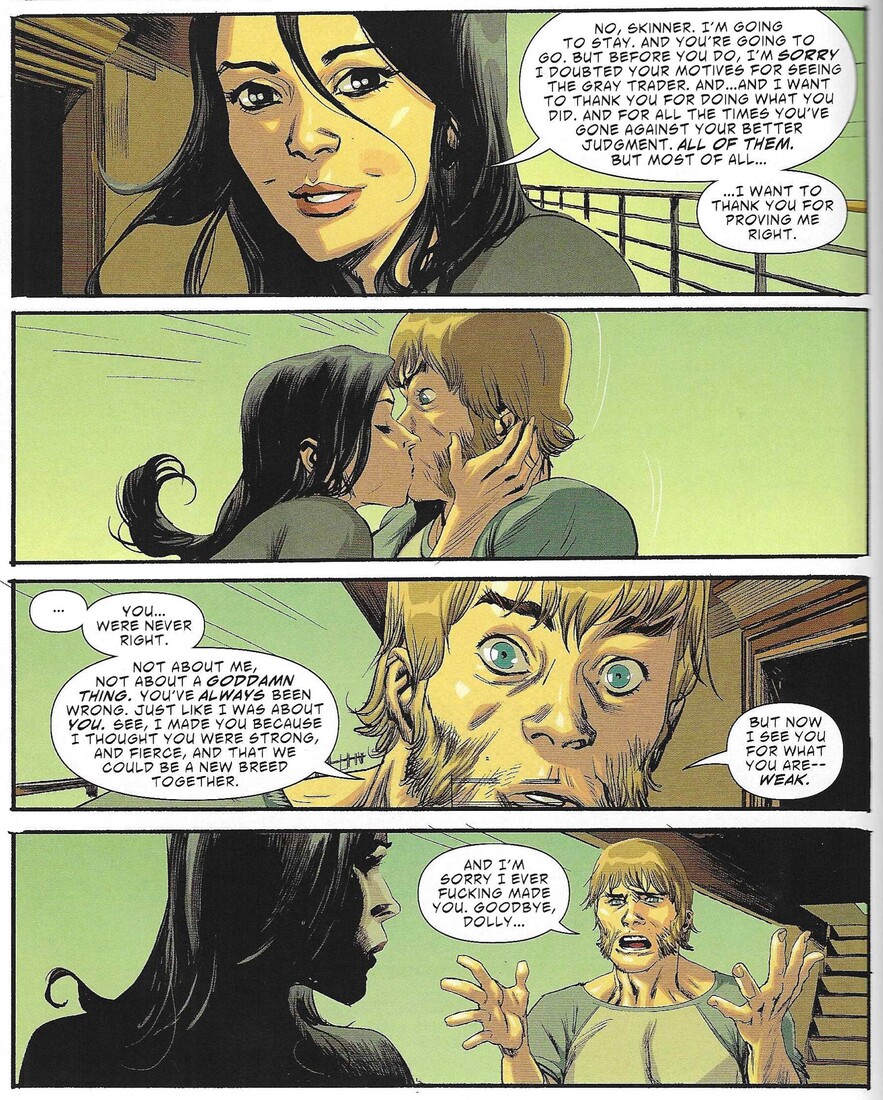 (it feels like he’s satirizing some old-school vampire stories just a little, but, as with the Americanism of his main characters, he’s showing the rapaciousness of old-world capitalists when presented with new business opportunities in the New World), and he does a good job embedding all these events in American history, which brings his themes to the fore a bit more (which is why, again, Skinner does not need to write Pearl his letter at the end). Plus, even though the plot is nothing too special, Snyder tells the story with verve and power, and he does a very good job making sure everyone gets their moments to shine. It’s a horror comic, after all, and Snyder gives us a lot of horror, but like the best horror stories, he has other things on his mind, too, which helps elevate the work.
The series has been collected in nine trade paperbacks and two Omnibus editions (which add the second anthology, which I have not read as it’s not in the trades I own and therefore is not listed here). It’s unclear if DC has let the older stuff go out of print, as the Omnibuses seem hella expensive, and even the first trade, which you can find here, is more expensive than it was when it was new. There is one of those “compact editions” of the first 11 issues, and we’ll see how DC keeps this in print going forward, because I can’t believe it doesn’t sell. It’s definitely worth a read.
As always, feel free to check out the archives for more comics goodness!

I started reading this on release but dropped it somewhere along the way, can’t remember how far I got.
It was just average, I avoid anything that has Snyder attached to it these days so I doubt I’ll ever give it another try.
I enjoyed the first collection. Not enough to make any effort to read further.