
As I’ve blogged about recently, the Bronze Age was big on reviving Silver Age villains who’d faded from the scene, whether they deserved it or not. Detective Comics #418’s lead story, “And Be A Villain,” shows the same impulse held true for Silver Age heroes.
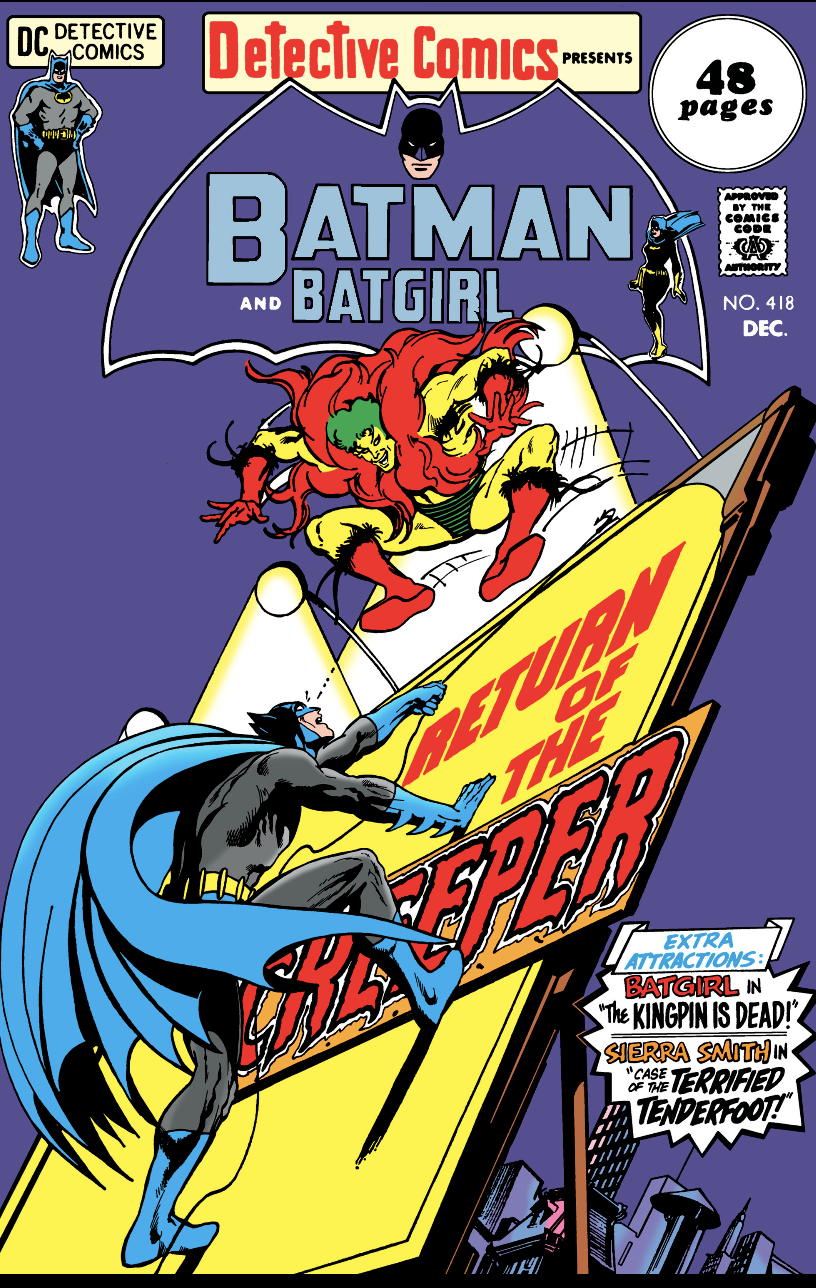
The story, by Denny O’Neil and Irv Novick, is straight-forward enough. Investigating a series of chemical thefts, Batman discovers the thief is the Creeper. dJack Ryder has become trapped in the form of his alter ego, unable to turn back to normal. He’s stealing chemicals so that Dr. Yatz, the son of the professor who gave Jack his Creeper powers, can recreate the formula and restore Jack to normal. Yatz, however, intends to free Jack from his condition by shooting him dead, then selling the formula.
This doesn’t make sense, as O’Neil, who co-wrote some of the Creeper’s series, should have known. The formula gives Jack his strength and agility but it’s a molecular transformer implanted in his body that brings about the transformation.

It’s easy to explain, though. Jack’s cracking up over his condition and Yatz guessed he was too panicked to spot a lie.
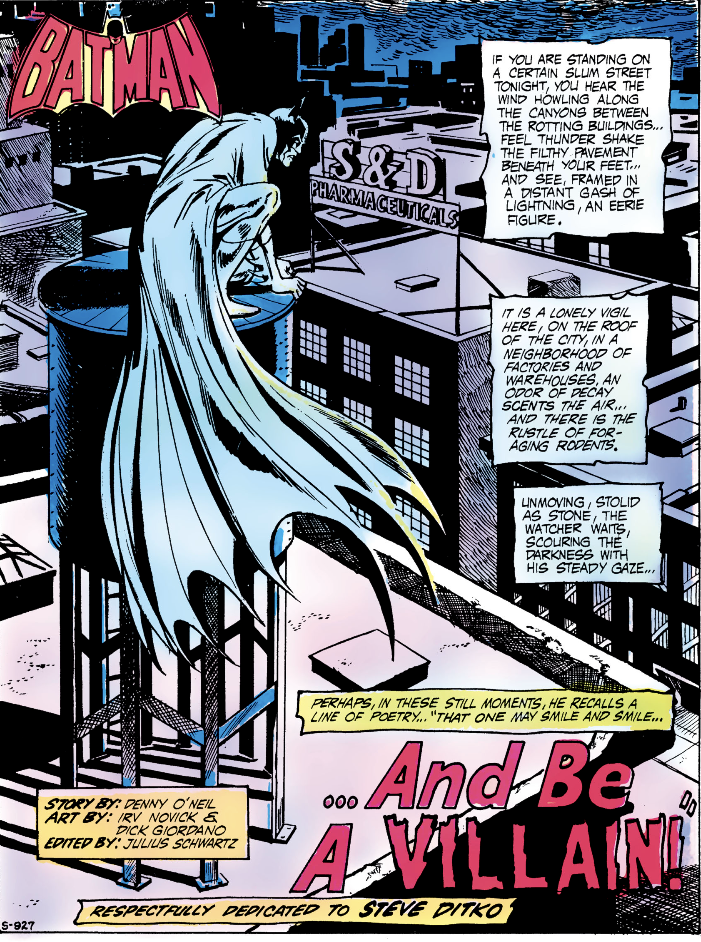
The story isn’t a minor classic or anything but it’s enjoyable. Irv Novick (with Dick Giordano inks) gives everything a Neal Adams look, as witness this splash page.
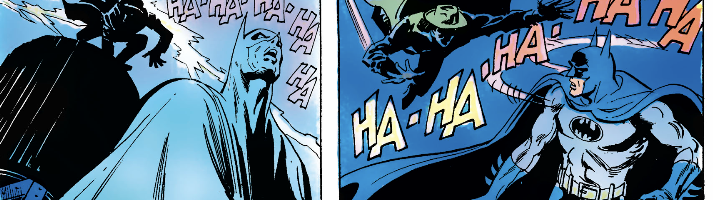
From a historical perspective, it’s striking to see, once again, how much the Darknight Detective has changed over the past five decades. When Batman and the Creeper go head to head, it doesn’t go well for the Masked Manhunter —
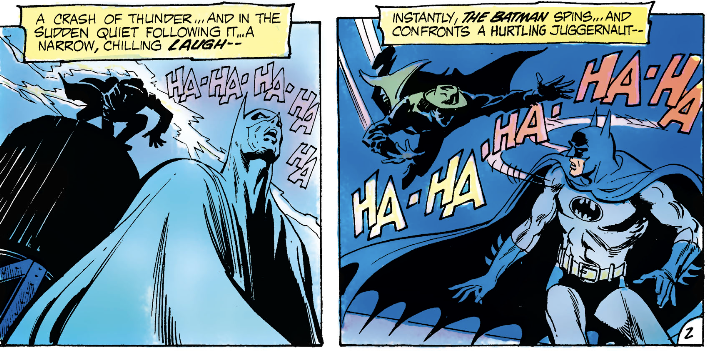
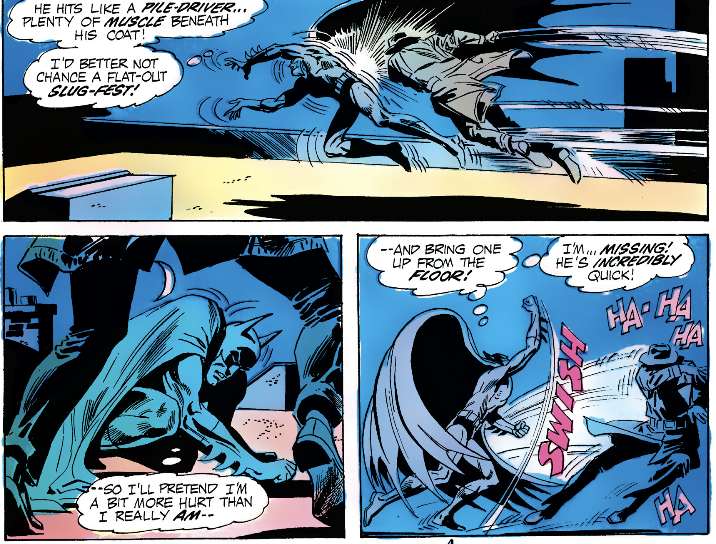
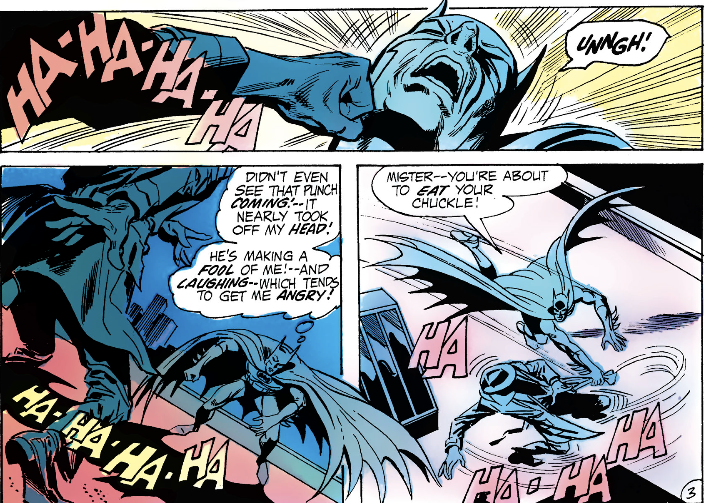
The Creeper does not eat his chuckle. He wins. I can’t imagine he’d do that in these days of Bat-Godhood.
This story brought the Creeper back into action after two and a half years since O’Neil wrote him into Justice League of America #70, right after Beware the Creeper bit the dust.

“And Be a Villain” wasn’t the first attempt at a Silver Age superhero revival: Iceman appeared in Amazing Spider-Man #92 nine months after X-Men went the way of all four-color flesh. Bobby’s guest appearance was a backdoor pilot, though it didn’t lead to a series.

Dr. Strange, “master of black magic,” had better luck. His run in Strange Tales ended with the issue above, which launched a battle between Stephen and the ancient Nameless Ones. The Roy Thomas-written story continued into Sub-Mariner (also written by Thomas) a couple of months later.
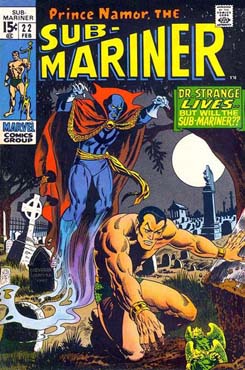
That issue ended with Dr. Strange apparently trapped in the Nameless One’s dimension forever, barring their path to our world. Unsurprisingly, Thomas didn’t let that stand and resolved everything in Incredible Hulk #126.
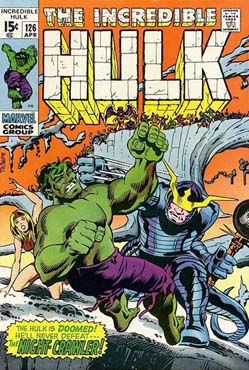
At the end of that story, Stephen declares that with the Nameless Ones banished for all time, he’s going to retire as a mage and settle into life as a consulting physician. Whenever I reread this story that ending makes no sense. The Nameless Ones are hardly the only occult threat out there and surely stepping down as Earth’s mystic defender would require contacting the Ancient One, arranging for a replacement … Did Thomas simply figure Stephen’s time in comics was done, or what?
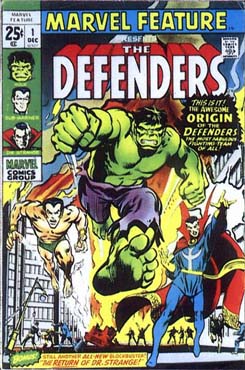
Regardless, the retirement didn’t last, even if Thomas had intended it to. In Sub-Mariner #34-35, Rascally Roy had teamed up Namor, Hulk and the Silver Surfer as the Titans Three, with an eye to making a regular team out of them. Stan Lee vetoed that — Silver Surfer was his to write, nobody else’s — so Thomas turned the Titans Three into the Defenders with Dr. Strange instead of the Surfer. It came out in the summer of ’71, including a tortured explanation for what Dr. Strange was back in harness.
The Creeper’s revival feels different, though. The gap since his last appearance was longer than for Dr. Strange or Iceman and the Creeper was never as big at DC as they’d been at Marvel. He still wasn’t: his guest-appearance did nothing to turn around his C-list status. He’d continue making multiple team-ups and getting backup series in various books but he remained a has-been who never was.
Bringing back heroes would continue as a trend throughout the Bronze Age. A couple of months after the Creeper’s return, Hank McCoy of the X-Men got his own series.

It didn’t last but the Beast took off: Steve Englehart brought him over to the Avengers and he stayed an Avenger until X-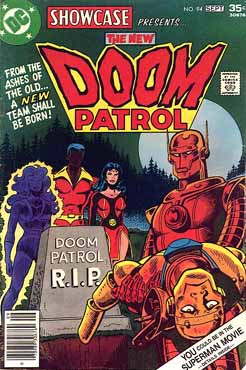 Factor brought him back into the mutant-verse. Teen Titans gave up the ghost in 1973, then bounced back in 1976 (I think someone revived them later, too). The Doom Patrol and the Challengers of the Unknown returned late in the decade. The X-Men came back in 1975, but I imagine anyone who reads comics knows that.
Not all the revivals were good, or successful, but they kept on coming. Old heroes not only don’t die, it was now clear they wouldn’t even fade away.
Art top to bottom by Neal Adams, Steve Ditko, Irv Novickx2, Adams, Gene Colan, Marie Severin, Herb Trimpe, Adams, Gil Kane, Jim Aparo.
