

“Kids are swingin’ from the power lines; nobody’s home, so nobody minds”
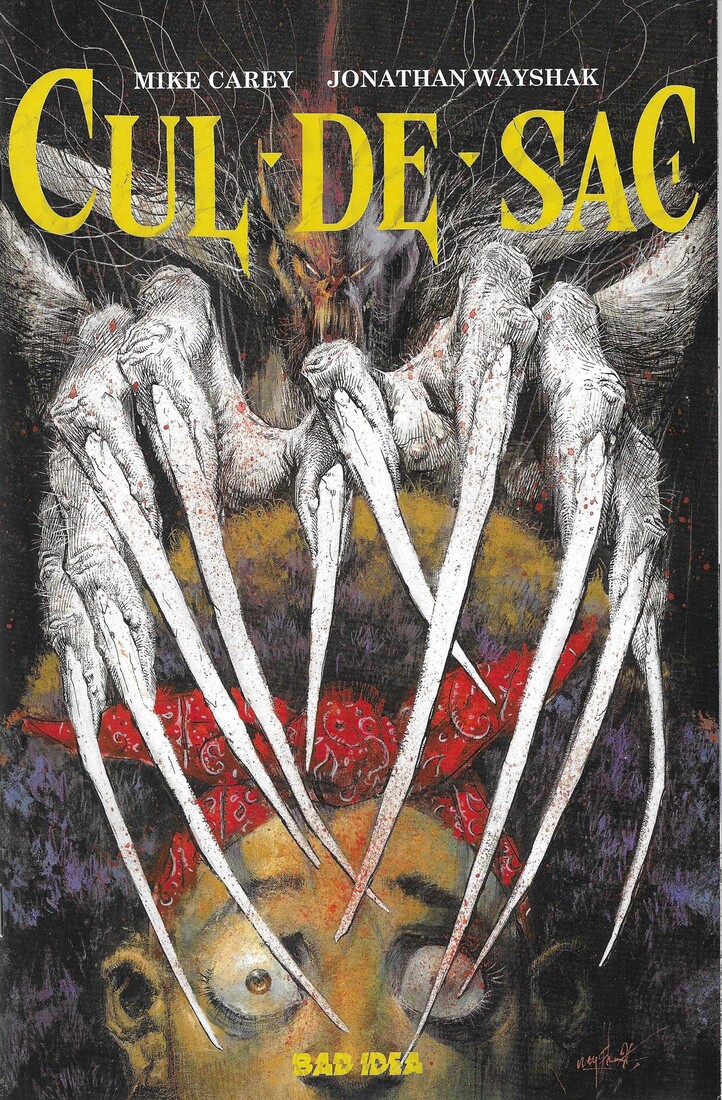
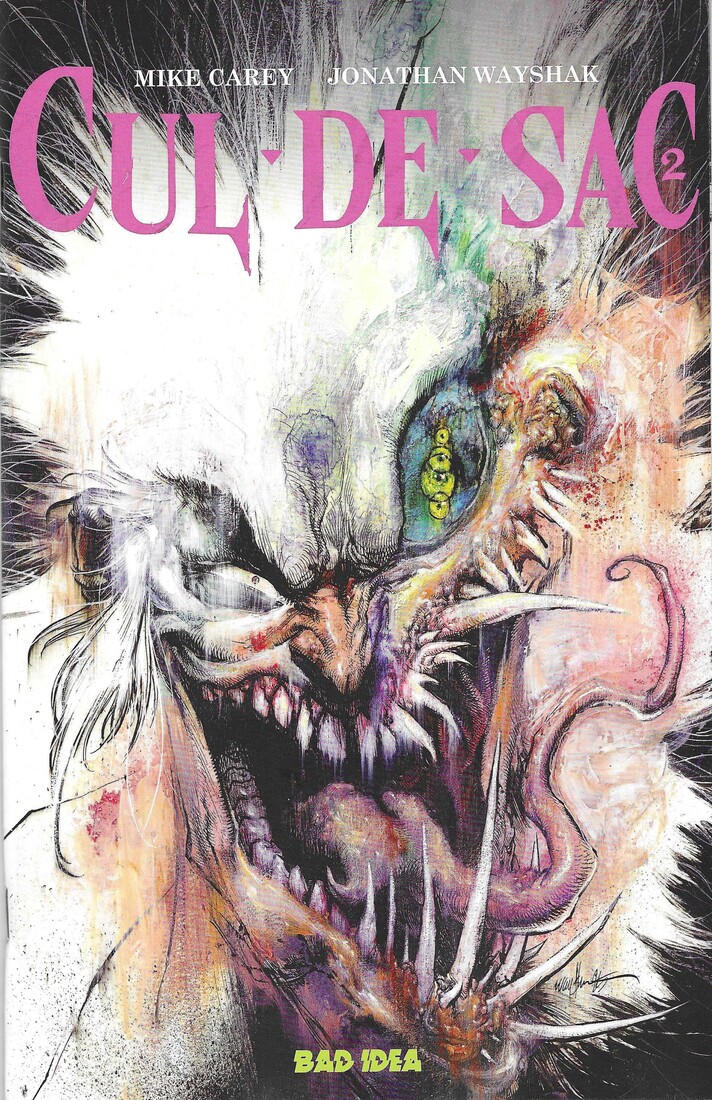
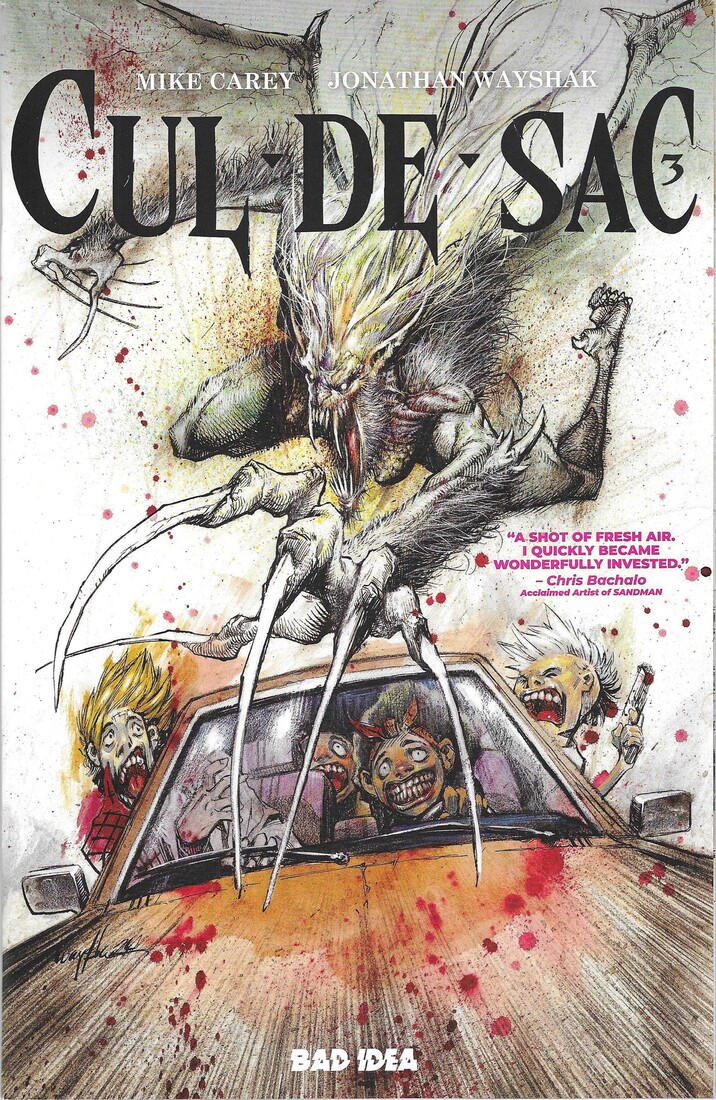

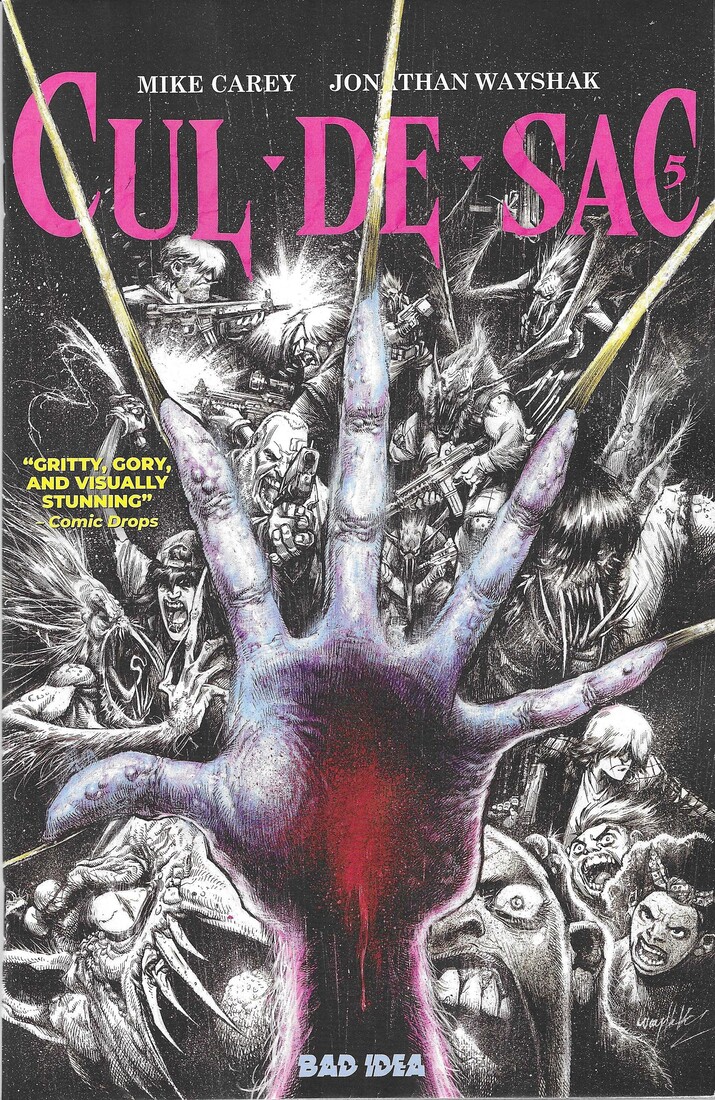
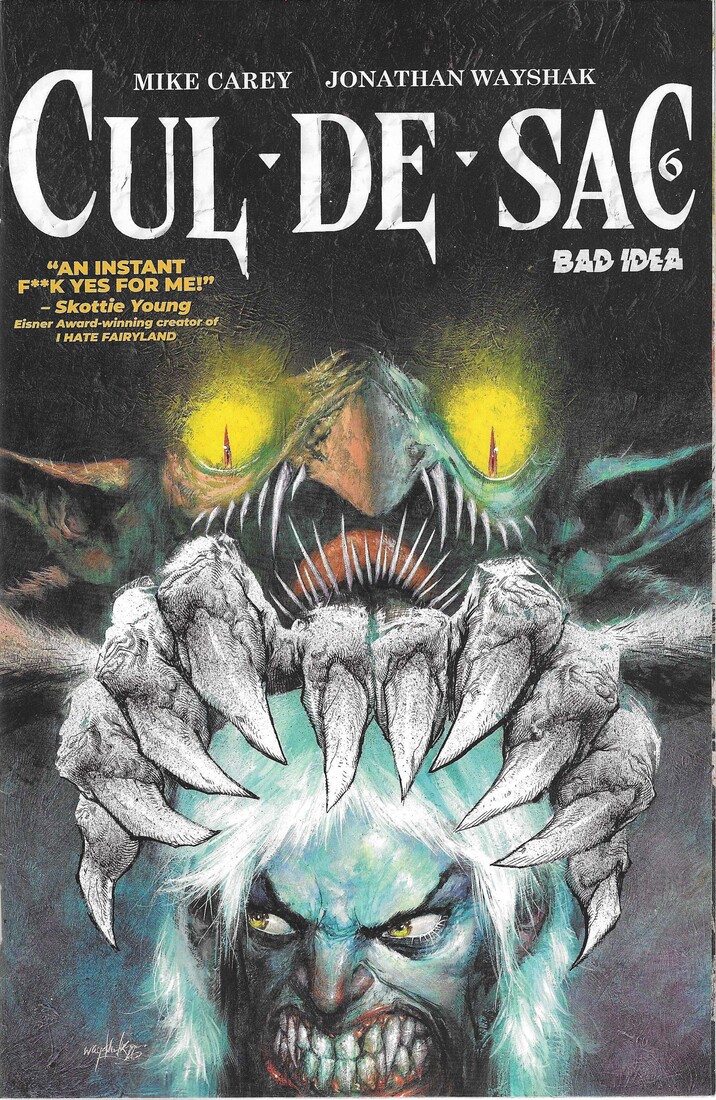
Cul-de-Sac is by Mike Carey (writer), Jonathan Wayshak (artist), and Tom Napolitano (letterer). It’s 6 issues, with various back-up stories (which I assume won’t be in the trade collection).  The story is 153 pages long, but the issues are of varying length — this story goes 30, 28, 28, 26, 21, and 20 pages long, and the back-ups make up the rest of the issues — but they all cost $5.99 each, which means buying all the issues will set you back $35.94, which is a bit excessive, as I imagine the trade will not be that much (and even if it doesn’t include the back-ups, that’s fine, as they’re fine but nothing special). This is, of course, from Bad Idea, which just keeps coming with new ways to annoy the readers. Good job, Bad Idea!
Over the years, I’ve read Mike Carey comics and often haven’t been too impressed. He has some decent ideas, but often his storytelling is just kind of bland, and that eventually overwhelms whatever decent ideas he might have. I didn’t hate him, but he didn’t excite me. Of course, recently he’s done some better stuff — Carey is in his mid-60s these days, so maybe he’s finally gotten decent? — which is pretty keen. Ghostbox was quite good, and so is Cul-de-Sac. Good times!
Issue #1 of this came out in August, and I gave it a brief review, but here’s the set-up again: there’s a group of vampire hunters who discover that several vampires are living in a suburb of Portland (Oregon, that is), so they head off to kill them all. Which they do. However, they didn’t know that these people weren’t actually vampires, but a separate species that kind-of sort-of resembles vampires if you squint a little, but are actually much more powerful than vampires. One thing they can do is reproduce, and at the beginning of the book, one of the moms takes all the kids — her two daughters and the sons of the other two couples — into the woods for their annual summer camping trip, but this time she tells them who they are. She does this in the dumbest way possible, so they’re freaked out, and her older daughter, Gail, tells her to leave them alone to process. 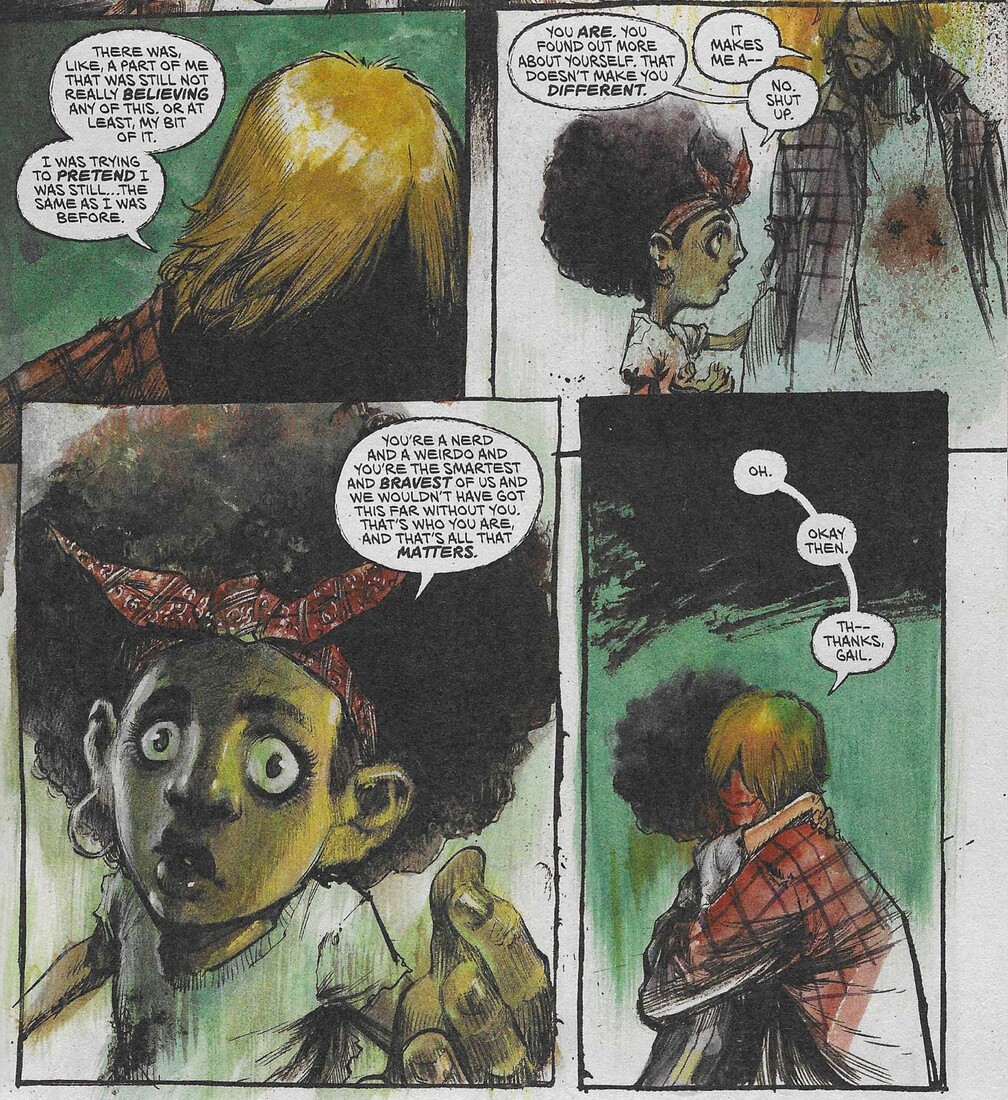 She does, and gets killed. They eventually return home and find out what happened. So they have to go on the run, because the vampire hunters are after them, now.
It’s a good hook, and Carey does nice work with it. The vampire hunters are working for a mysterious dude who, when he hears about the deaths, sends a mysterious, super-tough lady to clean things up. Jagger, as she calls herself, is very creepy and efficient, and she is, of course, hiding something from the vampire hunters. Gail finds a number on her mom’s phone that connects her to a dude in Texas, so that’s where they’re going. It turns out he’s a vampire, so the hunters get there first and set a trap, but he convinces them that Jagger and her group are much, much more dangerous than the kids, and perhaps they’d like to defend the children instead of killing them? There’s a lot going on, in other words. Carey does a good job unspooling the story, as the surprises aren’t really that surprising, but he knows how to get to each beat well, with some nice misdirection thrown in that isn’t confusing but does keep us on our toes a bit. The kids don’t know what they are, so they slowly discover what they’re able to do, and it makes the more confident and stronger. Carey does a good job giving each of them interesting personalities, so they play off each other well. Gail and one of the boys, Robert, are a bit older and a bit more mature, while Gail’s sister, Sam, and the other boy, Callum, are a bit younger and wilder.  Callum, for instance, embraces his new lifestyle whole-heartedly — once you eat like their species eats, you can’t eat “regular” food, and Callum is fine with that — and believes that he’s an indestructible action star, which gets him in a bit of trouble when he comes across someone like Jagger, who’s very good at her job. Sam is horrified by what she is, but she can’t keep it out of her life, much to her chagrin. Gail and Robert try to keep them on track, but as anyone who’s watched younger kids for even a little while, that’s a tall order. Carey does pretty good work with the other characters, too — Gallant, the vampire they’re trying to reach, is a bit of stereotype, but he’s fine, while Carey gives the vampire hunters different personalities, too, and the most important one gets a bit more page time, so we know a bit more about her. Even Jagger is more interesting than your standard evil person, so that’s nice. Carey does bring the story to a somewhat satisfying conclusion, but it’s also clear he has more in mind for these characters, so it’s important to make the reader interested in them, and he does a decent job with it. As with most of Carey’s work, it’s not the deepest comic in the world, but the writing, at least, is pretty good.
I mentioned in my review of issue #1 that Wayshak has a Sam Kieth vibe to him, and I stick by that. I still don’t know what Wayshak did before this comic, but it’s impressive to see his command of the page and of the characters. He breaks panel borders often but cleverly, as it never seems like he’s doing it just to be showy but within the structures of the storytelling. His designs are great — his vampires are weird and scary and unpleasant to look at when they become “monstrous;” when they’re just human-like, they look like humans, but they shift nicely to monster-mode. He uses a lot of different styles very well, which makes the book more interesting. He uses simple lines in some places to highlight some of the starkness of what’s on the page, but usually he uses a lusher brush to add texture to each panel, and he hatches and colors “outside the lines” a lot to add some chaotic elements to the art.  The book veers from black and white to color, and Wayshak does a very good job with the coloring, using warm and cold colors to nice effect when they’re called for. He has a loose, slightly cartoonish style, too, which works most of the time. The characters react very emotionally to a lot of things, and Wayshak does a good job distending their faces as the shit continues to hit the fan. The one issue I have with his work is that the kids’ heads are oddly big. He does a good job making them look like kids — not small adults, in other words, which sometimes happens — but their heads are out of proportion with their bodies. It’s … weird.
Still, this is a gorgeous comic, and Carey’s story is pretty compelling. It’s clear he has more things to say about these characters, so it will be interesting to see where he goes with them. For now, check out the trade when it comes out!
Rating: ★ ★ ★ ★ ★ ★ ★ ★ ☆ ☆

I started picking up Bad Idea comics recently, though I missed this one. They used to claim they would never collect their comics into TPBs, but since then they’ve released one or two. Not sure if new stuff will be collected, so for now I’m buying singles.
Was this one also printed on that soft newsprinty paper? I’m not sure it fits all of their books– a lot of modern art and coloring is clearly meant for a screen/glossy paper. Your scans look neat, though.
Yeah, they’ve reversed course on trades, but I got this in singles because the first issue just happened to show up at my store and I wanted to check it out, and then I was hooked, dang it!
It’s a very rough paper, but it really works for the art. I agree that matching the paper to the art can be tough, but this looks (and feels) really neat.