

“They know what they want, they sing your name and glide between the sheets”
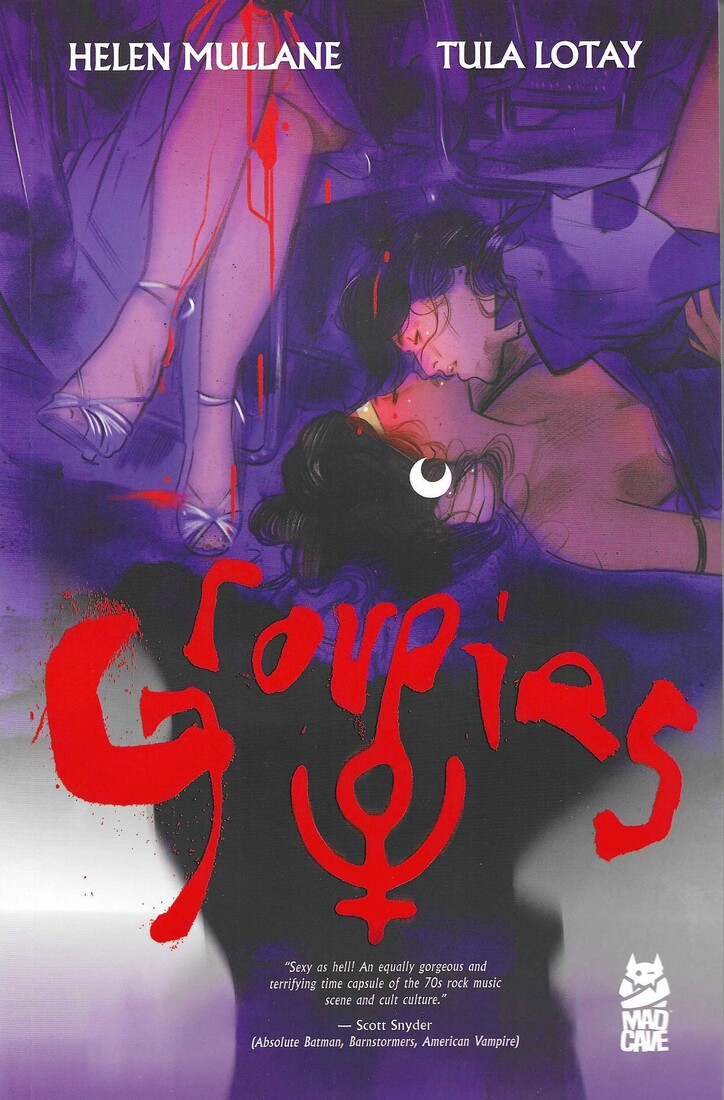
Groupies takes the absolute hoariest of clichés — a rock bang selling their souls to Satan and the groupies who love them — and spins it a bit differently, and that’s not bad. Helen Mullane and Tula Lotay are the writer and artist, while Dee Cunniffe (and Lotay) and Richard Starkings and Tyler Smith provide the coloring and lettering. 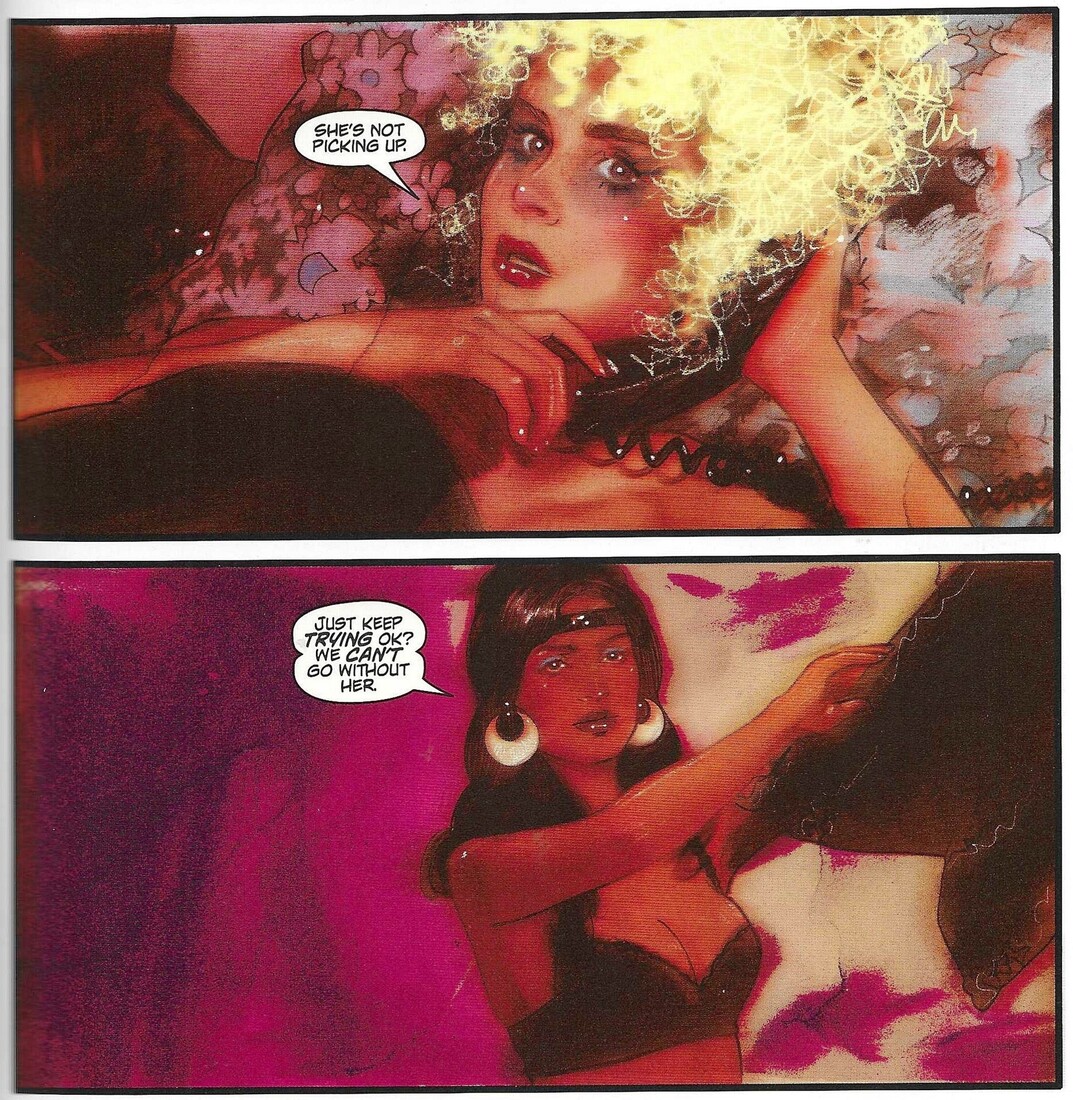 It’s edited by Will Dennis, published by Mad Cave (it was originally on Comixology), it’s 130 pages long, and it costs $19.99. Let’s check it out!
Mullane sets the book in the hedonistic 1970s and tells the story from the point of view of the groupies, which is a smart move. It’s “empowering” to a degree, because it does give them some agency in their fate, and in these kinds of stories, the women are usually just stereotypical sacrifices, and Mullane doesn’t want to go that route. Each chapter of the story is narrated by a different woman, so we get different points of view and opinions in each chapter, as they don’t all like each other even though they’ve known each other a while and are united in their quest to, you know, fuck all the rock stars they can find. Early on, they hook up with The Moon Show, a band just on the cusp of stardom, which rockets to fame throughout the book, mainly due to sacrifices to a dark god. I mean, that’s the only way anyone becomes famous, isn’t it? Mullane does a good job showing how the girls slowly begin to realize something is wrong and then what’s happening. Early on, one of their friends does not join them on the road, and they think it’s because she’s just not interested, but we know it’s because she’s dead. Later, other women start disappearing, and the main groupies start getting suspicious, as they should. Mullane doesn’t hide the fact of what’s happening, but she does ground it within the regular human emotions of jealousy (one girl is made at another because she bagged the lead singer, who the first girl wanted) and a desire for fame. Plus, all the girls are on different kinds of drugs, so of course they don’t really trust their senses. 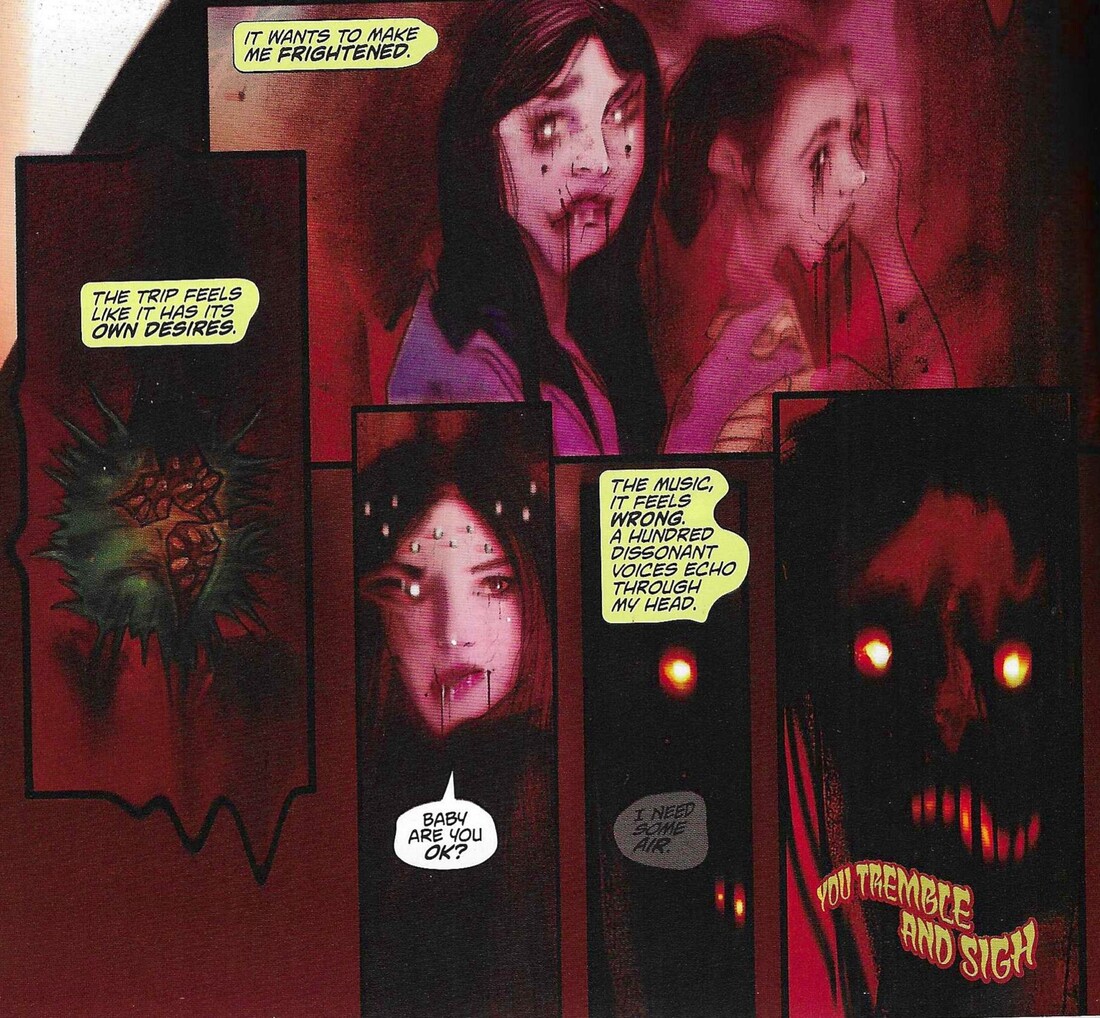 So, again, while we know what’s going on, Mullane does a good job at giving the women good reasons to not believe it. Plus, I mean, how many Satanic cults do you come across in any given day? It’s not something you’re going to believe easily. We also aren’t sure how much the band knows — they’re shits, of course, because they’re modeled on any number of scumbag rock bands from the 1970s (Led Zeppelin, obviously, but you can’t swing a dead groupie in the 1970s without hitting a bunch of scumbags playing instruments and singing such charming lyrics as “I took her love at seventeen, a little late these days it seems”), and Mullane does a decent job giving them personalities, so they’re more charismatic than just your garden-variety scumbags, and we can believe both that they’d get these women but also that they’d treat them poorly and also that they might be able to get famous without supernatural help. The mystery keeps the plot moving, because it’s unclear exactly where it will go (I mean, we can guess, but maybe we guess wrongly!). It is a bit frustrating reading the comic, because the ladies, who are potential victims and a bit more sympathetic than the men, still do a lot of stupid things, which I know was par for the course in the Seventies, but it doesn’t make it any less annoying. The most interesting one is probably Vera Vicious, who narrates the second chapter (she’s the one who wanted the lead singer and is angry she didn’t get him), because while all the women don’t apologize for their actions, she’s the boldest of them all about what she’s doing, and it’s fun to see how she navigates the plot. The story is a bit too clichéd for my liking, but Mullane does do some things to make it more interesting.
I like Lotay, of course, but I do wish she’d do less horror-y kind of stuff, because usually the coloring is pretty murky, and her smeared art sometimes doesn’t come through as well. 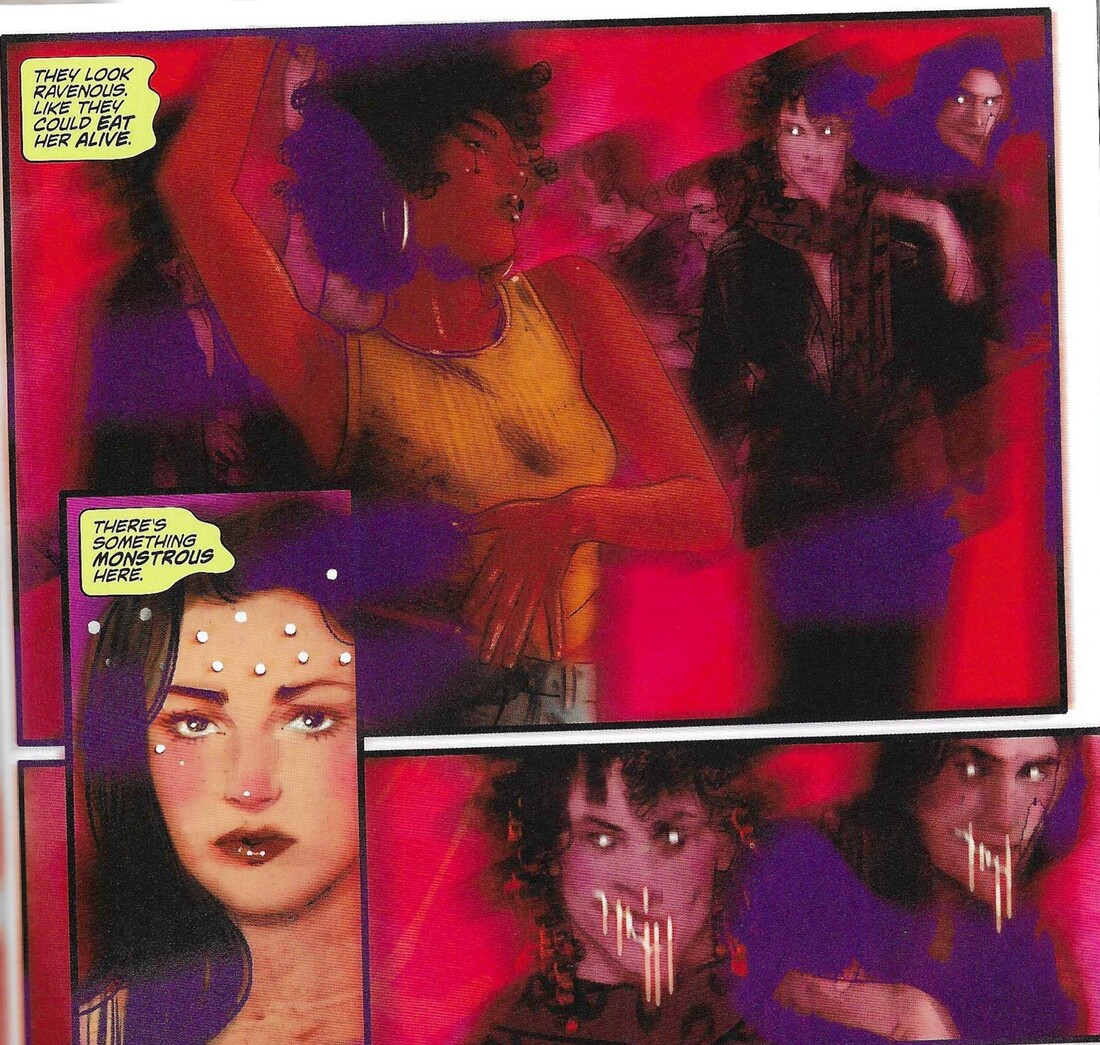 The last thing I read by her, Somna, had the same problem, while the previous thing I read by her, Barnstormers, worked a bit better because it was brighter. This is brighter than Somna, true, but when she gets into the horror stuff, it gets darker, and it’s occasionally difficult to see what’s going on clearly. She does some fun stuff — Vera’s electric blonde hair is amazing, for instance — and her style suits a weird, supernatural vibe, as she shows weird stuff happening in the margins that might be real or might not, and it’s pretty neat. When the ladies are experiencing the world in an altered state, Lotay bends the art accordingly, even shifting panel borders to make their viewpoint a bit weirder. The biggest problem I’ve always had with Lotay’s art is that her faces are often not expressive enough, and that’s true here, but weirdly, it works for a lot of the book, as the characters are often very blasé about the bizarre stuff that’s going on, so Lotay’s weakness doesn’t work against her. It’s only a few places where it seems like it would be better if we did get more expressiveness, but for the most part, it works with the tone of the book, not against it.
Groupies isn’t a great book, but it’s not bad. It takes a familiar theme and puts some interesting twists on it, but there are some problems with it. It’s always neat to see a weird supernatural thriller that doesn’t quite go where you think!
Rating: ★ ★ ★ ★ ★ ★ ½ ☆ ☆ ☆
