
[Greg put this column up on 16 October 2009, and of course, given the subject matter, he got a lot of fun comments, including Bill Reed offering to fight people who don’t like Flex Mentallo. Enjoy!]
Here’s another parlor game for you. This one kind of grew out of an idea some friends were kicking around on the CBR forums.
The question put to the floor was, what makes something a “cult” hit, as opposed to being just a clear success or failure?
We were primarily talking about movies, but I thought it was an interesting exercise to apply the idea to comics, as well.
Of course, if you apply the term as it’s commonly used to describe movies or television, well, all comic books are “cult” comics. Especially superhero comics — it’s a narrow genre, there aren’t that many people who read them, and the ones who do read them tend to be really devoted and knowledgeable. As far as the layman is concerned, technically DC and Marvel’s entire output is to a cult audience.
So we have to refine the definition a little bit. Here’s what I came up with as characteristics of what I’d consider to be a “cult” comic book series.
In its initial appearance, the series was a short-run commercial failure. Whatever time limit you choose is arbitrary, but for our purposes let’s say that to be considered a ‘cult’ series, whatever its original incarnation might have been, it didn’t sell in big numbers and ran two years or less.
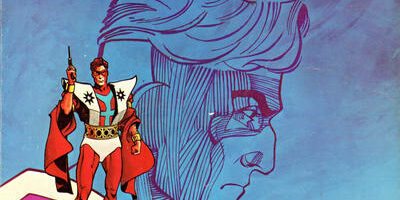
Let me walk you through a test case. Take Archie Goodwin and Walt Simonson’s Manhunter.
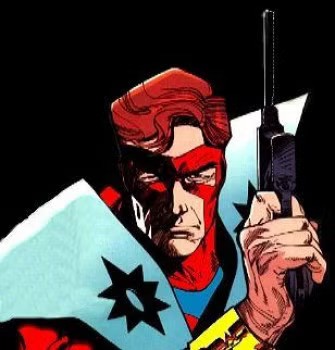
It started as a revival of a Golden-Age B-lister, an obscure little feature from Joe Simon and Jack Kirby that ran in Adventure Comics during the 1940s.
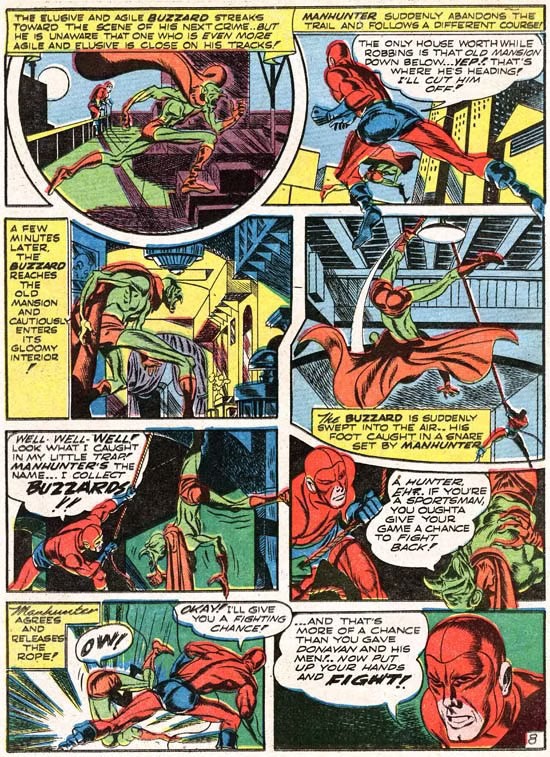
The ’40s Adventure Comics version would be called a moderate success, I guess, though the Simon and Kirby Manhunter was never a major player. The feature ran as a backup from #58 to #92 or so, as nearly as I can figure, usually running 8 or 9 pages per issue. But the Goodwin/Simonson revival turned into something else entirely.
Though, as I said, it was not a huge success initially. The revived-and-reimagined Manhunter started as a backup feature in Detective #437, and ended in #443. Six backup 8-page stories and one lead feature (shared with Batman) that clocked in at 20 pages.

By any standard measure it was a commercial failure. Didn’t really bump the Detective sales numbers up, didn’t get great word of mouth on the book … pretty much was a blip in the history of the title.
But it was admired by people in the business. I think that has to be the second criterion — a “cult” series should be, despite its commercial failure, a word-of-mouth hit among fellow professionals. Manhunter reputedly blew away every freelancer that saw it in the DC offices at the time. Its writer, Archie Goodwin, was routinely named as “the best writer in comics” by his peers and three of the strip’s seven installments won Shazam Awards, as well as a couple more being bestowed on Archie Goodwin for overall Best Writer as well as naming Walt Simonson as Best New Talent in 1973 and 1974. Those were peer awards, voted on by working comics writers and artists — the membership of the Academy of Comic Book Arts. They’re not fan awards.
What else? Well, a “cult” series should be continually discovered by generations of new readers. It doesn’t die off.
Manhunter got canceled after seven installments. But it was such a legend that it was collected in trade paperback just four years later, in 1979, which was really unprecedented back then.
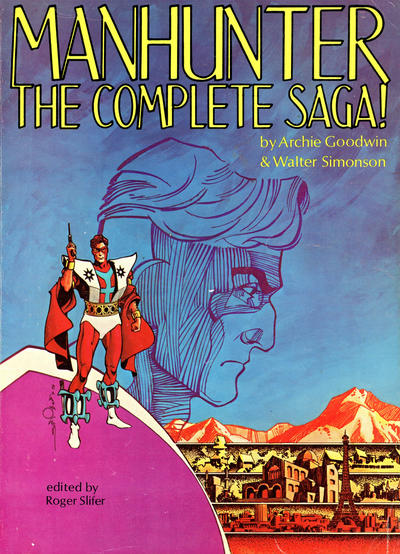
It was collected again in the 80’s.

And again in 1999, this time with some added material.

And I believe that 1999 edition is still available. The book’s still not a hit, not doing big numbers or anything — but it’s there, enough of a perennial that it’s worth it to DC to keep it in print.
What else? Well, it should be influential. I think Manhunter certainly qualifies there. Pop quiz — how many other superhero comics have done espionage, ninjas or clones since 1974?

Yeah, exactly. I don’t for a minute imply that the works that came after were stealing from Manhunter, but I’m talking influences here.
And finally … in comics, a “cult” success means people keep trying to recapture the magic. And usually failing.
No one has been able to duplicate whatever it was that made the Goodwin-Simonson Manhunter work. But that doesn’t stop them from trying.

But it takes more than just bringing the character back.
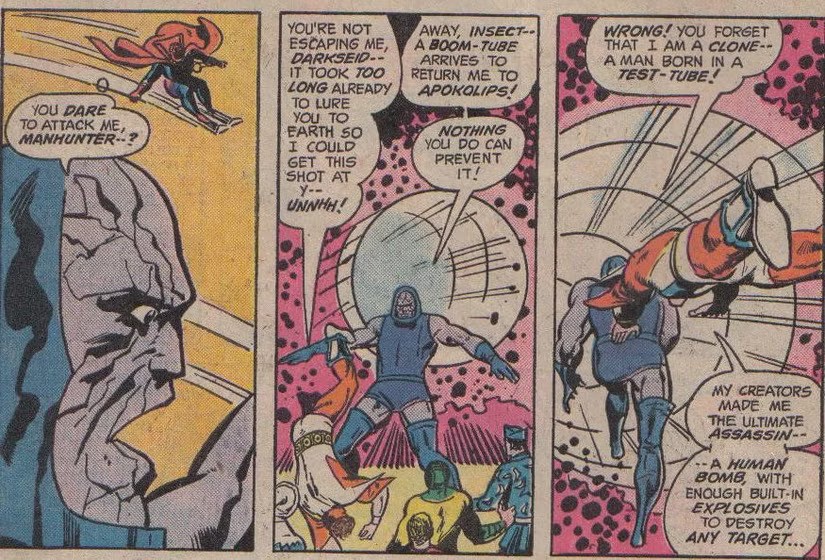
Or riffing on his name and costume.
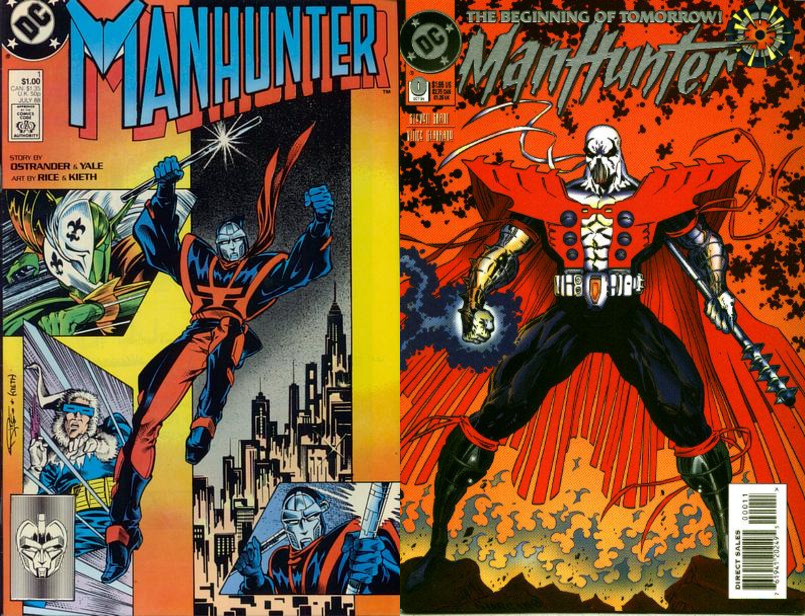
Even a version done as a straight-up homage with the blessing and permission of Walt Simonson fell flat.
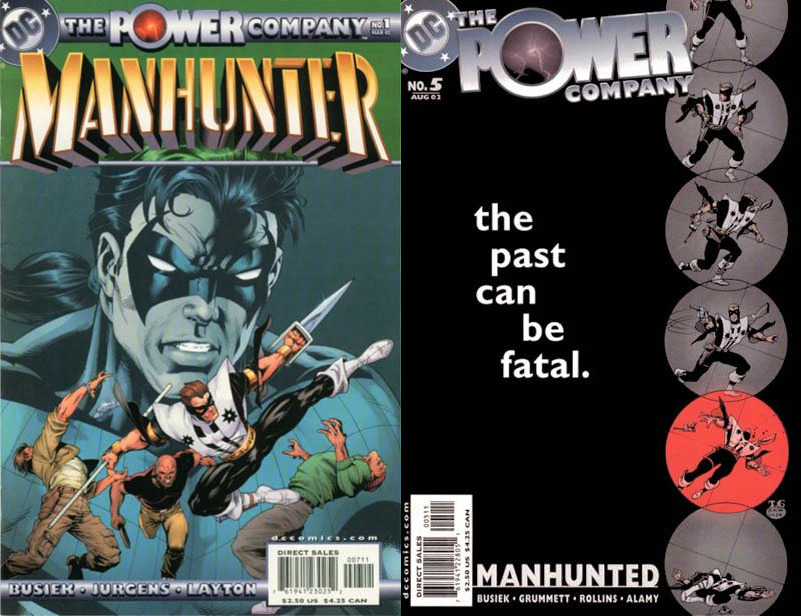
What’s interesting is that Manhunter’s most successful incarnation to date is a revival that goes nowhere near the Goodwin and Simonson character.

Kate Spencer’s Manhunter has nothing to do with Paul Kirk’s — not even as a ‘legacy’ character, unlike DC’s other tries. I think that as a result of that decision to make a clean break, it is the most successful version of “Manhunter” that DC Comics has ever done — because it goes off and does its own thing. If you include Birds of Prey then I think Kate Spencer almost has more pages recounting her adventures than all the other iterations combined. (Kate’s book ran 38 issues. Her closest runner-up, Mark Shaw, only got 24 … Chase Lawler got 14. And Paul Kirk never even got to headline — he was in seven issues of Detective and his clones were in a couple of different team books, Secret Society of Super-Villains and Power Company.) At this point I think Kate Spencer’s page count even eclipses the original Golden Age Manhunter’s, the Simon and Kirby version.
And yet that’s the one that’s usually referred to as having a “rabid cult following,” or being a “successful failure,” or all the other things one usually ascribes to things that are “cult” hits. Go figure.
*
I picked Manhunter because it’s a favorite of mine and I already knew most of the stats, but you can play this game with any number of other short-lived-but-beloved comics series.
For example, just pulling one out of a hat, I think DC’s Prez might well be a candidate for “cult” status.
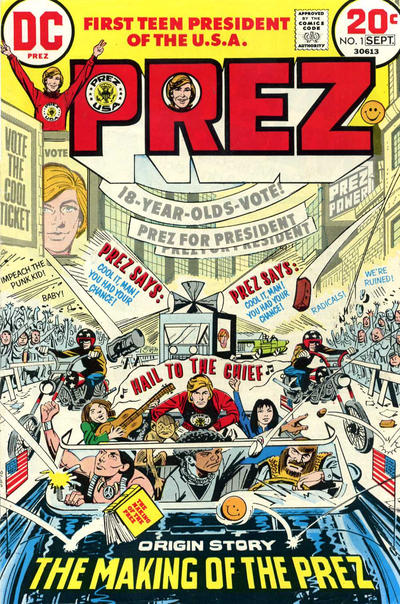
Objectively, the book was a dismal failure, canceled after four issues. And the issues that were published were not really very good.
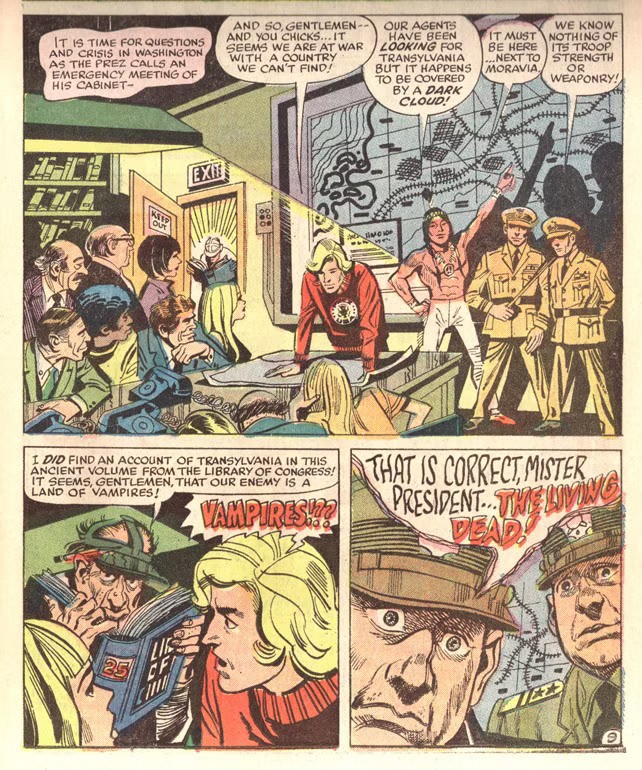
But for some reason, almost forty years later, the title has a certain cachet among comics historians. People still know the book and talk about it. It gets blogged about quite a bit.
And professionals keep going back to that well. Neil Gaiman did it in Sandman …

… and here it is again in a revival special from Vertigo, this time from Ed Brubaker and Eric Shanower.

There’s something there in the original that people are still latching on to. I don’t know that the series meets ALL the criteria I laid out above (Is Prez influential? Doubtful.) But I think it hits most of those marks. [Edit: This was written before DC tried again, in 2015 with Mark Russell and Ben Caldwell. The cult classic lives on!]
One more example. This one I think is inarguable. Wally Wood’s witzend.
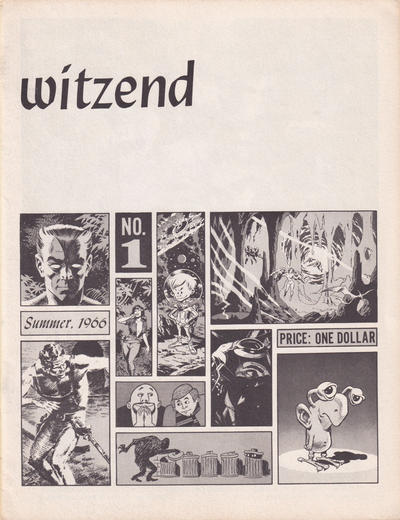
This started as a self-published anthology project from Wally Wood and several of his studio friends, and served as the launching pad for all kinds of stuff. It’s occasionally cited as the first of the underground comics, though I think it has much more in common with “ground-level” stuff like Star*Reach. In particular, Wood’s Wizard King is remembered as being a groundbreaking piece of fantasy comics work.
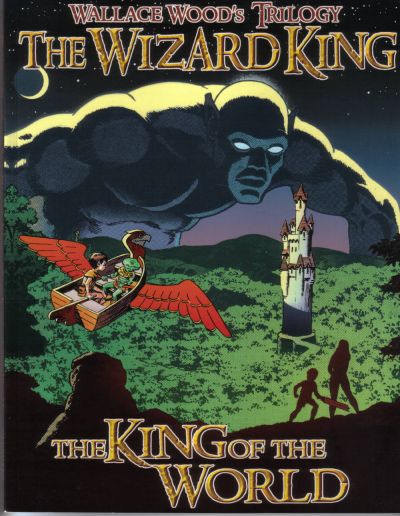
Again, it doesn’t meet ALL the criteria — but it hits a lot of them. In particular, witzend was an influence on a lot of people. Ralph Bakshi’s Wizards is very nearly an uncredited adaptation of Wood’s Wizard King.

(Some say it’s outright theft of Wood’s work but I wouldn’t go quite that far.)
The main point I wanted to make is that there’s a difference between “cult status” and “fondly-remembered flop.” For example, I think Chase was a cult series.

But Prowler, as much as I adored it, was just a failure.

I could go on. But I think you all get the idea … so let’s hear your picks. What are your nominations for the series that were …
… initially commercial flops …
… but beloved by professionals …
… continually re-discovered by new readers …
… can be shown as a clear influence on other work …
… and occasionally revived, but without success?
Talk amongst yourselves. Enjoy. And I’ll see you next week.

Manhunter:
I still have the Ostrander version. He (Ostrander) was on fire with Suicide Squad, Firestorm, Spectre, so I got this one too. It’s the least of all but still a nice read.
2009 Me had a lot of strong opinions. He apparently hated the Gaiman and Brubaker Prez follow-ups, whereas 2025 Me doesn’t even remember reading those. I did buy the TPB collecting all the Prez Rickard appearances, though.
I will also go to bat for Mark Russell and Ben Caldwell’s Prez, which I own in two formats, and am tempted to go for a third. Great stuff which got me in on the ground floor of Russell’s comic work. Wish it lasted longer.
Trying to think of a new answer to this question. Maybe Alan Moore’s 1963 books? Left unfinished, remembered fondly, with one or two attempts to bring some of the properties back since. Not sure it’s continually rediscovered, though.
I agree, Russell’s Prez was fun.
Re: “…Bill Reed offering to fight people who don’t like Flex Mentallo.”
Specifically threatening me with a paddlin’.
And at the risk of getting paddled, I have to say that my opinion of Flex Mentallo hasn’t changed in the intervening years…
I wonder if HTML works here.
Nope! Well, it was this: https://simpsonswiki.com/wiki/That%27s_a_paddlin%27
Flex Mentallo was appalling self-indulgent tripe. Not that I have strong opinions about it or anything.
I hated the Kate Spencer Manhunter. A prosecutor who decides “Well I couldn’t convict those obviously guilty meta-perps so I’ll just kill them” presses even worse buttons for me than most vigilantes do.
I thought the Secret Society of Super-Villains use of the Manhunter clone was decent, in concept, but they had so much turnover in creative people that it was always going to be doomed. It is, by far, the best story in that series. The Mark Shaw Manhunter series started out full throttle, with the battle with the assassin, Dumas; but, they never found a decent villain after that and John Ostrander lost sight of the action-adventure side of things. I had a long conversation with artist Doug Rice about the series and it was conceived to be an adventure romp, like those first 4 issues, then Ostrander got bogged down in character material, with Mark Shaw’s family and Rice got bored with things and moved on. The idea of a super-villain bounty hunter was pretty cool and the apprehension of Penguin and Captain Cold, in the first issue was awesome; but, we never really revisit that. Then, he got pulled into the mess that was Invasion and The Janus Directive and it was flailing, by the time they brought back Dumas. They brought him back after that Chase Lawler one was flatlining, then used him to good effect in the Kate Spencer series.
I would throw out The THUNDER Agents as having the kind of cult status that Greg talks about. Not exactly a commercial hit when launched, but the range of talent on it keeps people coming back to it and people try to recapture it, with the Paul Gulacy single story, in Omni Comix being the best, in my opinion (though I liked the copyright violation Wally Wood’s Thunder Agents, from David Singer’s Deluxe Comics, particularly the Raven and Lightning stories).
I’d also offer up some of Sam Glanzman’s work, especially The USS Stevens stories and The Lonely War of Captain Willie Schultz. The former were back-up stories in the DC war books, based on Glanzman’s WW2 naval experience, which then led to his autobiographical A Sailor’s Story. They then got reprinted by Dover Press. Willie Schultz was written by Will Franz and appeared in Charlton’s Fightin Army, about an American soldier, framed for a murder and court martialed, who flees across the German lines and hides out in a German unit, as he speaks fluent German (son of German immigrants). He then tries to prove his innocence and stay alive and not cause any Allied deaths. It got a reprint a few years ago. Add Sam’s Hercules, from Charlton, which was probably his best work, as an artist, in terms of pushing his artistic boundaries. It took a few issues, but the latter half of the series is filled with great baroque-influenced stylings, as well as the classic labors of Hercules.
In some ways I think Manhunter is too easy to access to be considered a cult classic at this point. It certainly is a classic, though. For me, part of what makes something a proper cult classic is the cachet it gets from being a bit hard to find. It takes some effort to track down, but the word of mouth is so good among the cognoscenti that people continue trying to uncover rare copies of their own. Flex Mentallo’s lack of a reprint for many years is exactly what made it a cult comic for me. Ditto with Miracleman for many years.
One of my current cult fixations is Paul Pope’s THB, which actually just got a collected edition after being serialized in super random, hard to track down single issues of various formats. It’s fun to check out and see how it meets a lot of the other criteria Greg laid out – in some ways, Pope’s stuff is kind of the 2nd wave of manga-influenced Western comics (after folks like Frank Miller, Scott McCloud, etc. brought some of those Japanese influences to the forefront in their work) but I also see how he influenced later cartoonists with his stuff. It’s quality stuff, too, and despite its unavailability it has continued to garner interest amongst pros and fans (and the occasional movie studio) for 30 years.