

[On 3 July 2015, Greg posted this column, in which he wrote about “comfort food” books, which we all have, I suspect. Not a ton of comments, but Diane Duane actually does show up to comment, and, surprisingly, Greg did not respond to her. Weird. Anyway, enjoy!]
It’s been the kind of bad-news week where I find myself eschewing new books, instead gravitating toward some beloved old favorites for the week’s bus reads. Comfort food.
To me the essence of comfort food reading is the pleasure of the expected. It’s the same reassuring feeling you get from seeing a favorite band play the hits. Just for fun, I thought I’d share a few of those familiar old favorites with you this week.
Nostalgia drives a lot of it, I suppose. I know there are a lot of other bloggers that get really misty when they look back on G.I. Joe or Star Wars or Transformers; but me, I’m about a decade older than those folks. What does that for me is original Star Trek.
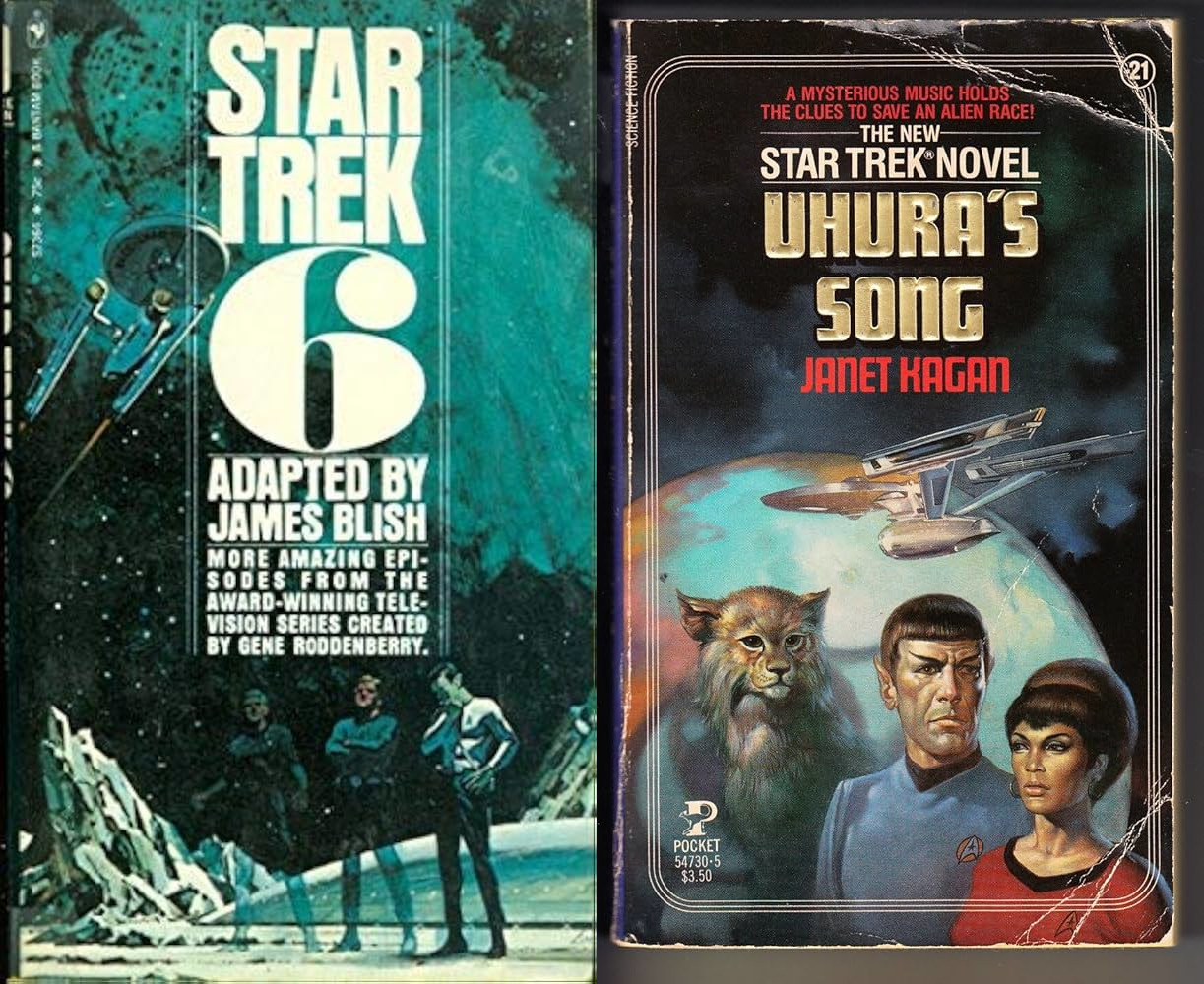
The thing is, though, I got the taste for Star Trek not from television, but from prose novels. First the adaptations from James Blish and Alan Dean Foster, and later with the original stories.
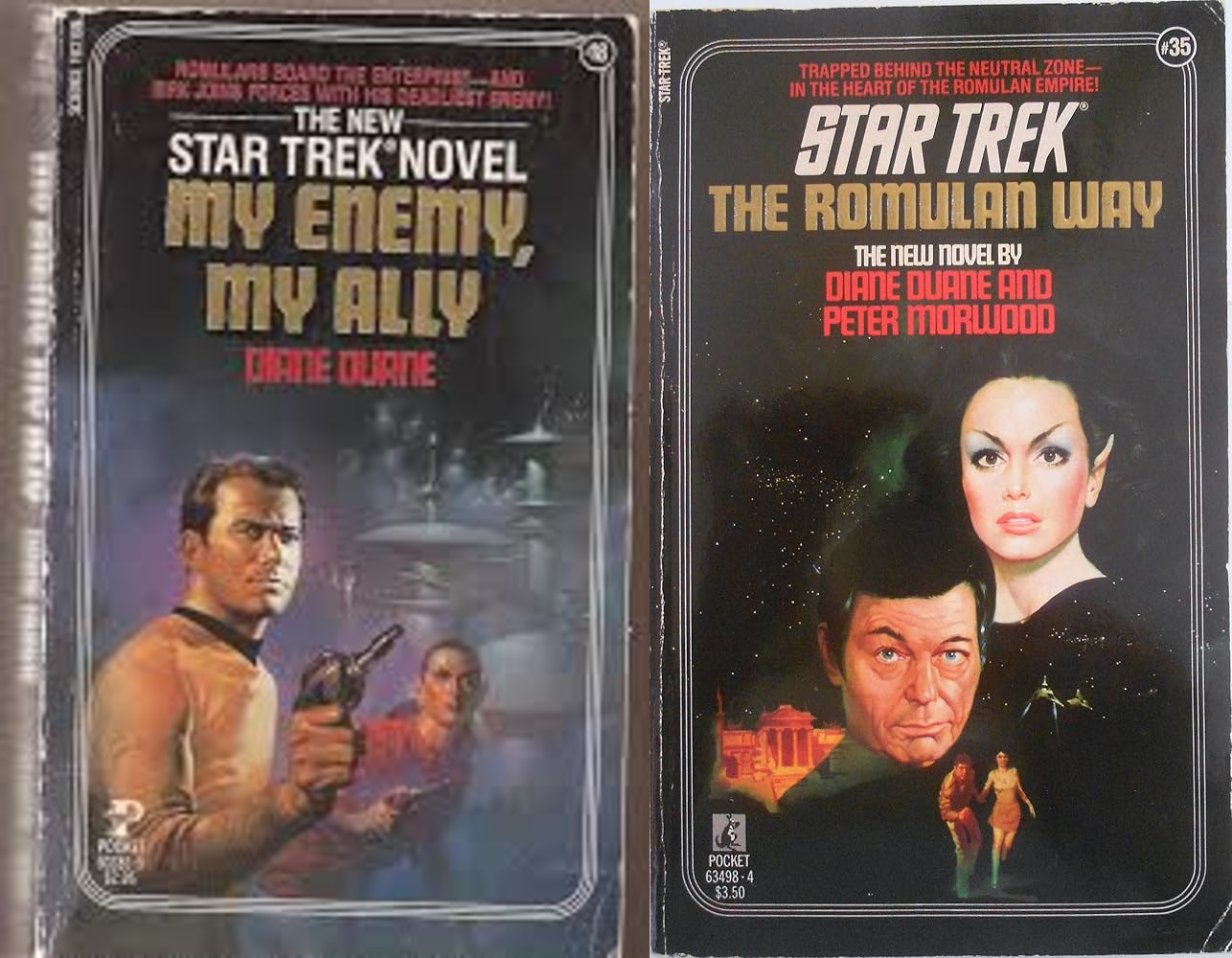
So when I am wanting to settle in with some old-school Trek, it’s the novels I think of first. Of those, the ones I never get tired of are Diane Duane’s. Particularly the books that have come to be known as the “Rihannsu” cycle, telling the story of the Enterprise‘s adventures following the defection of the Romulan vessel Bloodwing, commanded by Kirk’s old adversary Commander Ael t’Rllaillieu, and how the defection of Ael and her crew might very well provoke a new Romulan war. For the longest time there were only two — My Enemy, My Ally and The Romulan Way, that came out in 1984 and 1987 respectively.
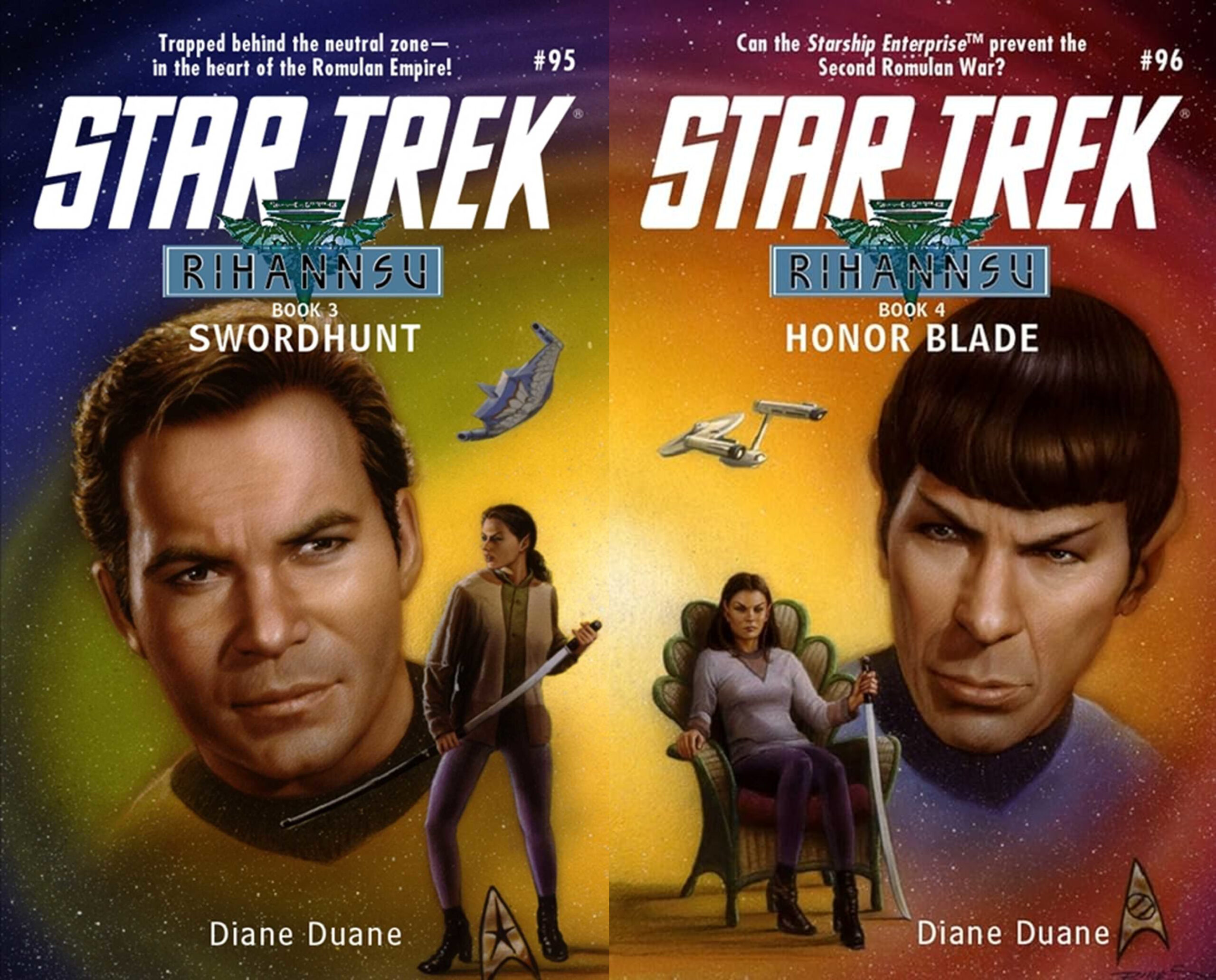
There were some loose ends but on the whole each novel is fairly self-contained. But then Ms. Duane gave us the rest of the story. Swordhunt and Honor Blade came out as separate books in quick succession in 2000, though they were originally intended to be one large novel.
These ended on a pretty big cliffhanger, with the Enterprise about to follow the Bloodwing into Romulan space to aid in a rebellion. Finally, six years later, Diane Duane wrapped it all up in The Empty Chair.
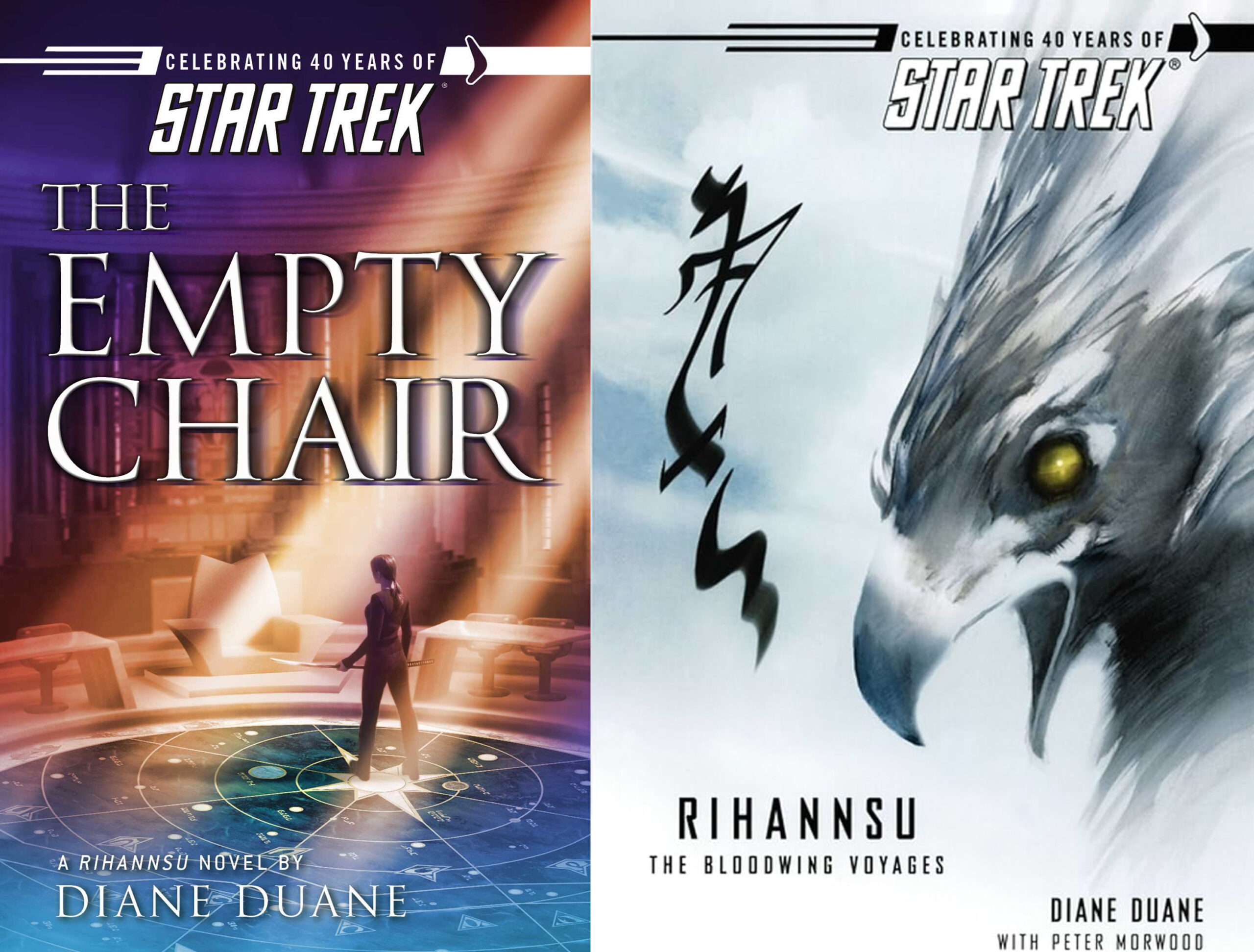
This came out in tandem with the omnibus edition Rihannsu: The Bloodwing Voyages, which restores the author’s preferred text of the previous books in the series. This week, for the first time ever, I settled in with them and read them all straight through in sequence, and they were better than I remembered. These books are an amazing tour de force. Just a great, sprawling, complex story with the best of the old Trek mixed with lots of new ideas, a staggering display of extrapolation and worldbuilding, and a fair amount of hard SF. Not for the first time, I wished these books had been used as the source material when the Next Generation et al decided to revisit the Romulans. It’s not like they didn’t have Diane Duane’s number, she wrote a script for the first season of TNG. Oh well, we still have the books.
Speaking of space opera, another beloved old favorite I broke out this week was Nexus.
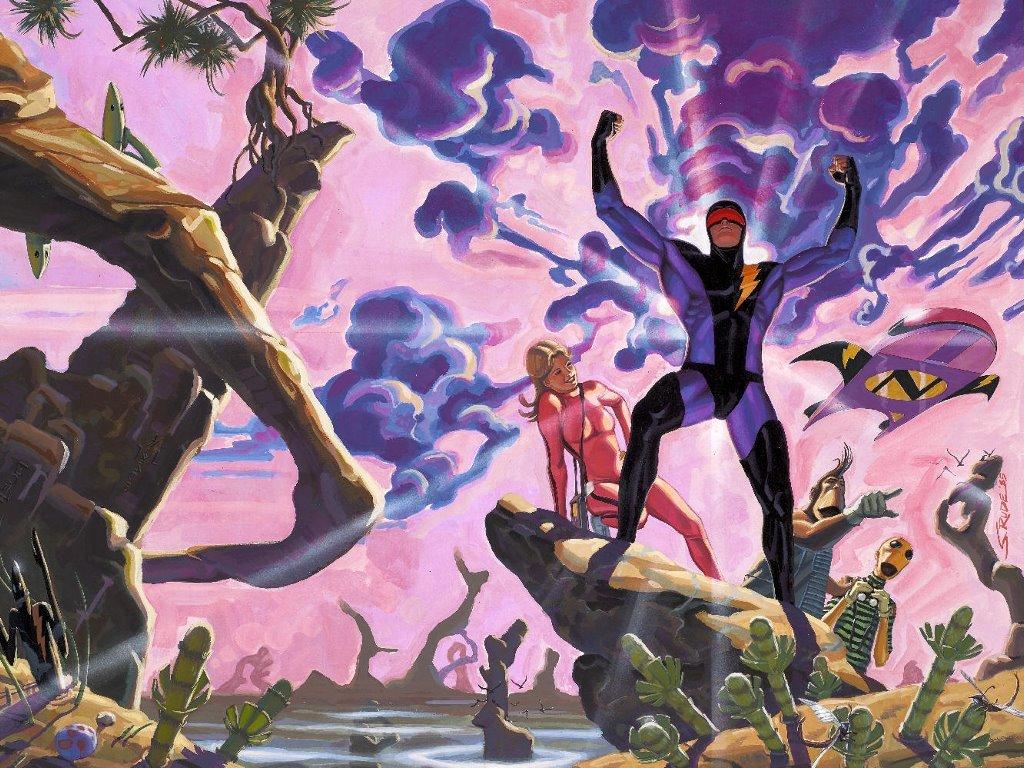
I had the entire original run and then lost it in a move in the 1990s — I suspect foul play on the part of an ex but I can never prove it — and have been smarting over the loss ever since. Although I was pleased to see the Dark Horse archive series, I knew I could never afford those.
But I could afford the ‘omnibus editions’ and believe me I was all over that action.
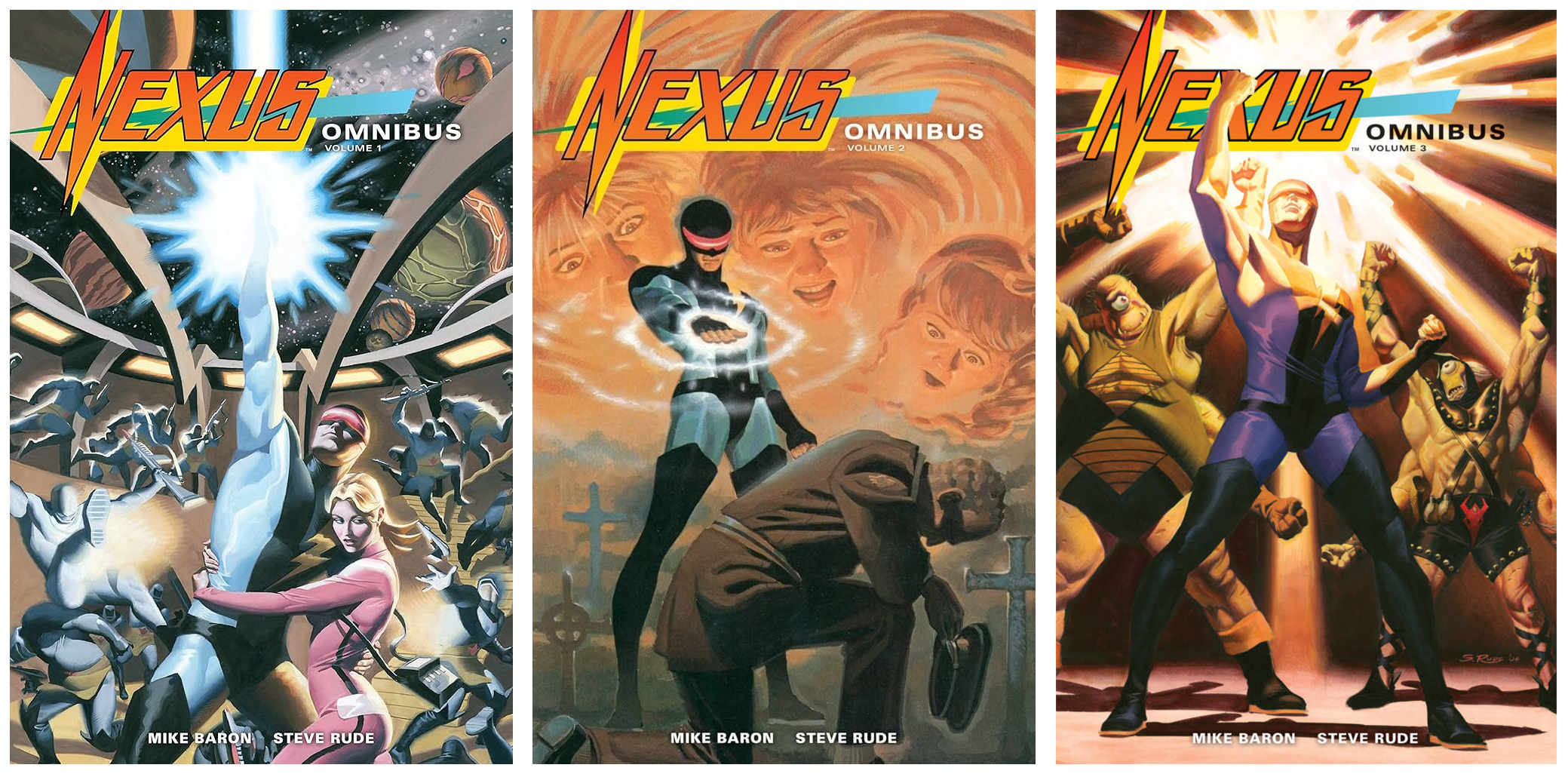
They’re the same price as a Marvel Essential or a DC Showcase, with roughly the same gloriously huge page count, but the dimensions are slightly smaller … on the other hand, these are in full color. I love that Dark Horse and IDW picked up all these great old First Comics titles. I also grabbed the Sable and Badger omnibus books IDW put out, but Nexus remains my favorite. I just never get tired of the demented universe Mike Baron created, and that Steve Rude visualized so brilliantly.
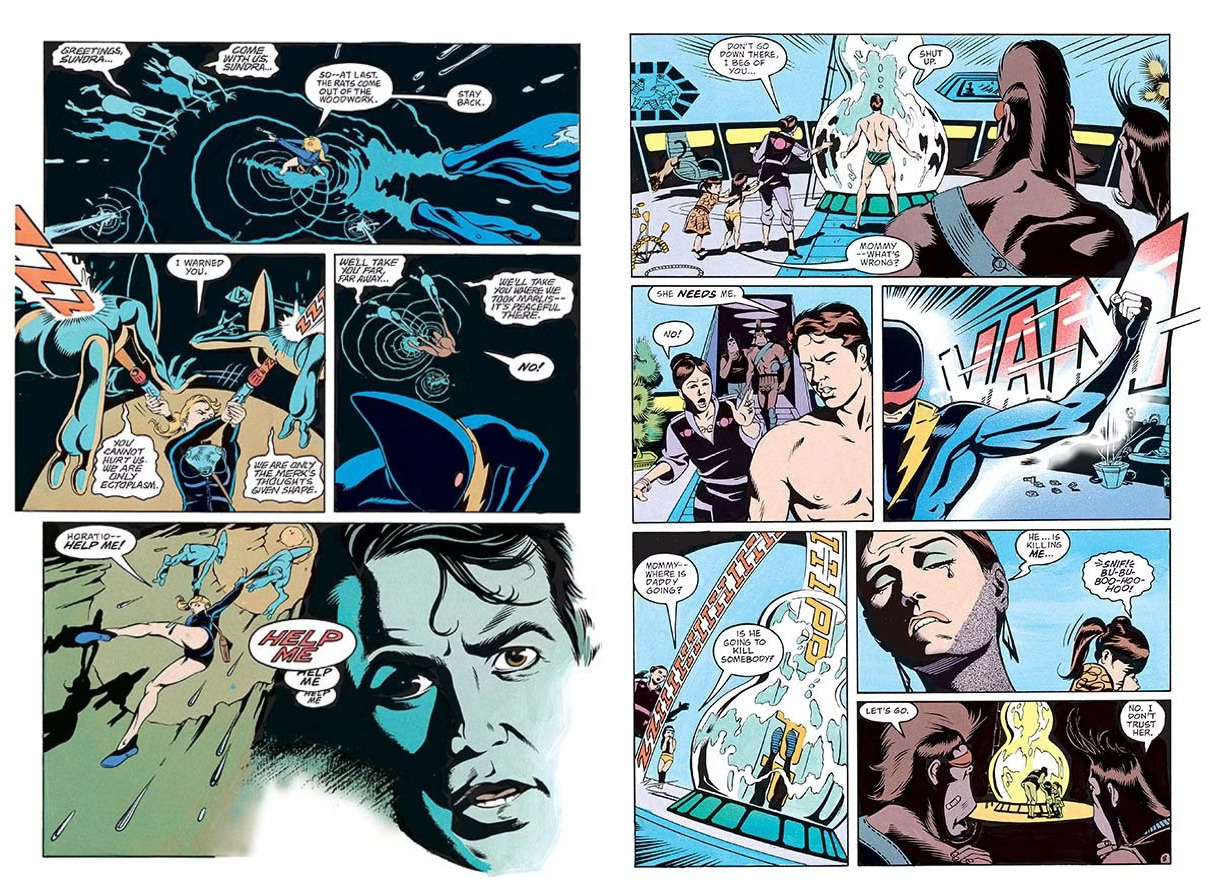
It was bizarre and funny and romantic and full of breakneck action. It was pretty much everything i want in a comic book plus a bunch more coolness I’d have never thought to ask for.
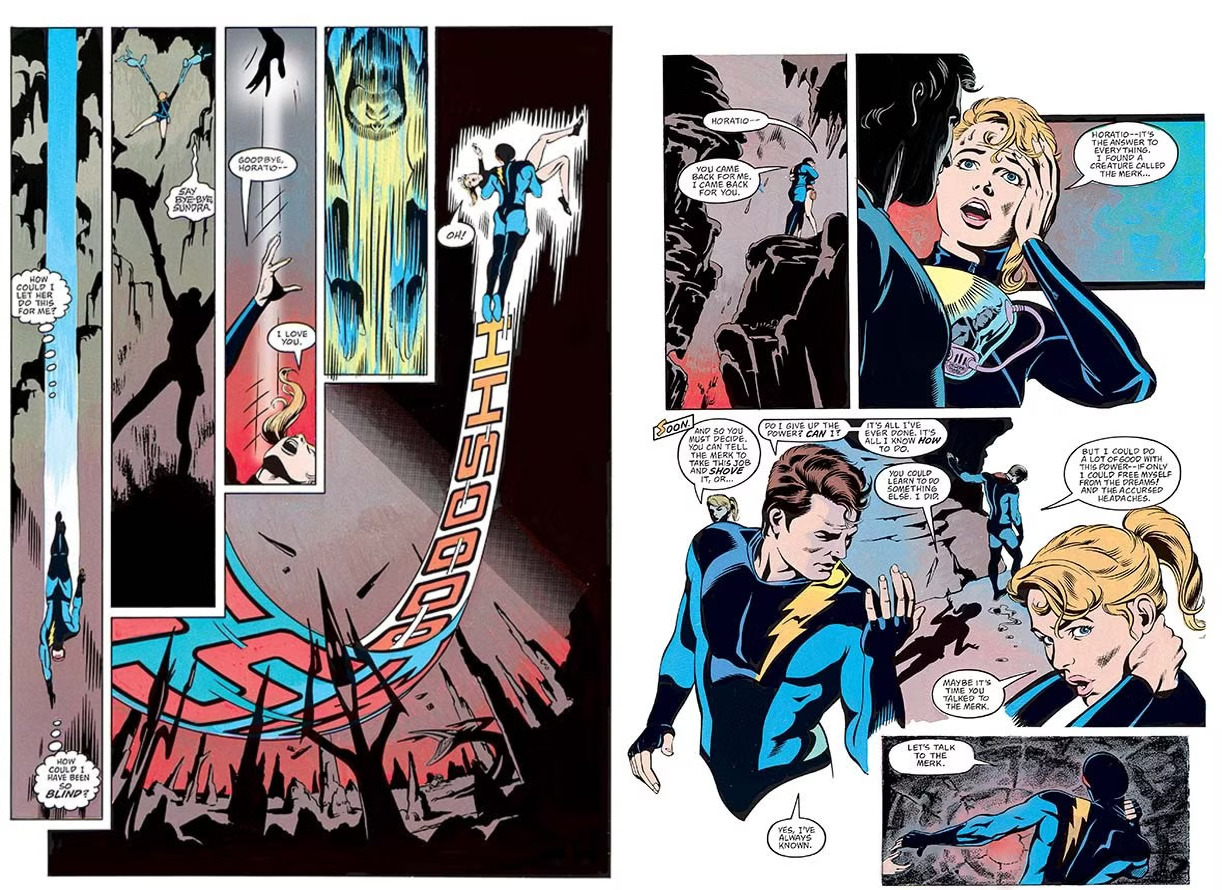
All of that AND Clonezone the Hilariator, the spacefaring stand-up comic.
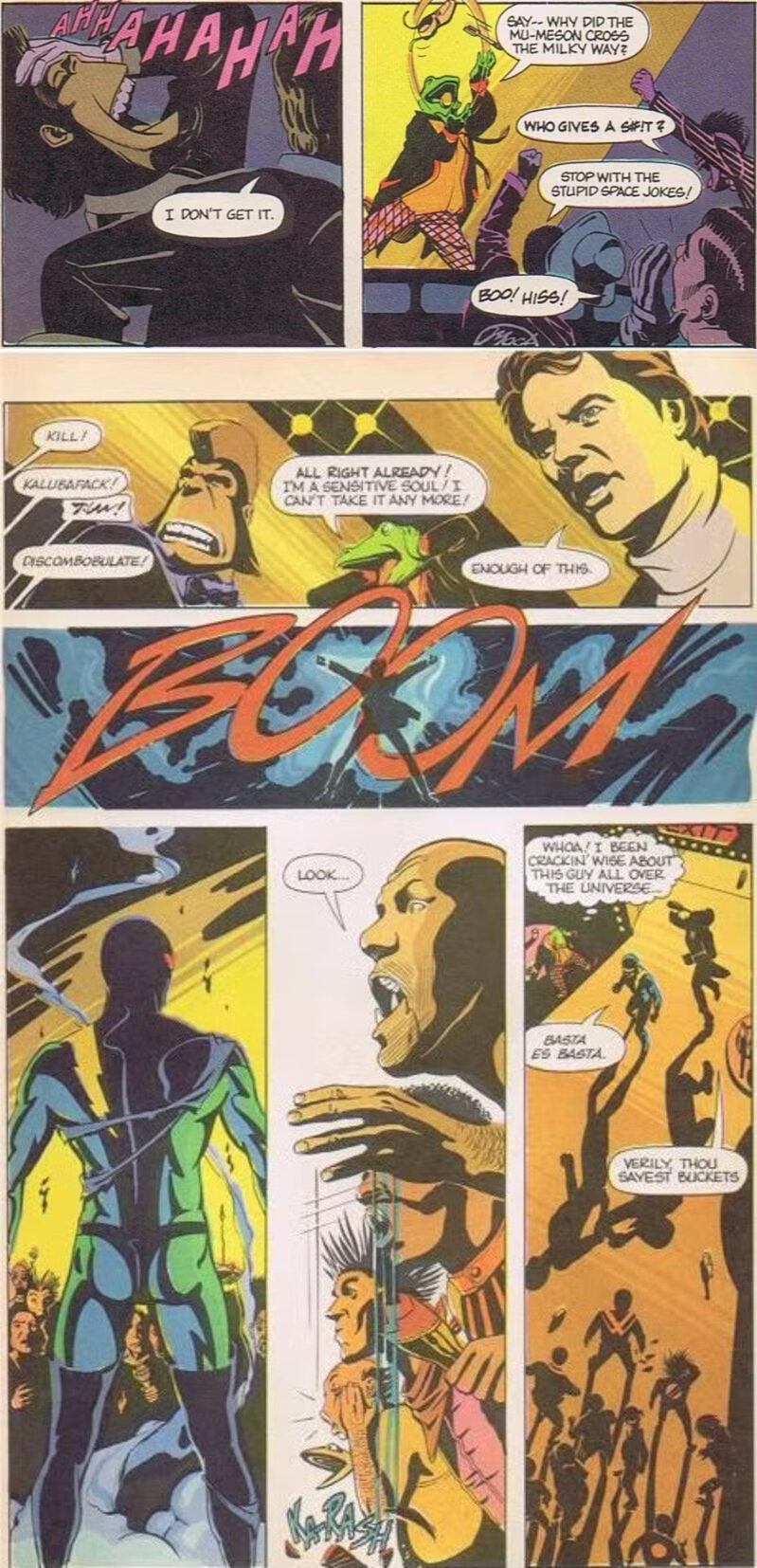
There have been many times over the years I’ve tried to write a column about the glory that is Nexus, but I never seem to get beyond “Jesus this is just f’n AWESOME.” Anyway, you can get the Nexus Omnibus editions used for really not very much at all and see for yourself. You won’t regret it.
And finally, this poster popped up on my Twitter feed last week and awakened a desire to revisit my favorite year in comics — Marvel circa 1975.
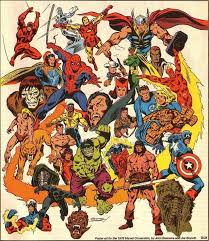
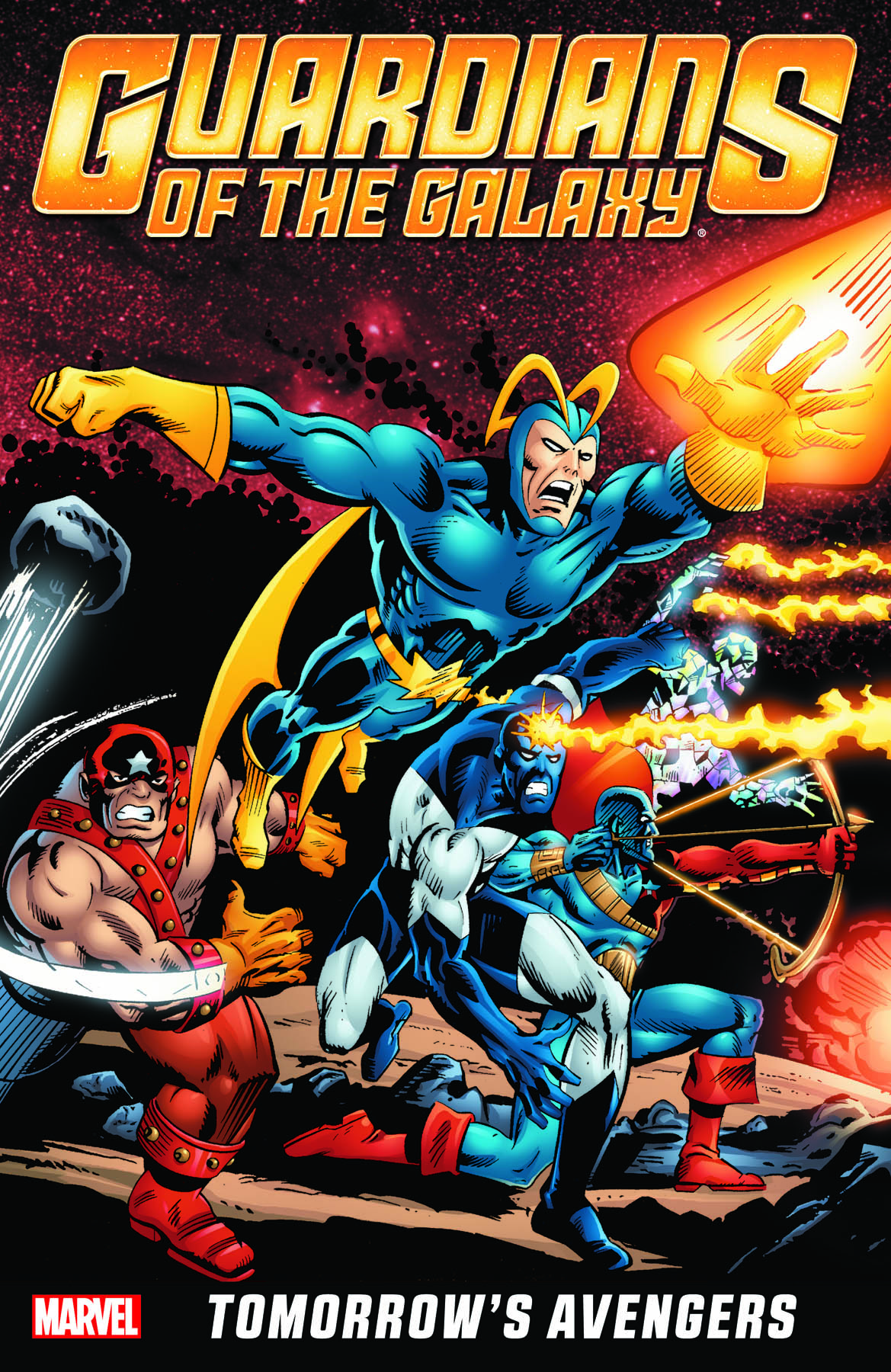
Part of it, I suppose, is that I was just exactly the right age, and I was completely high on our local store putting in a new comics rack, as I documented here. [Edit: I haven’t gotten to that one yet, but that’s the Wayback Machine link!] But it also was a hugely amazing and experimental year for Marvel — that was when Iron Fist and Howard the Duck got their own books, it was the year that gave us the All-New X-Men, and also when Black Goliath and the Son of Satan got their own titles. Then you had Englehart-Brunner-Colan Doctor Strange, and Steve Gerber tearing it up on Man-Thing and the Defenders, you had the original clone saga unfolding in Spider-Man and the Celestial Madonna happening over in Avengers, you had the premiere issues of Marvel Preview and The Invaders and the magazine Doc Savage. Don McGregor had T’Challa vs. the Klan and then Jack Kirby was back on Captain America for a hell-for-leather run up to the Bicentennial. I was in for all of it, and blessedly, it’s all pretty much available in paperback or sometimes even in hardcover. This week it was the Guardians of the Galaxy — the original ones.
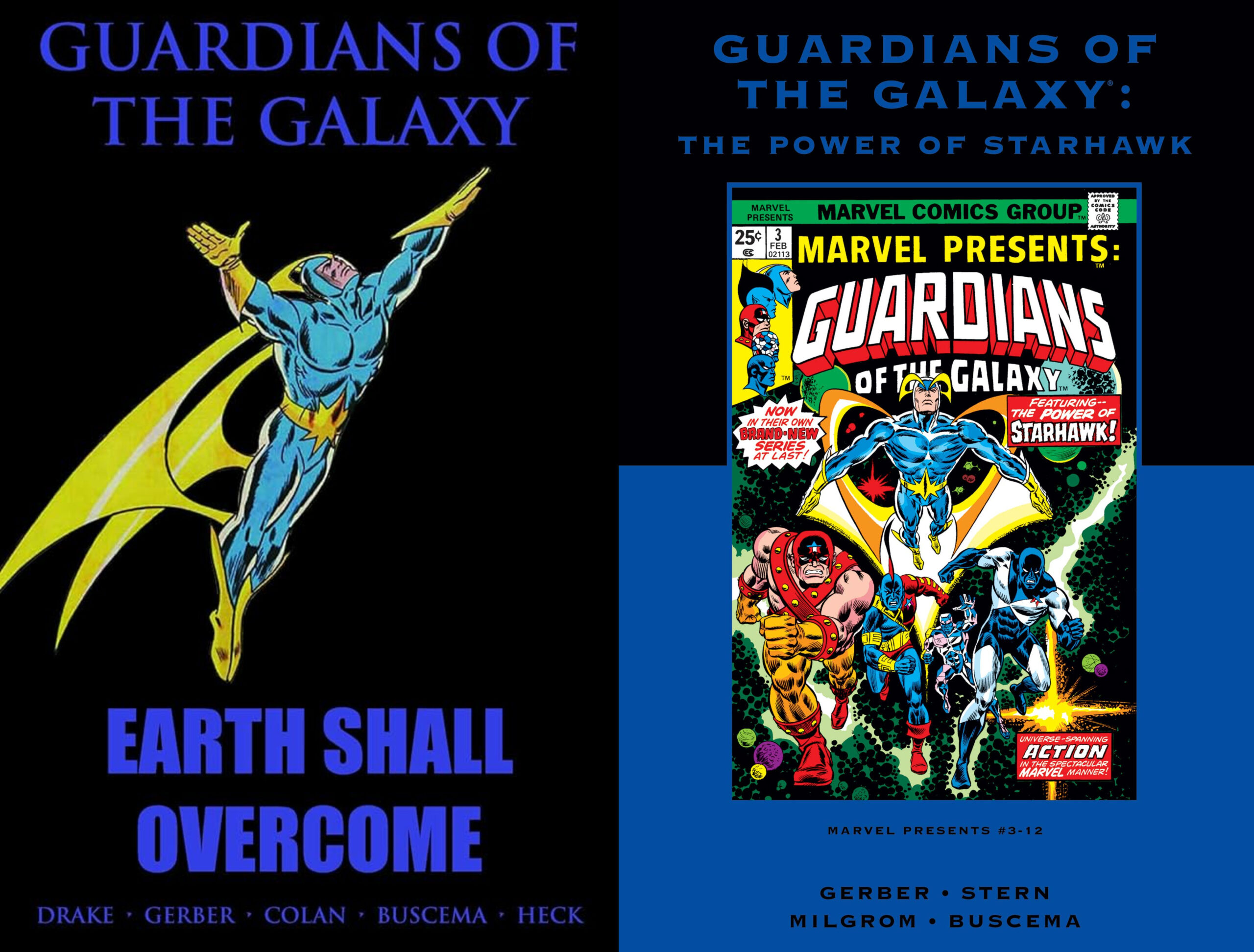
I have the two hardcovers pictured but you can find both volumes combined in the trade paperback Tomorrow’s Avengers Vol. 1.
I went for the Guardians because I was having a space opera kind of week but really you could point to almost anything on that wonderful Buscema poster and I’d be up for those comics, whether it’s Conan or the Monster of Frankenstein or Captain America. 1975 was the hell of a year.
Anyway, those are the old reliables I went for this week. Feel free to sound off about yours in the comments, and I’ll see you next week.

I know I’ve read My Enemy, My Ally and The Romulan Way.
Can’t remember a darn thing about either book, my memory is truly atrocious these days.
I agree on Nexus. I used Dark Horse’s archives (used) and omnibuses to fill out the gaps in my series. Wildly imaginative and yet written thoughtfully enough Nexus is more than “the Punisher in Space.”
Oh, yeah. I remember this one quite well. Within a few months I had snagged very reasonably priced copies of both the Rihannsu omnibus and Empty Chair – and then only got around to reading them about 6 years afterward.
But they are indeed excellent. And as Greg said, Duane’s vision of the Romulans should have been the baseline for their portrayals in TNG and later Trek shows and movies.
1975 was the year that really pulled me into Marvel, as a regular reader. Deep down, that’s still what I want Marvel to be like (though some of my favorite runs came later- Claremont/Byrne/Austin X-Men and Simonson Thor, to give two obvious examples). The height of Bronze Age Marvel, when it was at its most Bronze-Age Marvel-y. By a few years later (sometime in the early-to-mid ’80s, I think) that “Bronze Age Marvel” feeling was mostly gone, though it hung on longer in some series than in others.
I spoke of the 1975 material and Nexus, in the original, as well as my favorite Trek books (I’m not widely read in Trek). I thought Id share some other comfort books that I didn’t mention previously. First, the Diogenes Club books by Kim Newman, as well as his Anno Dracula series. They are meta-fictions, mixing all kinds of characters together, some he created, others he borrowed, in terrific pulp mystery adventures, with a modern sensibility. Anno Dracula features Count Dracula, staring in the Victorian Era, where he survives Stoker’s novel events and becomes the new Prince Consort to Queen Victoria and implements a repressive regime, with vampires is power within society. Another Victorian vampire character, Lord Ruthven, is the prime minister. Mycroft Holmes’ Diogenes Club is part of a cabal that opposes Dracula and an agent, Charles Beauregard, works with vampire doctor, Genvieve Deuodone, in investigating the murder of vampire prostitutes, in Whitechappel, by a killer known as Silver Knife, as vampires are vulnerable to silver. The series progresses on to WWI, with the Red Baron as a vampire (The Bloody Red Baron) and even has a cameo by a beloved beagle! That is followed by Dracula Cha-Cha-Cha, set in the 50s, during the La Dulce Vita era of Italian film and culture, where The Crimson Executioner (an Italian horror film character, played by Mickey Hargitay) is killing vampires. There is a vampire secret agent, Hamish Bond (Hamish is Scots Gaelic for James). There is Johnny Alucard, about Dracula’s legacy coming to America, in the early 70s, mixing with Andy Warhol’s crowd, then moving to Hollywood. It also features a government team of vampire blood-infused super soldiers, who are pastiches of the X-Men and Captain America. A certain rumpled raincoat-wearing detective makes an appearance, as does Orson Welles. That has since been followed by more books.
The Diogenes Club books feature other investigators of weird happenings, at very points in history. Many appeared in Anno Dracula, but appear as a sort of alternate world versions. One of the main figures is Richard Jeperson, who is a mix of the tv series hero Jason King and the Jon Pertwee Doctor Who, who has his own Emma Peel assistant. They also come across Derek Leech, a demonic figure from Newman’s The Quorum, who is a satire of 1980s greed culture and Thatcherites.
Beyond that, I repeatedly come back to the novels of Alistair MacLean, Frederick Forsyth (well, mostly the early ones) and, more recently, John Le Carre’s Smiley books. The Karla Trilogy, with Tinker, Tailor, Soldier Spy is the best known, but Smiley appeared in Le Carre’s first novel and several more, including Call For the Dead, A Murder of Quality, The Spy Who Came in from the Cold, The Looking Glass War and the Karla books (including The Honorable Schoolboy and Smiley’s People). The early ones are more detective stories, set around the world of intelligence and counter-intelligence. The Spy Who Came in from the Cold is where it moved into more pure espionage. Glen Cook’s original Black Company trilogy of books is another, though I kind of drifted away with the later books with the Company. Fritz Leiber’s Fafhrd and Gray Mouser are another, as are Terry Pratchetts Discworld books, especially the City Watch volumes. Lastly, the original Star Wars novelization, by Alan Dean Foster (credited to George Lucas) and his own Splinter of the Mind’s Eye. The novelization captures the thrills of the film and includes the deleted material and expands on some things. Splinter was the best follow up to Star Wars, before Lucas started messing with things, in the sequels and beyond. The only other rival is Archie Goodwin, on the Marvel comics and the newspaper strip. Then, there are Elliot Maggin’s two Superman novels, Last Son of Krypton and Miracle Monday. I have read them more times than I can recall (same with the Foster Star Wars material).