
[We go back to the beginning with this column, which Greg posted on 24 December 2005. I agree to a degree with Greg, but one of the commenters noted that her son could easily follow current comics, so maybe he’s not as right as we old people think he is. I should note that this is the first in a new category, which I’m calling “Comics in the Real World.” There aren’t too many columns in this category, as it’s more of a catch-all for things that are comics-related but didn’t fit into the “Current Comics” category we had or the “Bronze Age Comics” category I just finished reposting. So we’ll veer around a bit with this category, looking at publishing, Greg’s experiences at conventions, and the fan side of comics collecting. Should be fun. Enjoy!]
So I’ve been thinking about a lot of different things this last week. It all ties together, sort of, but you’ll have to be patient. We’ll get there. It has to do with fans and comics and how we have an amazing ability to blame everything and everyone except the actual guilty party for What’s Wrong With Comics. But I have to lay some groundwork first.
I’ve been reading all kinds of things lately, old stuff, new stuff, even keeping up — after a fashion — with this “Infinite Crisis” business at DC. And it occurred to me that it all, ALL ties together with a phenomenon our friend Alex Cox over at Listen To Us, We’re Right has been grumping about for a few years now.
But I want to lay the groundwork here, get all the pieces in place. We’ll start with this example. I want to lay a quote on you from a graphic novel I got earlier this week. It’s from the introduction.
“If you are amongst those readers who take an interest in the graphic story field, then you know the past few years have been exciting times for the American comic book. After thirty years there are new signs of growth, of acceptance, of reaching toward new audiences. Despite setbacks and a vast abyss of literary regurgitation, we are in an encouraging renaissance of enthusiasm for the graphic story form.”
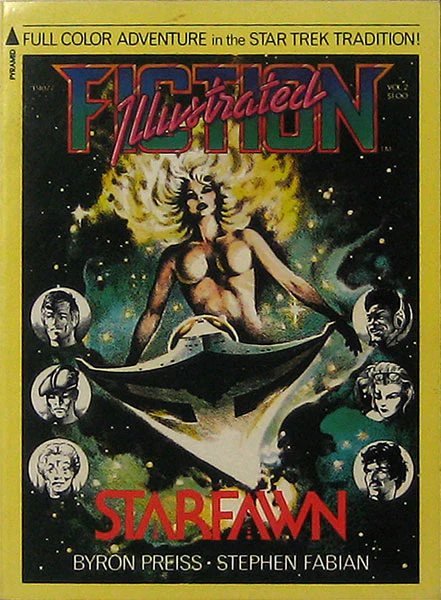
Sounds like somebody from Fantagraphics pushing the latest printing of Ghost World or something, doesn’t it? Guess again. That quote’s thirty years old. It’s from the late Byron Preiss, God rest his soul, introducing Starfawn. The second “graphic novel” ever printed, as we understand the form today. I’ve been after it for years, bowled one out on eBay a few weeks ago, and it arrived last Wednesday. Written by Preiss, with stunning art by SF illustrator Stephen Fabian. Here it is.
Now, here’s another quote, of more recent vintage. This one’s from the hardcover collection of Identity Crisis, the end notes from writer Brad Meltzer.
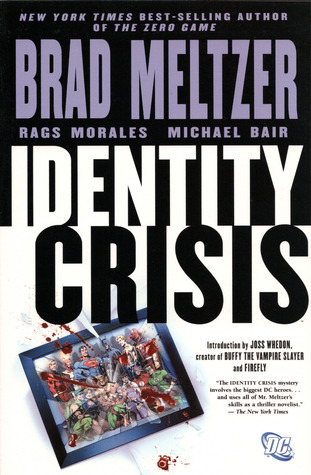
“They’d allow us to see the old Silver Age stories in a brand-new way. You look back on those stories now and they’re wonderful — nothing tops them — but I think a lot of people chuck them to the side and say, ‘that’s fun, that’s cute, but they’re a coloring book and we don’t need them any more.’ I love those stories. I grew up on those stories, and those stories changed my life. They taught me my values. They engaged me when no one else did. And in my own selfish way, I wanted them back.” That last bit in bold I want you to remember, because we’ll get back to it.
Now, those who know me — hell, those who’ve been reading this blog the last couple of Fridays — will tell you that in a very real sense, I agree with Mr. Meltzer. I too grew up on the adventures of the DC and Marvel heroes in the 60’s and 70’s. I learned my values from them too … or, more properly, from their creators and chroniclers. I learned from Gardner Fox and John Broome that it was possible to outwit a much more powerful foe, if you kept calm and thought things through, and especially if you paid attention in school and learned a lot of science facts. I learned from Stan Lee that you had to do what was right no matter how much it cost you, and that no matter what, you never gave up. I learned craft from Archie Goodwin and passion from Steve Englehart and history from Roy Thomas and activism from Denny O’Neil and satire from Steve Gerber and just all sorts of stuff from all those guys. Which is not to slight the artists, because I learned a lot there too; but I want to talk about writers and stories tonight.
Here’s the thing. What actually prompted the column subject this evening wasn’t just reading graphic novels this week, old and new; it was also seeing the new Narnia movie (which we absolutely adored) and remembering how I found those books, when I was a youngster. It was in the children’s section of the library in Lake Oswego, which was run by a delightful, wise old lady named Mrs. Lapidus. I had been reading the Oz books by Frank Baum, and having exhausted the library’s store of them, I was casting about for something new. She suggested Narnia and I went home, somewhat nervously, with two of Lewis’ books under my arm.
When I started them I couldn’t put them down. They were like Oz but cooler, a little MORE, somehow. It was still about kids from our world going to a magical land but people could get hurt and die in these books. I raced through them and then went back to Mrs. Lapidus and she hooked me up with Lloyd Alexander’s Prydain books. Which were a little tougher and cooler than even the Narnia books. And so on.
This went on for a couple of years. It was a progression that started with Baum and Lewis and went on up to J.R.R. Tolkien and Edgar Rice Burroughs and Robert E. Howard and … the list goes ever onward, topping out somewhere around Neil Gaiman’s Stardust. Always about fantasy and swashbuckling and swords and so on, but a rising level of complexity. I still read the stuff: my wife gifted me today with a really pristine used copy of the long out-of-print King Kull collection, as a matter of fact. But what I want you to think about for a moment is the progression. Like stair-steps.
The same thing held true for me with science fiction. Started with Tom Swift. Then moved on to the Heinlein juveniles like Have Space Suit, Will Travel on up through Asimov, Clarke, Ellison, etc. Or mysteries: The Hardy Boys, the Three Investigators, Sherlock Holmes, Sam Spade, on up through to Lew Archer and Kinsey Millhone.
Here’s the thing, though. We used to have this in mainstream superhero comics, too. And now we don’t.
This is how it worked when I was a kid. You saw something on TV that got you interested in superheroes. In my case it was the Adam West Batman TV show and the old Filmation DC cartoons. So when we were at the drugstore and I saw something like this, I was all over it.
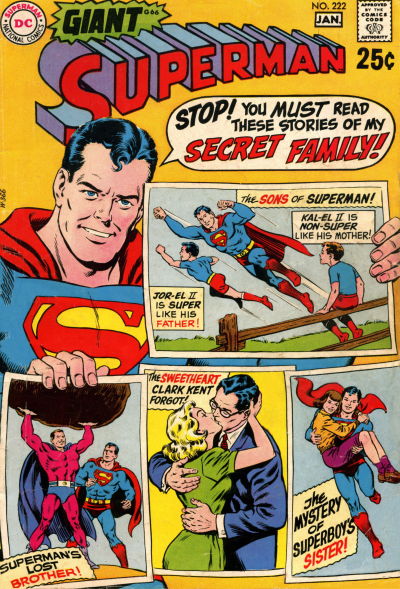
And that was my entry point. DC giant collections. From there I graduated to the more current stuff, say something like this:
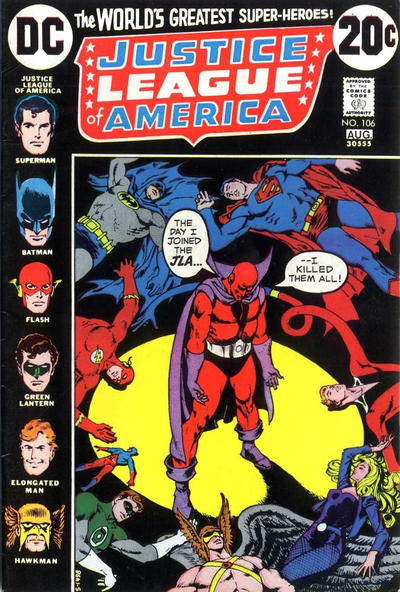
DC seemed sort of juvenile by then, though. Fortunately, there was Marvel, with its troubled, more ‘human’ heroes and sprawling cosmic epics. I became a Marvel zombie in the mid-70’s. DC was for kids.
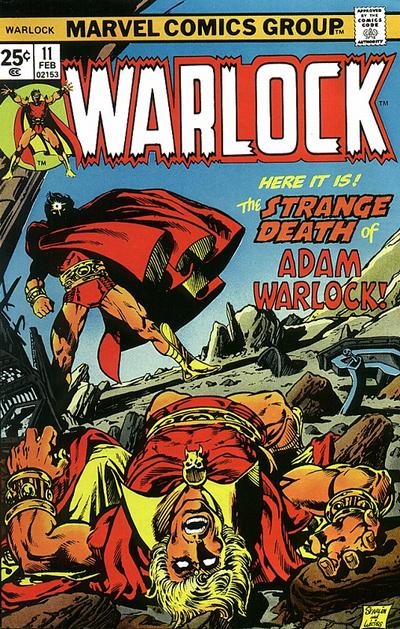
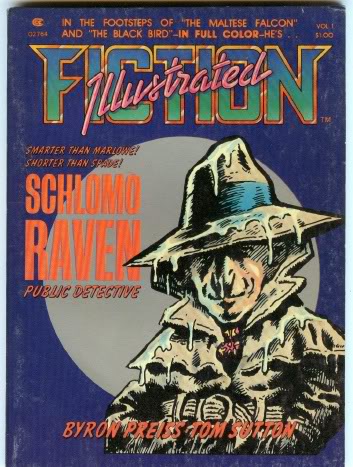
A few more years and I was a full-on comics aficionado. Always on the lookout for something new and different and more mature. Comics needed to GROW UP, damn it. So when Byron Preiss started his newfangled graphic-novel experiments with Weird Heroes and Fiction Illustrated, I was right there.
Stair-steps. Back then we had them. Today we don’t, not for adventure comics. Today if a kid sees a Superman cartoon on TV, wants more, and goes to the store looking — well, first of all, he wouldn’t find superheroes there at all, probably. But if by some miracle of distribution he did, this is what would be waiting.

Do I really need to explain why this is wrong? For God’s sake, if ANY character in super-hero comics should be instantly accessible to anyone of any age, it’s Superman. But what our hypothetical kid would be faced with, were he fool enough to buy it simply because it says “Superman” on the cover and he wanted to read a Superman story, is a crossover issue that’s part of some larger tie-in story running through several DC series and its own mini-series and it’s all just a prologue to this “Infinite Crisis” thing, whatever that is. This isn’t a story. It’s the equivalent of a page from a chapter of a book that’s being published at the rate of three pages a week for a year. Imagine walking into this stone cold, your only preparation being an episode of the Dini-Timm Superman cartoon, or maybe a rerun of a Christopher Reeve Superman movie. How incomprehensible would this comic book be to that kid? How unpleasant and scary?
Which begs the question. Who’s the target audience for this crap? Where’s the stair-step that led here and where do you go afterward?
There isn’t one, of course. On either end. And the reason goes back to the quotes I gave you at the beginning of this column, and the phenomenon our friend Alex Cox talks about. Alex calls it “nerd pandering,” preaching to the choir, rendering comics inaccessible to everyone except the True Believers.
What struck me is that this phenomenon has been around ever since Byron Preiss invented the graphic novel, and judging from Mr. Meltzer’s comments, it’s here with us in full flower today. We have always been self-conscious, always wanting the world to know that it’s OKAY to read this stuff, it’s important and literary and a True American Art Form and … and you know what? It’s all coming from the same place. It walks, talks, and sheds water just like me waving a copy of the Englehart-Brunner Dr. Strange in front of my high school English teacher telling her yes it was SO literature and I SHOULD be allowed to write a report on it. Justifying something I happened to like to someone I was sure disapproved of it, and by extension, disapproved of me.
Here’s a news flash, fellow fans. We don’t need to prove ourselves any more. That fight is over and WE WON. Take a look at the box-office for the Spider-Man movies, or X-Men, or even stuff like the Smallville TV show. Superheroes aren’t just for geeks any more.
But you know what? Even without the mainstream success of recent years, all this effort at proving ourselves was completely unneccesary. We don’t need to “reclaim” anything because we never lost it. Only comics geeks think we need to justify liking superheroes to the rest of the world. We don’t need to, any more than a mystery fan needs to justify liking Agatha Christie. And we sure don’t need to be twisting mainstream characters like Superman into impossible, unrecognizable shapes because we, “in our own selfish way, wanted them back.” Mr. Meltzer, no one was taking them away from you.
But we always seem to want to do this, ever since the 70’s when Byron Preiss was desperate to prove that he wasn’t just doing COMICS, damn it. He was doing “America’s First-Ever Graphic Novel Revue.” Only comics fans seem to have this need. You don’t see mystery writers looking to “reclaim” Nancy Drew by having her go undercover in a story about exposing child prostitution in Bangkok, or something loony like that. It struck me, watching Narnia unfold on the screen, that no one involved with this wonderful effort had any illusions that they were making anything other than a children’s story that was beloved by many, and they wanted to honor that. There was no need to “reclaim” anything, or “re-imagine it for a mature audience,” or anything of the sort. It was a children’s book and they made a great children’s movie out of it, without pretending to do anything else.
I miss that about superhero comics. The stairsteps are gone. We are all sitting on the same one stair now, crowding every kind of story and genre onto this one arrested-adolescent step, making it narrower and narrower. Just us nerds, being pandered to, wondering why there are fewer and fewer of us as the years roll on.
See you next week.

Feels ironic Meltzer talks about Silver Age comics teaching him values and then he grows up to write flippin’ Identity Crisis anyway.
I mostly agree with Greg here, in that I do think there should be lots of comics for different demographics. And I think we have that today, just… outside the realm of superhero funnybooks. But even then, when I started reading Superman comics, they were a weekly soap opera spread across four different titles and I almost never got two issues in a row, and yet I was able to read and enjoy them just fine. Kids love finding a new universe to explore with a bunch of lore and characters and history. I think it’s the adults who worry too much about something being new-reader-friendly. As we age we lose that ability or willingness to go with the flow, jump in medias res.
Anyway, I did a similar stair-step thing too, going from superhero comics to edgier fare to Vertigo to indies, etc. But I’ve looped back around and now I want the fun stuff I liked as a kid again. I don’t know if this is a good or bad thing, or what it says about me. Maybe I’m hitting the seventh age of man. But I never got more joy out of comics than when they were weird, random ephemera, and I’m trying to trick my brain to get back to that mode again.
Sadly, the value that Meltzer learned as “shock” value.
When I picked up Avengers 106 I hadn’t looked at the book in years. It includes a flashback to an unpublished Captain America story, villains I’d never seen before (Space Phantom, Grim Reaper), and the only part that lost me was Rick Jones turning into Captain Marvel.
On the other hand, I’ve also picked up books that can’t pull it off — they make me feel there’s chunks of backstory I need or they fill in the backstory and bore me to tears. Generally, though, I agree with you — a continued story wouldn’t be a dealbreaker.
‘ve maintained for years that American comics have been held back from enjoying the stature they have in other parts of the world, because of self-loathing. People who worked in comics for a couple of generations were embarrassed by what they did and hid it, searching for an opportunity to escape it as quickly as possible. It was the young generation that came into the industry that loved comics for what they were; but, a lot of pros then wanted to move away from anything related to kids, because they had been made to fell inferior, for liking comics longer than their peers, or more deeply. So, bit by bit, they chipped away at anything meant for kids, to the point that we turned all of our brightly clad superheroes into psychotic nutjobs, by the grim & gritty 90s. Thankfully, some people understood that you can’t have darkness without some light, to create contrast. Even so, we still had to be SERIOUS and more mature, which more often meant violent, profane and borderline pornographic. I’m all for adult comics, but adult life isn’t violence, sex and F-bombs….unless you are Quentin Tarantino. If you want adult comics, how about a little romance? Mature means building a future with someone you love, starting a family, etc. Where are those comics?
Celebrate what you love, but let the other person celebrate what they love, too, even if (and especially) if it is different from your love.
Just to build on your point about adult comics being more than just violence, profanities and sex, it’s not like there hasn’t been writers who provided a roadmap for how that could be done in superhero comics. Alan Brennert always wrote very mature, adult superhero stories, but you can hand any of those over to, say, a 10 year-old child without any qualms.
Paul Chadwick’s “Concrete” always seemed to me the perfect stepping stone from superheroes to indies and from adolescent stuff to real “mature” stuff. There’s some plot points around sex, but there’s nothing titillating… there’s no real profanity, no gratuitous violence… just a great comic. I think a new miniseries just started; I’ll have to buy that.
See also the endless variations of “I’m doing an Oz story BUT IT’S DARK!!!! Oooh, edgy!” When Popeye became public domain, the current Popeye strip spent a week or two mocking “I’m doing Popeye — the Serial Killer!” and “I’m doing Winnie the Pooh — Serial Killer!” edgy takes.
Greg makes some really good points, especially regarding the unnecessary defensiveness some comic writers feel toward their own work… but to some extent I have to disagree with the premise that there are no “stairsteps” from modern superhero companies. I think that the quality and accessibility of the Big Two’s flagship titles has varied a lot in the new millennium, BUT:
– both publishers have tried and largely succeeded in establishing alternatives to their mainline continuity that might be more appealing to kids or young teenagers. The 90s had some excellent Timmverse-inspired “Adventures” comics from DC that I do actually remember picking up off the grocery store spinner rack as a youngster and enjoying. I’m enjoying reading massive collections of that material even more as an adult. The early 2000s saw the Ultimate universe from Marvel, which produced what I would consider to be an undeniably great entry point to superhero comics in Ultimate Spider-Man. Later on, you get stuff like the late, lamented Langridge/Samnee Thor, web-originals from DC like Batman ’66 that have the zany all-ages appeal of many Silver Age comics, and DC has really done an admirable job of pumping out young adult-oriented original graphic novels in the last couple of years. I have not read that many of those books, but I have heard good things (and I really liked Jimmy Olsen’s Supercyclopedia).
– more importantly, all the old stuff that Greg liked when he was a kid is increasingly available in collected form! We don’t have 100 page giants with 1 lead story and 3 classic reprints on the newsstands, but we do have an increasingly well-maintained catalog of trade paperbacks representing classic and beloved but obscure comics from the history of the medium. Now, you might quibble that your average 8-year-old is not going to be as able to engage with the Stan Lee style of dialogue from the 60s Thor issues… but I would argue that as a 90s kid, I ate that stuff up. There are also plenty of other more modern, digestible collections that have truly classic comics, too. You might also argue that even if a kid is into the old-fashioned 50s or 60s style, they’re not going to be able to afford a $49.99 Marvel Masterwork collection… but the good news is that public libraries tend to have more and more of these classic comics available for patrons! My library also has a ton of collections that are more modern and very appealing to kids, even if they’re not the most recognizable characters (the Squirrel Girl trades are insanely popular at my library – deservedly so). Outside of libraries, DC especially has also been hitting it out of the park with their $9.99 “compact comics” line that has a mix of ultra-classic stuff (Batman: Year One), modern classics (All-Star Superman, The New Frontier), and underappreciated good entry-level comics (Brubaker/Cooke Catwoman). Are all of these comics that I would hand without reservation to a five or ten year old? In truth, no – but I am glad there are some options for affordable cracking adventures for the young ‘uns who can handle some of the headier or grittier stuff that may be in some of those stories. I myself have bought several duplicates of stories I already own in other formats because these are so cheap and convenient to lend or gift to someone who has been curious about superheroes from movies but has never made the plunge into comics.