

“My head is in a bad place but I’m having such a good time”
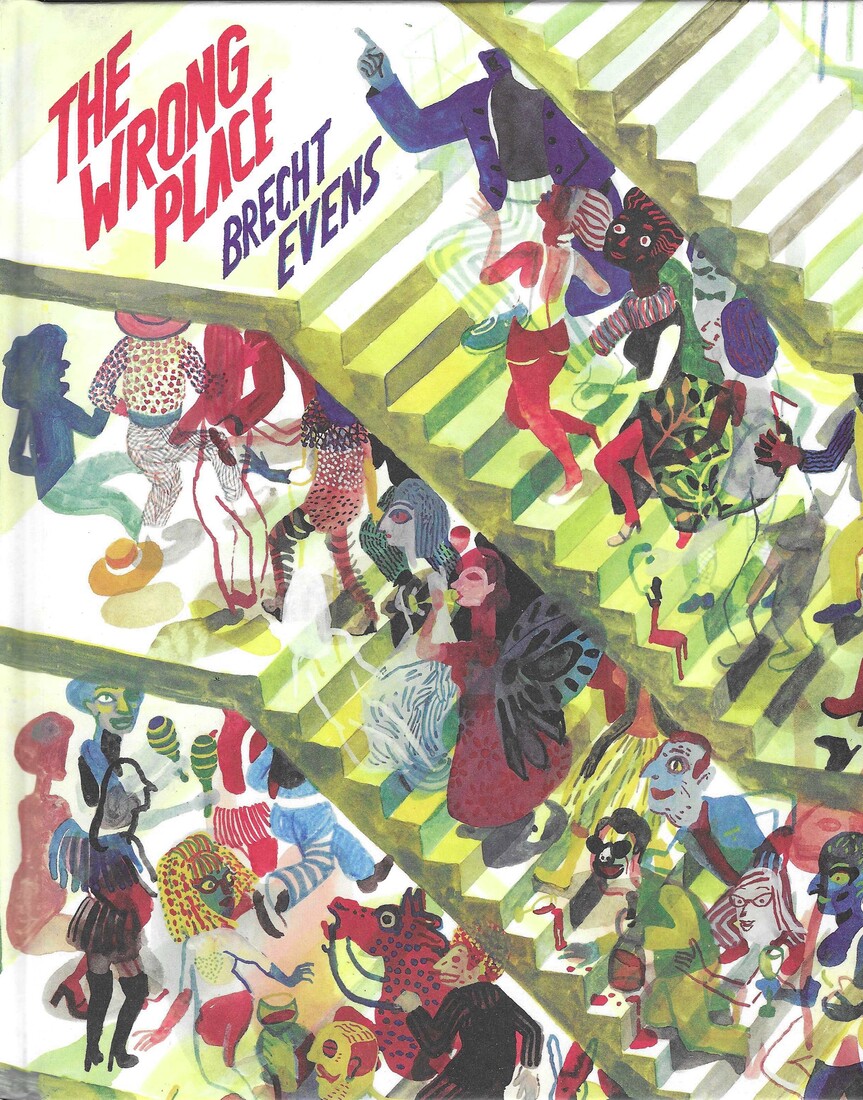
The first Brecht Evens comic I read, The City of Belgium, was very good, and I decided to keep an eye out for his work. So Drawn & Quarterly, which published The City of Belgium, brings us The Wrong Place, which is his first comic from back in 2010. 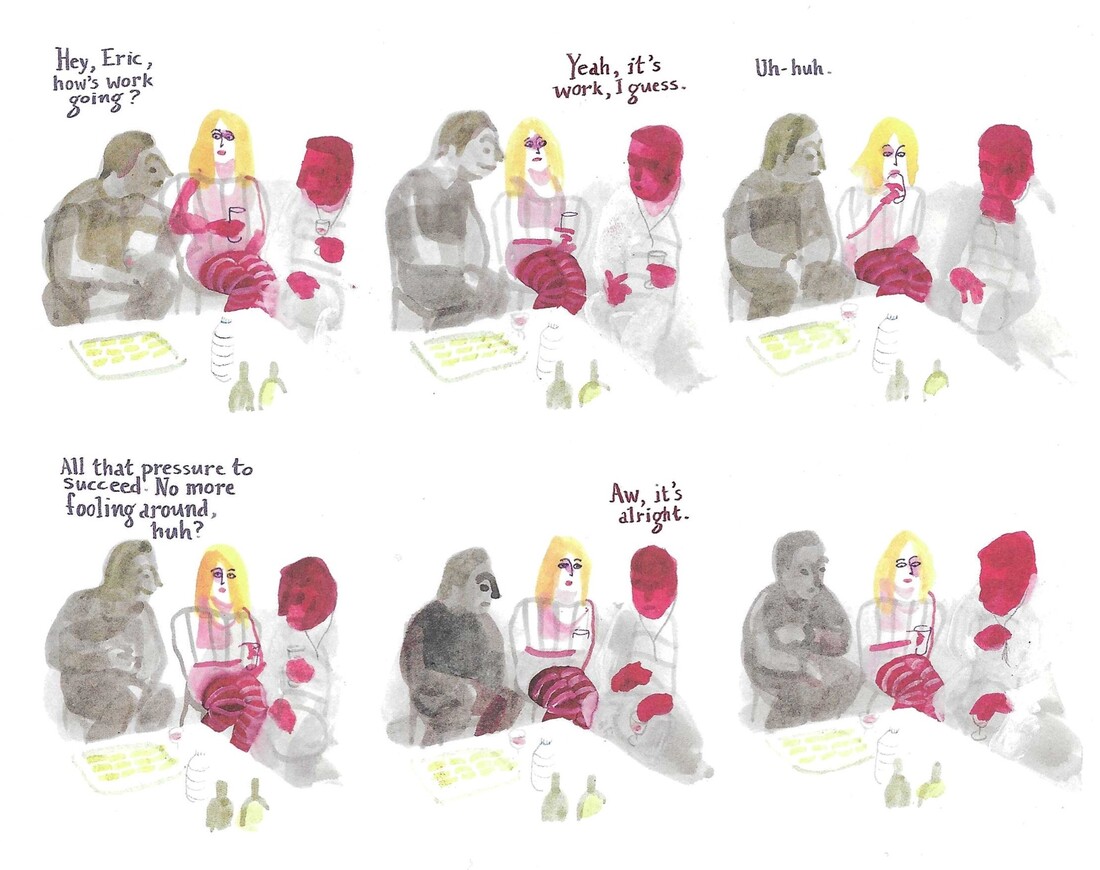 It’s so dense it needs three translators — Rhian Heppleston, Michele Hutchison, and Laura Watkinson (it was in Flemish originally, so maybe Flemish is really hard to translate!). It’s 176 pages long and cost 30 U.S. dollars.
Evens is an interesting comic creator, as he seems to care not a whit about plot, which is perfectly fine with me. The City of Belgium didn’t have much of a plot, and neither does The Wrong Place. Evens seems far more interested in creating characters and just letting them chat with each other, however well or poorly it goes. The central character in The Wrong Place is named Robbie, even though he’s not exactly the main character — he’s the dude everyone wants to hang out with, because he’s so very cool, so the plots — such as they are — kind of revolve around whether anyone is going to be able to hang out with Robbie. Robbie himself hangs out at the Disco Harem, a very weird club in the city (it seems far too large, and it’s not only a dance club, as some bizarre stuff is going on in it), and the characters claim that Robbie was the one who made it cool — it was a nothing place, but when Robbie started hanging out there, it became cool. Good for him! The main character is probably Gary, who’s kind of a loser. He’s a nice enough guy, but he’s nowhere near as cool as Robbie and he desperately wants to be. In the first section, Gary has a party at his house, and a bunch of people show up, and it’s clear that even as he’s greeting everyone, he’s trying way too hard. It only takes a few minutes and an awkward pause in the conversation for someone to ask if Robbie is coming. Gary invited him, but he hasn’t shown up yet, so Gary calls him, and he says he’ll be there. Of course, it turns into a Waiting for Godot thing, as Gary calls Robbie a few other times, but there’s always something going on that is keeping Robbie away. 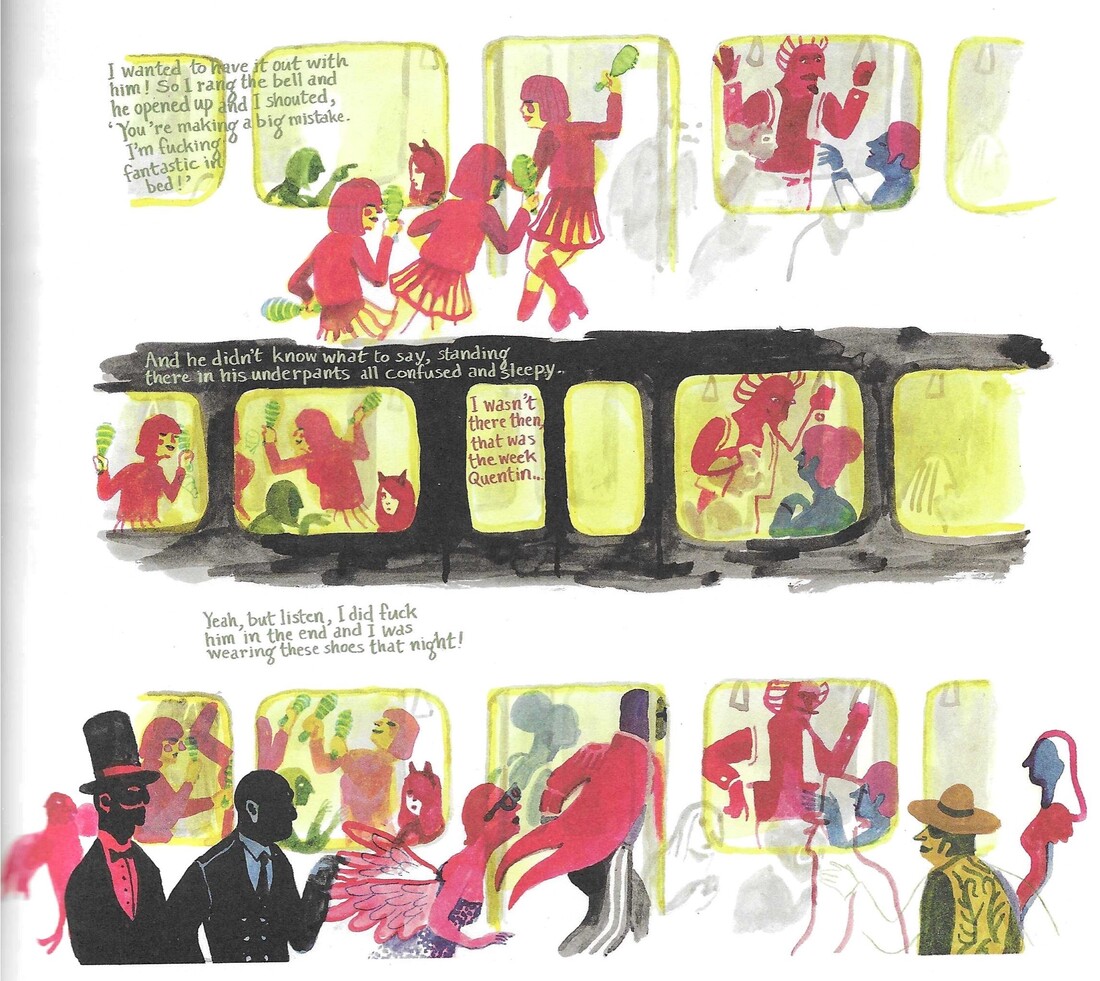 Gary’s guests have a decent enough time, but it’s clear they all came in the hopes of seeing Robbie. In the second section, a young woman named Naomi gets her hair cut, and her friend Julie convinces her to go out on the town to shake off a break-up. They head off to the Disco Harem, of course, where Julie goes off with some dude, leaving Naomi alone. She ends up meeting Robbie and exploring the club with him, which eventually leads to sex. In the third section, Gary himself ends up at Disco Harem, where he and Robbie hang out and have a nice conversation. A brief coda takes us back to Julie at the salon, where she talks to Naomi on the phone to get the dirt on what happened between her and Robbie. And … that’s it, in terms of plot.
Now, this might not so interesting, and if you’re a big fan of plots, it’s not. I like a good plot, but Evens is more interested in the moments between people and what they do in those moments, and The Wrong Place is a fascinating study of people. At Gary’s party, everyone talks about Robbie as if he’s some mystical presence, and Gary doesn’t seem to mind, but it still feels very insulting … until you realize that Gary has that whiff of desperation about him, and while we can pity that, there’s also a bit of contempt for him, too. Characters like this are common in literature, and it’s easy to both pity and loathe them a little, and Evens is good enough that we feel those things, but we also can’t hate him too much, either, because he still seems like an ok dude. It’s not his fault that he’s friends with a shining star, and it’s made better by the fact that Robbie really is a good guy — he has no contempt for Gary, and when they meet at the club, they have a good time. But Gary can’t help who he is, and he’s someone who isn’t happy with who he is (even though he tries to hide it) and can’t compete with Robbie. He also wants to hang out with Robbie as much as his guests do, and at the club, when he gets to hang, he seems much freer and happier. 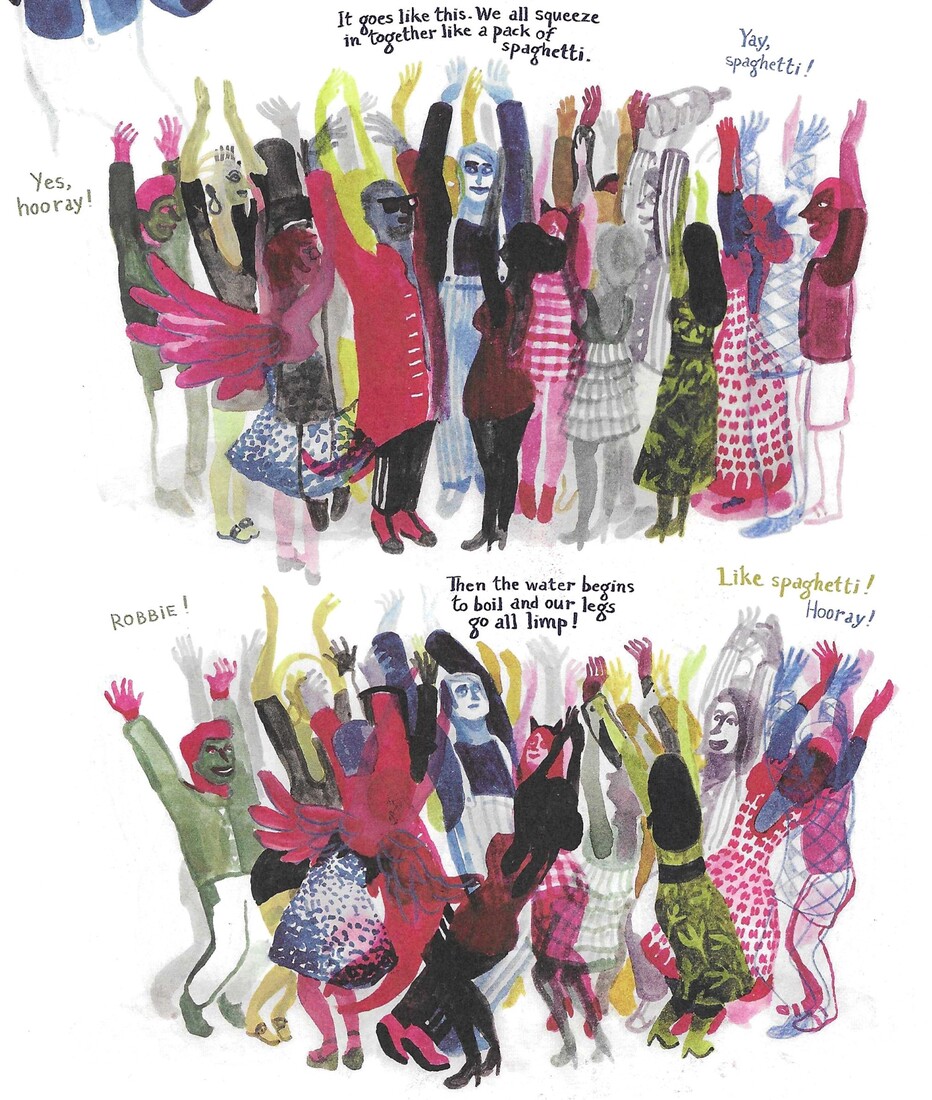 Robbie is still the star, though, and Evens ends Gary’s story with a devastating comparison between the two that cuts us to the core.
Robbie isn’t the greatest dude in the world, though, as Naomi’s story shows. He doesn’t do anything horrible, but he outshines her, too, and so her night ends a bit sadly. Robbie takes her through the club and out into the city, and she has a marvelous time. After they have sex, though, it’s like she realizes that she’s a tourist and she comes back down to earth, and while Robbie doesn’t really do anything bad, she feels like he’s already moved on from her. It’s another small moment in which there are no villains, just two people who don’t really know each other and have no future together. At the beginning of her story, Naomi is shy and unsure about her attractiveness, and she forgets that in Robbie’s presence, because of his star wattage. Once that turns away from her, all her insecurities come rushing back. It’s natural and it happens to us all, which is why it’s so painful to see it happen to her, even though Robbie has not done anything wrong. The people in this book are all like that — nobody is evil, but they occasionally do things that make others feel bad, often inadvertently. You know, like real life.
Evens’s art is always a highlight, and he uses it well in this book. He paints everything, which makes the entire book very lush and vibrant. He creates amazing and unique characters and puts them into a wild city, full of mysterious and sensual pleasures. He begins, as I noted, in Gary’s apartment, which is quite boring, and then introduces elements from the city and the Disco Harem, which opens up the entire world of these characters. During the party at Gary’s, where many people are quite colorful and fun, he uses more white spaces around each “panel” to create a sense of isolation and loneliness among the people, even as many of them have intimate conversations. It’s as if Robbie’s absence is crowding out everything else, and the small pockets of friendship among the characters can’t quite overcome it. 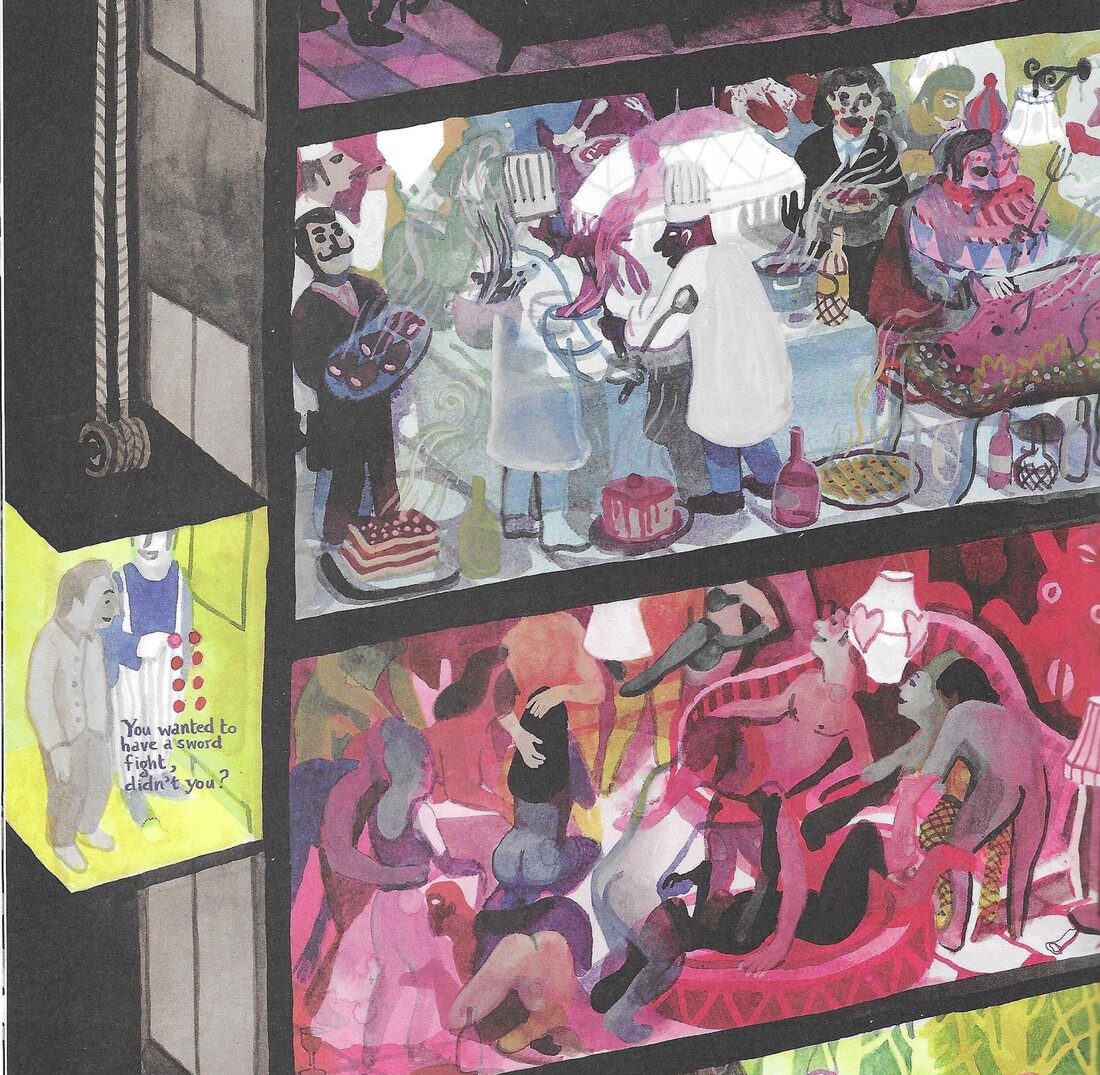 Evens uses a lot more gray washes in this section, too, as Gary’s blandness extends from his person to his apartment, and only the intrusion of his more interesting friends and acquaintances can hold it at bay for a time. When Naomi goes to the Disco Harem, Evens begins to drench the pages with color, showing the glorious profusion of insanity that occurs inside the club. Even so, there are some dark corners of the club where people shouldn’t venture unless they’re truly ready, and Evens does a nice job presenting the sense of menace even as Naomi has a good time with Robbie. He puts Naomi in a bright red outfit, so she stands out even among the craziness of the club’s denizens. The sex scene with Naomi and Robbie is presented very well (and graphically), as Evens gets the blur of flesh and emotions very well. In the final section, he does much of the same with Gary at the club, although he keeps Gary painted gray to highlight how little he fits into Robbie’s world, even though the two of them are friends. At the end, when Gary is trying to do something antithetical to his personality, Evens once again isolates him in small panels as he shrinks from the moment, and the final image of him is tragic, as the colors of the club threaten to overwhelm him. The art tells the story as well as the writing does, giving us a fully-realized comic book.
I don’t love this book quite as much as I did The City of Belgium, but that’s probably because Evens was a more mature creator when he did that one, so he’s a bit more in command of the page and the themes. This is still a terrific comic, and if you haven’t read Brecht Evens’s work yet, this is a good place to start. I’m looking forward to more from him!
Rating: ★ ★ ★ ★ ★ ★ ★ ★ ☆ ☆
