
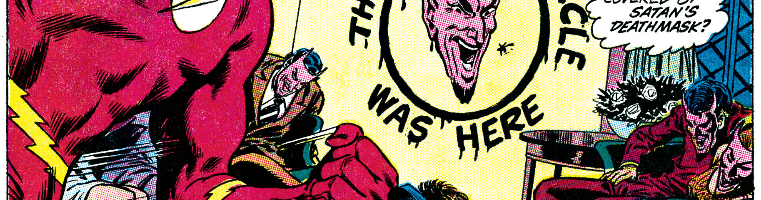
 For any DC fan in the Silver Age, Carmine Infantino was the Flash artist. He’d been drawing Barry Allen from the beginning until 1967 when DC kicked him upstairs and Ross Andru took over. Suffice to say, Andru did not displace Infantino in anyone’s eyes.

Behind the Infantino cover of Flash #200, “The Explosive Heart of America” paired up Robert Kanigher, the current Flash scripter, with Irv Novick. Kanigher would be gone in a few issues, replaced by Cary Bates; Irv Novick would stick around as the definitive Flash artist of the Bronze Age (Ross Andru, taking over as editor in the late 1970s, would make the mistake of replacing him with Alex Saviuk). His interpretation of Barry departed from Infantino’s crew-cut and bow tie —
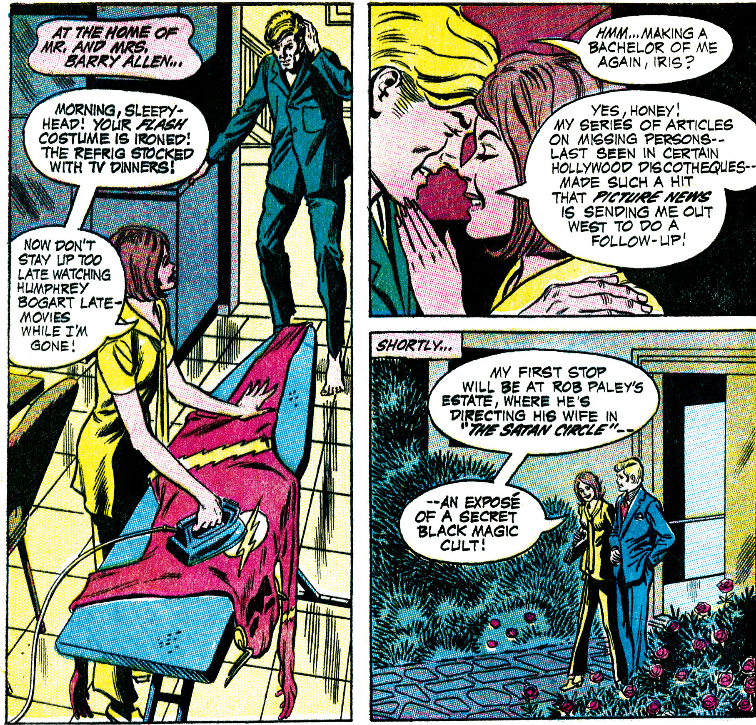

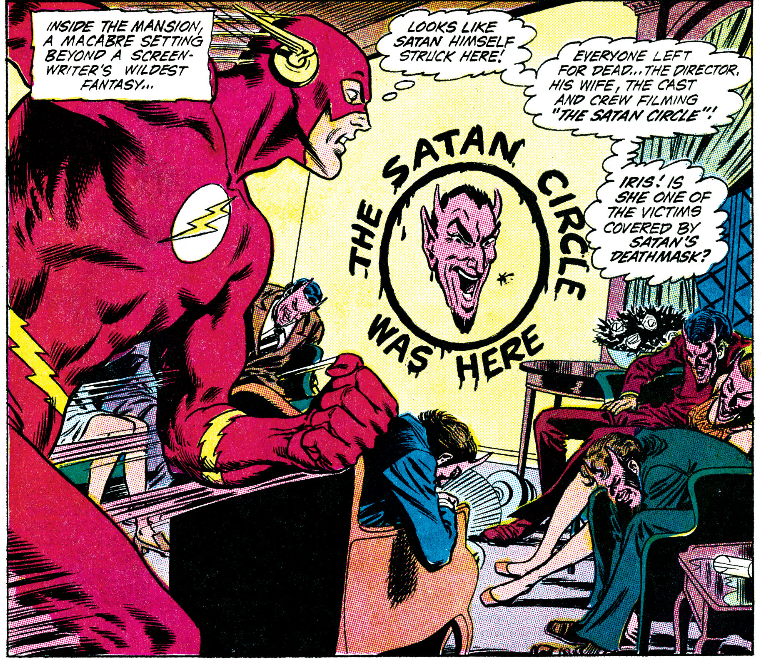
Once again we have comics dealing with the “relevant” topic of Satanism. Though Kanigher’s script brings in the Manson family (or a reasonable facsimile) as well.
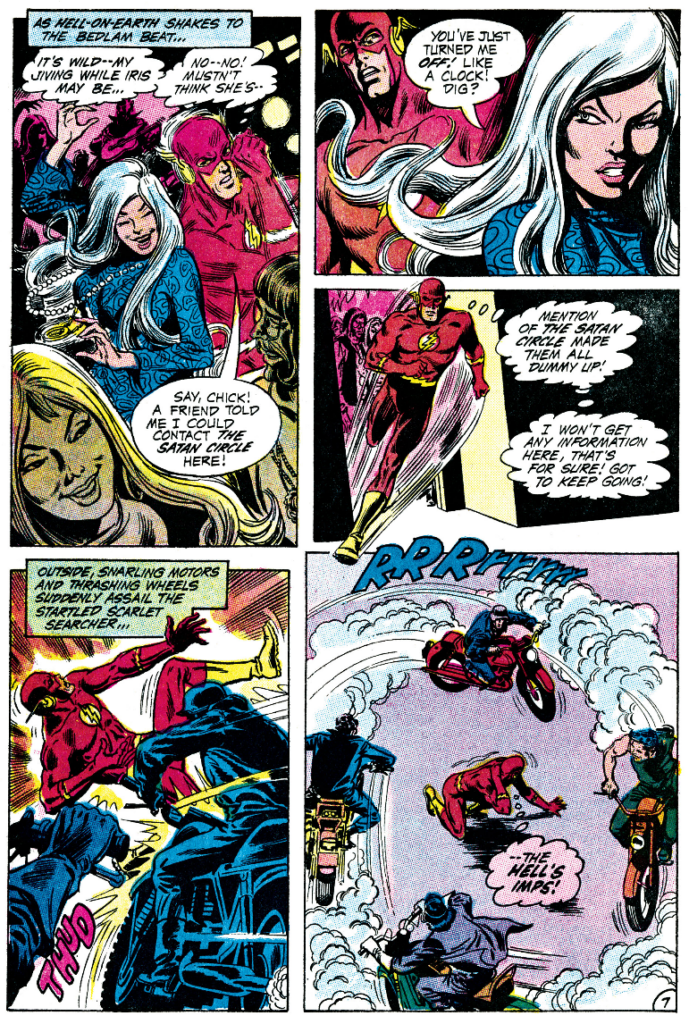
Later we see Flash boogie down and grapple with that other bogeyman of era, evil bikers.
Over at Marvel Gerry Conway, having worked on some DC horror anthology stories and two issues [corrected for accuracy] of Phantom Stranger, finally lands his first regular superhero series, Daredevil.
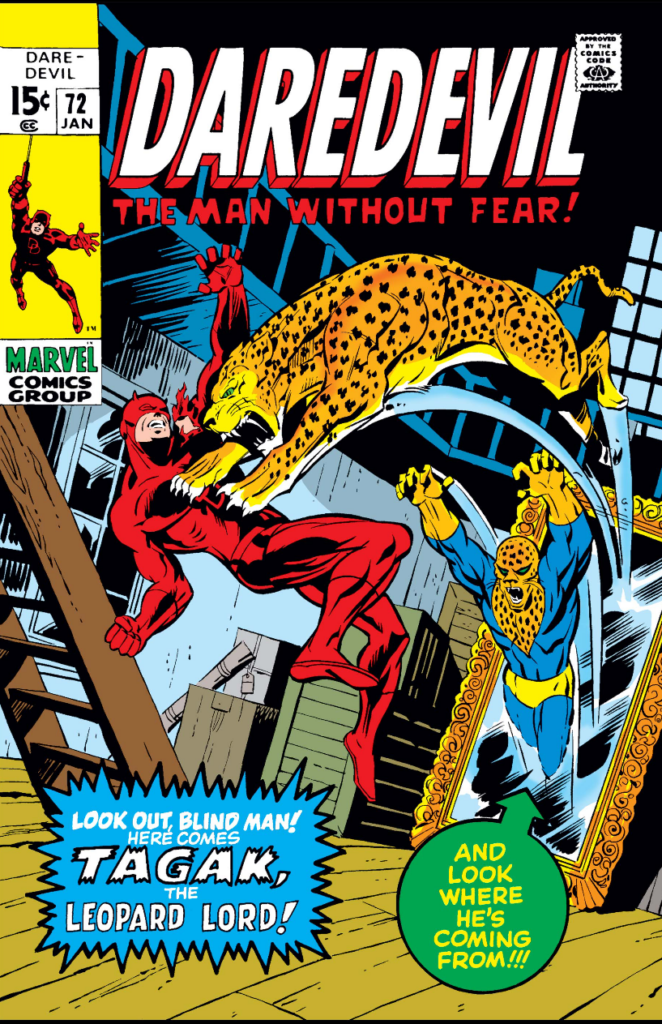
#72, “Lo, the Lord of the Leopards,” by Conway and Gene Colan, has DD investigating a series of thefts and meeting Tagak, a blind monarch from another dimension who sees through the eyes of his leopard sidekick (that makes Tagak the second blind man Matt Murdock has met). It’s readable, not memorable, though I am curious about this scene —

Is Conway planning to delve deeper into Matt’s role as a blind dude? I guess I’ll find out. Oh, we also get this bit of relevant scriptwriting —

The idea people don’t want to get involved was a common trope in fiction back then. The archetype of this was the legend of Kitty Genovese, supposedly murdered outside her apartment building while the other tenants, people who knew her, callously stood and watched. That’s not how it happened; some of them did call the police, for instance, but in the pre-911 days couldn’t get through. However it would remain a symbol of big-city alienation for decades after.

Like Linn drums, Fairlights and other hi-tech used in overproduced slick 1980s albums, pop culture elements that are supposed be state-of-the-art and hyper-modern now end up sounding horribly outdated: counter culture slang is no different. “You’ve just turned me off! Like a clock! Dig?” Ouch, Bob K.!
Speaking of “Like”, that hippie figure of speech has been annoyingly adopted and adapted by today’s younger generation.
I have that Satan Circle back issue. That fifth panel where he puts the rose in her hair is a lovely portrait of Barry and Iris by Novick. After Carmine, DC didn’t know what to do with Flash, hence the rotating writers (Fox and Broome trying some Marvel-apeing and spooky stuff; then Robbins, Friedrich, Kanigher…) and the usual relevance. I felt Bates was the first scripter in years to really “get” him.
So pervasive was the legend of Kitty Genovese, that Moore used it in Watchmen, IIRC.
He did.
I imagine even at the time Kanigher’s hip slang sounded as tinny as Bob Haney’s in Teen Titans.
I had a former coworker who couldn’t go more than a minute without working “like” into the conversation. When she tried not doing it, she just froze up.
One very minor correction, fraser — Gerry Conway actually wrote two issues of Phantom Stranger (#10 and #11), not just one.
Thank you, Alan. Edited to correct that.